

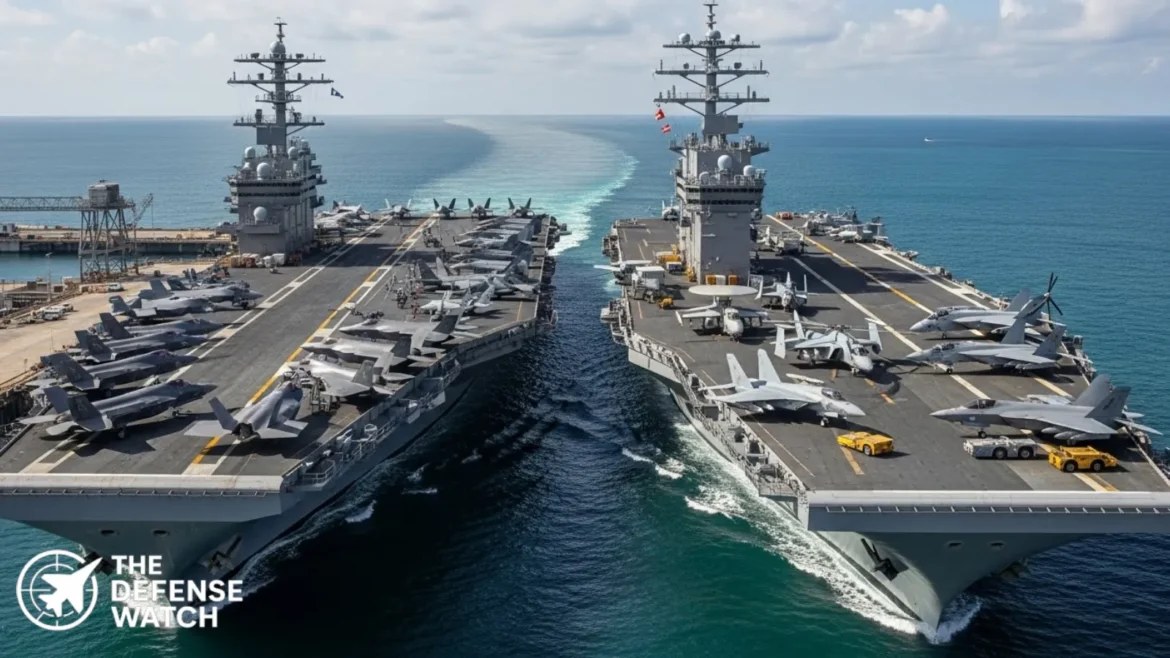
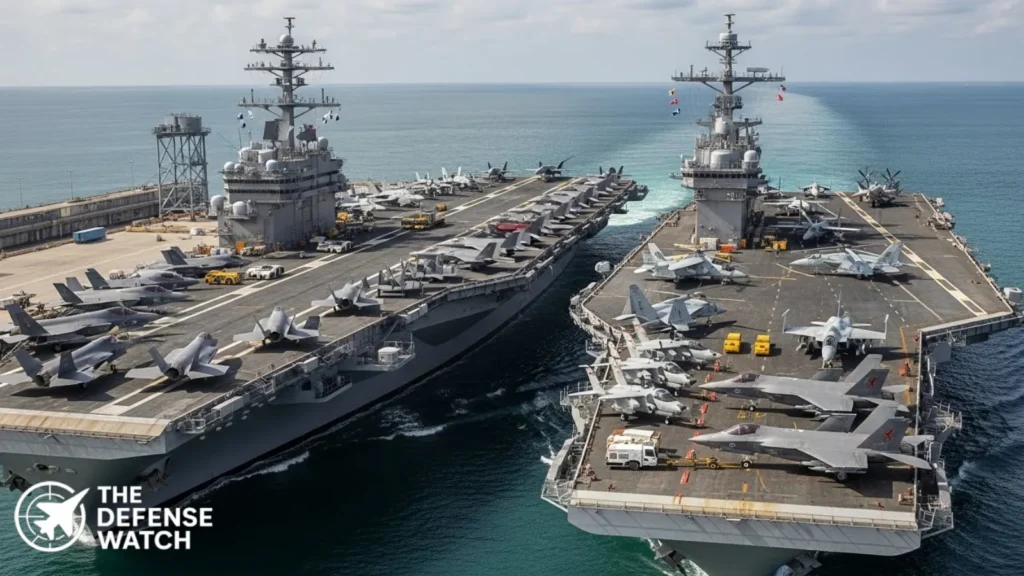
China Aircraft Carrier vs US Carrier
For decades the United States Navy’s aircraft carriers have been the backbone of American military power at sea, acting as floating air bases wherever Washington wants global influence. Now China’s rapid push into carrier development has shifted this balance in the Indo‑Pacific. With China operating multiple carriers and building even more advanced ones, the question is no longer theoretical: in a China aircraft carrier vs US contest, who leads in strength, capability, and strategic impact today and in the near future? This comparison matters not just for Taiwan or the South China Sea, but for NATO partners in Asia, U.S. deterrence posture, and global trade security across vital sea lanes.
China Aircraft Carrier vs US Carrier Specifications Table
| Feature | China’s Carriers (Fujian Class) | U.S. Navy Carriers (Ford/Nimitz Class) |
|---|---|---|
| Number in Service | 3 (Liaoning, Shandong, Fujian) | 11 supercarriers overall |
| Displacement | ~80,000 tons (Fujian) | ~100,000+ tons |
| Propulsion | Conventional (fuel) | Nuclear |
| Aircraft Launch | Electromagnetic (Fujian), ski jump (older) | Catapult (steam/EMALS) |
| Typical Air Wing | ~50–60 aircraft | ~70–90 aircraft |
| Endurance at Sea | Limited (fuel dependent) | Very high (nuclear) |
| First Service Entry | 2012 (Liaoning) to 2025 (Fujian) | 1975 (Nimitz) to 2017 (Ford) |
| Estimated Cost | ~5 to 6 billion USD each | ~13+ billion USD each |
Design & Technology
China’s Carriers
China’s first carriers were built from Soviet designs and launched aircraft off a ski ramp. The newest, the Fujian, shifts to electromagnetic launchers like those on U.S. carriers. That lets China operate heavier aircraft and yields greater payload capacity. But China’s carriers use conventional engines, which means they need regular refueling and lack the almost unlimited reach that nuclear power provides. China is also building a future carrier design (Type 004) that may be nuclear and larger than the U.S. Ford class.
U.S. Carriers
Firepower & Performance
China’s Carrier Air Wing
China’s air wings include J‑15 fighters, new J‑35 stealth jets, airborne early warning aircraft (KJ‑600), and drones. This mix gives China a broader range of mission profiles than earlier carriers could manage, but they still trail the U.S. in mature combat systems and number of fighter sorties per day.
U.S. Carrier Air Wing
U.S. carrier air wings include F‑35C stealth fighters, F/A‑18 Super Hornets, E‑2D Hawkeyes for airborne radar, and EA‑18G Growlers for electronic warfare. The U.S. can support large air wings and sustain high sortie rates thanks to advanced deck tech and long experience.

Operational Range & Mobility
With nuclear propulsion, U.S. carriers can stay at sea for months without refueling, and move quickly across oceans. China’s current carriers must refuel more often and rely on supply ships, which adds complexity to long‑range operations. Future Chinese carriers with nuclear plants could narrow this gap.
Combat Effectiveness
China’s Experience
China’s carrier operations are relatively new. The PLAN has conducted exercises and integrated carriers into fleet drills, but it lacks real combat experience. Training, logistics, and joint‑force command will take years to mature.
U.S. Operational Record
Cost & Export Value
U.S. carriers are among the most expensive warships ever built, but they also support vast industrial bases and export naval aviation tech to allies. China’s carriers cost less but their export value is limited since no other navy yet operates similar ships at scale.
Analysis
In a straight China aircraft carrier vs US comparison today, the United States maintains the lead in overall capability. U.S. carriers are larger, nuclear powered, and carry more aircraft, supported by decades of operational experience and a global network of bases. China is closing the technology gap with electromagnetic launch systems, domestic aircraft development, and plans for future nuclear carriers. But China’s fleet is smaller, less tested, and more regionally focused around the First Island Chain. U.S. doctrine still emphasizes integrated air, sea, and joint operations with allies, while China continues to build institutional expertise.
China’s carrier program is rapidly evolving. Newer designs like the projected Type 004 could rival or even surpass U.S. carriers in size and aircraft capacity. Still, numbers and technology do not automatically translate to combat effectiveness without experience and logistics support.
Conclusion
In a direct China aircraft carrier vs US comparison today, the United States clearly leads in capability, reach, and operational experience. China’s carriers are credible and improving quickly, but they remain second with limited endurance and less battle‑tested systems. Under specific conditions close to China’s coast and within integrated PLAN operations, Chinese carriers could be effective. On a global scale, U.S. carriers retain the edge in power projection and sustained operations.
FAQs
In a China aircraft carrier vs US clash who has more carriers?The U.S. Navy operates more carriers (11) compared with China’s three.
How do China’s carriers differ in launch technology?China’s newest carrier uses electromagnetic launch systems like U.S. Ford class, while earlier Chinese carriers used ski‑jump ramps.
Why does propulsion matter in carrier ops?Nuclear propulsion lets U.S. carriers stay at sea longer without refueling, giving them greater range and endurance. Chinese carriers now are conventionally powered.
Can China’s carriers carry stealth aircraft?China is developing carrier‑based stealth jets like the J‑35, expanding their mission sets.
Does the U.S. still lead in carrier combat experience?Yes. The U.S. has longer and more varied operational experience with carriers, especially in real combat scenarios.
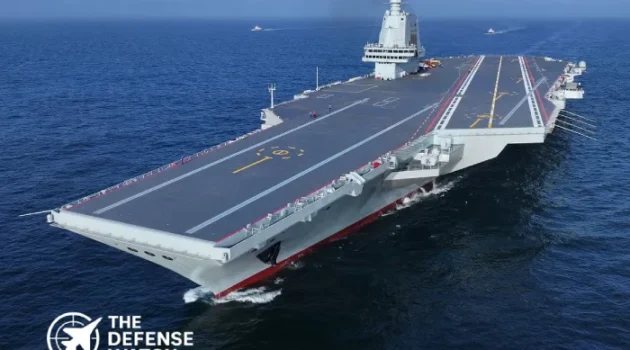

China’s newest aircraft carrier, the Fujian (hull number 18), has officially entered service with the People’s Liberation Army Navy, equipped with a domestic electromagnetic aircraft launch system that represents a significant milestone in China’s naval aviation development. The event took place at a commissioning ceremony in early November 2025 at the Yulin Naval Base in Hainan Province.
New Era in Chinese Naval Aviation
The Fujian is China’s third aircraft carrier and its first to use electromagnetic catapults for aircraft launch and recovery. The carrier displaces more than 80,000 tonnes and features a flat-deck design that departs from the ski-jump approach used on China’s first two carriers, the Liaoning and Shandong. Unlike steam-powered systems, electromagnetic launch systems use electrical drives to accelerate aircraft along the flight deck.
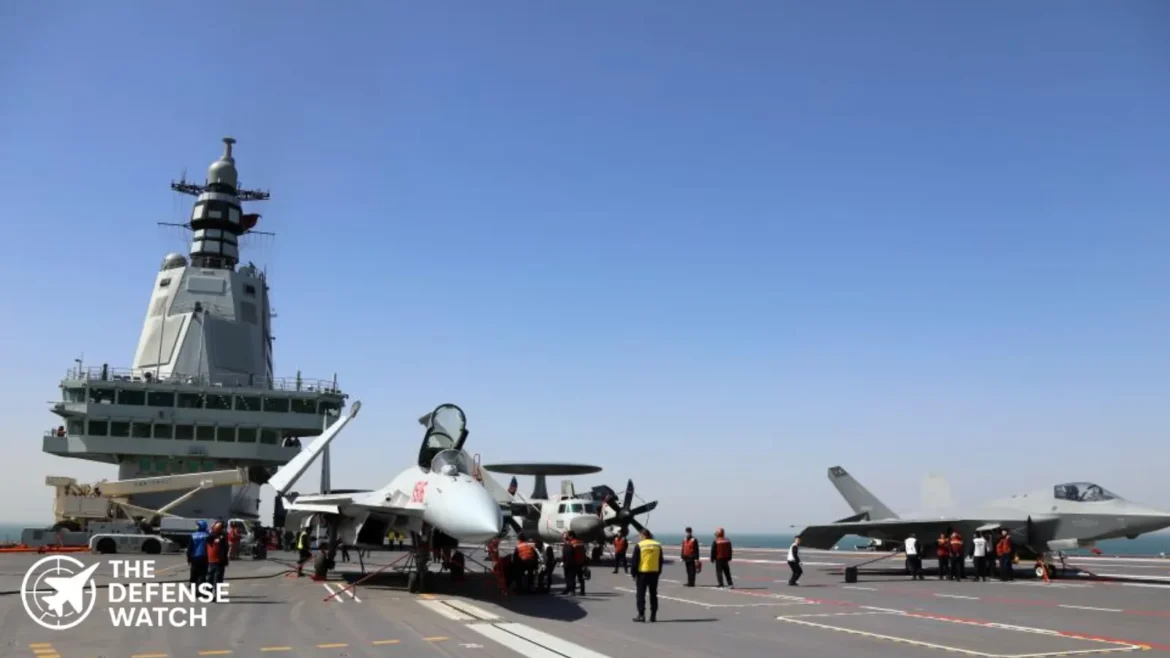
State media report that the Chinese navy has successfully completed initial training using the electromagnetic catapults and new arresting gear systems. This training saw carrier-borne aircraft including the Shenyang J-15T fighters, the new J-35 stealth fighter, and the KJ-600 airborne early warning aircraft complete takeoff and landing cycles.
Electromagnetic Catapult Technology
Electromagnetic aircraft launch systems (EMALS) represent an advanced alternative to steam catapults. They are designed to provide smoother acceleration, improved reliability, and more precise control. China’s system is a domestically developed version of the technology, powered by a medium-voltage direct current integrated power system.
In September 2025 Chinese officials released footage showing J-35 stealth fighters using the EMALS for launch and recovery operations at sea. The J-35 is a fifth-generation stealth fighter adapted for carrier operations with folding wings and reinforced landing gear.
The Fujian’s electromagnetic launch capability allows it to support a broader range of aircraft types with heavier fuel loads and armaments, including early warning aircraft that enhance carrier group situational awareness and command and control.
Strategic and Operational Context
China’s shift to electromagnetic launch systems aligns with its long-term goal of modernizing the People’s Liberation Army Navy (PLAN) and expanding its blue-water capabilities. Electromagnetic launch systems were once exclusive to the U.S. Navy’s new Ford-class carriers. With Fujian now operational, China becomes the second country to field such technology on a carrier.
At the commissioning ceremony, Chinese leaders underscored the Fujian’s role in advancing the PLAN’s broader strategic objectives. Analysts note the carrier increases China’s ability to project air power from the sea and to operate a more capable carrier air wing.
Comparison With Global Carriers
Even with its new technology, the Fujian does have differences compared to the U.S. Navy’s nuclear-powered carriers. The Fujian uses conventional propulsion rather than a nuclear reactor, so its endurance and range are more limited compared with U.S. nuclear carriers capable of nearly unlimited deployment without refueling.
The U.S. Navy operates a larger carrier fleet, but few of its carriers have shown public footage of electromagnetic catapult operations with fifth-generation aircraft. China’s Fujian has publicly showcased J-35 and other aircraft operations with its EMALS, contributing to global interest in its capabilities.
What This Means for Regional Security
Analysts see the successful integration of electromagnetic catapult systems on Fujian as a tangible sign of China’s advancing naval aviation technology. While the carrier still must complete further trials and integration with support ships and training units, its operational status reflects China’s investment in enhancing its maritime force projection.
Regional navies and defense partners will monitor the Fujian’s deployment patterns as the PLAN seeks to extend its operating range beyond the immediate waters around China. This carrier may have implications for operations in the South China Sea, East China Sea, and other strategic maritime areas.
Looking Ahead
The Fujian’s electromagnetic catapults and new generation aircraft operations signal a new chapter for the PLAN’s carrier force. China continues to research and develop future carrier designs, including larger nuclear-powered ships that could carry more aircraft and operate with greater endurance.
As the Fujian transitions from trials to a fully integrated carrier strike group role, global naval watchers will assess how this technology influences carrier aviation norms and operational doctrines.