
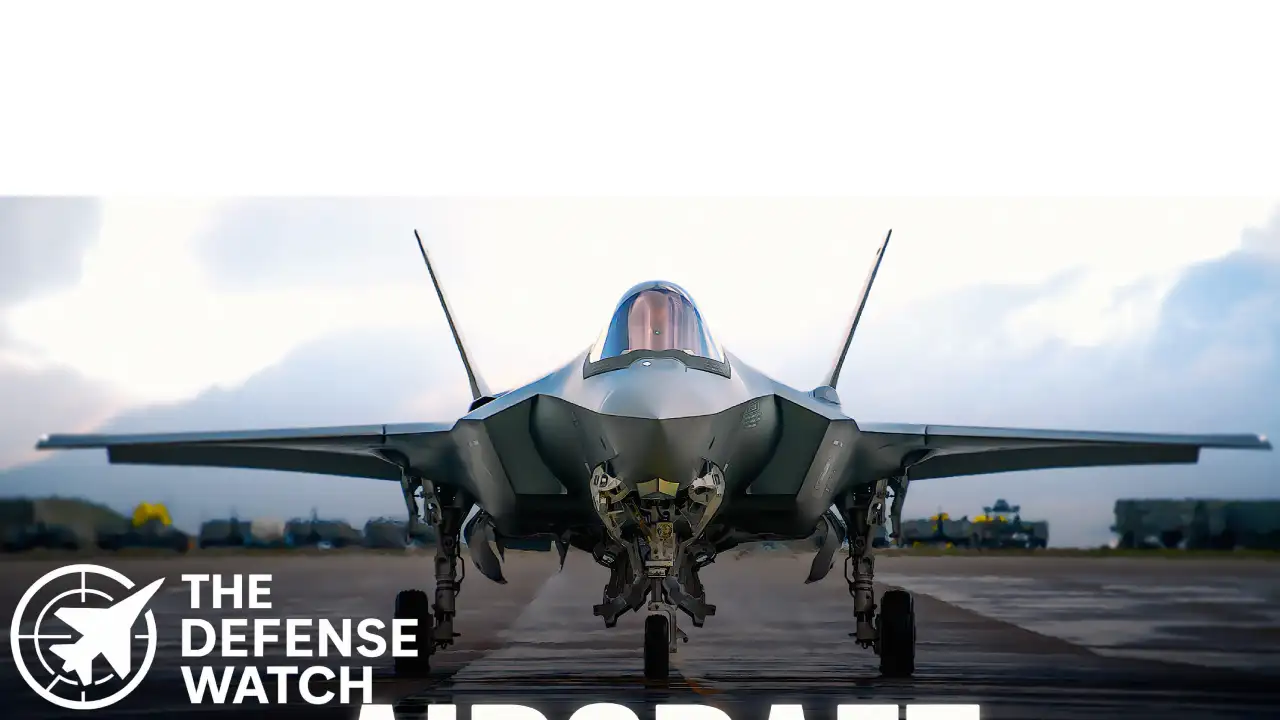
In an age where control of the skies remains a cornerstone of national defense, advanced fighter jets continue to define the balance of power. As of 2025, the roster of front-line combat aircraft includes stealth platforms, sensor-rich multirole fighters, and upgraded 4th/4.5-generation workhorses. Here, we survey the top 10 fighter jets in the world today, highlighting their strengths, trade-offs, and strategic significance. We also examine how U.S. airpower stacks up against global competitors.
Top 10 Fighter Jets in the World (2025)
Below is a synthesized, consensus-based list (drawing on recent rankings) of the premier fighter aircraft in service today. Rankings depend on a blend of stealth, avionics/sensor fusion, weapons capacity, survivability, upgrade potential, and operational deployment.
| Rank | Fighter Jet | Top Speed (Mach) | Ferry Range (km) | Payload Capacity (kg) | RCS (m², frontal est.) | Key Strengths & Notes |
|---|---|---|---|---|---|---|
| 1 | Lockheed Martin F-35 Lightning II | 1.6 | 2,200 | 8,160 | 0.001 | As the world’s most proliferated 5th-generation fighter, the F-35 combines stealth, sensor fusion, networked operations, and multirole flexibility. |
| 2 | Lockheed Martin F-22 Raptor | 2.25 | 2,960 | 8,390 | 0.0001 | While fewer in number, the F-22 remains a gold standard in air superiority, especially in air-to-air combat, thanks to its stealth, supercruise, and agility. |
| 3 | Chengdu J-20 Mighty Dragon | 2.0 | 3,400 | 10,000 | 0.05 | China’s flagship 5th-gen stealth platform, designed for long-range, contested-airspace penetration, represents Beijing’s push to contest U.S. dominance. |
| 4 | Sukhoi Su-57 “Felon” | 2.0 | 3,500 | 10,000 | 0.1–1.0 | Russia’s stealth / multirole design with emphasis on agility, sensor suite, and electronic warfare. Still incremental in deployment scale. |
| 5 | KAI KF-21 Boramae | 1.8 | 2,900 | 7,700 | 0.5 | A next-gen South Korean/Indonesian project with stealth features and modular growth potential, representing a shift in Asian aerospace ability. |
| 6 | F-15EX Eagle II | 2.5 | 2,400 | 13,380 | 25 | The modern evolution of the F-15 line, packed with advanced radar, heavy payload capacity, and multirole adaptability. |
| 7 | Eurofighter Typhoon | 2.0 | 3,790 | 7,500 | 0.5 | A high-performing 4.5-generation jet with good agility, multirole flexibility, and strong European alliance backing. |
| 8 | Dassault Rafale | 1.8 | 3,700 | 9,500 | 1 | France’s versatile combat aircraft with excellent track record in combat, strong avionics, and export success. |
| 9 | Boeing F/A-18E/F Super Hornet / EA-18G Growler | 1.6 | 3,300 | 8,050 | 1 | A proven and upgradeable platform, especially when augmented with electronic warfare capabilities (EA-18G). |
| 10 | Sukhoi Su-35S | 2.25 | 3,600 | 8,000 | 3 | Among the best non-stealth “4++” fighters, prized for agility, thrust-vectoring, and weapon load. |
Notes on ordering:
- The exact ordering among the top few (F-35, F-22, J-20, Su-57) is subject to debate, depending on weighting of stealth versus raw maneuverability or sensor systems.
- Some emergent designs, such as Chinese FC-31 derivatives or upgrades to existing jets, may shift rankings in coming years.
How the U.S. Ranks — Strengths, Gaps & Trends
U.S. Airpower: Deep but Imperfect
The U.S. continues to lead in sheer depth and integration of fighter capability. The F-35 remains the backbone of next-generation U.S. airpower, while the F-22 remains unmatched in certain pure air dominance roles. Upgraded legacy platforms like the F-15EX and advanced F-16 blocks extend U.S. competitiveness in cost-effective roles.
However, U.S. jets must increasingly face contested anti-access/area-denial (A2/AD) environments — meaning survivability, data fusion, electronic warfare, and unmanned teaming are now at least as critical as raw performance.
Challenges & Strategic Pressure
- Scale vs saturation: U.S. aircraft must contend with massed adversary systems (e.g. integrated air defenses, drones, missile salvos).
- Next-generation development: The Pentagon’s Next Generation Air Dominance (NGAD) program aims to field a sixth-generation fighter (or a family of systems) by the 2030s to replace or complement F-22/F-35 roles. (Note: as of 2025, the F-47 designation has been used in some reporting for an NGAD successor).
- Export & interoperability burden: U.S. jets must serve both domestic defense and export customers; balancing security, performance, and affordability is nontrivial.
In sum, the U.S. remains at or near the top, but cannot be complacent — rising challengers like China’s J-20 and Russia’s Su-57 are narrowing the margin.
Context & Outlook: What to Watch in Coming Years
- Stealth vs counter-stealth: As passive and active sensors evolve, fighters must adapt with low-observability, electronic attack, and signature management.
- Networked teaming & drones: Future air combat may see crewed fighters directing swarms of unmanned platforms, shifting the paradigm of “fighter.”
- Emerging entrants: Programs like China’s J-35, upgraded FC-31 derivatives, Turkey’s KAAN, or Indian indigenous fighters could expand the competitive field.
- Upgradability & lifecycle cost: A less capable but upgradeable aircraft might outperform a “flashier” model if it can evolve cost-effectively over 30 years.
FAQs
Because its strength is in stealth, sensor fusion, network integration, and multirole flexibility — not raw speed. These qualities give it an edge in first-look, first-shot engagements in contested airspace.
Yes, in terms of depth, operational experience, global basing, and integrated systems. But rivals are rapidly advancing in stealth, EW, and integration.
Absolutely. Platforms like the F-15EX, Su-35S, Rafale, or upgraded Typhoons remain viable in less-denied environments, or as “attritable” assets complementing stealth assets.
Current projections suggest in the 2030s via the NGAD program, possibly as a manned-unmanned system rather than a single monolithic jet.
Source : Simple Flying | af.mil
Get real time update about this post category directly on your device, subscribe now.

14 comments
[…] F-15A/B (1970s) – Original single- and two-seat versions for air superiority. […]
[…] for daylight air superiority, later adapted for multirole […]
[…] to guarantee air superiority, the F-15 has earned a legendary reputation. It first flew in 1972 and continues to serve decades […]
[…] stability, and security cooperation. The deal is expected to enhance PAF’s capability to maintain air superiority and integrate seamlessly with its fleet of F-16 Fighting Falcons, which remain the backbone of its […]
[…] is focusing its resources on modernization: carrier aviation, stealth fighters, hypersonic missiles, unmanned systems, and space/cyber capabilities. For instance, in its […]
[…] to confront what the administration describes as narco-terrorism. The U.S. has repositioned stealth fighters (F‑35) in Puerto Rico, conducted nighttime maritime strikes and asserted that criminal groups in […]
[…] shaping (internal bays) and anti-radiation missiles challenges the assumption that advanced stealth fighters are always purely air-to-air platforms. If exported, such a package could complicate regional […]
[…] If successful, this shift could mark the beginning of a new era in American defense production—one defined not by paperwork and delays, but by speed, ingenuity, and sustained technological superiority. […]
[…] excels as a versatile, combat-proven multirole fighter, while Typhoon shines as a high-performance air superiority jet with NATO-wide […]
[…] maintaining Israel’s “Qualitative Military Edge” (QME). U.S. law requires that Israel retain superior military capability relative to its regional neighbors, and the F-35 is widely considered one of its most […]
[…] Saudi Arabia into a U.S.-led security architecture in the Middle East. However, keeping the jets technologically inferior is key to avoiding a major shift in regional airpower […]
[…] logistics, and data linking infrastructure — could provide a backdoor for Chinese access to U.S. stealth […]
[…] Shifting Focus… Autonomous Weapon Systems Spark U.S. Ethics Debate Amid Rapid Military AI… Top 10 Fighter Jets in the World in 2025 — Where… Key Features of Boeing’s Sixth-Gen F-47 Fighter Jet That Define Next-Gen… Why the U.S. Air […]
[…] Define Next-Gen… Autonomous Weapon Systems Spark U.S. Ethics Debate Amid Rapid Military AI… Top 10 Fighter Jets in the World in 2025 — Where… Why the U.S. Air Force Still Uses the A-10 Warthog in… SUBSCRIBE […]