

Table of Contents
Boeing F-47 Sixth-Generation Fighter: Everything We Know About America’s Next Air Dominance Platform
The United States Air Force is accelerating development of its most ambitious combat aircraft program in decades. The Boeing F-47, America’s first sixth-generation fighter jet, represents a fundamental shift in air warfare philosophy , combining extreme range, advanced stealth, and the ability to command autonomous drone wingmen in contested airspace. As China rapidly expands its own next-generation fighter programs, the F-47 has become central to maintaining American air superiority through the 2030s and beyond.
President Donald Trump announced on March 21, 2025, that Boeing had secured the engineering and manufacturing development contract worth over $20 billion, ending months of uncertainty that had placed the entire Next Generation Air Dominance (NGAD) program in jeopardy. The selection marked a significant victory for Boeing’s defense division and signals a major shift in American tactical aviation development.

Historic Designation Honors WWII Legacy
The Air Force chose the designation “F-47” to honor the legacy of the P-47 Thunderbolt, whose contributions to air superiority during World War II remain historic. The number also pays tribute to 1947, the founding year of the Air Force as an independent service, while recognizing the 47th President’s support for developing the world’s first operational sixth-generation fighter.
This marks Boeing’s first clean-sheet fighter design to be selected since the company’s 1997 merger with McDonnell Douglas. The F-47 contract is expected to revitalize Boeing’s fighter production line in St. Louis, Missouri, where the company has invested billions of dollars in highly classified facilities even before winning the competition.
Performance Specifications and Capabilities
While many technical details remain classified, Air Force leaders have disclosed several key performance parameters that underscore the F-47’s revolutionary capabilities.
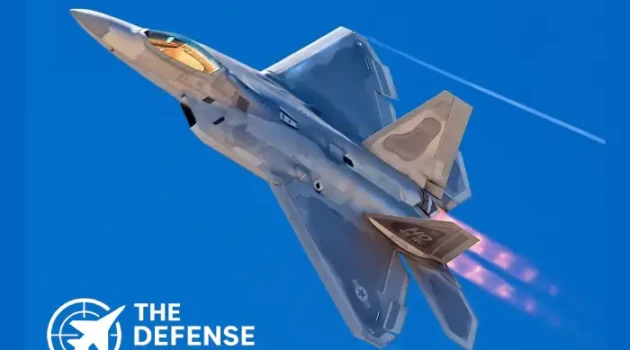
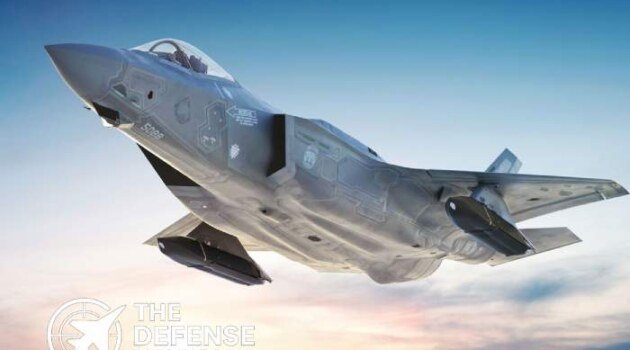
The F-47 will have a combat radius exceeding 1,000 nautical miles and achieve speeds above Mach 2 providing approximately 25 percent greater operational reach than current American fighters. Air Force Chief of Staff General David Allvin stated the aircraft will feature significantly longer range, more advanced stealth, and higher availability than fifth-generation fighters like the F-22 and F-35.
The fighter’s extended range proves critical for operations in the vast Indo-Pacific theater, where distances between potential conflict zones and allied bases stretch across thousands of miles. This capability addresses one of the primary weaknesses identified in current force structure planning for potential conflicts with peer adversaries.
Revolutionary propulsion technology will enable these performance gains. The F-47 will utilize variable-cycle engines developed under the Next Generation Adaptive Propulsion program, featuring a third stream of cooled air that can be adjusted dynamically during flight. When opened, this third stream maximizes fuel efficiency and theoretically doubles the range compared to the F-22 Raptor. When closed, it provides maximum thrust for high-speed operations and supercruise capability.
Next-Generation Stealth Technology
The F-47 incorporates next-generation all-aspect broadband low-observability, including significantly reduced infrared signature alongside a minimal radar cross-section. These stealth advances represent a generational leap beyond current fifth-generation fighters, enabling operations deep within heavily defended airspace.
Advanced ceramic radar-absorbent coatings are being developed to survive the extreme heat, rain, and abrasion encountered at high speeds. The aircraft’s stealth characteristics extend across multiple spectrums, addressing the increasingly sophisticated sensor networks deployed by potential adversaries. Spectral warfare” and “spectral dominance” have emerged as major focus areas throughout the NGAD initiative, recognizing that modern air defense systems operate across infrared, electronic, and visual detection methods.
Family of Systems Approach
The F-47 represents just one element of the broader NGAD ecosystem. The aircraft will fly alongside multiple autonomous drone wingmen known as Collaborative Combat Aircraft, which can conduct reconnaissance, strike missions, electronic warfare, and decoy operations. The Air Force plans to acquire at least 1,000 CCAs to complement the manned fighter fleet.
General Atomics and Anduril are developing the first iteration of CCA drone wingmen, designated RFQ-42A and RFQ-44A respectively, designed to operate alongside F-35s and F-47s. These relatively inexpensive unmanned platforms will provide mass and flexibility while reducing risk to pilots in contested environments.
The F-47 serves as the command node for these autonomous systems, acting as a quarterback that coordinates sensing, jamming, decoy, and strike operations across the combat space. This manned-unmanned teaming concept fundamentally changes air combat tactics, allowing a single F-47 to project power across a much wider battlespace than any previous fighter.
Accelerated Development Timeline
Air Force Chief of Staff General David Allvin confirmed in November 2025 that the F-47 will make its first flight in 2028, an aggressive timeline made possible by years of secretive development work that preceded the formal contract award.
Allvin stated that X-plane demonstrators have been flying for five years, logging hundreds of hours while testing cutting-edge concepts and proving advanced technologies. These experimental aircraft, developed by both Boeing and Lockheed Martin under research contracts with the Defense Advanced Research Projects Agency, first flew in 2019 and 2022.
Boeing has already begun manufacturing the first production F-47, demonstrating remarkable speed from contract award to construction. Boeing officials attribute this rapid progress to the maturity of their design and experience gained from prototype development. The company made unprecedented investments in classified manufacturing facilities before even securing the contract, gambling billions on winning the competition.
The Air Force aims to achieve operational capability by 2029, with the service planning to field the aircraft throughout the 2030s. Air Force leaders have indicated plans to purchase at least 185 F-47s, roughly equivalent to the current F-22 Raptor fleet size.
Development Challenges and Concerns
Despite optimistic timelines, the F-47 program faces significant technical hurdles. The Next Generation Adaptive Propulsion engine development is running approximately two years behind schedule due to supply chain constraints. Both GE Aerospace and Pratt & Whitney are competing to provide the revolutionary powerplants, with final engine selection not expected until 2030.
The program’s cost remains a sensitive issue. Former Air Force Secretary Frank Kendall paused the program in May 2024 after cost estimates reached approximately $300 million per aircraft, roughly triple the cost of an F-35. The pause prompted an extensive internal study to determine whether NGAD represented the most viable approach to achieving air superiority against advanced adversaries.

Major General Joseph Kunkel, director of Air Force Force Design, Integration, and Wargaming, stated the study tried numerous alternatives but found no more viable option than NGAD to achieve air superiority in highly contested environments. This conclusion led to resumption of the program under the new administration.
Questions persist about whether the planned force structure provides sufficient mass for potential conflicts. Some defense analysts argue that 186 fighters represents a dangerously thin fleet when accounting for maintenance rotations, training requirements, forward basing vulnerabilities, and attrition over decades of service. While Collaborative Combat Aircraft provide force multiplication, they cannot fully substitute for manned fighters in all mission scenarios.
Countering the China Challenge
The F-47’s urgency stems directly from China’s rapid advances in next-generation aviation technology. Beijing is expanding its J-20 stealth fighter fleet, pushing fourth-generation jets through deep modernization programs, and experimenting with sixth-generation designs. Some projections suggest China could be adding stealth fighters at a pace not seen since the early Cold War.
In late 2024, China publicly tested multiple prototype sixth-generation fighters, including designs designated J-36 and J-50. These aircraft feature tailless configurations and advanced stealth characteristics, demonstrating that China is aggressively pursuing next-generation capabilities. The public nature of these tests contrasts sharply with American secrecy surrounding the F-47, though whether this reflects Chinese confidence or psychological operations remains debated.
General Kenneth Wilsbach of Air Combat Command emphasized that the United States would need crewed sixth-generation aircraft to counter Chinese sixth-generation aircraft. The qualitative edge provided by American fifth-generation fighters cannot be assumed to persist indefinitely as adversary capabilities mature.
Strategic Implications and Analysis
The F-47 represents more than just another fighter aircraft—it embodies a fundamental reconceptualization of air dominance for the 21st century. By integrating extreme range, advanced stealth, revolutionary sensors, and autonomous wingmen into a single system of systems, the Air Force is betting that quality and capability can offset potential numerical disadvantages against adversaries like China.
This approach carries significant risks. The high unit cost limits procurement numbers, potentially creating gaps in coverage during major contingencies. The complexity of integrating so many advanced technologies simultaneously increases development risk and could delay fielding. And the assumption that expensive, exquisite platforms can decisively outperform larger numbers of less-capable aircraft remains unproven in modern combat.
However, the alternatives appear even less attractive. Attempting to match China’s production volume with legacy aircraft would prove financially impossible while ceding qualitative advantages. Relying solely on unmanned systems ignores their current limitations in complex decision-making and adaptability. And failing to modernize would guarantee American air power becomes obsolete within a decade.
The F-47 program also signals America’s commitment to maintaining technological leadership in military aviation, a domain where the United States has held decisive advantages since World War II. Success would preserve this advantage for another generation. Failure could mark a fundamental shift in the global balance of power.
Looking Ahead
As the F-47 moves from conceptual demonstrators to production aircraft, many questions remain unanswered. The final design remains highly classified, with even basic configuration details unknown to the public. Cost per aircraft, while projected around $300 million, could change as the program matures. And the ultimate fleet size may adjust based on budget realities and evolving threat assessments.
The 2028 first flight represents a critical milestone that will provide the first public glimpse of America’s vision for sixth-generation air combat. Success in meeting this timeline while managing costs and technical risks will determine whether the F-47 becomes a decisive capability or a cautionary tale in defense acquisition.
What remains clear is that the F-47 has become central to American military planning for future conflicts. As peer competitors advance their own next-generation programs, the pressure to field this revolutionary aircraft only intensifies. The next few years will prove decisive in determining whether American air dominance persists through mid-century or becomes another casualty of great power competition.
FAQS
When will the F-47 make its first flight?Air Force Chief of Staff General David Allvin confirmed the F-47 will conduct its first flight in 2028, with operational capability targeted for 2029.
How much will each F-47 cost?While the exact price remains classified, estimates suggest approximately $300 million per aircraft—roughly three times the cost of an F-35 Lightning II.
How many F-47 fighters will the Air Force buy?Current plans call for acquiring at least 185 F-47s, though this number could change based on budget constraints and evolving requirements.
What makes the F-47 a “sixth-generation” fighter?The F-47 features next-generation stealth, extreme range exceeding 1,000 nautical miles, speeds above Mach 2, variable-cycle engines, and the ability to command autonomous drone wingmen in combat.
Will the F-47 replace the F-22 Raptor?Yes, the F-47 is designed as the successor to the F-22 Raptor for the air superiority mission, though F-22s will undergo modernization to bridge the gap until F-47s achieve full operational capability.
How does the F-47 compare to China’s sixth-generation fighters?While both countries are developing sixth-generation capabilities, specific performance comparisons remain speculative due to classification. China has publicly tested prototype designs, while American F-47 details remain highly classified.
Get real time update about this post category directly on your device, subscribe now.




3 comments
[…] confirmation came on 9 December from Boeing Defense Australia and the Royal Australian Air Force (RAAF), signaling a major milestone in the Ghost Bat program’s transition from experimental tests […]
[…] Paris-based Harmattan AI, founded in 2024, focuses on autonomous defence and AI products including strike and surveillance drones, autonomous mission software, and systems designed to operate in contested environments. The investment is intended to accelerate AI integration into Dassault’s future combat portfolio, particularly for controlling unmanned aerial systems and embedding autonomy into next generation platforms. […]
[…] Trojan vehicles are based on the Challenger 2 main battle tank chassis. Titan is a bridge-laying platform that enables forces to cross gaps up to 60 metres, while Trojan clears obstacles and minefields, enhancing manoeuvre […]