

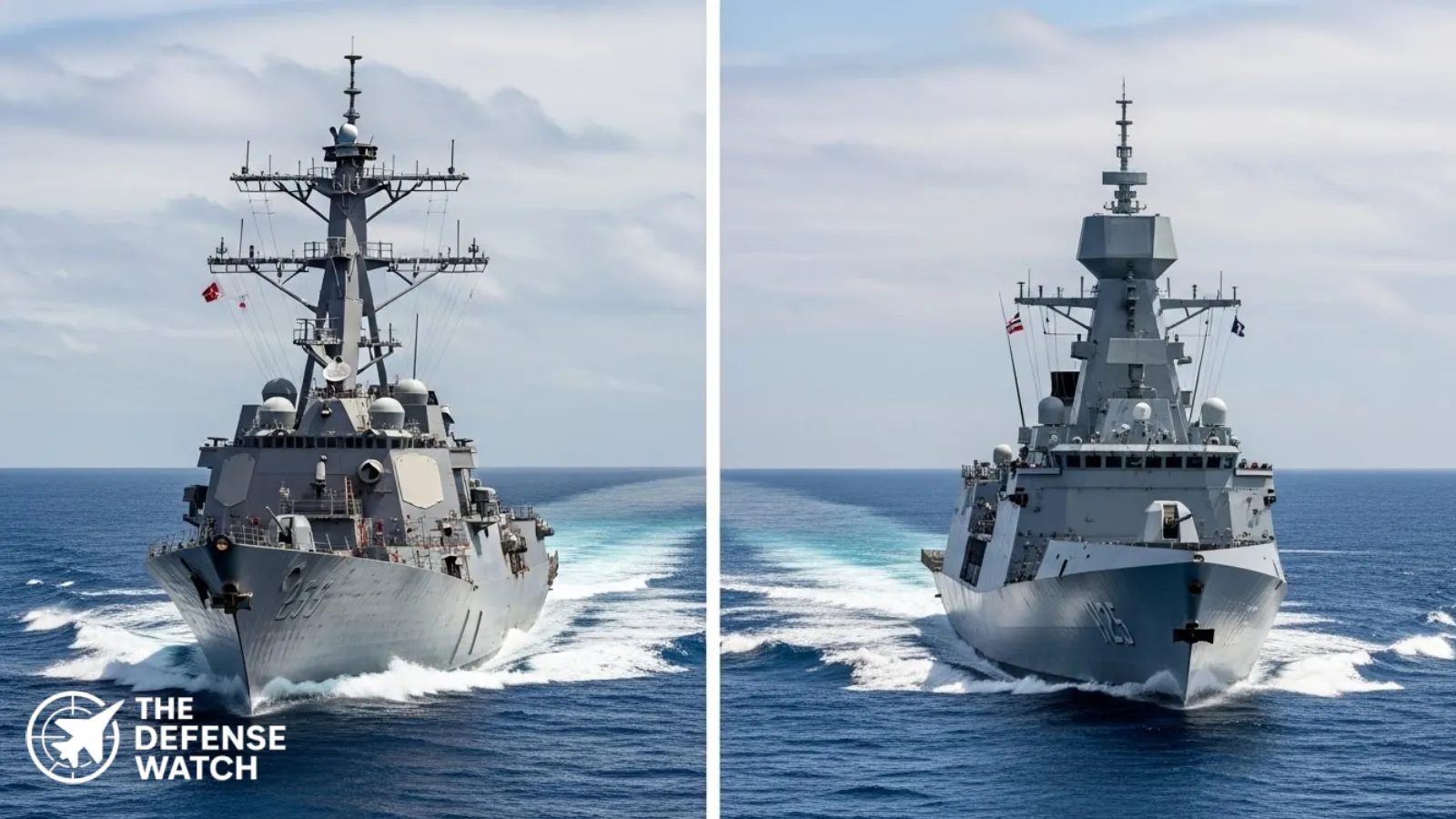
Destroyer vs Frigate Explained
The destroyer vs frigate debate comes up often when modern navies announce new ship programs or deployments. Both vessels look similar at first glance. Both carry missiles, radars, helicopters, and advanced sensors. Yet their roles, size, and combat focus differ in important ways. Understanding the difference between a destroyer and a frigate helps explain how navies balance firepower, cost, and global reach.
Today, the United States Navy, NATO allies, and Indo Pacific powers operate both ship types side by side. From the Arleigh Burke class destroyer to newer guided missile frigates, each fills a specific place in fleet operations.
What Is a Destroyer
A destroyer is a large, heavily armed surface combatant designed for high intensity warfare. Historically, destroyers were built to protect battleships from torpedo boats. Over time, they evolved into multi role warships focused on air defense, missile defense, and strike operations.
Modern destroyers act as command ships within task groups. They often escort aircraft carriers and amphibious assault ships. They also operate independently in contested waters.
Key Features of Modern Destroyers
- Displacement usually between 8,000 and 10,000 tons
- Large vertical launch systems for missiles
- Advanced phased array radars
- Long range air and missile defense capability
- Command and control for fleet operations

The U.S. Navy’s Arleigh Burke class is a leading example. These ships carry the Aegis combat system and can launch Tomahawk cruise missiles, Standard air defense missiles, and anti submarine weapons. Official U.S. Navy background on destroyer roles can be found on the Navy’s surface forces overview page (external link to U.S. Navy official site).
What Is a Frigate
A frigate is a smaller surface combatant optimized for escort, patrol, and maritime security missions. In the destroyer vs frigate comparison, frigates focus more on cost effective presence and protection rather than maximum firepower.
Frigates are often tasked with convoy escort, anti submarine warfare, and regional patrols. Many operate close to shore or across long sea lines of communication.
Key Features of Modern Frigates
- Displacement typically between 3,000 and 7,000 tons
- Fewer missile cells than destroyers
- Strong anti submarine focus
- Lower crew size and operating cost
- Ideal for sustained forward presence
New frigate programs reflect their growing importance. The U.S. Navy’s Constellation class frigate aims to complement destroyers by taking on escort and patrol duties, freeing larger ships for high end missions. Program details are publicly outlined by the U.S. Naval Sea Systems Command (external link to NAVSEA official site).
Size and Cost Differences
One of the clearest differences in the destroyer vs frigate comparison is size. Destroyers are larger, heavier, and more expensive to build and maintain. A single modern destroyer can cost well over two billion dollars. Frigates often cost half that or less, depending on configuration.
Because of this, navies can field more frigates than destroyers. This matters in peacetime operations, where constant presence is needed across multiple regions.
Weapons and Combat Systems
Destroyer Firepower
Destroyers carry extensive missile arsenals. Their vertical launch systems support air defense, ballistic missile defense, land attack, and anti ship missions. They also carry advanced electronic warfare systems and long range sensors.
In fleet combat, destroyers often provide the air defense umbrella for other ships. They can intercept aircraft, cruise missiles, and in some cases ballistic missiles.
Frigate Armament
Frigates carry fewer missiles and lighter sensors. Their weapons are tailored toward submarines, surface threats, and self defense. Many frigates rely on helicopters and towed sonar arrays for submarine hunting.
While they lack the broad missile defense role of destroyers, modern frigates remain lethal in their intended missions.

Roles in Modern Naval Strategy
The destroyer vs frigate distinction becomes clear when looking at strategy.
Destroyers are high value assets used in contested environments. They deploy with carrier strike groups, ballistic missile defense patrols, and power projection missions.
Frigates are workhorses. They escort logistics ships, patrol chokepoints, and maintain maritime security. In lower intensity conflicts, frigates often operate as the first line of response.
NATO navies use this mix to balance capability and affordability. European fleets, in particular, rely heavily on frigates for daily operations, while keeping fewer destroyers for air defense leadership.
Why Navies Still Need Both
Some analysts once argued that advanced destroyers could replace frigates. That view has shifted. Rising costs and global commitments have reinforced the need for both ship types.
Frigates offer numbers and presence. Destroyers offer depth and power. Together, they create flexible fleets that can scale from routine patrols to major combat.
Recent naval strategies from the United States, United Kingdom, and Japan all emphasize mixed surface fleets. This approach reflects lessons from recent conflicts and growing maritime competition.
Analysis, The Future of Destroyers and Frigates
Looking ahead, the destroyer vs frigate balance is becoming more important, not less. Hypersonic missiles, drones, and submarine threats are forcing navies to spread risk across more hulls. Frigates provide affordable platforms for sensors and unmanned systems. Destroyers concentrate high end defenses and command roles.
The return of great power competition at sea means navies cannot rely on a single ship type. Instead, layered fleets are becoming the norm, with destroyers and frigates operating as complementary tools rather than rivals.
FAQs
Yes. Destroyers carry more weapons, sensors, and missile defense systems than frigates.
Frigates cost less to operate and are better suited for patrol, escort, and anti submarine roles.
Yes. The U.S. Navy is introducing the Constellation class guided missile frigate.
In theory yes, but destroyers hold a major advantage in sensors and firepower.
Frigates are more common worldwide due to lower cost and broader mission use.

12 comments
[…] frigate also embarks a Spanish Navy SH-60B helicopter and embarked security teams to support a range of […]
[…] from a vertical cell, a key capability for modern naval air defense. The interception validated the combat readiness of the frigate and the effectiveness of its integrated sensors, command system, and missile engagement […]
[…] announced that the completion of builder’s sea trials for USS Zumwalt (DDG 1000) follows a long modernization period as the Navy’s first CPS equipped surface […]
[…] infrastructure needed to support Canada’s next-generation surface combatants. The River-class destroyer program will eventually replace the current Halifax-class frigates and the retired Iroquois-class […]
[…] assessment highlights a critical vulnerability in modern naval warfare: the ability of low-cost unmanned aerial vehicles to potentially overwhelm sophisticated ship-based […]
[…] push follows national plans by the Spanish government and its Council of Ministers to update the frigate fleet for continued service through the mid-21st […]
[…] Swedish frigate effort is one of the nation’s largest surface fleet expansions in decades and has drawn interest from major European shipbuilders. France’s […]
[…] These systems improve detection and prosecution of underwater threats and support a wide set of maritime security and combat […]
[…] Under Pillar II, the emphasis on advanced capabilities such as artificial intelligence, autonomous systems, and cyber technologies reflects the evolving character of modern naval warfare. […]
[…] frigates of historical and modern classes play notable roles in multinational engagements. Vessels such as Navarra and Santa […]
[…] logistics roles. Some deactivated equipment will be returned to inventory, supporting the broader destroyer modernization program and workforce continuity at Osborne Naval […]
[…] 77 meters in length, the ship is optimized for operations in shallow waters where conventional frigates and destroyers may face maneuvering constraints. Its primary role is to detect, track, and engage hostile […]