• Home
  • About
  • Defense Systems
  • Manufacturer
  • Comparisons
  • Compare 
  • Tools
TheDefenseWatch.com
  • Aerospace & Aviation
  • Military & Ordnance
  • Naval & Maritime
  • Cyber & Space Defense
  • Policy & Strategy
  • Global News
  • Tools Library
    • Smart Calculator
    • Drone Flight Time Calculator
    • Drone Range Calculator
    • Counter-Drone Jammer Effective Range Calculator
    • Counter-Battery Radar Detection Calculator
    • Artillery Fire Correction Calculator
    • Thermal Camera Detection Range Calculator
    • Missile Range & Time-of-Flight Calculator
    • Radar Detection Range Calculator
    • FPV Strike Drone Payload vs Range Calculator
    • Loitering Munition Endurance Calculator
    • Sniper Ballistic Drop & Windage Calculator
    • Bullet Drop Calculator
    • U.S. Army Combat Fitness Test (ACFT) Calculator
    • Military Pension Calculator
    • Military Retirement Calculator
    • Military Pension Calculator
    • Large Number Calculator
Font ResizerAa

TheDefenseWatch.com

The Defense Watch | U.S. & Global Defense News, Analysis & Military Updates

Search
  • Home
  • About
  • Defense Systems
  • Manufacturer
  • Comparisons
  • Compare 
  • Tools

Stay Updated

Get the latest update

Subscribe

Explore

  • Drone
  • Fighter Jets & Military Aircraft
  • Hypersonic Weapons
  • Aircraft Carriers
  • Strategic History & Missions
  • Tools Library
Home » When a Manhole Killed a Sub: Lessons from the USS Guitarro Sinking
Naval & MaritimeSubmarines

When a Manhole Killed a Sub: Lessons from the USS Guitarro Sinking

TeamDefenseWatch
Last updated: October 8, 2025 5:48 am
TeamDefenseWatch
Share
6 Min Read
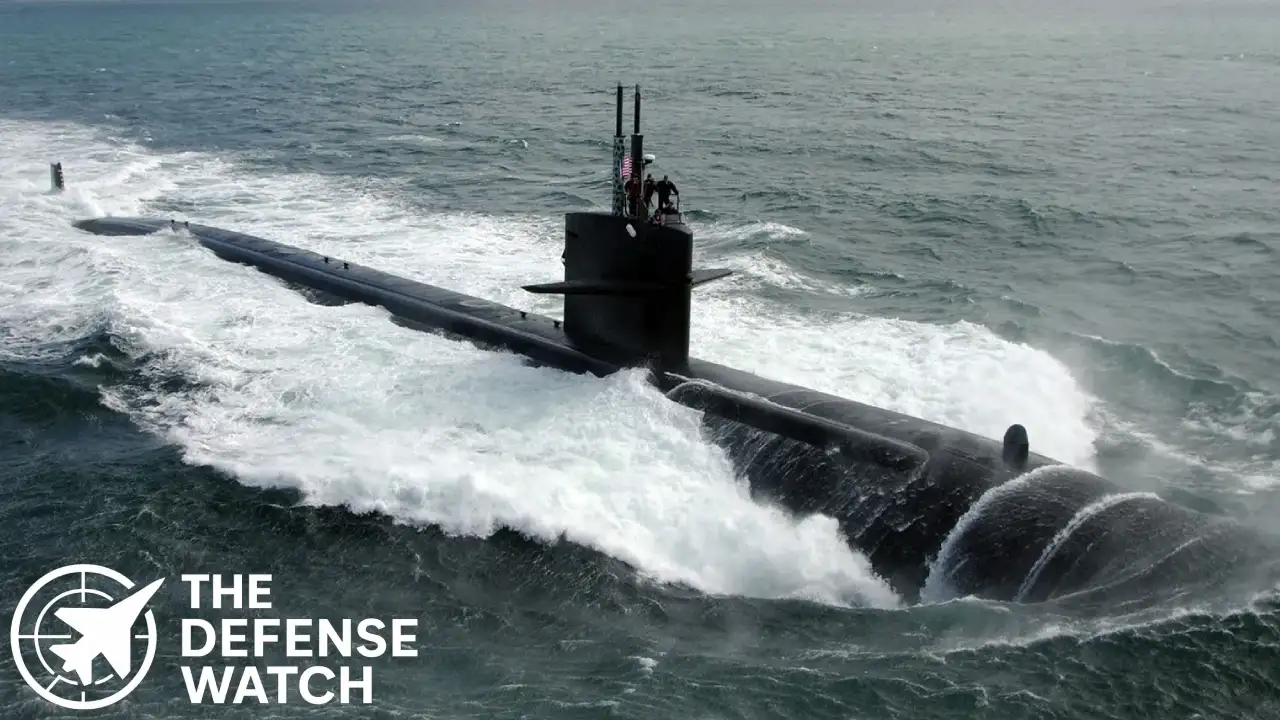
USS Guitarro sinking
Image courtesy of Creative Commons
SHARE

The Unlikely Sinker: USS Guitarro and the “Uncovered Manhole” Disaster

On May 15, 1969, the U.S. Navy’s brand-new nuclear attack submarine USS Guitarro (SSN-665) sank while tied up at Mare Island Naval Shipyard. The cause was not enemy action or deep-sea disaster—but a seemingly mundane engineering oversight: an open manhole in the bow sonar dome left unsealed during maintenance.

Contents
  • The Unlikely Sinker: USS Guitarro and the “Uncovered Manhole” Disaster
  • How the Submarine Sank: A Chain of Preventable Failures
    • Removing Safety Barriers Without Replacement
    • Trim Tests, Miscommunication, and Flooding Cascade
  • Aftermath: Recovery, Repair, and Institutional Reckoning
    • Refloating, Repair, and Delay
    • Findings and Recommendations
  • Broader Context: The Guitarro Incident’s Relevance Today
  • FAQs

Though the sinking might read like a naval footnote, it contains enduring lessons in configuration control, human factors in shipbuilding, and the catastrophic consequences of small omissions in submarine environments. Below, we reconstruct the incident, its aftermath, and its relevance to modern naval safety programs.

How the Submarine Sank: A Chain of Preventable Failures

Removing Safety Barriers Without Replacement

During the Guitarro’s fitting-out, the bow structure housed a sonar dome with multiple transducers. A manhole provided internal access and was normally sealed by a bolted cover and protected by a cofferdam (a three-foot-high barrier) to prevent incidental flooding.

In March 1969, maintenance work required removal of the cofferdam and the manhole cover so technicians could service the sonar transducers. Critically, the cover and cofferdam were never reinstalled. The manhole was physically sitting on the dock, and the cofferdam had been stored away.

- Advertisement -

Trim Tests, Miscommunication, and Flooding Cascade

On the day of the accident, two teams were concurrently altering the sub’s trim—one filling forward ballast tanks, the other draining aft tanks—without coordination or awareness of each other’s operations.

The changing buoyancy shifted the submarine’s draft, drawing water past the now-uncovered manhole and into the sonar dome. As flooding progressed, the bow settled, opening additional forward openings where seawater poured into major compartments. The flooding overwhelmed pumps and sealed openings, and the sub sank to the bottom.

By the time corrective action could begin, the event had cascaded beyond recovery. Fortunately, no personnel were lost in the accident.
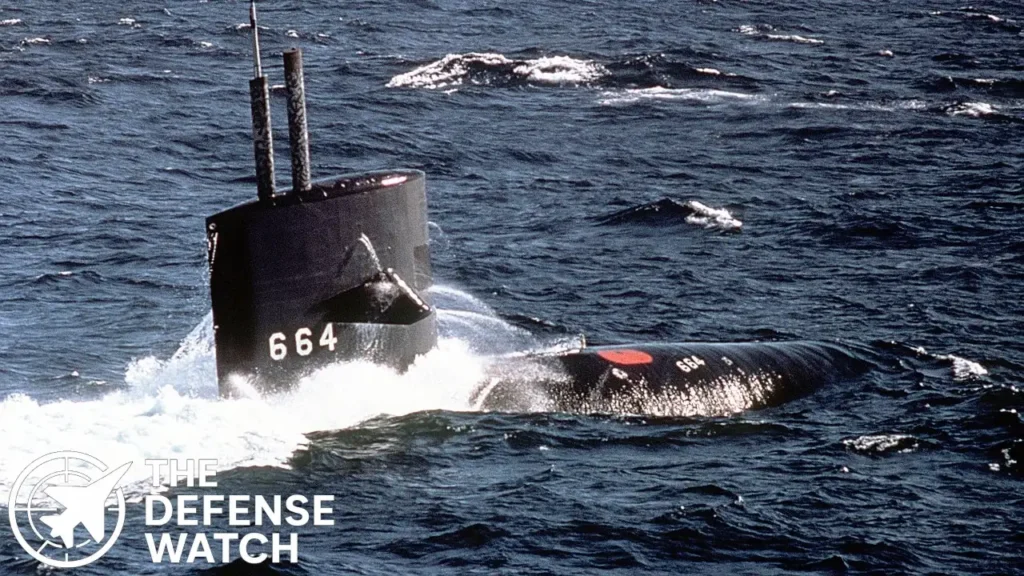
USS Guitarro sinking
Image courtesy of Creative Commons

Aftermath: Recovery, Repair, and Institutional Reckoning

Refloating, Repair, and Delay

Three days later, the Guitarro was refloated. The damage assessment ranged from $15.2 million to $21.85 million. Initially set for commissioning in January 1970, the submarine’s entry into service was delayed by 32 months, and she was finally commissioned on September 9, 1972.

Findings and Recommendations

Investigators attributed the accident not to a single error, but to systemic lapses: lack of centralized control, insufficient communication between contractors, ambiguous responsibility assignments, and weak supervision of simultaneous testing.

Among the formal recommendations:

  • All cables and lines traversing watertight hatches or doors should employ quick-disconnect fittings to facilitate emergency closure.
  • Strengthen configuration control and clearly define responsibility for ship construction tasks.
  • Improve communication protocols between civilian and Navy personnel during testing or system modifications.

Although Guitarro had a long service life—conducting WestPac and Indian Ocean patrols—she was decommissioned in May 1992 and recycled by October 1994. The sail of her sister ship, USS Sturgeon, is preserved at the Naval Undersea Museum in Keyport, Washington.

Broader Context: The Guitarro Incident’s Relevance Today

While the Guitarro sinking occurred more than half a century ago, its lessons remain salient:

- Advertisement -
  • Small errors can cascade in closed, complex systems: A missing cover, inadequate oversight, or communication breakdown in a submarine can lead to a catastrophe far out of scale with the initial error.
  • Modern shipbuilding and submarine construction still contend with overlapping civilian and military roles. Ensuring strict configuration control and lines of responsibility is as important today as it was in 1969.
  • The incident provides historical context to more recent mishaps in naval construction and maintenance—like the recent Chinese submarine sinking at port, which observers compared to Guitarro’s fate.
  • Within U.S. submarine safety practice, the standards and culture of damage control, redundancy, and procedural rigor stem in part from accidents like Guitarro, and earlier losses such as USS Thresher (SSN-593) in 1963. The Thresher tragedy led to the SUBSAFE program, a sweeping overhaul of submarine safety rules.

In sum, the Guitarro accident remains a cautionary tale: even in a peacetime shipyard environment, human error, communication breakdowns, and inadequate oversight can lead to the loss of strategic assets.

Source

FAQs

Were any crew lost when Guitarro sank?

No. The sinking happened while docked and under construction; no personnel casualties were reported.

Did the submarine’s nuclear reactor suffer damage?

No reactor damage was reported. The flooding remained confined to forward compartments and did not breach the reactor plant.

How much was the repair cost and delay?

Repairs were estimated between $15.2 million and $21.85 million. The commissioning was delayed by 32 months.

Are submarines still vulnerable to similar mistakes today?

Yes. While design, automation, and oversight have advanced, any complex system—especially submarines—remains vulnerable to human error, miscommunication, and oversight lapses in maintenance or construction. Historical incidents like Guitarro underline the importance of procedural discipline.

Is there a public memorial or display from Guitarro?

No full submarine is preserved, but the sail of her sister ship USS Sturgeon (SSN-637) is on display at the Naval Undersea Museum in Keyport, Washington.


TAGGED:naval shipyard mishapSturgeon-classsubmarine accidentsubmarine safety lessonsUSS Guitarro
Share This Article
Facebook Copy Link Print
ByTeamDefenseWatch
TeamDefenseWatch is the official editorial byline of TheDefenseWatch.com. Working under one umbrella, TheDefenseWatch.com, the team delivers verified, factual reporting on global defense, military technology, aerospace systems, and security developments. Articles are sourced from official statements, defense industry releases, and trusted media, with editorial review to ensure accuracy and clarity.Contact: info@TheDefenseWtach.com
2 Comments
  • Pingback: How Navy SEALs Train Beneath the Pacific: Submarine Insertion & Underwater Ops
  • Pingback: Trump-South Korea Deal Hits Snag Over Nuclear-Powered Submarine Clause

Leave a Reply Cancel reply

Your email address will not be published. Required fields are marked *

New Arrivals

  • Boeing VC-25B Presidential Aircraft Boeing VC-25B Presidential Aircraft
  • SM-3 Block IB Missile SM-3 Block IB Missile
  • USS Abraham Lincoln Aircraft Carrier USS Abraham Lincoln Aircraft Carrier
  • M142 HIMARS M142 HIMARS
  • Terrex S5 Infantry Vehicle Terrex S5 Infantry Vehicle
  • A-29 Super Tucano Aircraft A-29 Super Tucano Aircraft
  • DSAR 15 Rifle DSAR 15 Rifle

Recent Compares

  • Tejas vs Gripen: Key Differences and Capabilities Tejas vs Gripen: Key Differences and Capabilities View Comparison →
  • Tejas vs MiG-21 Bison: How India Replaced Its Iconic Supersonic Fighter Tejas vs MiG-21 Bison: How India Replaced Its Iconic Supersonic Fighter View Comparison →
  • F-35 vs F-16: Stealth, Sensors and Combat Roles F-35 vs F-16: Stealth, Sensors and Combat Roles View Comparison →
  • Tejas Fighter Jet vs F-16 Fighting Falcon: Capability Compared Tejas Fighter Jet vs F-16 Fighting Falcon: Capability Compared View Comparison →
  • Rafale Fighter Jet vs F-16 Fighting Falcon : Which Fighter Has the Edge? Rafale Fighter Jet vs F-16 Fighting Falcon : Which Fighter Has the Edge? View Comparison →
  • Su-57 Fighter Jet vs J-20 Fighter Jet: Stealth and Air Combat Compared Su-57 Fighter Jet vs J-20 Fighter Jet: Stealth and Air Combat Compared View Comparison →
  • Mirage 2000 vs Tejas Mk1A: Legacy Combat Power vs Indigenous Modernization Mirage 2000 vs Tejas Mk1A: Legacy Combat Power vs Indigenous Modernization View Comparison →
  • Rafale Fighter Jet vs F-22 Raptor: Which Air Dominance Fighter Has the Edge? Rafale Fighter Jet vs F-22 Raptor: Which Air Dominance Fighter Has the Edge? View Comparison →
  • Tejas Fighter Jet vs. Rafale Fighter Jet: India’s Indigenous Fighter Meets France’s Proven Multirole Combat Aircraft Tejas Fighter Jet vs. Rafale Fighter Jet: India’s Indigenous Fighter Meets France’s Proven Multirole Combat Aircraft View Comparison →
  • F-22 Raptor vs. F-35 Joint Strike Fighter: Which Fifth Generation Fighter Has the Edge? F-22 Raptor vs. F-35 Joint Strike Fighter: Which Fifth Generation Fighter Has the Edge? View Comparison →

Recent Posts

  • USS Oregon Visits Norway as U.S. Navy Maintains High North Presence
  • Lockheed Martin Unveils PAC-3 Edge Interceptor for U.S. Army
  • Northrop Grumman Completes B-2 Spirit of Kitty Hawk Overhaul
  • Army Report Finds Systemic Failures Behind Fatal 2025 Midair Collision
  • Lockheed Martin to Supply Black Hawk Training Systems to Philippine Air Force

You Might Also Like

Spain marine amphibious vehicle
Naval & MaritimeNaval Strategy & Maritime Security

Spain Moves To Acquire New Marine Amphibious Vehicle As Naval Modernization Accelerates

April 17, 2026
U.S. Marines conducting close-quarters urban raid training in a dense training environment during readiness exercise
Naval & Maritime

U.S. Marines Expand Urban Raid Training To Prepare For High-Intensity Combat In Dense Cities

June 1, 2026
Singapore Invincible-class submarine
Naval & MaritimeNaval Strategy & Maritime Security

Singapore Navy Races To Deploy Third Invincible-Class Submarine Amid Indo-Pacific Undersea Competition

April 13, 2026
Nuclear Submarines
Naval & MaritimeSubmarines

South Korea Moves To Acquire Nuclear-Powered Submarines As Regional Naval Competition Intensifies

September 7, 2026

Logo

Copyright © 2026 TheDefenseWatch.com

Helpful Links

  • Home
  • About Us
  • Privacy Policy
  • Terms of Use / Disclaimer
  • U.S. Privacy Notice – CCPA Compliance

Defense Systems

  • Defense Systems
  • Comparisons 
  • Manufacturer
  • Tactical Calculators

Popuplar

Which 5 Air Forces Possess the Costliest Fighter Jet Fleets in the World
Evolving Strategic Value: Carrier Strike Groups in the Indo-Pacific’s Future Security Architecture
Autonomous Weapon Systems Spark U.S. Ethics Debate Amid Rapid Military AI Integration

We report on developments involving military forces, governments, defense companies, research organizations, and security institutions around the world. 

Welcome Back!

Sign in to your account

Username or Email Address
Password

Lost your password?