Takeaways
Key facts from the contract announcement
1. $52.1 Million F-35 Modification
Lockheed Martin Aeronautics received a $52,116,731 modification to incorporate engineering changes into F-35 Lot 18-19 air vehicle production.
2. U.S. and International F-35 Customers
The work covers aircraft for the Air Force, Marine Corps, Navy, F-35 Cooperative Partners and Foreign Military Sales customers.
Lockheed Martin Wins $52.1M F-35 Lot 18-19 Modification
Lockheed Martin Aeronautics has received a $52.1 million contract modification to incorporate engineering changes into production of F-35 aircraft in Lots 18 and 19, extending work on the program through July 2028.
According to the U.S. Department of Defense contract announcement, Naval Air Systems Command (NAVAIR) awarded Lockheed Martin a $52,116,731 modification to previously awarded contract N0001923C0003. The action covers improvements and production incorporation of new capabilities across F-35 variants serving U.S. military, international partner and Foreign Military Sales customers.
The announcement does not identify the individual engineering changes or disclose the specific capabilities being incorporated under this modification.
Scope of the F-35 Lot 18-19 Lockheed Martin Contract
The modification, designated P00028, adds engineering work associated with F-35 Lot 18-19 air vehicle production.
The scope covers production incorporation of engineering changes for aircraft operated by the:
- U.S. Air Force
- U.S. Marine Corps
- U.S. Navy
- F-35 Cooperative Partners
- Foreign Military Sales customers
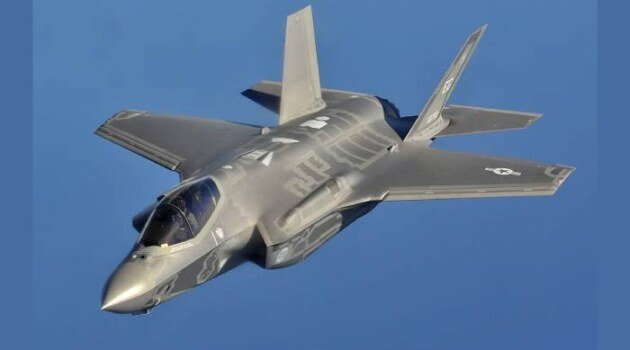
The F-35 program includes three principal variants. The F-35A is the conventional takeoff and landing variant operated primarily by the Air Force and international customers. The F-35B provides short-takeoff and vertical-landing capability for the Marine Corps and other users. The F-35C is the carrier variant operated by the Navy.
NAVAIR identifies Lockheed Martin as the F-35 prime contractor, with production involving a broader international and U.S. industrial network.
Because the contract notice does not identify individual modifications to avionics, sensors, software, structures or other aircraft systems, those elements should not be attributed to this award without additional documentation.
F-35 Lightning II Technical and Operational Context
The engineering work is being incorporated directly into Lot 18-19 air vehicle production, rather than being described as a separate fleet retrofit effort.
That distinction is important. Production engineering changes can allow updated designs, components or capabilities to enter aircraft manufacturing as part of later production lots. The announcement, however, does not specify whether individual changes relate to hardware, software, avionics, mission systems, structures or other aircraft subsystems.
The F-35 is a fifth-generation fighter family designed around low-observable characteristics, integrated sensors, mission computing and networked operations. The aircraft’s development and modernization process continues beyond the original development phase, with capability improvements incorporated through successive production and upgrade activities. NAVAIR describes the F-35 Joint Program Office as responsible for life-cycle management of the F-35A, F-35B and F-35C.
The modification therefore represents an engineering and production activity within the wider continuing F-35 modernization effort, rather than a new aircraft procurement announcement.
Operational Impact on U.S. Air Force, Navy and Marine Corps F-35 Fleets
The contract supports production of F-35 aircraft for multiple U.S. services as well as international customers.
For the U.S. Air Force, the F-35A provides a fifth-generation multirole fighter intended to operate alongside other aircraft and joint forces. The Marine Corps F-35B adds short-takeoff and vertical-landing capability, supporting operations from amphibious ships and austere locations. The Navy F-35C is designed for carrier operations and has structural and aerodynamic features associated with catapult launches and arrested landings.
NAVAIR states that the F-35 program serves the U.S. Air Force, Navy and Marine Corps, as well as international partners and FMS customers.
The contract notice does not state whether the engineering changes are associated with one specific service requirement or are common across multiple F-35 variants.
Contract Breakdown: Lockheed Martin F-35 Award Details
Contract Value
The modification is valued at $52,116,731.
The funds obligated at award total the same amount:
- FY2024 Air Force aircraft procurement: $9,067,600
- FY2024 Navy aircraft procurement: $11,462,115
- FY2025 Air Force aircraft procurement: $3,920,360
- FY2025 Navy aircraft procurement: $4,359,438
- F-35 Cooperative Partners and FMS customers: $23,307,218
The international customer funding represents a substantial portion of the modification, reflecting the multinational structure of the F-35 production program.
Contractor
Lockheed Martin Corp. and Lockheed Martin Aeronautics Co., Fort Worth, Texas, are the contractors identified in the announcement.
Contract Type
The modification combines firm-fixed-price, fixed-price-incentive and cost-plus-fixed-fee contract elements.
The action is a modification to previously awarded contract N0001923C0003, rather than a new standalone contract.
Work Locations
Work will be performed at:
- Palm Bay, Florida: 61%
- Fort Worth, Texas: 23%
- Nashua, New Hampshire: 8%
- San Diego, California: 4%
- Blackburn, United Kingdom: 1%
- Cheltenham, United Kingdom: 1%
- Various other locations: 2%
Palm Bay accounts for the largest share of the identified work, followed by Lockheed Martin’s Fort Worth operations.
Performance Period
The work is expected to be completed in July 2028.
Funding
Funding comes from U.S. Air Force and Navy aircraft procurement appropriations for fiscal years 2024 and 2025, together with funds from F-35 Cooperative Partners and FMS customers.
Options or Follow-On Work
The announcement does not identify option provisions associated with this modification or disclose additional follow-on quantities.
It also does not disclose the number of aircraft affected by the $52.1 million engineering modification.
Lockheed Martin Defense Industrial Base and Acquisition Impact
The geographic distribution of the work illustrates the multinational and multi-site industrial structure supporting F-35 production.
The program’s production network extends beyond Lockheed Martin’s Fort Worth final assembly operation. NAVAIR identifies Northrop Grumman as a principal F-35 partner and notes that BAE Systems manufactures major aircraft structures in the United Kingdom.
The modification also demonstrates how engineering work continues alongside serial aircraft production. Rather than treating the aircraft design as static after initial development, the F-35 acquisition structure allows changes to be incorporated into later production and modernization activities.
For the defense industrial base, such modifications can require coordination across engineering organizations, component suppliers, production facilities and government program offices. The contract announcement’s distribution of work across U.S. states and the United Kingdom reflects that broader supply and production network.
F-35 Program Milestones and Next Steps
The immediate milestone under this award is the incorporation of the specified engineering changes into F-35 Lot 18-19 production. Performance is scheduled to continue through July 2028.
The announcement does not provide a detailed schedule for individual engineering changes, aircraft deliveries or operational fielding.
The F-35 program continues to manage the aircraft as a family of variants rather than as a single configuration. NAVAIR identifies the Joint Program Office as responsible for life-cycle management covering production and sustainment of the F-35A, F-35B and F-35C.
As a result, further details about the specific capabilities being incorporated would be required before assessing their effect on aircraft performance, mission systems or operational availability.