Department Of War Announces $174 Million Gallium Investment
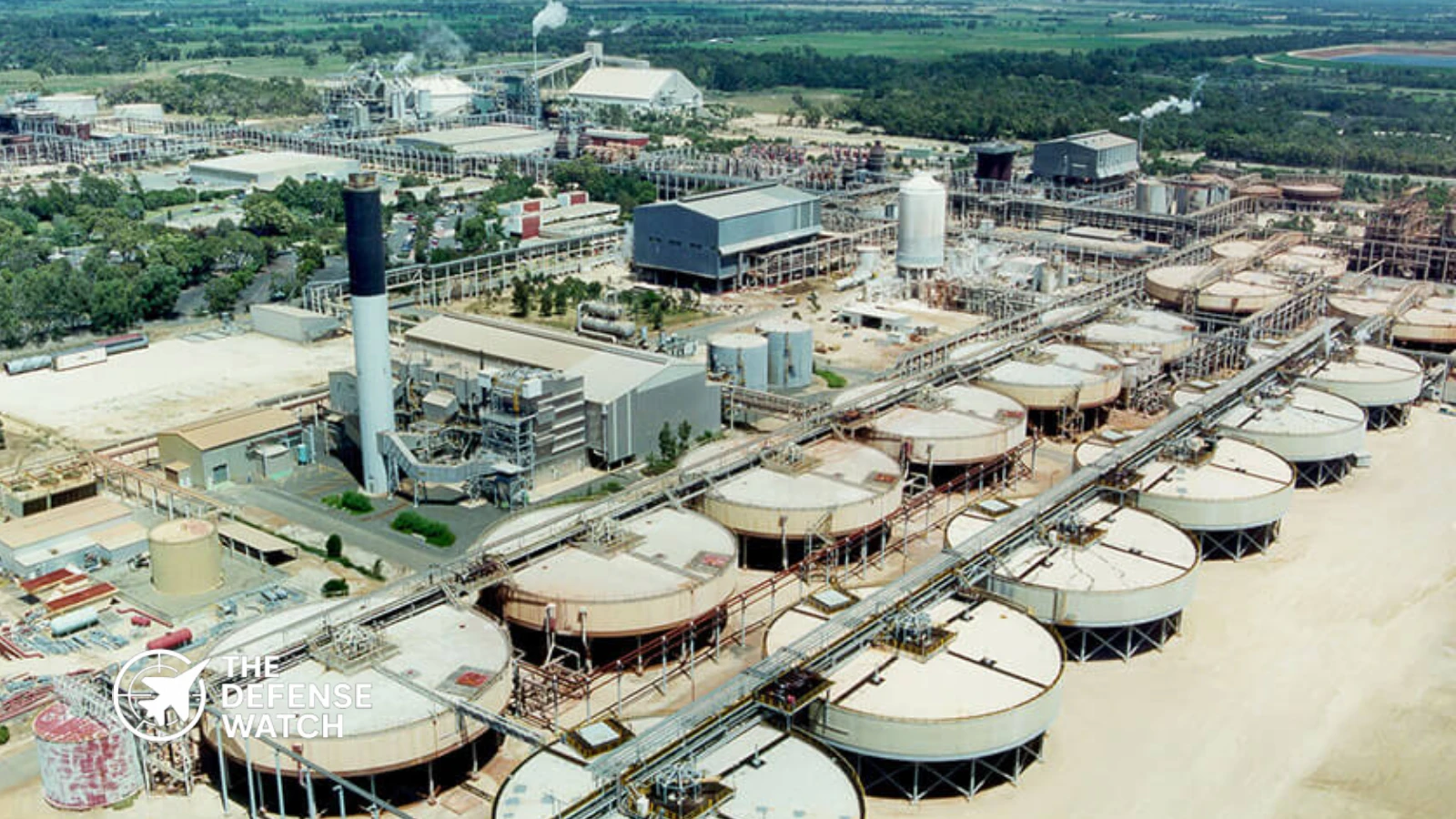
The Department of War is investing an estimated $174 million in a new gallium production facility at Alcoa’s Wagerup alumina refinery in Western Australia, marking a major U.S. effort to diversify the supply of a critical mineral used in defense electronics. The department announced the investment Aug. 31 through its Office of the Assistant Secretary of War for Industrial Base Policy and the Industrial Base Analysis and Sustainment program.
- Department Of War Announces $174 Million Gallium Investment
- Takeaways
- Why Gallium Matters To The Defense Industrial Base
- China Dominates Global Gallium Production
- Wagerup Project Builds On Existing Alumina Infrastructure
- A Multinational Approach To Critical Minerals
- What The 100-Ton Capacity Means
- Implications For Radar, Missile Defense And Space Systems
- The Remaining Challenge Is Downstream Capacity
- Part Of A Broader Industrial Base Strategy
- What Happens Next
Takeaways
The Department of War is committing an estimated $174 million to a new gallium production facility in Western Australia, adding an important non-Chinese source of a mineral used in defense electronics and advanced semiconductors.
The project is being developed as a partnership involving the United States, Australia and Japan. Export Finance Australia, the Japanese government and Sojitz Corporation are participating alongside Alcoa, which will construct and operate the facility. The plant is projected to produce 100 metric tons of gallium metal annually.
The Department of War said the final U.S. dollar value of its investment could change because of exchange-rate fluctuations.
Why Gallium Matters To The Defense Industrial Base
Gallium is a relatively small-volume material, but its importance to modern military electronics is much greater than its production volume suggests.
The metal is used to manufacture compound semiconductor materials including gallium arsenide, or GaAs, and gallium nitride, or GaN. These materials provide electronic properties that are useful in high-frequency, high-power and optoelectronic applications.
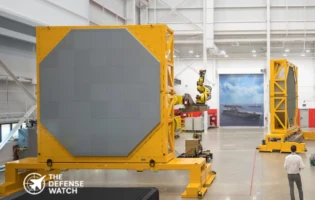
The Department of War specifically identified advanced radar systems for aircraft and naval platforms, ground-based missile defense, secure satellite and tactical communications, electro-optical and infrared sensors, missile guidance and thermal imaging among the defense applications dependent on gallium-based technologies.
The U.S. Geological Survey also identifies gallium use in integrated circuits and optoelectronic devices. Its 2026 Mineral Commodity Summaries states that U.S. gallium consumption is concentrated in compound semiconductor applications, with gallium arsenide and gallium nitride supporting integrated circuits and optoelectronic systems such as laser diodes, LEDs, photodetectors and solar cells.
This makes gallium a supply-chain issue that extends well beyond mining. The material ultimately feeds specialized semiconductor manufacturing, where interruptions in upstream supply can affect the availability and cost of downstream components.
China Dominates Global Gallium Production
The strategic concern is the concentration of gallium production.
According to the U.S. Geological Survey, China accounted for 99 percent of global gallium production in 2024. The concentration is particularly significant because gallium is generally recovered as a byproduct of processing bauxite into alumina, rather than being mined primarily from dedicated gallium deposits.
That production structure makes diversification more difficult than simply opening a conventional mine. New supply requires suitable feedstock, recovery technology, refining capacity, downstream processing and commercial customers.
USGS analysis has also highlighted the vulnerability created by China’s dominance. A 2024 USGS study estimated that a complete restriction of Chinese gallium and germanium exports could reduce U.S. GDP by approximately $3.4 billion under the modeled scenario, with gallium accounting for most of the estimated impact.
The study found that a complete disruption of China’s gallium exports could cause the quantity of gallium available to the rest of the world to fall by about 39.5 percent and prices to rise by more than 2.5 times under its modeled assumptions.
China introduced export controls on gallium and germanium in 2023 and later tightened restrictions. USGS reported that China accounted for 98 percent of global gallium production in 2024 in its broader 2025 outlook analysis, while its country-specific data subsequently put China’s share at 99 percent.
Wagerup Project Builds On Existing Alumina Infrastructure
The Australian project is significant because it is designed to recover gallium as a byproduct of alumina refining.
Gallium occurs in trace quantities in bauxite. During alumina production, it can be separated from the refining stream rather than requiring a separate conventional mining operation. Sojitz and Japan Organization for Metals and Energy Security, through their Japan Australia Gallium Associates joint venture, have been working with Alcoa on the project since 2025.
The project reached a final investment decision in July 2026 following feasibility studies and technical verification. Sojitz said construction would proceed following final site preparations and regulatory approvals.
Construction had already moved into the next phase before the Department of War announced its investment. Alcoa held a groundbreaking ceremony at Wagerup on Aug. 24, marking the start of construction of the production plant.
Alcoa said the facility is expected to create up to 200 construction jobs and approximately 20 permanent positions once operational.
Wagerup Gallium Project At A Glance
| Item | Details |
|---|---|
| Location | Wagerup, Western Australia |
| U.S. investment | Estimated $174 million |
| Production target | 100 metric tons of gallium annually |
| Operator | Alcoa of Australia |
| U.S. program | Industrial Base Analysis and Sustainment |
| U.S. office | Office of the Assistant Secretary of War for Industrial Base Policy |
| Key partners | United States, Australia and Japan |
| Australian financing partner | Export Finance Australia |
| Japanese commercial partner | Sojitz Corporation |
| Facility status | Construction underway |
| Primary purpose | Diversification of gallium supply |
A Multinational Approach To Critical Minerals
The structure of the project is also important from a defense industrial-base perspective.
Rather than treating gallium as a purely domestic U.S. procurement problem, Washington is using an allied supply-chain model involving Australia and Japan. This approach spreads investment, production and commercial responsibilities across countries that already have established industrial and security relationships with the United States.
Australia has positioned the Wagerup project as a priority under its critical-minerals cooperation with Washington. Export Finance Australia previously said the project could provide up to 10 percent of total global gallium supply and announced Australian support for the project.
Japan also has a direct interest in diversifying its supply. Sojitz plans to market gallium from the project to Japan and other countries with demand, giving the project a commercial pathway beyond U.S. defense requirements.
That arrangement matters because supply-chain resilience depends on more than establishing production capacity. Producers need long-term buyers, processing capability and predictable investment conditions to keep facilities operating during periods of weak commodity prices.
What The 100-Ton Capacity Means
The planned 100-metric-ton annual output is substantial in the context of the global gallium market.
Australia’s government has previously characterized the project as capable of supplying up to 10 percent of global gallium demand. The exact market share will vary with global production and consumption, but the planned capacity represents a meaningful addition to supply outside China.
The strategic value, however, is not simply the number of tons produced.
For defense planners, the key benefit is the creation of another source of gallium that can be incorporated into a diversified allied supply chain. This can reduce exposure to a single dominant producer and provide additional options for semiconductor manufacturers and other users if international trade conditions deteriorate.
USGS has identified additional gallium production capacity outside China, including potential capacity in Germany, Kazakhstan and South Korea. But the agency has also noted that some of this capacity has historically operated at low utilization rates or remained idle.
The Wagerup project therefore addresses both availability and the question of whether alternative capacity can be brought into sustained commercial production.
Implications For Radar, Missile Defense And Space Systems
The defense implications are concentrated in electronics rather than conventional weapons production.
GaN technology is particularly important for high-frequency radio-frequency applications. USGS identifies military radar, electronic warfare, military communications, civilian radar, avionics and satellite communications among applications for gallium nitride.
For radar systems, gallium-based semiconductor technologies can support high-power and high-frequency electronic components. That makes the material relevant to the sensor architecture of modern aircraft, ships and missile defense systems.
The same supply chain also reaches space systems. Gallium-based materials are used in solar cells and optoelectronic devices, while the Department of War specifically identified satellite power and communications as areas where reliable gallium supplies are important.
The result is a supply-chain connection between critical minerals and several of the military capabilities that depend on advanced electronics.
The Remaining Challenge Is Downstream Capacity
The Wagerup project does not by itself eliminate supply-chain risk.
Gallium production is only one stage in a much larger industrial system. The material must be refined to appropriate purity levels and then incorporated into semiconductor manufacturing processes. Those downstream capabilities are also geographically concentrated and can become bottlenecks even when raw material availability improves.
USGS reports that the United States does not currently produce primary low-purity gallium domestically. U.S. demand is supplied through imports, while some high-purity and secondary refining capacity exists domestically.
This means the strategic value of the Australian project will depend partly on how effectively its output connects to allied refining, semiconductor and component manufacturing networks.
For the Department of War, that is consistent with the broader purpose of the IBAS program, which is designed to address vulnerabilities across the defense industrial base rather than focus exclusively on final weapons production.
Part Of A Broader Industrial Base Strategy
The gallium investment is part of a larger effort to strengthen access to materials needed for defense production.
The Department of War said the IBAS program, established in 2014, has invested more than $2.6 billion across more than 200 projects aimed at restoring and strengthening the defense industrial base.
The Wagerup project shows how that strategy is increasingly extending beyond conventional defense contractors and into upstream materials.
For modern weapons systems, industrial resilience begins well before a missile, radar or aircraft reaches an assembly line. Semiconductor materials, specialty metals, chemical inputs and processing capacity can all become constraints on production if they are dependent on a small number of foreign suppliers.
Gallium is a particularly clear example because the global production base is heavily concentrated in China while its downstream applications include radar, communications, electronic warfare, missile guidance and space systems.
The U.S. investment in Wagerup therefore represents more than the construction of a single processing facility. It is an attempt to create a durable allied source of a material that sits near the foundation of modern military electronics.
What Happens Next
Construction at Wagerup is now underway, following the Aug. 24 groundbreaking ceremony. Alcoa will construct and operate the plant, while the multinational partnership provides financial and commercial support for the project.
Sojitz said the project is intended to establish a long-term and stable supply of gallium, with production linked to demand in Japan and other markets.
For Washington, the important measure will ultimately be whether the project moves from construction into reliable commercial production and whether its output becomes integrated into a broader allied semiconductor supply chain.
The Department of War’s $174 million investment represents a direct U.S. effort to address that vulnerability. With China still dominating global gallium production, adding 100 metric tons of annual capacity from an allied source gives the United States, Australia and Japan another strategic option in a critical technology supply chain.