

Executive Summary:
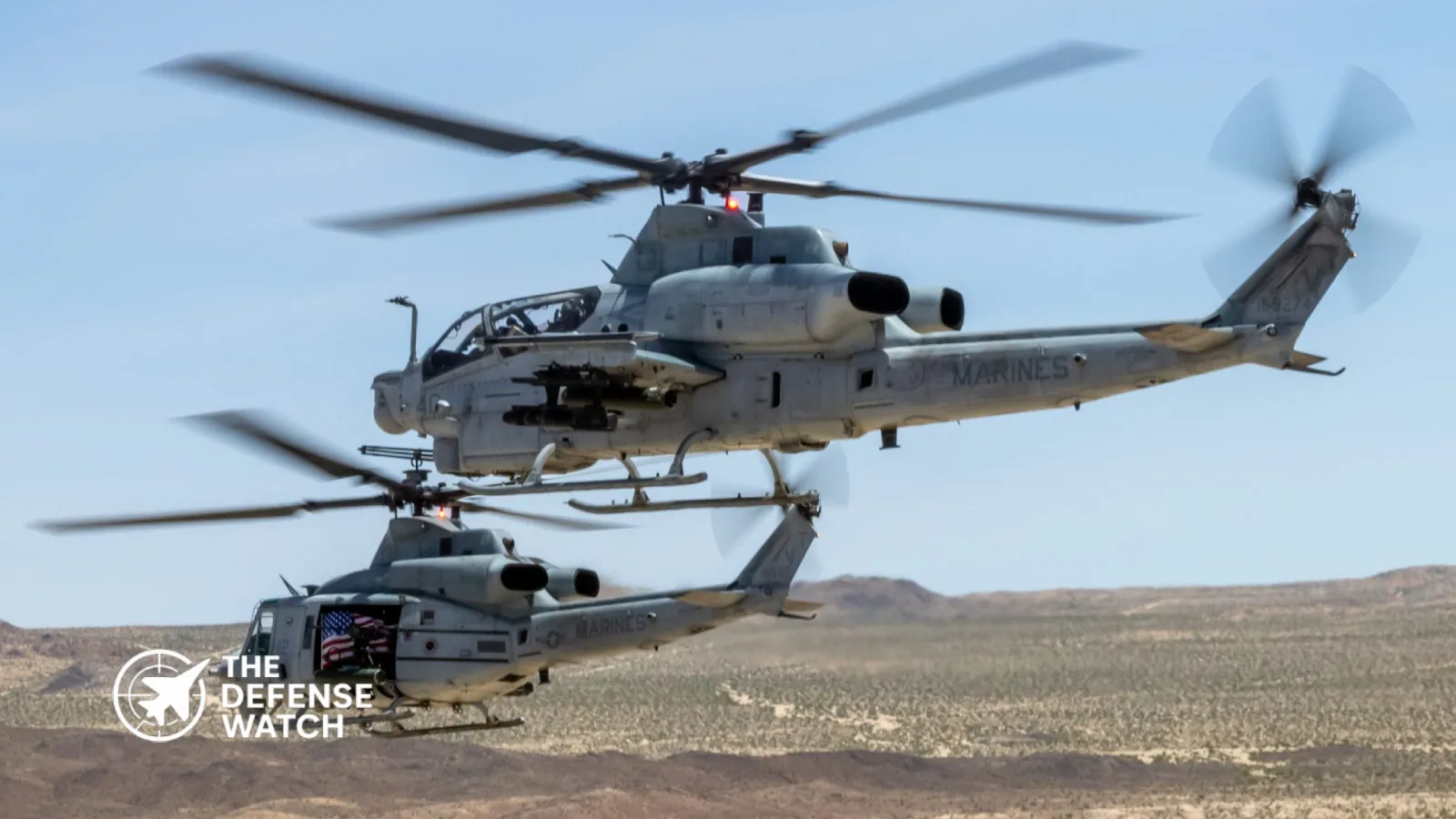
Bell Textron has received an estimated $300 million U.S. Navy contract to modernize up to 49 U.S. Marine Corps H-1 helicopters under the SPINE Phase 3.0 program. The upgrades will significantly improve electrical power, digital architecture, survivability, and future weapons integration, extending the operational relevance of the AH-1Z Viper and UH-1Y Venom well into the 2040s.
Bell Wins Major USMC HH-1 SPINE Upgrade Contract
Bell Textron has secured an estimated $300 million contract from the U.S. Department of the Navy to carry out the next phase of the Structural and Power Improvements for NextGen Effects (SPINE) modernization program for the U.S. Marine Corps‘ H-1 helicopter fleet. The award was announced by Bell on July 27, 2026.
The agreement covers upgrades for up to 49 helicopters, including 28 AH-1Z Viper attack helicopters and 21 UH-1Y Venom utility helicopters. Work will be performed at Bell’s Amarillo Assembly Center beginning in mid 2027, with deliveries of upgraded aircraft scheduled to begin in 2028.
What SPINE Phase 3.0 Will Deliver
The SPINE modernization program is designed to prepare the Marine Corps‘ H-1 fleet for increasingly networked, data driven battlefield operations.
According to Bell, the upgraded aircraft will receive improvements in several critical areas:
| Capability | Operational Benefit |
|---|---|
| Enhanced electrical power | Supports next generation sensors and mission systems |
| Reinforced structural components | Accommodates future equipment growth |
| Advanced digital data bus | Improves system integration |
| Link 16 tactical datalink | Enables real time battlefield networking |
| Improved defensive systems | Increases survivability in contested environments |
| Long range network enabled weapons support | Expands strike capability beyond current configurations |
Bell says these improvements will enable H-1 helicopters to operate more effectively alongside fixed wing aircraft while receiving targeting information through networked command and control systems.
Building on Earlier SPINE Milestones
The latest contract follows several years of developmental work.
In March 2026, Bell completed the first fully upgraded AH-1Z and UH-1Y aircraft under the SPINE program. Those helicopters were delivered to Naval Air Station Patuxent River for flight testing to validate the new configuration before fleet wide production begins.
The program was previously known as the Structural Improvement Electrical Power Upgrade (SIEPU) before being renamed SPINE to better reflect its broader modernization objectives.
Why The Upgrade Matters
The AH-1Z Viper and UH-1Y Venom remain the backbone of Marine Corps rotary wing aviation.
Rather than replacing the aircraft with an entirely new platform, the Marine Corps is extending their service life while integrating capabilities required for future expeditionary operations.
The modernization focuses on enabling:
- Digital connectivity across joint forces
- Integration of future precision weapons
- Increased onboard electrical generation
- Enhanced electronic warfare compatibility
- Improved survivability against modern air defense threats
Bell and Marine Corps officials have stated that the upgraded aircraft are expected to remain operational into the 2040s, reducing the need for an expensive near term replacement program.
Strategic Significance for U.S. Defense
The SPINE program reflects a broader shift across the U.S. military toward modernizing existing platforms for operations in highly contested environments.
Future Marine Corps concepts such as Expeditionary Advanced Base Operations (EABO) and Distributed Maritime Operations depend heavily on aircraft capable of sharing targeting data across multiple domains while operating close to hostile forces.
Adding Link 16 networking, improved electrical capacity, and digital architecture enables the H-1 fleet to support these concepts without requiring a completely new helicopter design. The additional power generation also creates room for future technologies such as advanced electronic warfare equipment, improved infrared countermeasures, autonomous mission systems, and next generation precision guided weapons.
From a budgetary perspective, upgrading proven aircraft often provides a faster and more cost effective path than developing a new rotorcraft, particularly as the Marine Corps balances investments across aviation, unmanned systems, long range fires, and amphibious capabilities.
Program Timeline
| Milestone | Status |
|---|---|
| First SPINE upgraded AH-1Z completed | Completed in 2026 |
| First SPINE upgraded UH-1Y completed | Completed in 2026 |
| Flight testing at NAS Patuxent River | Ongoing |
| Phase 3.0 production begins | Mid 2027 |
| First fleet deliveries | 2028 |
| Aircraft covered under contract | Up to 49 |
| Estimated contract value | $300 million |
Looking Ahead
The Phase 3.0 contract marks the transition of the SPINE program from prototype testing into fleet modernization.
As upgraded aircraft enter service beginning in 2028, the Marine Corps expects the enhanced AH-1Z and UH-1Y fleet to provide greater interoperability with joint forces, improved survivability in contested battlespaces, and expanded compatibility with future weapons and digital combat systems.
The modernization also demonstrates the Pentagon’s continued emphasis on extending the effectiveness of proven aviation platforms through targeted technology upgrades rather than wholesale fleet replacement.
