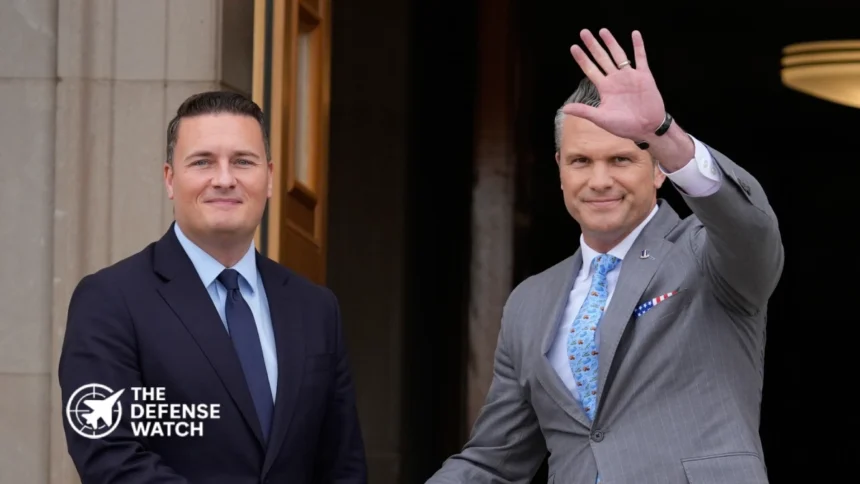
U.S. Secretary of War Pete Hegseth met British Defence Secretary Wes Streeting at the Pentagon on October 15, 2026, as Washington and London sought to maintain cooperation over Ukraine, military technology and wider transatlantic security.
The meeting took place during a period of renewed uncertainty over U.S. support for Kyiv, following a disruption to Ukraine’s access to Starlink satellite communications. Streeting said he had received direct reassurance from Hegseth that the service had been restored, although the reason for the interruption remained unclear.
The talks also came as Britain pressed for deeper defense cooperation with the United States, including collaboration on emerging military technologies, faster weapons procurement and industrial capacity.
Ukraine and Starlink put allied coordination under scrutiny
Ukraine’s reliance on satellite communications has become an important consideration in its military operations, particularly for forces using drones and other network-dependent systems.
Reporting by Reuters and The Guardian on October 15 described a disruption that affected Ukrainian military drone operations. Streeting confirmed that he and Hegseth welcomed the restoration of Starlink access, but said the meeting did not establish why the service interruption had occurred. He declined to speculate about its cause.
The distinction matters. Confirmation that communications were restored does not establish who initiated the disruption, why it occurred or whether it reflected a deliberate change in military policy.
For Ukraine, dependable access to satellite communications supports coordination between dispersed units and can help connect unmanned systems to operators. Any interruption can create operational difficulties, although the effects depend on the equipment involved, alternative communications available and the duration of the outage.
Streeting’s visit therefore had a diplomatic dimension beyond the immediate technical issue. London has continued to advocate support for Ukraine while maintaining close defense ties with Washington, making reliable communication between the two governments important to their joint approach.
Britain wants a faster, more integrated defense partnership
Before meeting Hegseth, Streeting delivered a speech at the Center for Strategic and International Studies in Washington outlining his priorities for the future of UK-US defense cooperation.
In the speech, published by the British government on October 15, Streeting argued that the allies need to adapt their defense industries to the pace of technological change. He identified drones, uncrewed maritime systems, artificial intelligence and advanced fighter aircraft as areas where closer cooperation could deliver practical benefits.
Streeting also called for shorter procurement timelines. He said the UK government had set targets to reduce the period from concept to contract for new platforms from six years to two, adapt existing systems within one year rather than three, and complete other requirements in less than three months.
These are stated targets, not evidence that the timelines have already been achieved. Their success will depend on how requirements are defined, how quickly equipment can be tested, and whether suppliers can deliver systems at the required scale.
The British government is also seeking closer links between defense companies, research institutions and military users. Lessons from Ukraine have increased the importance of rapid testing and adaptation, particularly in areas such as electronic warfare, autonomous systems and counter-drone technology.
For the United States, deeper cooperation with Britain offers access to established industrial relationships, shared research and a close military partner. However, the practical value of that cooperation will depend on procurement decisions, funding, technology-sharing arrangements and the ability to move promising systems into service.
Industrial capacity is central to the relationship
Streeting’s remarks placed production capacity alongside technological innovation as a core defense priority. Developing an advanced weapon is only part of the challenge. Militaries must also manufacture enough equipment, maintain it and replenish stocks during sustained operations.
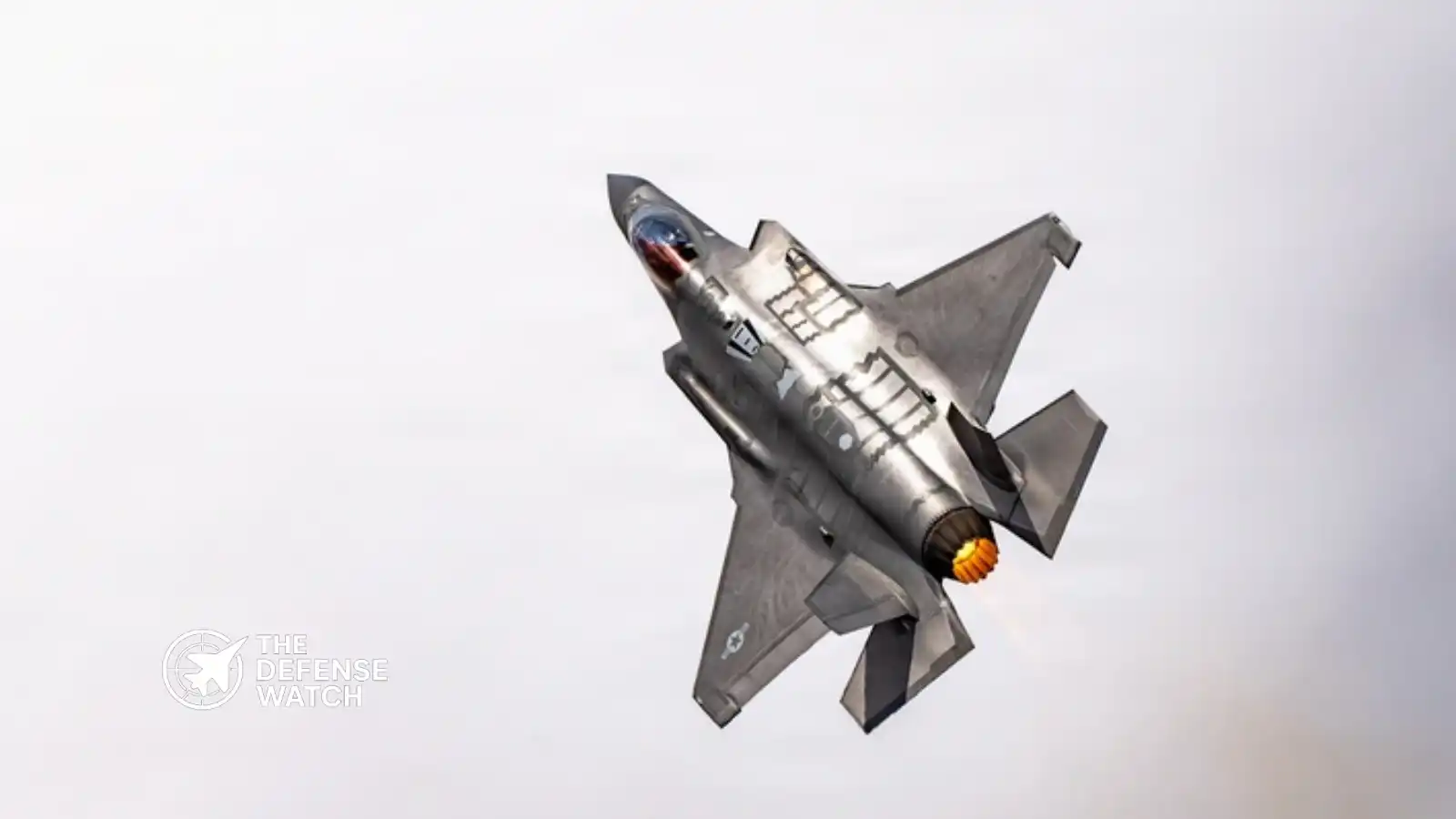
He cited the existing industrial relationship between the two countries, including British companies’ participation in the F-35 program and cooperation under the AUKUS security partnership.
According to Streeting’s speech, British industry produces around 15% of each F-35 through a network of more than 100 UK Tier 1 suppliers, supporting more than 20,000 jobs. He also highlighted US investment in the submarine industrial base and Britain’s investment in its nuclear defense enterprise through AUKUS. These figures and descriptions reflect the British government’s account of the partnership.
AUKUS, which brings together Australia, the United Kingdom and the United States, is particularly relevant to long-term industrial cooperation because its submarine program requires sustained technical coordination, workforce development and manufacturing investment across multiple countries.
The broader challenge is to preserve national industrial capabilities while making allied supply chains more productive. Shared production can spread costs and expand access to specialized expertise, but it can also create dependencies if components, maintenance or production facilities become bottlenecks.
Streeting argued that the allies should make it easier for technology and expertise to move across the Atlantic and give industry greater confidence to invest by aggregating demand. Turning that ambition into results will require specific programs, funding commitments and procurement arrangements.
NATO burden-sharing remains part of the discussion
The meeting also fits into a wider debate over how European allies should contribute to NATO’s conventional defense and reduce vulnerabilities created by excessive reliance on U.S. military capacity.
Streeting acknowledged in his Washington speech that European countries need to assume greater responsibility for their own defense. He said Britain intended to increase its contribution while remaining closely integrated with the United States and NATO.
This approach seeks to balance two objectives: strengthening Britain’s ability to sustain military operations and preserving the benefits of transatlantic cooperation.
For Washington, European investment in defense capabilities could help distribute the burden of deterrence and improve the alliance’s ability to respond to multiple security demands. For London, access to US technology, industrial expertise and military cooperation remains important to its defense planning.
The balance will depend on actual capabilities rather than spending announcements alone. Additional funding must translate into trained personnel, available equipment, munitions stocks, maintenance capacity and forces that can operate together.
What the meeting establishes
The October 15 engagement confirmed continued high-level contact between the United States and the United Kingdom at a time of uncertainty over Ukraine and the future direction of allied defense cooperation.
Public reporting establishes that Streeting received reassurance over the restoration of Starlink access and that his Washington visit included a wider push for cooperation on defense technology, industrial production and procurement reform.
It does not establish that the Pentagon and London reached a new defense agreement, approved a specific weapons program or adopted a new joint policy on Ukraine during the meeting.
The immediate test for the partnership will be whether diplomatic coordination can be translated into dependable support for Ukraine and practical improvements in the allies’ ability to develop, produce and sustain military capabilities.