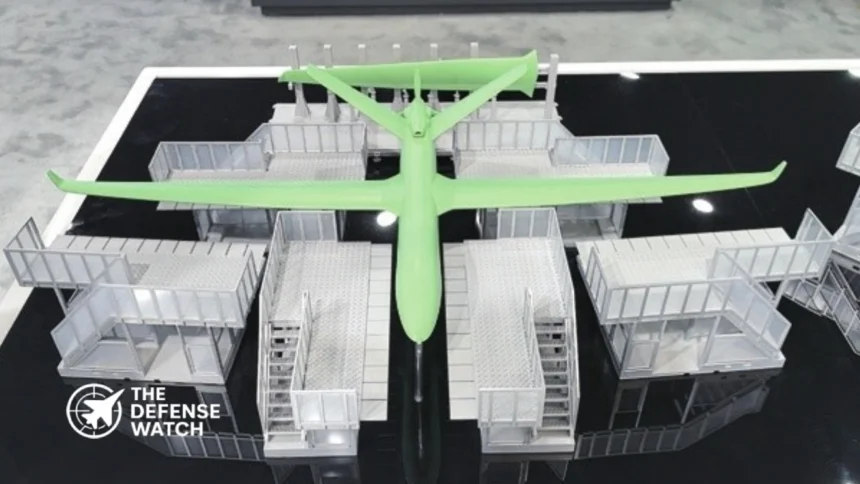
China’s Chengdu Aircraft Corporation (CAC), the manufacturer of the J-20 stealth fighter and J-10 fighter family, has introduced a standardized modular approach to aircraft manufacturing equipment that it says has reduced tooling development costs by about 20 percent and shortened development cycles by roughly 25 percent.
The approach replaces much of the traditional model of building dedicated equipment for individual aircraft projects with reusable components that can be assembled and adapted for different manufacturing tasks. Details were reported by China’s Global Times on October 16, citing information released through Aviation Industry Corporation of China (AVIC).
The changes concern the equipment used to manufacture aircraft, rather than the aircraft designs themselves. Their immediate significance is industrial: reducing the time and expense required to develop production fixtures, platforms, transport equipment and lifting systems.
A common equipment base for multiple aircraft projects
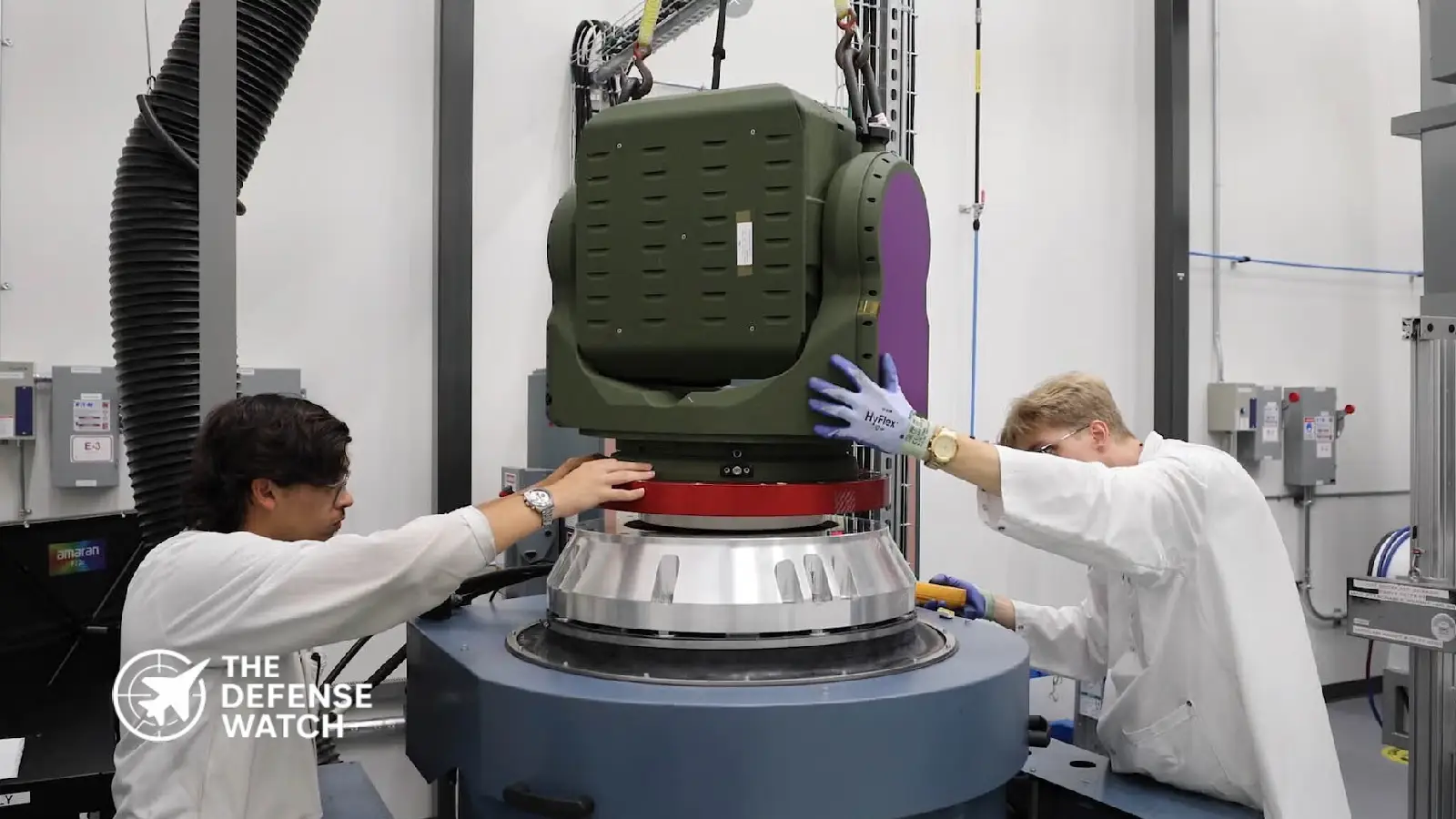
Aircraft manufacturers depend on specialized tooling to hold, position, move and assemble structural components accurately. Such equipment can include assembly fixtures, work platforms, transport vehicles, support frames and lifting rigs.
Traditionally, manufacturers have often designed dedicated tooling for individual aircraft types or production tasks. Differences in aircraft geometry, structural loads, materials and assembly procedures can limit the reuse of equipment developed for another program.
CAC’s new approach seeks to standardize common structures while retaining customized interfaces where required. Instead of designing an entire equipment system from the beginning, engineers can combine existing modules with model-specific components.
According to the AVIC information reported by Global Times, CAC identified five categories of tooling for the initiative and developed 163 shared basic modules. The company reported an overall modular reuse rate exceeding 80 percent.
The distinction between reusable modules and complete equipment systems is important. Standardizing common components does not mean that every fixture or production tool can be used unchanged across different aircraft. Aircraft-specific interfaces and engineering requirements still determine how each assembly must be configured and validated.
Where the reported savings come from
CAC reported several results from its standardized tooling program:
- Development costs: Reduced by approximately 20 percent.
- Development cycles: Shortened by approximately 25 percent.
- Flexible assembly tooling: Modular coverage reached 80 percent.
- Work platforms: Modular coverage reached 90 percent.
- Transport vehicles: Standardized application rate reached 84 percent.
- Support frames: Standardized application rate reached 60 percent.
- Lifting rigs: Standardized application rate reached 87 percent.
These figures describe the tooling initiative, not the total cost of manufacturing a fighter aircraft.
CAC also reported direct cost savings exceeding 20 percent in certain research projects where tooling could be reused across multiple aircraft. The savings arise partly because development expenses can be spread across several uses instead of being charged to a single aircraft or research task.
The figures should not be interpreted as evidence that the overall cost of producing the J-20 or J-10 has fallen by the same percentage. The reporting does not disclose aircraft-level production costs, the total investment required to implement the system or the number of production lines currently using it.
Why manufacturing equipment matters to fighter production
The approach addresses a less visible part of military aircraft production: the time and resources needed to prepare manufacturing processes before an aircraft can be assembled.
For advanced combat aircraft, production equipment must support demanding requirements for alignment, repeatability, structural handling and quality control. Developing new tooling can add cost and engineering work when a manufacturer introduces a new aircraft variant, changes a production process or begins another research program.
Reusable tooling can reduce duplicated design work and allow equipment to be reconfigured for different tasks. It can also reduce the number of dedicated components that manufacturers need to purchase, store and maintain.
AVIC’s reported results suggest that CAC is seeking to improve the efficiency of its manufacturing infrastructure, rather than relying exclusively on new factory capacity or additional equipment for each project. Aerospace industry specialist Wang Ya’nan, editor-in-chief of Aerospace Knowledge magazine, told Global Times that the approach could be particularly useful when production capacity needs to expand quickly.
However, modular tooling is only one element of an aircraft production system. It does not, by itself, establish how quickly a factory can manufacture completed aircraft. Output also depends on component availability, skilled labor, assembly processes, quality assurance, engine deliveries and other production constraints.
Implications for China’s military aviation industry
CAC’s reported initiative is relevant because the company manufactures some of China’s most prominent combat aircraft, including the J-20 and J-10 families. More efficient tooling development could help the manufacturer prepare production equipment for new projects or adapt existing facilities when requirements change.
The potential advantage is flexibility. If common equipment can be reused across multiple programs, manufacturers may need less time to design and build dedicated tooling for each new task. This could reduce some of the costs and delays associated with introducing manufacturing changes.
The same principle is used more broadly in modern industrial production, where standardized components and reconfigurable equipment help factories accommodate different products without rebuilding entire production systems.
For military aviation, however, the value of that flexibility depends on how much equipment can genuinely be shared between aircraft programs. Differences in airframe dimensions, assembly sequences, structural loads and manufacturing tolerances can restrict commonality. Specialized tooling will remain necessary for operations that cannot be standardized.
The published figures also leave several questions unanswered. CAC has not publicly disclosed in the cited reporting how much it invested in the initiative, the absolute value of the savings, or whether the reported improvements apply uniformly across its aircraft programs.
What the figures do, and do not, establish
The reported 20 percent reduction in tooling development costs and 25 percent reduction in development time provide measurable indicators of progress in CAC’s manufacturing processes. They do not establish an equivalent increase in completed aircraft deliveries.
Assessing the broader effect would require additional information, including production rates before and after implementation, the number of aircraft programs using the modules, and evidence that tooling savings translate into lower recurring manufacturing costs.
For now, the clearest conclusion is that Chengdu Aircraft Corporation is standardizing more of its production equipment to reduce duplicated engineering work and improve reuse. Whether those improvements produce a measurable increase in fighter output remains unconfirmed by the available reporting.