• Home
  • About
  • Defense Systems
  • Manufacturer
  • Comparisons
  • Compare 
  • Tools
TheDefenseWatch.com
  • Aerospace & Aviation
  • Military & Ordnance
  • Naval & Maritime
  • Cyber & Space Defense
  • Policy & Strategy
  • Global News
  • Tools Library
    • Smart Calculator
    • Drone Flight Time Calculator
    • Drone Range Calculator
    • Counter-Drone Jammer Effective Range Calculator
    • Counter-Battery Radar Detection Calculator
    • Artillery Fire Correction Calculator
    • Thermal Camera Detection Range Calculator
    • Missile Range & Time-of-Flight Calculator
    • Radar Detection Range Calculator
    • FPV Strike Drone Payload vs Range Calculator
    • Loitering Munition Endurance Calculator
    • Sniper Ballistic Drop & Windage Calculator
    • Bullet Drop Calculator
    • U.S. Army Combat Fitness Test (ACFT) Calculator
    • Military Pension Calculator
    • Military Retirement Calculator
    • Military Pension Calculator
    • Large Number Calculator
Font ResizerAa

TheDefenseWatch.com

The Defense Watch | U.S. & Global Defense News, Analysis & Military Updates

Search
  • Home
  • About
  • Defense Systems
  • Manufacturer
  • Comparisons
  • Compare 
  • Tools

Stay Updated

Get the latest update

Subscribe

Explore

  • Drone
  • Fighter Jets & Military Aircraft
  • Hypersonic Weapons
  • Aircraft Carriers
  • Strategic History & Missions
  • Tools Library
Home » U.S. Forces Expand Maritime Interdiction Capability In Gulf Of Oman With Hellfire Missile Strike
Naval & MaritimeNaval Strategy & Maritime Security

U.S. Forces Expand Maritime Interdiction Capability In Gulf Of Oman With Hellfire Missile Strike

Kaleem Sheikh | Regional Defense Correspondent
Last updated: September 17, 2026 1:37 am
Kaleem Sheikh | Regional Defense Correspondent
Share
7 Min Read
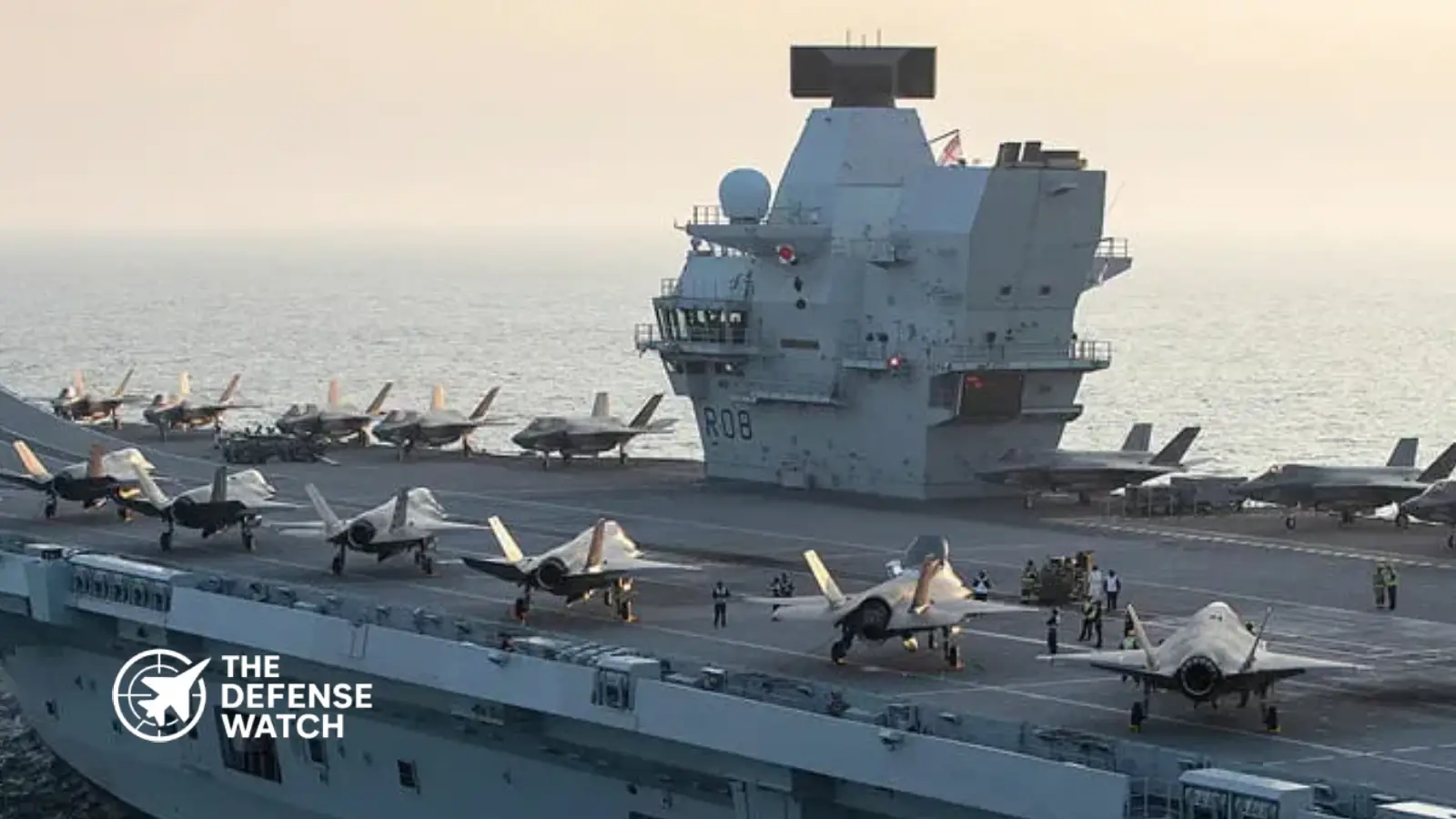
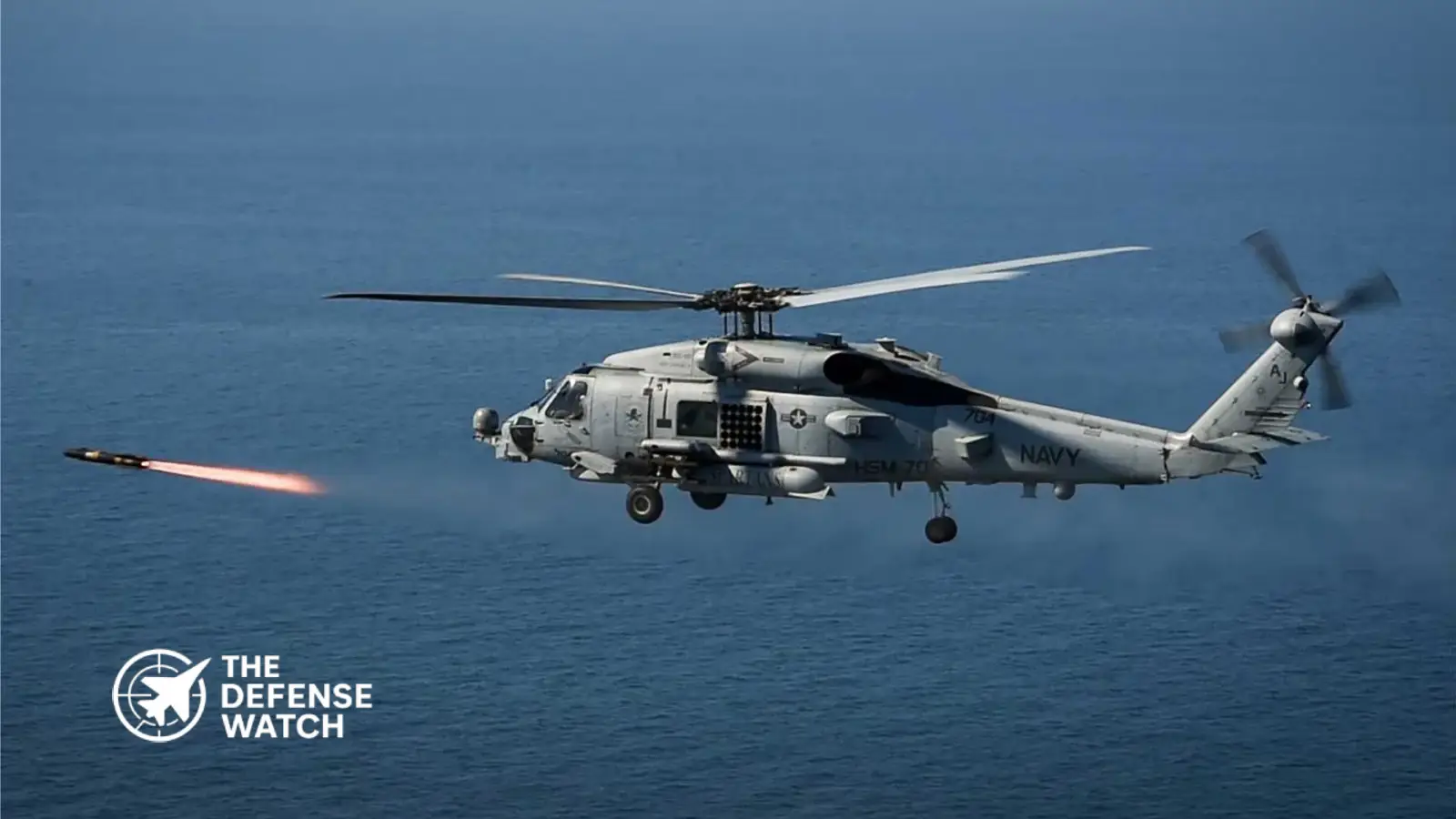
U.S. military aircraft supports maritime interdiction mission in the Gulf of Oman during CENTCOM blockade enforcement operations.
Image Source: U.S. Department of War/Defense
SHARE

Executive Summary:

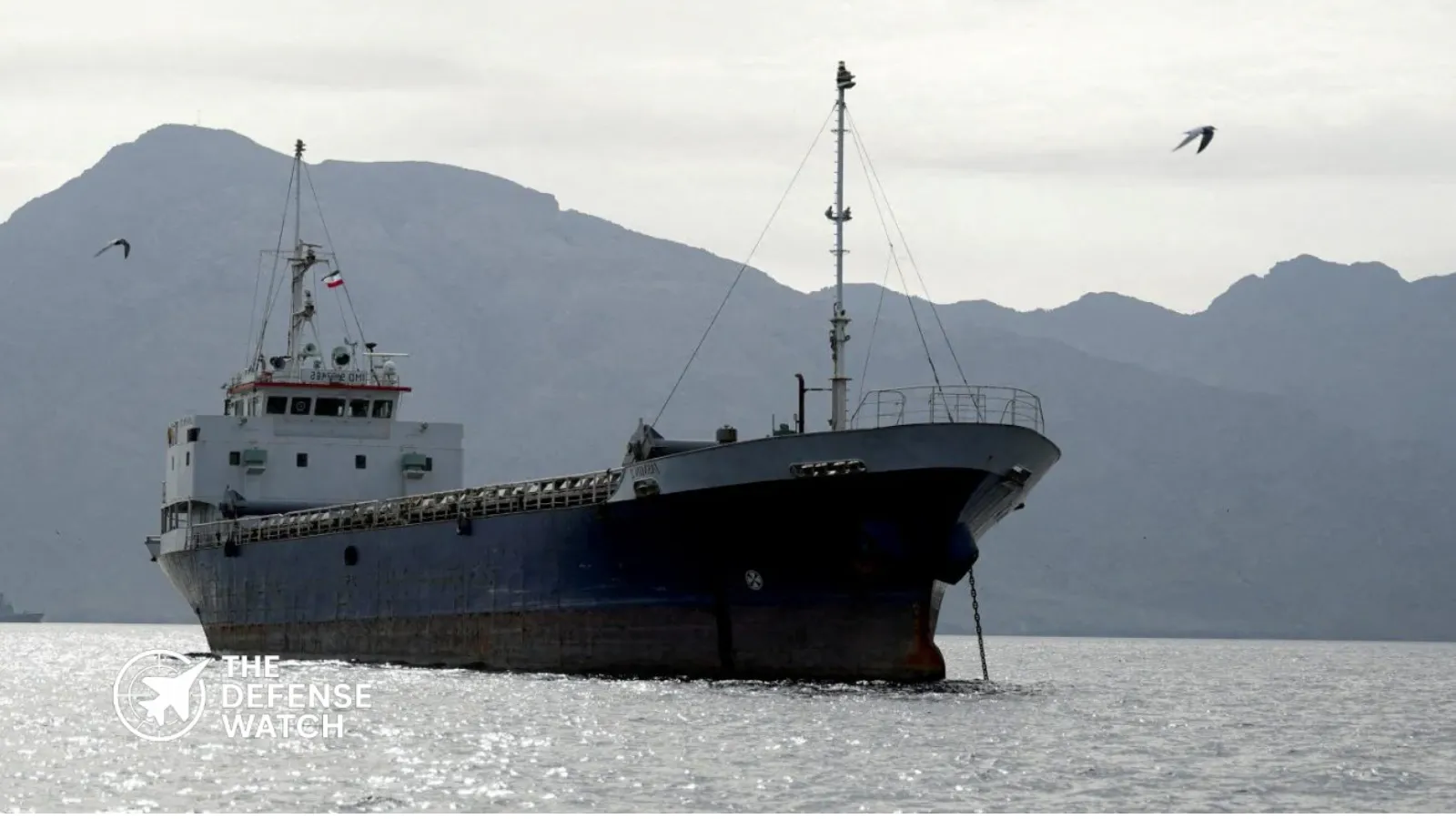
U.S. Central Command confirmed that American forces disabled the Gambia-flagged vessel M/V Lian Star in the Gulf of Oman after it allegedly ignored more than 20 warnings while heading toward an Iranian port.

The operation involved a precision Hellfire missile strike on the ship’s engine room, highlighting the growing role of guided weapons in maritime interdiction and blockade enforcement missions.

The incident marks the latest escalation in a wider U.S. effort to enforce restrictions on maritime traffic connected to Iran while maintaining pressure during an ongoing regional ceasefire.

(adsbygoogle = window.adsbygoogle || []).push({});

U.S. Forces Disable Iran-Bound Vessel In Gulf Of Oman

U.S. forces disable Iran-bound vessel operations have entered a new phase after American military aircraft used a Hellfire missile to stop a commercial ship attempting to reach an Iranian port in the Gulf of Oman.

Contents
  • U.S. Forces Disable Iran-Bound Vessel In Gulf Of Oman
  • Hellfire Missile Used For Maritime Enforcement
  • Growing Maritime Pressure Around Iran
  • Strategic Importance Of The Gulf Of Oman
  • Analysis: Precision Weapons Reshape Maritime Interdiction

According to U.S. Central Command (CENTCOM), the Gambia-flagged cargo vessel M/V Lian Star was observed transiting international waters toward Iran on May 29. U.S. forces reportedly issued more than 20 warnings informing the crew that the vessel was violating blockade measures before taking military action.

After the ship failed to comply, a U.S. aircraft fired a Hellfire missile directly into the vessel’s engine room, disabling its propulsion system and preventing it from continuing toward its destination. CENTCOM stated that the vessel is no longer transiting toward Iran.

The incident represents one of the most visible examples of precision maritime interdiction carried out by U.S. forces during the current blockade enforcement campaign.

- Advertisement -

Hellfire Missile Used For Maritime Enforcement

The AGM-114 Hellfire missile has long been associated with counterterrorism operations, armed drones, attack helicopters, and precision battlefield strikes. Its use against a commercial vessel highlights how military planners are adapting existing precision weapons for maritime security missions.

Unlike large anti-ship missiles designed to sink vessels, the Hellfire allows operators to target specific components such as engines, rudders, steering systems, or command spaces. This enables military forces to stop a ship while limiting structural damage and reducing risks to crew members.

(adsbygoogle = window.adsbygoogle || []).push({});

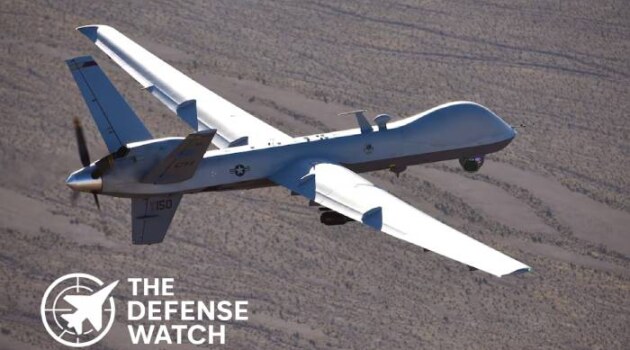
CENTCOM did not disclose the aircraft involved in the operation. However, several platforms deployed across the region are capable of employing Hellfire missiles, including the MQ-9 Reaper, AH-64 Apache, and MH-60R Seahawk. No official confirmation has been provided regarding which aircraft conducted the strike.

  • MQ-9 Reaper Drone

    MQ-9 Reaper Drone

    • Maximum Speed: 480 km/h
    • Endurance: 24–40 hours
    • Operational Range: 1,850 km
    • Payload Capacity: 1,700 kg
    • View Details →
    8.0

    From an operational perspective, the incident demonstrates how precision-guided munitions can provide commanders with additional options between verbal warnings and more destructive force.

    Growing Maritime Pressure Around Iran

    The latest action comes amid a broader U.S. maritime campaign focused on restricting access to Iranian ports.

    CENTCOM stated that U.S. forces have now disabled five commercial vessels and redirected 116 others as part of blockade enforcement efforts. The command said operations continue while a ceasefire with Iran remains in effect.

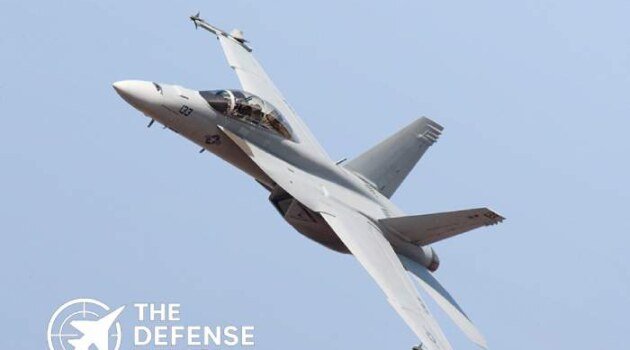
    Previous enforcement actions have involved multiple methods of disabling ships. Earlier in May, U.S. Navy F/A-18 Super Hornets reportedly used 20mm cannon fire to disable the rudder of the tanker M/T Hasna. Additional operations targeted vessels identified as Sea Star III and Sevda using precision munitions.

    • F/A-18E/F Super Hornet Fighter Jet

      F/A-18E/F Super Hornet Fighter Jet

      • Generation: 4.5th Generation
      • Maximum Speed: Mach 1.8 (1,190 mph / 1,915 km/h)
      • No. of Engines: 2 × F414-GE-400
      • Radar Range: ~150+ km (AESA Radar)
      • View Details →
      8.0

      The progression from warning shots and cannon fire to a direct Hellfire missile strike illustrates the increasing sophistication of maritime interdiction tactics being employed in the region.

      Strategic Importance Of The Gulf Of Oman

      The Gulf of Oman serves as a critical gateway connecting the Arabian Sea to the Strait of Hormuz, one of the world’s most important maritime chokepoints.

      A significant portion of global oil and liquefied natural gas exports pass through these waters each year. Any military activity affecting shipping routes in the region is closely monitored by energy markets, insurers, shipping companies, and regional governments.

      (adsbygoogle = window.adsbygoogle || []).push({});

      The use of precision-guided weapons against non-compliant vessels also signals a shift toward faster, stand-off enforcement methods. Rather than relying exclusively on boarding teams or close naval interception, military forces can monitor vessels through surveillance assets and rapidly disable them if crews refuse instructions.

      This approach reduces operational risk to boarding personnel while allowing naval and air assets to cover larger areas of contested maritime space.

      Analysis: Precision Weapons Reshape Maritime Interdiction

      The U.S. forces disable Iran-bound vessel operation demonstrates an emerging trend in modern naval security missions.

      Traditional maritime interdiction often depended on surface warships approaching suspect vessels, launching boarding teams, and conducting inspections. While effective, those methods can be time-consuming and potentially dangerous in contested waters.

      The Gulf of Oman incident highlights how precision-guided weapons, persistent surveillance, and real-time intelligence are increasingly being integrated into maritime enforcement operations. The ability to strike a vessel’s engine room without sinking the ship reflects a calibrated use of force designed to achieve compliance while controlling escalation.

      (adsbygoogle = window.adsbygoogle || []).push({});

      For defense planners, the operation provides another example of how airpower and precision munitions are expanding their role beyond conventional combat missions and into maritime security enforcement.

      As regional tensions continue to influence shipping activity around Iran and the Strait of Hormuz, similar operations may remain a key component of U.S. efforts to maintain pressure while avoiding broader naval confrontation.
TAGGED:CENTCOMGulf of OmanNaval Security
Share This Article
Facebook Copy Link Print
ByKaleem Sheikh | Regional Defense Correspondent
Follow:
Kaleem Sheikh is a regional defense correspondent at TheDefenseWatch.com covering defense and security developments across Asia and the Middle East, including military operations, procurement, and regional security issues.
Leave a Comment

Leave a Reply Cancel reply

Your email address will not be published. Required fields are marked *

Latest Defense Systems

  • SU-57 Felon Stealth Fighter SU-57 Felon Stealth Fighter
  • Boeing F/A-XX Fighter Boeing F/A-XX Fighter
  • JF-17 Thunder Fighter Jet JF-17 Thunder Fighter Jet
  • Gaurav Glide Bomb Gaurav Glide Bomb
  • F-47 Fighter Jet F-47 Fighter Jet
  • Spirit UAS Spirit UAS
  • GBU-43/B MOAB Bomb GBU-43/B MOAB Bomb
  • John F. Kennedy Aircraft Carrier John F. Kennedy Aircraft Carrier
  • Voyager Tanker Voyager Tanker

Recent Compares

  • J-10C vs JF-17 Thunder: Which Fighter Is More Capable? J-10C vs JF-17 Thunder: Which Fighter Is More Capable? View Comparison →
  • Tejas vs Gripen: Key Differences and Capabilities Tejas vs Gripen: Key Differences and Capabilities View Comparison →
  • Tejas vs MiG-21 Bison: How India Replaced Its Iconic Supersonic Fighter Tejas vs MiG-21 Bison: How India Replaced Its Iconic Supersonic Fighter View Comparison →
  • F-35 vs F-16: Stealth, Sensors and Combat Roles F-35 vs F-16: Stealth, Sensors and Combat Roles View Comparison →
  • Tejas Fighter Jet vs F-16 Fighting Falcon: Capability Compared Tejas Fighter Jet vs F-16 Fighting Falcon: Capability Compared View Comparison →
  • Rafale Fighter Jet vs F-16 Fighting Falcon : Which Fighter Has the Edge? Rafale Fighter Jet vs F-16 Fighting Falcon : Which Fighter Has the Edge? View Comparison →
  • Su-57 Fighter Jet vs J-20 Fighter Jet: Stealth and Air Combat Compared Su-57 Fighter Jet vs J-20 Fighter Jet: Stealth and Air Combat Compared View Comparison →
  • Mirage 2000 vs Tejas Mk1A: Legacy Combat Power vs Indigenous Modernization Mirage 2000 vs Tejas Mk1A: Legacy Combat Power vs Indigenous Modernization View Comparison →
  • Rafale Fighter Jet vs F-22 Raptor: Which Air Dominance Fighter Has the Edge? Rafale Fighter Jet vs F-22 Raptor: Which Air Dominance Fighter Has the Edge? View Comparison →
  • Tejas Fighter Jet vs. Rafale Fighter Jet: India’s Indigenous Fighter Meets France’s Proven Multirole Combat Aircraft Tejas Fighter Jet vs. Rafale Fighter Jet: India’s Indigenous Fighter Meets France’s Proven Multirole Combat Aircraft View Comparison →

Recent Posts

  • Russian Fighter Jets in 2026: Su-57, Su-35, Su-30 and MiG-41 Compared
  • F/A-XX Navy Fighter: Boeing Wins Contract as Cost Tops $20 Billion
  • Starfighters Space Plans December F-104 Test for Starlaunch 1
  • Army Task Force Partners With Acquisition Office to Speed Counter-Drone Fielding
  • Hegseth Thanks New Recruits and ROTC Cadets During Knoxville Visit

You Might Also Like

UK Carrier Strike Group
Aircraft CarriersNaval & Maritime

UK Carrier Strike Group Expands NATO Maritime Capability In Arctic Under Arctic Sentry Mission

September 8, 2026
Strait of Hormuz security
Geopolitical & Strategic DoctrinesPolicy & Strategy

U.K. And France Move To Lead Hormuz Security Without U.S. After Trump Blockade Push

September 7, 2026
NSA Stirling Australia
Naval & MaritimeSubmarines

US Navy Expands Submarine Capability In Australia With New NSA Stirling Support Hub

June 9, 2026
British aircraft carrier sailing in northern waters during NATO maritime operations near Norway
Aircraft CarriersNaval & Maritime

British Aircraft Carrier Arrives In Norway As NATO Expands Northern Operations

September 7, 2026

Logo

Copyright © 2026 TheDefenseWatch.com

Helpful Links

  • Home
  • About Us
  • Privacy Policy
  • Terms of Use / Disclaimer
  • U.S. Privacy Notice – CCPA Compliance

Defense Systems

  • Defense Systems
  • Comparisons 
  • Manufacturer
  • Tactical Calculators

Popuplar

Which 5 Air Forces Possess the Costliest Fighter Jet Fleets in the World
Evolving Strategic Value: Carrier Strike Groups in the Indo-Pacific’s Future Security Architecture
Autonomous Weapon Systems Spark U.S. Ethics Debate Amid Rapid Military AI Integration

We report on developments involving military forces, governments, defense companies, research organizations, and security institutions around the world. 

Welcome Back!

Sign in to your account

Username or Email Address
Password

Lost your password?