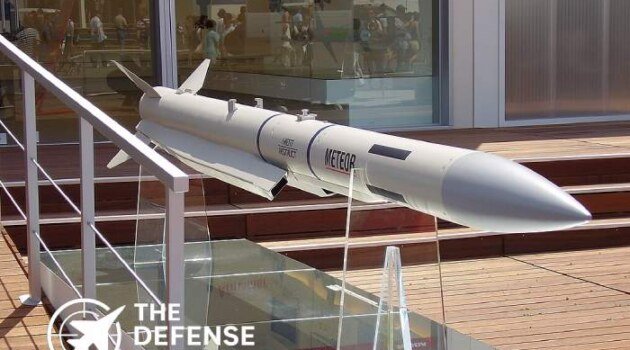
Germany Strengthens Air Combat Capability with New Meteor Missile Procurement
Germany has placed a new order with European defense manufacturer MBDA for additional Meteor missiles, expanding the country’s stockpile of beyond visual range air-to-air weapons for its Eurofighter Typhoon fleet. The procurement underscores ongoing European efforts to modernize air combat capabilities amid evolving security challenges.
MBDA announced the contract award through its official channels, though specific order quantities and financial details were not disclosed. The Meteor missile represents one of the most advanced air-to-air weapons currently operational, featuring a ramjet propulsion system that provides extended range and sustained high-speed performance throughout flight.
Advanced Ramjet Technology Distinguishes Meteor System
The Meteor beyond visual range missile entered service with multiple European air forces over the past decade, representing a collaborative development program among France, Germany, Italy, Spain, Sweden, and the United Kingdom. Unlike conventional rocket-powered air-to-air missiles, Meteor’s throttleable ducted rocket (ramjet) motor enables the weapon to maintain energy throughout its flight envelope.
This propulsion system provides tactical advantages in engagements against maneuvering targets at extended ranges. The missile reportedly achieves a no-escape zone several times larger than previous-generation weapons, meaning adversary aircraft have significantly reduced opportunities to evade once the weapon is launched within certain parameters.
(adsbygoogle = window.adsbygoogle || []).push({});Germany’s Eurofighter Typhoon fleet has been equipped with Meteor since integration was completed, providing the Luftwaffe with enhanced air superiority capabilities. The weapon measures approximately 3.7 meters in length with a diameter of 178 millimeters and weighs around 190 kilograms.
European Collaborative Defense Manufacturing Model
MBDA defense systems operates as a joint venture among Airbus, BAE Systems, and Leonardo, representing a European collaborative approach to complex weapons development. The company specializes in missile systems across air, land, and naval platforms, with operations in France, Germany, Italy, Spain, and the United Kingdom.
The Meteor program exemplifies multinational defense cooperation, with development costs and industrial workshare distributed among participating nations. Germany’s continued procurement supports domestic industry participation while maintaining interoperability with allied air forces operating the same weapon system.
(adsbygoogle = window.adsbygoogle || []).push({});France, the United Kingdom, Italy, Spain, and Sweden have all integrated Meteor onto their respective fighter aircraft, including Rafale, Eurofighter Typhoon, and Gripen platforms. This commonality simplifies logistics and training across NATO air forces while supporting coalition operations.
Context Within European Defense Spending Trends
The new Meteor missile Germany order arrives as European nations accelerate defense modernization following geopolitical shifts. Germany announced significant increases to defense spending, targeting NATO’s 2% GDP guideline with plans for comprehensive military modernization across all service branches.
Air force modernization forms a critical component of Germany’s defense strategy, with investments in F-35 Lightning II acquisitions, continued Eurofighter upgrades, and munitions stockpiling. The Luftwaffe operates approximately 138 Eurofighter Typhoons across multiple variants, representing the backbone of German air combat capability.
(adsbygoogle = window.adsbygoogle || []).push({});Beyond visual range air-to-air missiles constitute essential inventory for maintaining credible deterrence and air superiority. Modern air combat doctrine emphasizes engagement at extended ranges before entering close-range combat, making weapons like Meteor central to operational effectiveness.
Operational Capabilities and Integration
The Eurofighter Typhoon weapon systems portfolio includes multiple air-to-air and air-to-ground munitions, with Meteor serving as the primary beyond visual range solution. The aircraft’s sensor suite, including CAPTOR-E active electronically scanned array (AESA) radar on newer variants, provides target detection and tracking capabilities to fully exploit Meteor’s performance envelope.
Integration testing and qualification programs ensure compatibility between aircraft systems and weapons. Germany’s Eurofighters have undergone successive upgrade programs, enhancing avionics, defensive systems, and weapons compatibility to maintain technological relevance against evolving threats.
The Meteor’s active radar seeker provides terminal guidance, allowing the missile to prosecute targets independently after launch. This “fire and forget” capability enables launching aircraft to engage multiple targets or maneuver defensively without maintaining target illumination throughout missile flight.
Strategic Implications for European Air Defense
European air defense modernization extends beyond individual weapons procurement to encompass integrated air and missile defense architectures. Germany participates in NATO integrated air defense, contributing aircraft, sensors, and command and control capabilities to collective defense arrangements.
The continued investment in advanced air-to-air capabilities reflects assessments of potential adversary capabilities, including modern fighter aircraft and long-range air-defense systems. Maintaining technological overmatch in air combat requires sustained investment in sensors, platforms, and weapons throughout their operational lifecycles.
(adsbygoogle = window.adsbygoogle || []).push({});MBDA continues development work on future variants and capability enhancements for the Meteor system, ensuring the weapon remains effective against emerging threats. Collaborative European defense programs provide economies of scale while maintaining industrial capabilities across multiple nations.
Industry and Economic Considerations
Defense procurement decisions balance operational requirements with industrial and economic factors. The MBDA Meteor air-to-air missile program supports skilled manufacturing jobs and advanced technology development across participating European nations.
Germany’s defense industrial base includes significant aerospace and weapons manufacturing capabilities, with domestic companies participating in major international programs. Continued orders support production lines and supplier networks while maintaining workforce skills and technological expertise.
The ramjet propulsion technology employed in Meteor represents specialized manufacturing capability with potential applications beyond air-to-air weapons. Maintaining these industrial competencies provides strategic advantages for future development programs and technological independence.
Future Outlook for European Air Combat Capabilities
As sixth-generation fighter programs advance, weapons like Meteor will likely serve as bridge capabilities until next-generation systems achieve operational status. The Future Combat Air System (FCAS), a joint French-German-Spanish development program, includes plans for advanced weapons alongside new aircraft platforms.
(adsbygoogle = window.adsbygoogle || []).push({});Germany’s continued investment in current capabilities ensures operational readiness while future programs mature. The typical service life for modern air-to-air missiles spans multiple decades with periodic upgrades, meaning today’s procurement decisions influence capabilities well into the 2040s and beyond.
NATO air forces conducting combined operations benefit from common weapons inventories, simplifying logistics and interoperability during multinational exercises and potential contingencies. The widespread Meteor adoption across European air forces reinforces this standardization.