Germany’s First F-35A Completes Maiden Flight
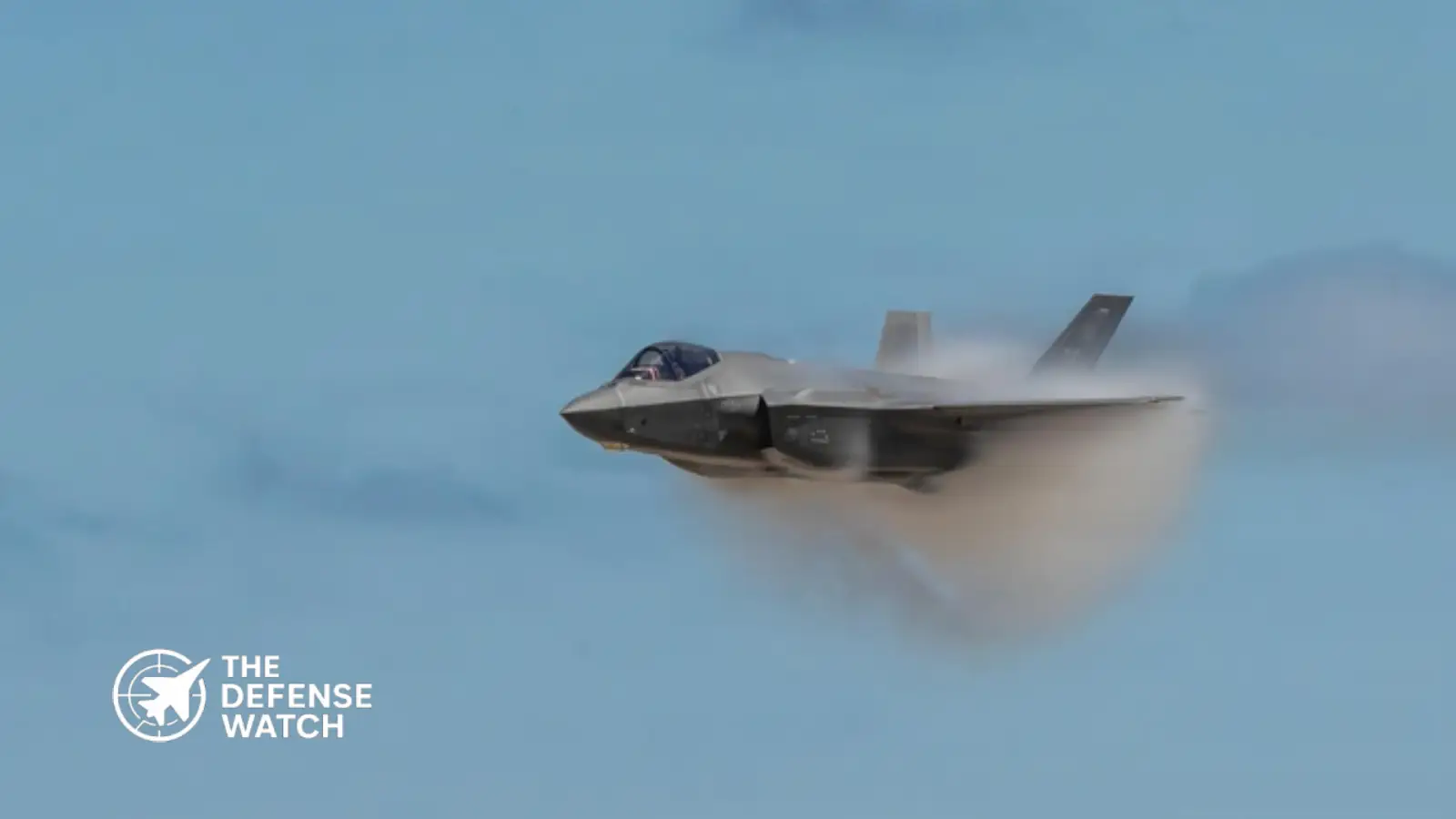
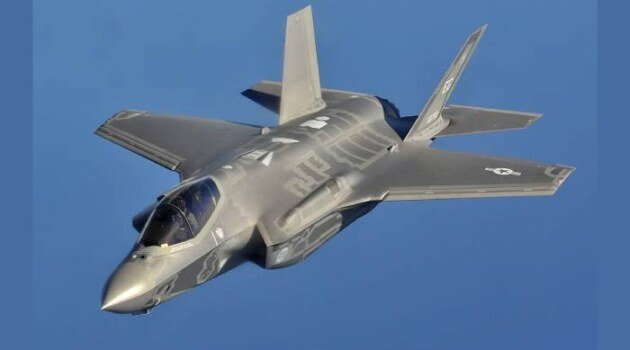
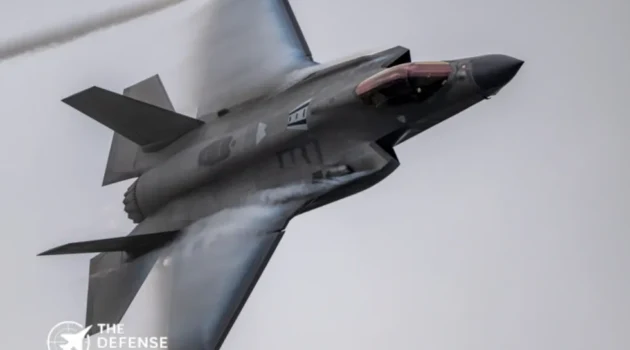
Germany’s first F-35A Lightning II has completed its maiden flight, marking a major milestone in the Luftwaffe’s transition to fifth-generation combat aviation. Lockheed Martin confirmed the flight after the aircraft completed final assembly and finishing work at the company’s Fort Worth, Texas, production facility.
Takeaways
Germany’s first F-35A has completed its maiden flight, marking a major production milestone before the aircraft enters the U.S.-based training phase of the Luftwaffe’s 35-aircraft program.
The aircraft, identified as MG-01, is the first of 35 F-35A fighters Germany is acquiring to replace its aging Panavia Tornado fleet. The German government selected the F-35A in 2022 and signed the procurement agreement in July 2023.
The maiden flight moves the program from production and acceptance activity into a more operationally focused phase. The next major step is delivery for German training in the United States before the aircraft begin arriving at Büchel Air Base in Germany.
A 35-Aircraft Replacement for the Tornado
Germany’s F-35 program is centered on 35 F-35A conventional takeoff and landing aircraft.
Program Element Germany F-35A Aircraft Lockheed Martin F-35A Lightning II Quantity 35 aircraft First German aircraft MG-01 Production site Fort Worth, Texas First flight September 8, 2026 U.S. training location Ebbing Air National Guard Base, Arkansas German operating base Büchel Air Base Tornado replacement Yes Planned German deliveries Beginning in 2027 Planned Tornado retirement 2030 The Bundeswehr says the F-35A acquisition is intended to strengthen Germany’s combat-air capability and improve interoperability with NATO partners. The aircraft will also take over missions currently performed by the Tornado, including Germany’s role in NATO nuclear sharing.
The transition is important because the Tornado fleet is approaching the end of its planned service life. Germany has stated that the remaining Tornado aircraft are expected to be retired by 2030.
Why the Maiden Flight Matters
A first flight does not mean the aircraft is operational with the Luftwaffe. It does, however, confirm that the first German production aircraft has progressed beyond assembly and ground preparation into flight testing.
That distinction matters for a program involving a sophisticated fifth-generation aircraft. Before a new F-35 can enter regular service, the aircraft must complete acceptance activity, support documentation, training arrangements and the broader infrastructure required to operate and maintain the platform.
Lockheed Martin completed final assembly of Germany’s first aircraft in August 2026. The company had previously moved the aircraft into its Aircraft Final Finishes stage, following the integration of its major structural components.
The successful maiden flight therefore represents one step in a much longer introduction process rather than an immediate change in Germany’s operational fighter force.
German F-35 Training Moves Through Arkansas
A key feature of Germany’s F-35 introduction is that the initial training pipeline will be based in the United States.
German pilots and maintenance personnel are expected to train at Ebbing Air National Guard Base in Arkansas. The U.S. Air Force has established Ebbing as a major international F-35 training location under the Foreign Military Sales program.
The training infrastructure became operationally relevant in 2024, when the U.S. Air Force completed new facilities supporting international F-35 pilot training. The 33rd Fighter Wing has also conducted exercises at Ebbing focused on dispersed operations and readiness in contested environments.
Germany is one of the first international customers scheduled to use the Ebbing training system alongside other F-35 operators. This arrangement gives Berlin access to an established U.S. training framework rather than requiring the entire initial training architecture to be built in Germany.
For the United States, the arrangement also reinforces the role of Ebbing as a central hub for training allied F-35 crews and maintainers.
Büchel Infrastructure Is Being Upgraded
While initial training takes place in Arkansas, Germany is preparing its own infrastructure for the F-35.
Büchel Air Base in western Germany is being upgraded through what the Bundeswehr describes as an F-35 campus. The work includes facilities for aircraft maintenance, flight preparation, logistics, operations and security.
The infrastructure requirement is particularly important because the F-35 is not simply a direct replacement for the Tornado in terms of airframe dimensions and performance. Its support system also includes specialized maintenance, information systems, secure communications and facilities designed around the aircraft’s low-observable characteristics.
The Bundeswehr has said the new infrastructure is also intended to meet the cybersecurity requirements associated with the aircraft.
F-35 Adds Fifth-Generation Capabilities
The German F-35A introduces capabilities that were not available to the Luftwaffe through the Tornado fleet.
The aircraft combines low-observable design, advanced sensors, onboard data processing and networked communications. The Bundeswehr specifically identifies sensor fusion, networking and reduced detectability as core characteristics of the F-35.
The operational significance goes beyond the aircraft’s ability to penetrate defended airspace. The F-35 is designed to collect and distribute information across a wider force, allowing it to function as both a strike aircraft and a sensor and communications node.
That characteristic is particularly relevant to NATO operations, where German aircraft may operate alongside F-35s from other European countries and U.S. forces.
Lockheed Martin has said more than 550 F-35 aircraft are expected to operate from more than 10 European countries by the 2030s. The growing European fleet is creating a common fifth-generation aircraft ecosystem across NATO.
NATO Interoperability Is a Central Part of the Program
Germany’s decision to acquire the F-35 also fits into a broader European shift toward common fifth-generation combat-air capabilities.
Denmark, Italy, Norway, the Netherlands and other European NATO members already operate or are introducing F-35 aircraft. The aircraft are increasingly appearing together in multinational exercises and air operations.
During Ramstein Flag 2026, F-35s from Denmark, Italy, Norway and the United States operated across northern Europe, demonstrating the integration of fifth-generation aircraft with allied air forces and supporting systems.
Germany’s entry expands this network. Once the Luftwaffe reaches operational capability, its F-35s will be able to participate in a much broader ecosystem of common training, logistics, tactics and operational data exchange.
For NATO, that commonality can reduce some of the interoperability challenges created by fleets built around different aircraft types and national support structures.
Nuclear Sharing Remains a Major Driver
Germany’s F-35 purchase also has a strategic dimension beyond conventional air combat.
The Bundeswehr explicitly links the acquisition to Germany’s NATO nuclear-sharing role. The F-35A will replace the Tornado in the German nuclear-sharing mission, subject to the applicable NATO and national arrangements.
This makes the F-35 transition particularly important for the Alliance. The aircraft provides Germany with a modern platform capable of operating in environments where survivability, electronic warfare resilience, sensor awareness and secure communications are increasingly important.
The F-35 is therefore not simply another fighter acquisition for Berlin. It is part of the broader effort to maintain Germany’s contribution to NATO airpower while replacing an aircraft design that dates to the Cold War era.
What Happens Next
The maiden flight is followed by a sequence of milestones leading toward German training and eventual deployment.
The first German aircraft are scheduled to remain in the United States for training, with the Bundeswehr previously identifying the initial group as part of the U.S.-based pilot and ground personnel training effort.
Germany is simultaneously completing the infrastructure required at Büchel. The Bundeswehr has stated that the first aircraft are planned to reach the German base from 2027, while the Tornado fleet is scheduled to reach the end of its planned service life in 2030.
This creates a multi-year transition period in which Germany must build experience with the F-35 while maintaining sufficient Tornado capability until the new fleet can assume its assigned missions.
The key challenge is therefore not the maiden flight itself. It is the successful integration of aircraft, pilots, maintainers, infrastructure, weapons, logistics and secure information systems into a functioning German combat-air system.
A Significant Milestone for German Airpower
Germany’s first F-35A maiden flight marks the aircraft’s transition from an industrial production program into the next stage of German military integration.
The 35-aircraft purchase gives the Luftwaffe a fifth-generation fighter built around stealth, sensor fusion and networked operations. It also brings Germany deeper into the growing European F-35 community and strengthens the common aircraft base available to NATO air forces.
The immediate focus now shifts toward acceptance, U.S.-based training and preparations for the aircraft’s eventual arrival at Büchel.
For Germany, the program represents the replacement of a Cold War-era strike and nuclear-sharing aircraft with a modern fifth-generation platform. For NATO, it adds another major European operator to an expanding F-35 network.
German Air Force IRIS-T SLM Marks Major Step In Air Defense Modernization
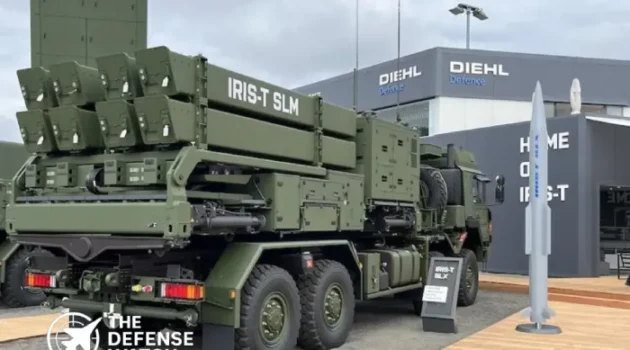
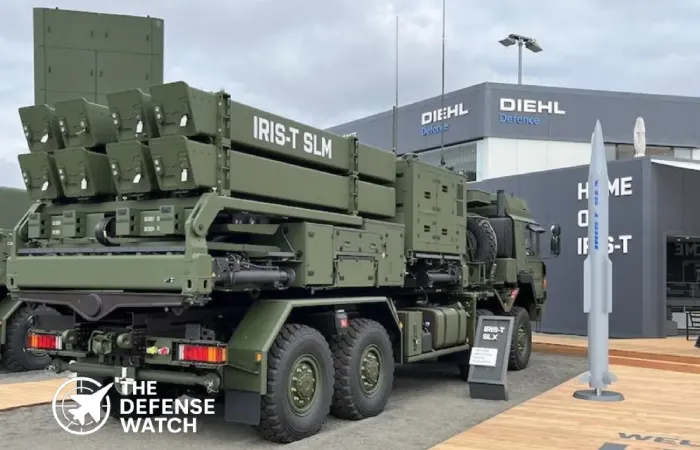
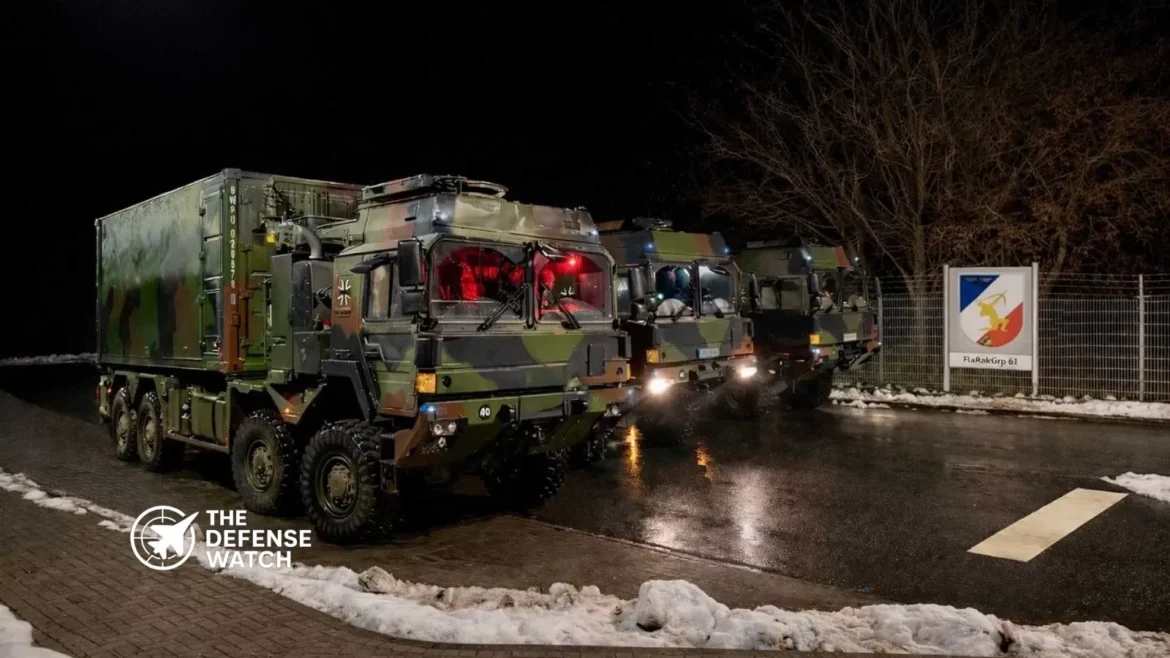
The German Air Force IRIS-T SLM air defense system has officially entered national service, marking a significant milestone in Germany’s effort to rebuild and modernize its ground-based air defense network.
(adsbygoogle = window.adsbygoogle || []).push({});According to German Air Force announced, the Luftwaffe has received its first IRIS-T SLM system in a configuration tailored specifically for German national requirements. The delivery represents the first operational step in restoring a medium-range air defense capability that Germany had largely phased out over the past decade.
The IRIS-T SLM air defense system is designed to counter a wide spectrum of aerial threats, including combat aircraft, helicopters, cruise missiles, and unmanned aerial systems.
Rebuilding Germany Ground-Based Air Defense
The German Air Force IRIS-T SLM delivery comes amid a broader modernization push following Berlin’s 2022 strategic shift in defense policy. Germany committed significant funding to improve readiness, enhance NATO interoperability, and strengthen territorial defense.
The IRIS-T SLM system fills a critical gap in Germany’s layered air defense architecture. After retiring legacy systems in the 2010s, the Bundeswehr faced limited medium-range ground-based air defense coverage. The new system is intended to restore that capability while aligning with NATO standards.
Germany has also committed to the European Sky Shield Initiative, a multinational effort aimed at building a coordinated and integrated air and missile defense shield across Europe. The IRIS-T SLM will play a key role in that framework.
What The IRIS-T SLM Air Defense System Brings
Developed by Diehl Defence, the IRIS-T SLM air defense system is the ground-launched variant of the IRIS-T missile family, originally derived from an advanced short-range air-to-air missile program.
(adsbygoogle = window.adsbygoogle || []).push({});The SLM variant offers extended range and altitude performance compared to earlier configurations. It typically consists of:
- A vertical launch missile unit
- A multifunction radar
- A tactical operations center
- Support and logistics vehicles

The system uses an active radar-guided interceptor capable of engaging multiple targets simultaneously. Its architecture supports network-enabled operations, allowing integration with other air defense assets.
Germany’s national configuration reportedly includes adaptations tailored to Luftwaffe command-and-control structures and operational doctrines.
Operational Lessons From Ukraine
The IRIS-T SLM has drawn significant international attention following its operational deployment in Ukraine. Berlin previously supplied IRIS-T SLM systems to Kyiv as part of military assistance packages.
Ukrainian officials have publicly credited the system with high interception rates against cruise missiles and unmanned aerial threats. While independent verification of battlefield performance remains limited, the system’s combat use has provided valuable operational feedback.
(adsbygoogle = window.adsbygoogle || []).push({});For Germany, fielding the IRIS-T SLM domestically reflects both confidence in the system’s performance and a desire to accelerate air defense readiness amid evolving security conditions in Europe.
Strengthening NATO Interoperability
The German Air Force IRIS-T SLM system is designed to integrate into NATO’s Integrated Air and Missile Defence framework. Germany remains a central contributor to NATO air policing and collective defense missions.
By restoring medium-range ground-based air defense, Berlin enhances both national resilience and alliance-wide capabilities. The system’s open architecture allows potential interoperability with other European and allied sensors and command systems.
Several European countries have also expressed interest in or placed orders for IRIS-T-based systems, reflecting broader demand for mobile and adaptable air defense solutions.
Industrial And Strategic Implications
For Diehl Defence, the delivery to the German Air Force represents a major domestic validation of its flagship ground-based air defense product. The company has positioned the IRIS-T SLM as a scalable system suitable for national defense, expeditionary missions, and infrastructure protection.
Germany’s renewed investment in air defense is part of a broader modernization cycle that includes aircraft procurement, missile defense initiatives, and upgrades to digital command networks.
(adsbygoogle = window.adsbygoogle || []).push({});The IRIS-T SLM complements other European efforts focused on layered defense against increasingly complex aerial threats, including low-flying cruise missiles and small unmanned systems.
A Shift In German Defense Posture
The fielding of the German Air Force IRIS-T SLM air defense system reflects a wider strategic reassessment in Berlin. After years of reduced emphasis on territorial air defense, Germany is rebuilding capabilities aligned with high-intensity conflict scenarios.
The Luftwaffe’s acquisition signals that ground-based air defense is once again a priority within the Bundeswehr force structure. As deliveries continue, additional batteries are expected to enhance coverage and readiness.
The system’s introduction also underscores Europe’s growing focus on sovereign defense manufacturing and regional supply chains, particularly in critical areas such as air and missile defense.
(adsbygoogle = window.adsbygoogle || []).push({});What Comes Next
With the first nationally configured IRIS-T SLM air defense system now delivered, attention will shift to operational training, integration testing, and full operational capability timelines.
Future procurements and deployment locations have not been fully detailed publicly. However, Germany’s stated defense objectives indicate that expanding layered air defense will remain central to its modernization agenda.
The German Air Force IRIS-T SLM deployment represents more than a single system delivery. It marks a structural return to medium-range air defense at a time when European security dynamics continue to evolve.

Germany Strengthens Air Combat Capability with New Meteor Missile Procurement
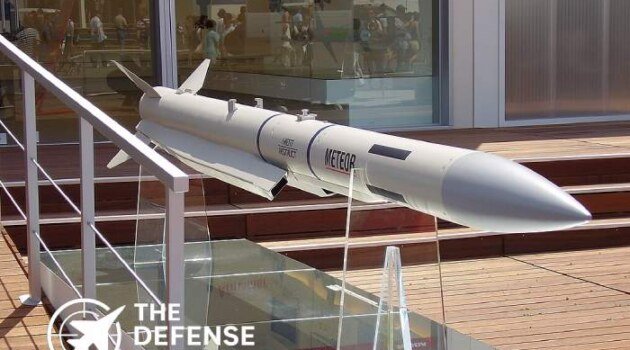
Germany has placed a new order with European defense manufacturer MBDA for additional Meteor missiles, expanding the country’s stockpile of beyond visual range air-to-air weapons for its Eurofighter Typhoon fleet. The procurement underscores ongoing European efforts to modernize air combat capabilities amid evolving security challenges.
(adsbygoogle = window.adsbygoogle || []).push({});MBDA announced the contract award through its official channels, though specific order quantities and financial details were not disclosed. The Meteor missile represents one of the most advanced air-to-air weapons currently operational, featuring a ramjet propulsion system that provides extended range and sustained high-speed performance throughout flight.
Advanced Ramjet Technology Distinguishes Meteor System
The Meteor beyond visual range missile entered service with multiple European air forces over the past decade, representing a collaborative development program among France, Germany, Italy, Spain, Sweden, and the United Kingdom. Unlike conventional rocket-powered air-to-air missiles, Meteor’s throttleable ducted rocket (ramjet) motor enables the weapon to maintain energy throughout its flight envelope.
This propulsion system provides tactical advantages in engagements against maneuvering targets at extended ranges. The missile reportedly achieves a no-escape zone several times larger than previous-generation weapons, meaning adversary aircraft have significantly reduced opportunities to evade once the weapon is launched within certain parameters.
(adsbygoogle = window.adsbygoogle || []).push({});Germany’s Eurofighter Typhoon fleet has been equipped with Meteor since integration was completed, providing the Luftwaffe with enhanced air superiority capabilities. The weapon measures approximately 3.7 meters in length with a diameter of 178 millimeters and weighs around 190 kilograms.
European Collaborative Defense Manufacturing Model
MBDA defense systems operates as a joint venture among Airbus, BAE Systems, and Leonardo, representing a European collaborative approach to complex weapons development. The company specializes in missile systems across air, land, and naval platforms, with operations in France, Germany, Italy, Spain, and the United Kingdom.
The Meteor program exemplifies multinational defense cooperation, with development costs and industrial workshare distributed among participating nations. Germany’s continued procurement supports domestic industry participation while maintaining interoperability with allied air forces operating the same weapon system.
(adsbygoogle = window.adsbygoogle || []).push({});France, the United Kingdom, Italy, Spain, and Sweden have all integrated Meteor onto their respective fighter aircraft, including Rafale, Eurofighter Typhoon, and Gripen platforms. This commonality simplifies logistics and training across NATO air forces while supporting coalition operations.
Context Within European Defense Spending Trends
The new Meteor missile Germany order arrives as European nations accelerate defense modernization following geopolitical shifts. Germany announced significant increases to defense spending, targeting NATO’s 2% GDP guideline with plans for comprehensive military modernization across all service branches.
Air force modernization forms a critical component of Germany’s defense strategy, with investments in F-35 Lightning II acquisitions, continued Eurofighter upgrades, and munitions stockpiling. The Luftwaffe operates approximately 138 Eurofighter Typhoons across multiple variants, representing the backbone of German air combat capability.
(adsbygoogle = window.adsbygoogle || []).push({});Beyond visual range air-to-air missiles constitute essential inventory for maintaining credible deterrence and air superiority. Modern air combat doctrine emphasizes engagement at extended ranges before entering close-range combat, making weapons like Meteor central to operational effectiveness.
Operational Capabilities and Integration
The Eurofighter Typhoon weapon systems portfolio includes multiple air-to-air and air-to-ground munitions, with Meteor serving as the primary beyond visual range solution. The aircraft’s sensor suite, including CAPTOR-E active electronically scanned array (AESA) radar on newer variants, provides target detection and tracking capabilities to fully exploit Meteor’s performance envelope.
Integration testing and qualification programs ensure compatibility between aircraft systems and weapons. Germany’s Eurofighters have undergone successive upgrade programs, enhancing avionics, defensive systems, and weapons compatibility to maintain technological relevance against evolving threats.
The Meteor’s active radar seeker provides terminal guidance, allowing the missile to prosecute targets independently after launch. This “fire and forget” capability enables launching aircraft to engage multiple targets or maneuver defensively without maintaining target illumination throughout missile flight.
Strategic Implications for European Air Defense
European air defense modernization extends beyond individual weapons procurement to encompass integrated air and missile defense architectures. Germany participates in NATO integrated air defense, contributing aircraft, sensors, and command and control capabilities to collective defense arrangements.
The continued investment in advanced air-to-air capabilities reflects assessments of potential adversary capabilities, including modern fighter aircraft and long-range air-defense systems. Maintaining technological overmatch in air combat requires sustained investment in sensors, platforms, and weapons throughout their operational lifecycles.
(adsbygoogle = window.adsbygoogle || []).push({});MBDA continues development work on future variants and capability enhancements for the Meteor system, ensuring the weapon remains effective against emerging threats. Collaborative European defense programs provide economies of scale while maintaining industrial capabilities across multiple nations.
Industry and Economic Considerations
Defense procurement decisions balance operational requirements with industrial and economic factors. The MBDA Meteor air-to-air missile program supports skilled manufacturing jobs and advanced technology development across participating European nations.
Germany’s defense industrial base includes significant aerospace and weapons manufacturing capabilities, with domestic companies participating in major international programs. Continued orders support production lines and supplier networks while maintaining workforce skills and technological expertise.
The ramjet propulsion technology employed in Meteor represents specialized manufacturing capability with potential applications beyond air-to-air weapons. Maintaining these industrial competencies provides strategic advantages for future development programs and technological independence.
Future Outlook for European Air Combat Capabilities
As sixth-generation fighter programs advance, weapons like Meteor will likely serve as bridge capabilities until next-generation systems achieve operational status. The Future Combat Air System (FCAS), a joint French-German-Spanish development program, includes plans for advanced weapons alongside new aircraft platforms.
(adsbygoogle = window.adsbygoogle || []).push({});Germany’s continued investment in current capabilities ensures operational readiness while future programs mature. The typical service life for modern air-to-air missiles spans multiple decades with periodic upgrades, meaning today’s procurement decisions influence capabilities well into the 2040s and beyond.
NATO air forces conducting combined operations benefit from common weapons inventories, simplifying logistics and interoperability during multinational exercises and potential contingencies. The widespread Meteor adoption across European air forces reinforces this standardization.