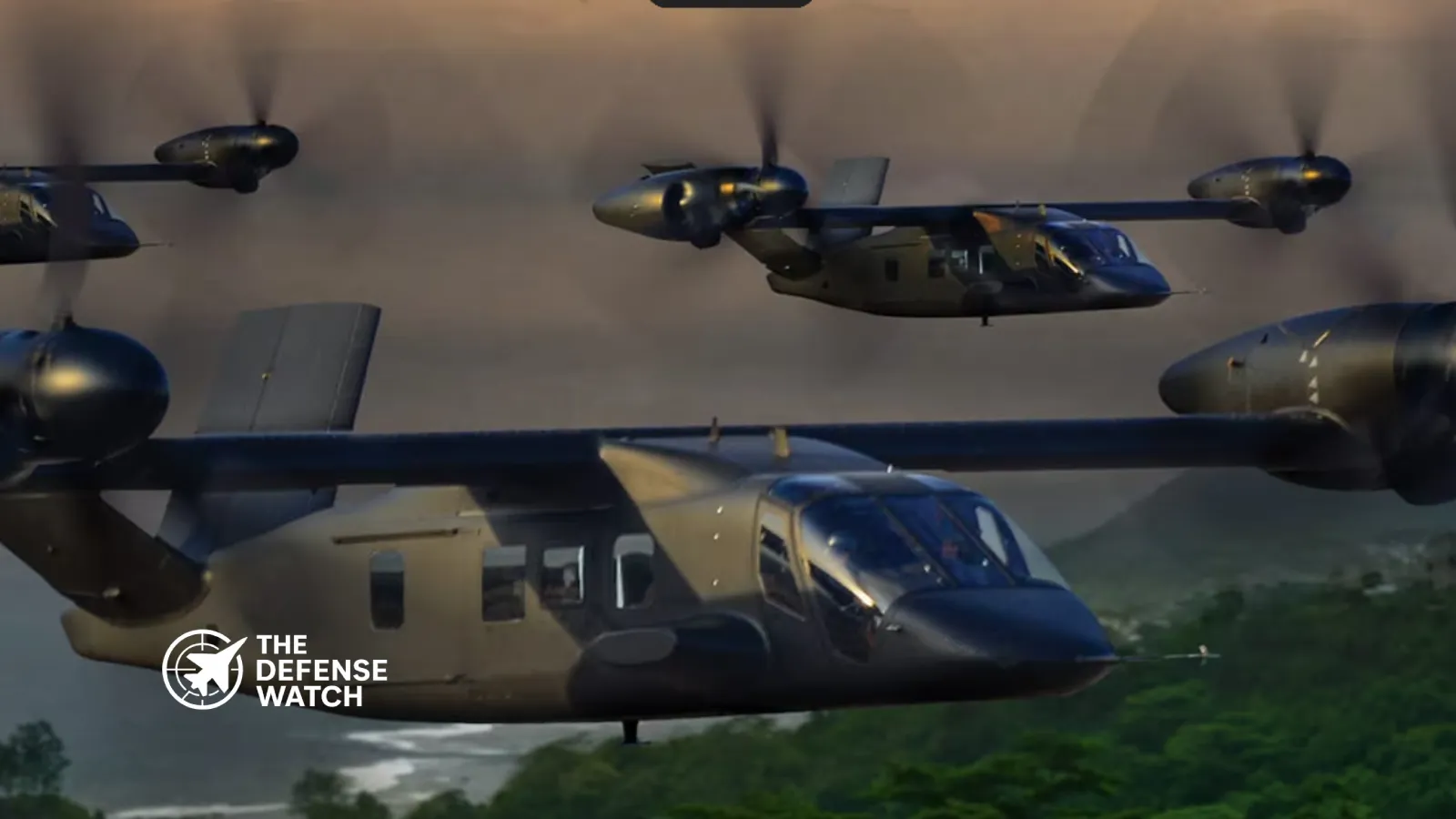
US Army Accelerates MV-75 Tiltrotor Fielding
The US Army is advancing fielding of the Bell MV-75 tiltrotor and aims to receive the first aircraft by late 2026, several years earlier than previously planned, service leaders said. The move marks a major shift in the Army’s Future Long Range Assault Aircraft (FLRAA) program and underlines urgency in modernizing its assault aviation fleet.
Army Chief of Staff General Randy George told soldiers in a January 13 forum that troops could begin flying the MV-75 by this time next year, a timeline that accelerates the delivery schedule from its original early-2030s expectations.
Tiltrotor Program Timeline and Acceleration
The MV-75, derived from Bell’s V-280 Valor tiltrotor demonstrator, was selected by the Army in 2022 to replace aging UH-60 Black Hawk helicopters under the FLRAA initiative. Its tiltrotor design aims to combine vertical takeoff and landing with fixed-wing speed and range.
Originally, first prototype deliveries and early flight testing were expected around 2027-2028, with operational fielding in the early 2030s. The Army and Bell have now agreed to move up that timeline. The service says active duty, National Guard, and Special Operations units may have MV-75s flying late in 2026 in a test and evaluation role.
Bell has begun assembling the first six MV-75 test aircraft in Wichita, Kansas, under contract for eight total, and plans to shift final assembly to its Amarillo, Texas facility, where Bell currently produces the V-22 Osprey tiltrotor.
Program Priorities and Capability Goals
The MV-75 tiltrotor is planned to give the Army significantly greater speed and range than legacy helicopters like the Black Hawk. Tiltrotor aircraft take off and land like rotary-wing platforms but transition to forward flight with proprotors that deliver faster cruise speeds.
(adsbygoogle = window.adsbygoogle || []).push({});Army leaders describe MV-75 as central to future assault and air mobility missions, especially in contested environments where rapid movement over long distances could be decisive. The aircraft is expected to support troop insertion, logistics lift, and other missions once fully operational.
Funding and Industrial Effort
Acceleration of the MV-75 schedule comes with a broader focus on US Army aviation modernization under the Future Vertical Lift framework. The FLRAA program represents one of the largest investments in Army aviation in decades. Funding adjustments and reprioritization of other programs have played a role in advancing tiltrotor development.
(adsbygoogle = window.adsbygoogle || []).push({});Bell says digital engineering methods have reduced manufacturing timelines for fuselage production, helping to support the accelerated delivery goal.
What Comes Next
Acceptance of the first MV-75 airframe in late 2026 will likely be followed by flight testing and evaluation well before initial operational capability. There is no confirmed date yet for full deployment with operational units.
Even with early deliveries, the Army plans to operate the MV-75 alongside a large fleet of Black Hawks for years, gradually replacing a significant portion of the current fleet.