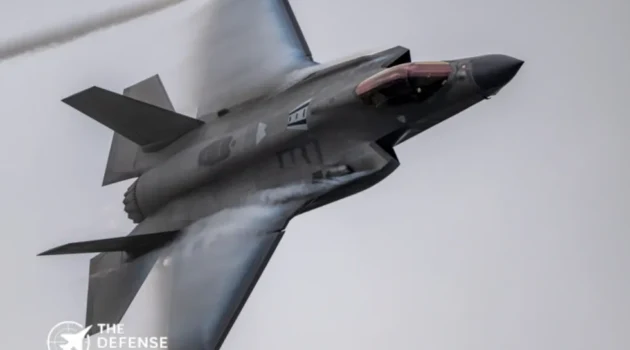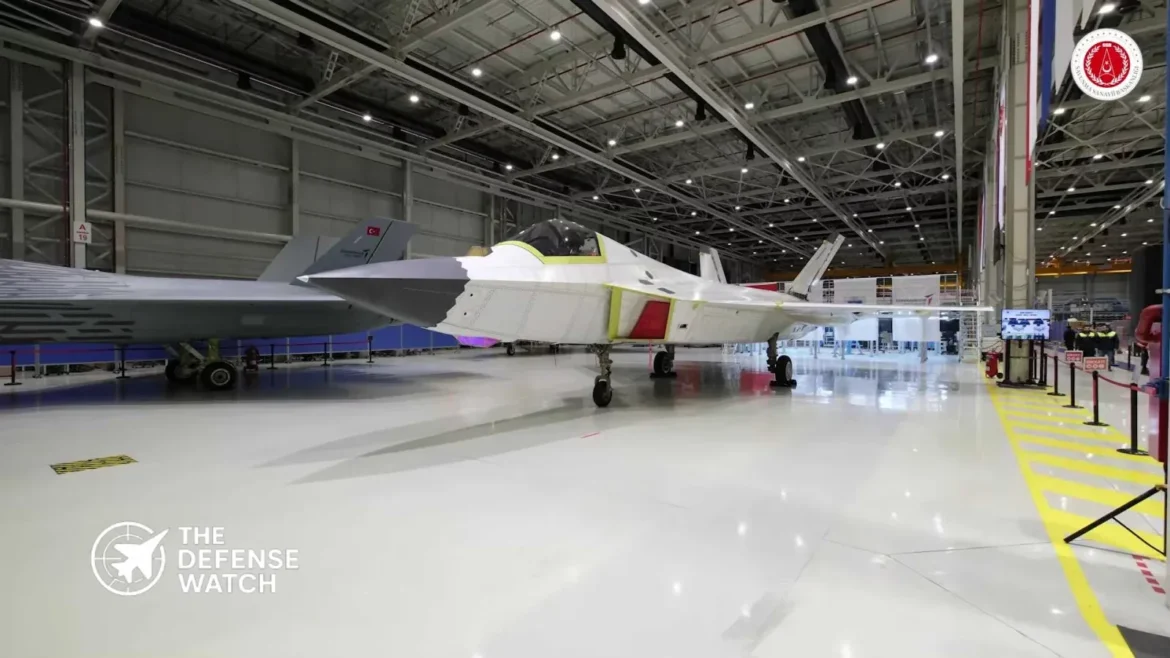
- ► Israeli newspaper Maariv reported that Spain is evaluating the Turkish KAAN fighter jet as part of its long term airpower planning.
- ► No official confirmation has been issued by Spain’s Ministry of Defense or Turkish Aerospace Industries.
- ► KAAN is Turkey’s indigenous fifth generation fighter program intended to replace the country’s F 16 fleet.
- ► The aircraft completed its maiden flight in 2024 and is currently in early flight testing.
- ► Spain operates EF 18 Hornets and Eurofighter Typhoons and participates in the Future Combat Air System program.
- ► European nations are reviewing next generation fighter options amid rising geopolitical tensions and modernization timelines.
- ► Any potential export of KAAN to a NATO member would carry strategic and industrial implications.
Spain Evaluating Turkish KAAN Fighter Jet, Israeli Media Claims
The Turkish KAAN fighter jet is reportedly being evaluated by Spain as part of Madrid’s long-term combat aircraft planning, according to a claim published by the Israeli newspaper Maariv.
(adsbygoogle = window.adsbygoogle || []).push({});The report states that Spain is assessing options beyond its current fleet as European nations accelerate efforts to field next-generation air combat systems. While no official confirmation has been issued by Madrid or Ankara, the claim highlights the growing international visibility of Turkey’s indigenous fifth-generation fighter program.
The development, if substantiated, would mark a notable moment for Turkey’s aerospace sector and for the evolving landscape of European fighter procurement.
Context: Europe’s Fighter Modernization Drive
Spain currently operates EF-18 Hornets and Eurofighter Typhoons and participates in the Future Combat Air System program led by France and Germany. However, European defense planning has become more fluid in recent years due to rising geopolitical tensions, budget pressures, and shifting industrial alliances.
Several European air forces are reviewing timelines, costs, and industrial participation frameworks tied to next-generation programs. In this context, external platforms such as the Turkish KAAN fighter jet are drawing attention, particularly as countries evaluate complementary or interim solutions.
The Maariv report suggests that Spain is monitoring KAAN as part of this broader review process. No procurement decision or formal request for information has been publicly disclosed.
What Is The Turkish KAAN Fighter Jet?
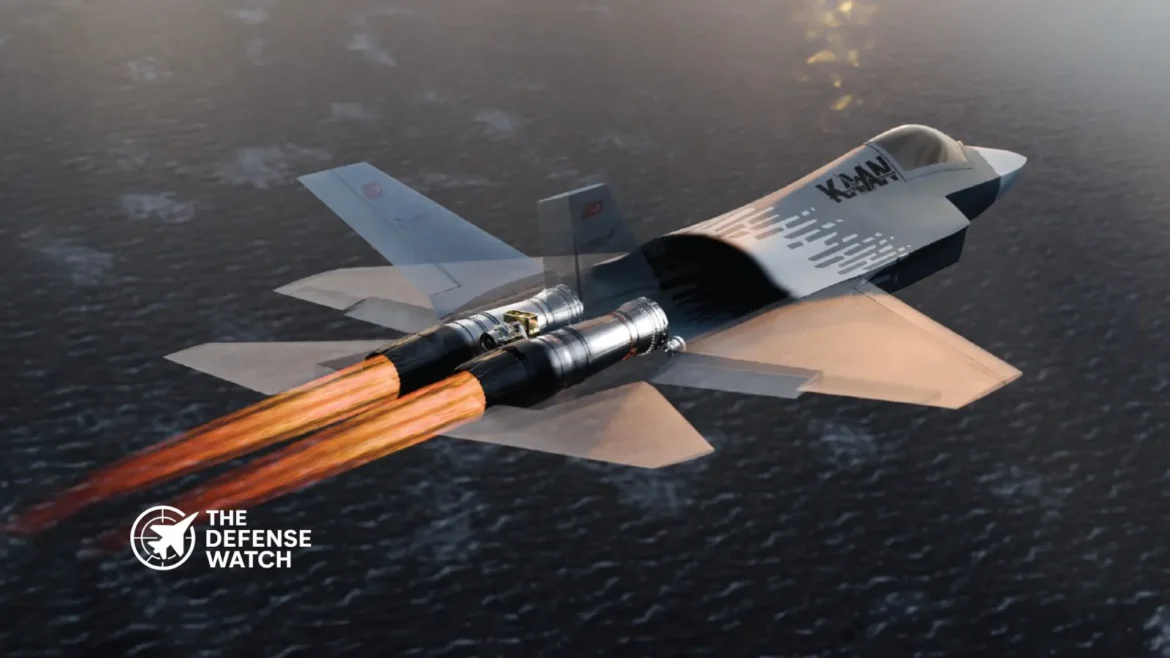
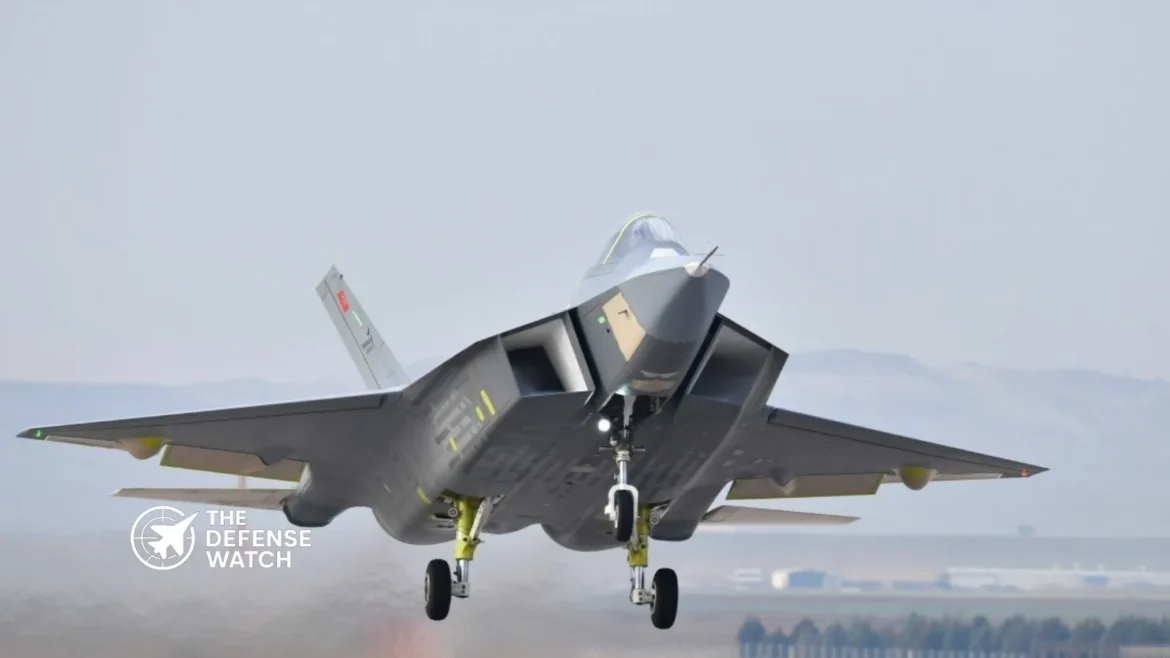
The Turkish KAAN fighter jet, developed by Turkish Aerospace Industries, is Turkey’s national combat aircraft program designed to replace the F-16 fleet in the coming decades.
The aircraft conducted its maiden flight in 2024 and is intended to feature:
- Low observable design characteristics
- Advanced avionics and sensor fusion
- Internal weapons bays
- Network centric warfare capability
Turkey positions KAAN as a fifth-generation platform, aligning it with aircraft such as the F-35 and other emerging stealth fighters. Engine development remains a key long-term milestone, with initial prototypes powered by foreign sourced engines while Ankara works toward indigenous propulsion solutions.
The Turkish government has consistently framed KAAN as both a sovereign capability project and a potential export platform.
European Interest And Strategic Implications
If Spain is indeed evaluating the Turkish KAAN fighter jet, it reflects several broader trends.
First, European nations are diversifying procurement options amid concerns over supply chains, cost growth, and industrial autonomy. Second, Turkey’s defense industry has expanded its footprint in recent years, particularly in unmanned systems and armored vehicles, increasing its credibility as an exporter.
From a geopolitical perspective, Spain considering a Turkish platform would carry industrial and alliance implications. Spain is a NATO member and part of joint European defense initiatives. Any movement toward a non EU fighter platform could influence trans European defense cooperation dynamics.
(adsbygoogle = window.adsbygoogle || []).push({});At the same time, evaluations do not necessarily translate into acquisition. Defense ministries routinely assess multiple platforms to benchmark capability, cost, and industrial return.
Official Silence And Verification
As of publication, neither the Spanish Ministry of Defense nor Turkish Aerospace Industries has confirmed the reported evaluation. The claim originates from Maariv, an Israeli publication, and has not been independently corroborated by official statements.
In defense reporting, early stage evaluations are common and often exploratory. Governments typically conduct feasibility reviews years before issuing formal tenders or requests for proposals.
Without confirmation from Madrid or Ankara, the reported Spanish interest in the Turkish KAAN fighter jet should be viewed as a preliminary assessment rather than a procurement commitment.
Analysis: Why KAAN Is Gaining Visibility
Roughly a third of Europe’s combat aircraft fleets will require replacement or major upgrades in the 2030s. Programs such as FCAS and the UK Italy Japan Global Combat Air Programme face long development timelines.
That gap creates space for alternative platforms to enter strategic discussions.
KAAN’s visibility is also tied to Turkey’s push for defense industrial independence following its removal from the F-35 program. Ankara has invested heavily in domestic aerospace capabilities, including radar systems, avionics, and weapons integration.
(adsbygoogle = window.adsbygoogle || []).push({});For potential buyers, three factors will likely determine interest:
- Program maturity and flight testing progress
- Engine roadmap and indigenous propulsion development
- Export framework, including technology transfer and industrial offsets
Spain’s reported evaluation, if accurate, may serve primarily as a comparative benchmark against European collaborative programs rather than a near-term acquisition plan.
Broader European Fighter Landscape
Spain’s current modernization path remains centered on Eurofighter upgrades and participation in FCAS. Any serious move toward the Turkish KAAN fighter jet would require alignment with NATO interoperability standards, sustainment infrastructure, and long term industrial partnerships.
European fighter procurement decisions are rarely made in isolation. They involve political, industrial, and alliance considerations as much as technical performance metrics.
The emergence of KAAN in European discussions underscores how the global fighter market is evolving, with more nations pursuing indigenous fifth-generation programs.
Conclusion
The reported Spanish evaluation of the Turkish KAAN fighter jet, as cited by Israeli media, signals growing international awareness of Turkey’s next-generation combat aircraft program.
(adsbygoogle = window.adsbygoogle || []).push({});However, no official confirmation has been issued, and there is no indication of a formal procurement process underway.
For now, the development highlights how Europe’s fighter modernization landscape remains dynamic, competitive, and strategically sensitive.

KAAN Fighter Jet Awaits US Approval For F110 Engines
The KAAN fighter jet program is nearing a key milestone as Türkiye expects the United States to approve exports of the F110 GE 129E turbofan engine for early production aircraft.
According to Turkish Aerospace Industries, approval for the U.S.-made engines could come in February or March 2026. The engines will power the first serial production batches of the KAAN Block 10 and Block 20 aircraft.
(adsbygoogle = window.adsbygoogle || []).push({});TUSAŞ General Manager Mehmet Demiroğlu said the company does not anticipate delays in the engine approval process, citing ongoing coordination between U.S. and Turkish officials.
Ten Engines Already In Hand
Demiroğlu confirmed that TUSAŞ already holds ten F110 engines. These are sufficient for prototype aircraft currently in development.
He stated that the company has faced no issues in the development phase related to propulsion. The existing engines support flight testing and system integration as the KAAN fighter jet moves through its early operational evaluation cycle.
The F110 GE 129E engine is produced by GE Aerospace and is widely used in advanced fourth generation fighters, including variants of the F 16. The engine provides high thrust output suitable for twin engine configurations such as KAAN.
Final Approval Stage Underway
TUSAŞ is now in what Demiroğlu described as the final stage of U.S. export approval. The authorization would allow the F110 engines to be installed in the first batch of KAAN Block 10 and Block 20 aircraft intended for operational service.
Based on discussions with both governments, TUSAŞ expects no disruption in deliveries. Approval could be issued within weeks.
(adsbygoogle = window.adsbygoogle || []).push({});The export decision follows established U.S. defense trade procedures. Such transfers require clearance under U.S. export control regulations and coordination between industry and government authorities.
First Delivery Set For 2029
The first KAAN fighter jet delivery to the Turkish Air Force is scheduled for early 2029.
Block 10 and Block 20 aircraft will rely on the F110 engine as an interim propulsion solution. These early blocks are expected to focus on core air dominance capabilities while additional systems mature.
The KAAN program represents Türkiye’s effort to field a domestically developed fifth generation fighter aircraft. The platform is designed to incorporate stealth shaping, advanced sensors, network centric warfare features, and internal weapons carriage.
The aircraft conducted its maiden flight in 2024, marking a significant milestone in Türkiye’s military aviation ambitions.
Transition To A National Engine By 2033
While early production models will use U.S. engines, TUSAŞ plans to equip the KAAN Block 30 aircraft with an indigenous powerplant.
Demiroğlu said the first test of the national engine is targeted for 2032, with final delivery planned for 2033. This shift would reduce reliance on foreign propulsion systems and strengthen domestic aerospace capabilities.
Engine development is a complex and resource intensive effort. It involves advanced materials, turbine blade technology, and high temperature performance engineering. Few nations maintain the industrial base required for fifth generation fighter engines.
(adsbygoogle = window.adsbygoogle || []).push({});Türkiye has been investing heavily in defense industrial self sufficiency over the past decade, particularly in aerospace, unmanned systems, and missile technology.
Strategic Context
The KAAN fighter jet plays a central role in Türkiye’s long term air power strategy. The program gained additional urgency aFter Ankara’s removal from the F 35 program in 2019.
Since then, Turkish defense planners have emphasized indigenous development across air, naval, and land systems.
The F110 export approval would signal continued defense industrial cooperation between Washington and Ankara, despite periodic political tensions.
The engine decision also carries operational significance. Without timely approval, serial production timelines could face adjustments. However, TUSAŞ leadership has publicly stated that current indicators point toward a smooth authorization process.
(adsbygoogle = window.adsbygoogle || []).push({});Program Outlook
With prototypes flying and engine supplies secured for testing, the KAAN fighter jet remains on track for initial operational delivery at the end of the decade.
Upcoming milestones include expanded flight testing, avionics integration, weapons certification, and low rate initial production planning.
As the program advances, propulsion remains a key focus area. The transition from the F110 engine to a domestically produced alternative will mark a critical phase in Türkiye’s effort to field a fully sovereign fifth generation combat aircraft.
For now, industry officials appear confident that U.S. approval for the F110 GE 129E engines will arrive within the expected timeframe.
Turkish-Saudi Defense Partnership Eyes Kaan Fighter Jet Investment
The Kaan fifth-generation fighter jet could become the centerpiece of expanded defense cooperation between Turkey and Saudi Arabia, according to Turkish President Recep Tayyip Erdogan. Speaking to reporters on February 5, 2026, during his return from Cairo, Erdogan indicated that the homegrown stealth aircraft has attracted significant interest from Riyadh and that a joint investment partnership could materialize in the near future.
(adsbygoogle = window.adsbygoogle || []).push({});“We have received a lot of positive feedback on Kaan,” Erdogan stated, according to Anadolu Agency. “There is a joint investment with Saudi Arabia in this area, and we can implement this partnership at any moment.”
The announcement follows Erdogan’s two-day diplomatic tour to Saudi Arabia and Egypt, where defense industry cooperation featured prominently in bilateral discussions. Both Ankara and Riyadh signed what Erdogan described as “major” defense industry cooperation agreements, with Turkey expressing determination to expand these partnerships further.
Kaan: Turkey’s Indigenous Fifth-Generation Fighter
The Kaan fighter jet, developed by Turkish Aerospace Industries (TAI), represents Turkey’s most ambitious aerospace project to date. First publicly unveiled in 2023, the aircraft completed its maiden test flight in early 2024 and is scheduled to enter serial production in 2028.
Erdogan emphasized the strategic significance of the program beyond its military applications. Kaan is not just a fighter jet,” the Turkish president asserted. “Kaan is a symbol of Turkey’s engineering capabilities and independent defense will.
The fifth-generation stealth aircraft incorporates advanced avionics, low-observable technology, and modern weapons systems designed to compete with established platforms like the F-35 Lightning II and European fighter programs. Turkey’s development of the Kaan accelerated following Ankara’s removal from the F-35 program in 2019.
Growing Defense Ties Between Ankara and Riyadh
Turkey-Saudi Arabia defense cooperation has strengthened significantly in recent years as both nations pursue greater strategic autonomy and regional influence. The potential partnership on the Kaan program would mark the latest development in expanding bilateral defense ties.
During his visit to Saudi Arabia, Erdogan highlighted alignment between Turkey’s “Century of Turkey” vision and Saudi Arabia’s Vision 2030 development program. Beyond defense, the countries signed an energy agreement worth approximately $2 billion to construct two solar power plants in Turkey’s Sivas and Karaman provinces, with a combined capacity of 2,000 megawatts.
“We have deep-rooted relations with Saudi Arabia that have cultural and historical dimensions,” Erdogan said. The progress our country has made in the field of defense industry is being followed with interest by Saudi Arabia, as it is by the whole world.
International Market for Turkish Defense Systems
The potential Saudi investment in the Kaan fighter jet would follow Indonesia’s commitment to purchase up to 48 aircraft under an agreement signed by TAI in June 2024. The Indonesian deal makes the Southeast Asian nation the first confirmed international customer for the advanced fighter.
Turkey’s defense industry has experienced rapid growth over the past decade, with domestically produced systems gaining international recognition. Turkish-made Bayraktar TB2 unmanned aerial vehicles have seen operational success in multiple conflicts, while naval platforms and armored vehicles have attracted buyers across Africa, the Middle East, and Asia.
We are primarily focused on meeting our own needs in the defense industry,” Erdogan explained. “In addition, we also strive to meet the needs of our friends and brothers. We are signing important cooperation agreements with Saudi Arabia in the field of defense industry and we are determined to develop this further.”
Regional Defense Dynamics
The expanding Turkey-Saudi Arabia defense cooperation reflects broader shifts in Middle Eastern security arrangements. Both nations have positioned themselves as major military and economic powers pursuing independent defense capabilities and regional leadership.
(adsbygoogle = window.adsbygoogle || []).push({});Turkey has invested heavily in indigenous defense production, reducing reliance on Western suppliers while building export markets. The country’s defense and aerospace sectors have achieved global recognition, with products ranging from armored vehicles and naval vessels to sophisticated electronic warfare systems and precision-guided munitions.
Saudi Arabia, meanwhile, seeks to diversify its defense procurement and develop domestic military industries under Vision 2030. Riyadh has historically relied on American and European suppliers but is increasingly exploring partnerships with emerging defense producers including Turkey, South Korea, and others.
Strategic Implications
A joint Turkish-Saudi investment in the Kaan program could accelerate development timelines, share production costs, and create new export opportunities. For Turkey, Saudi financial backing would provide additional resources for a capital-intensive program. For Saudi Arabia, partnership in a fifth-generation fighter program aligns with ambitions to develop indigenous aerospace capabilities.
The cooperation also signals potential coordination between two NATO partners (Turkey) and key U.S. regional allies (Saudi Arabia) on advanced military technology, independent of traditional Western suppliers.
Erdogan’s comments suggest negotiations are advanced, though specific details regarding investment amounts, production sharing, or technology transfer arrangements have not been disclosed. Turkish officials have indicated that formal announcements could follow pending finalization of technical and financial terms.
Looking Ahead
With serial production scheduled to begin in 2028, the Kaan program is entering a critical phase. Securing additional international partners and customers will be essential for program sustainability and export success.
(adsbygoogle = window.adsbygoogle || []).push({});Turkey’s growing defense cooperation with both Saudi Arabia and Egypt, underscored by Erdogan’s recent diplomatic tour, suggests Ankara is positioning itself as a key defense supplier to Middle Eastern nations seeking alternatives to traditional suppliers.
As global defense markets evolve and regional powers pursue greater self-sufficiency, partnerships like the potential Turkish-Saudi collaboration on the Kaan fighter jet may represent a new model for defense cooperation among emerging military powers.
Turkey’s Defense Industry Enters 2026 With KAAN Flight Tests, Record Exports & Steel Dome Deliveries
Turkey’s Defense Industry Sets Ambitious 2026 Targets as Exports Cross $10 Billion
Turkey’s defense industry kicked off 2026 with a comprehensive press briefing coordinated by the Presidency of Defense Industries (SSB), laying out a delivery-heavy, export-driven strategy across aviation, naval, missile, and electronic warfare domains — as the sector records its first-ever annual defense and aerospace exports surpassing $10 billion.
(adsbygoogle = window.adsbygoogle || []).push({});The briefing, held on February 1, featured senior executives from the country’s largest state-linked and private defense primes — including Turkish Aerospace Industries (TUSAS), Roketsan, ASFAT, TEI, STM, ASELSAN, and MKE — each presenting program milestones achieved in 2025 and concrete deliverables for the year ahead. The collective message was unmistakable: 2026 is a year of execution, not just development.
KAAN Fifth-Gen Fighter Enters Flight Test Phase
The centerpiece of the briefing was the KAAN national combat aircraft, Turkey’s stealth, twin-engine, fifth-generation fighter developed by TUSAS to replace the Turkish Air Force’s aging F-16 fleet. TUSAS General Manager Dr. Mehmet Demiroğlu confirmed that the program has transitioned from ground testing to active flight testing, with the first non-demonstrator prototype — designated P1 — targeted for its maiden flight by the end of April 2026.
A second prototype, P2, is expected to follow shortly thereafter, with TAI aiming for a first flight in the May–June 2026 window. Together with a dedicated ground-test vehicle, the program now has three prototypes in various stages of completion at TUSAS’s Ankara facilities.
“Our goal is still the end of April. KAAN will begin test flights.”— Dr. Mehmet Demiroğlu, General Manager, TUSAS
The KAAN program has attracted significant international interest. Indonesia has signed up for 48 aircraft, marking the first confirmed export order for the platform. TUSAS officials have indicated that negotiations with additional countries — including potential interest reported from Saudi Arabia and Spain — are ongoing, though no additional firm orders have been publicly announced.
Powering the KAAN prototypes are twin General Electric F110-GE-129E turbofan engines, with an initial batch already delivered to TAI as of late 2025. However, Turkey is pursuing full engine autonomy: the domestic TF35000 engine program, led by TEI, reached its critical design review (CDR) milestone in 2025. Early ground testing of the indigenous engine is planned for 2026, with integration on a KAAN airframe targeted for 2032.
TUSAS: Trainer Jets, Helicopters, and Airbus Supply Chain
Beyond KAAN, TUSAS reported a broad portfolio of deliverable programs for 2026. The company plans to hand over 22 HÜRKUŞ light attack and training aircraft to the Turkish Armed Forces this year. The advanced jet trainer HÜRJET — which reached Mach 1.2 during flight testing in 2025 — is expected to see its first Block 0 production aircraft roll out between May and June, with three to four units targeted by year-end.
HÜRJET secured a high-profile export contract with Spain’s Royal Air Force, a deal reportedly valued at over €2.6 billion for 30 aircraft with deliveries beginning in 2028. This marks Turkey’s formal entry into the jet trainer export market and a landmark sale to a NATO ally.
The GÖKBEY utility helicopter program is also accelerating. TUSAS confirmed that a new contract for 57 additional helicopters has been signed with SSB, bringing the total order to 83 units. The fifth production helicopter was delivered recently, and the company plans a delivery cadence of one per month in 2026, rising to two per month in 2027. GÖKBEY completed cold-weather testing in Sweden in February 2025, and civilian certification is expected in early 2026.
On the structural aerostructures side, TUSAS delivered the 500th fuselage section (Section 18–19) to Airbus and Boeing programs in December 2025, underscoring the company’s role as a Tier-1 supplier in global commercial aviation manufacturing.
TEI Sets Engine Records and Advances TS1400
Turkish Aero Engines (TEI), the national engine manufacturer, reported near $700 million in revenues for 2025, with roughly $500 million attributable to exports — including a maintenance contract win with the Chilean Air Force that solidified its global credentials.
TEI’s PD170 turbofan, which powers the ANKA and AKSUNGUR UAV platforms, broke through the 42,000-foot altitude ceiling during testing — a record in its class. The company also completed delivery of 100 units of the Kara Şahin piston engine.
Looking ahead, TEI announced that the TS1400 turbofan — intended for the HÜRJET trainer — has largely completed certification and will begin deliveries to TUSAS in 2026. This engine will enable HÜRJET to transition from interim foreign powerplants to a fully indigenous propulsion solution.
ASELSAN and the Steel Dome Air Defense Network
ASELSAN, Turkey’s largest defense electronics firm and the 43rd largest defense company globally according to the Defense News Top 100, reported a combined direct-and-indirect export contribution of $958 million in 2025. The company signed new contracts worth $2.069 billion with 58 countries, raising its total export customer base to 95 nations.
A standout achievement was the $410 million electronic warfare system sale to Poland — the first such sale to a NATO member state and a clear indicator of Turkey’s expanding credibility within the alliance’s defense ecosystem.
On the domestic front, ASELSAN confirmed that over 100 components of the multi-layered Steel Dome air defense system have been delivered to the Turkish Armed Forces. Steel Dome integrates the SIPER long-range, HISAR mid-range, and SENGOKU short-range air defense platforms into a single, networked architecture. A $6.5 billion mass-production contract covering Steel Dome subsystems and related strategic defense systems was signed between SSB and ASELSAN/Roketsan in late 2025.
Roketsan Enters Serial Production on Key Missile Systems
Roketsan, ranked 71st globally among defense manufacturers, contributed over $750 million to Turkey’s sector-wide export figure in 2025 — helping push the national total past $10 billion. The company closed the year with revenues up more than 55 percent and doubled its backlog of orders.
Critically, Roketsan formally entered serial production on two systems in 2025: the AKATA anti-ship missile and the TAYFUN strategic cruise missile. Both had previously been in development. Roketsan also conducted 850 test events during the year to validate operational maturity across its product lines. The company’s products are now active in more than 40 countries, with local co-production arrangements established in several markets.
ASFAT Expands Naval and Armored Vehicle Exports
ASFAT, the state-owned defense manufacturer, reported its most significant year in terms of contract value — reaching roughly twice the combined total of the previous seven years. On the naval side, the company delivered Pakistan’s PNS Khaibar corvette under the MILGEM program in Istanbul and began sea trials on a corvette destined for Romania — opening the door to the European naval export market.
New contracts were signed with SSB for the TF-2000 frigate program’s second phase, the MİLDEN submarine program’s first phase, and open-sea patrol vessels. The 8×8 Panther integrated howitzer system entered the Turkish Army inventory, with one unit already delivered and three more expected in February. The remaining 36 units of the ARPAN variant are scheduled for delivery in three batches before year-end.
STM’s NETA Autonomous Submarine Nears Testing Completion
STM, a leading developer of unmanned naval systems, confirmed that the NETA autonomous underwater vehicle has completed the majority of its test program and is approaching final validation. The company also announced that construction of Turkey’s first national attack craft has begun, while submarine modernization work and İSTİF-class frigate construction continue on an intensive schedule.
(adsbygoogle = window.adsbygoogle || []).push({});STM’s tactical drone portfolio now spans more than 15 export markets. The company is conducting strategic business development across 50-plus countries in 2026, aiming to convert pipeline opportunities into firm contracts.
MKE Targets Eightfold Increase in Ammunition Capacity
The Machinery and Chemical Industry Corporation (MKE), Turkey’s state ammunition manufacturer, disclosed that it has invested nearly $1 billion over the past two years to raise production capacity to 65,000 rounds annually. The company’s stated ultimate target is 1 million rounds per year — an eightfold increase — supported by new factory construction in Samsun and Kırşehir.
MKE also reported the first-ever export of heavy weapons to Bangladesh and the introduction of what it described as the world’s first electric-powered armored combat vehicle into the Turkish Armed Forces inventory. The company currently exports to more than 10 countries and established a new R&D center focused on energetic materials to localize chemical production.
Strategic Outlook
The February 1 briefing collectively underscored a deliberate shift in Turkey’s defense industrial posture — from a decade dominated by R&D milestones and prototype demonstrations to a phase defined by serial deliveries, export volume, and industrial scaling. Five Turkish companies now appear in SIPRI’s global top 100, and the country’s domestic localization rate exceeds 80 percent, down from roughly 20 percent two decades ago.
Roketsan’s CEO Murat İkinci projected that sector-wide defense and aerospace exports would surpass $10 billion in 2026, maintaining a growth rate comparable to 2025’s roughly 48-percent year-on-year increase. ASELSAN has set a stated goal of entering the global top 20 defense firms and the European top 10 within the medium term.
For international observers — particularly in Washington, Brussels, and allied capitals — the trajectory carries strategic significance. Turkey’s expanding role as a credible arms exporter to NATO allies (Poland, Spain) and Indo-Pacific markets (Indonesia) positions Ankara as an increasingly consequential player in the global defense trade landscape, with direct implications for alliance dynamics and regional security architectures.