The Pentagon’s plan to establish an Autonomous Warfare Command is intended to change how the U.S. military develops, acquires, trains with and deploys unmanned and robotic systems. Defense Secretary Pete Hegseth reaffirmed that objective on October 14, 2026, during a discussion with senior military department officials at the Association of the United States Army’s annual conference in Washington, D.C.
The proposed command, known as AUTOWARCOM, is scheduled to be established by October 1, 2027. Its central purpose is to coordinate autonomous warfare capabilities across the armed services, rather than leave development and fielding efforts divided among separate organizations.
Hegseth described the initiative as a long-term organizational change, with an emphasis on getting emerging technology into operational units faster. However, the command’s final structure, authorities, funding and practical division of responsibilities remain subject to further decisions.
From Project Agincourt to a Joint Military Command
The Pentagon formally set the initiative in motion on September 30 through a memorandum titled Project Agincourt: Pathway to the Autonomous Warfare Command. Project Agincourt provides the interim organizational framework for preparing the proposed command.
Owen West, who leads the Defense Department’s unmanned systems portfolio effort and directs the Defense Innovation Unit, has been assigned to lead the project. The initiative is intended to connect military operators, technology developers and acquisition officials more closely so that systems can be tested and improved in response to operational needs.

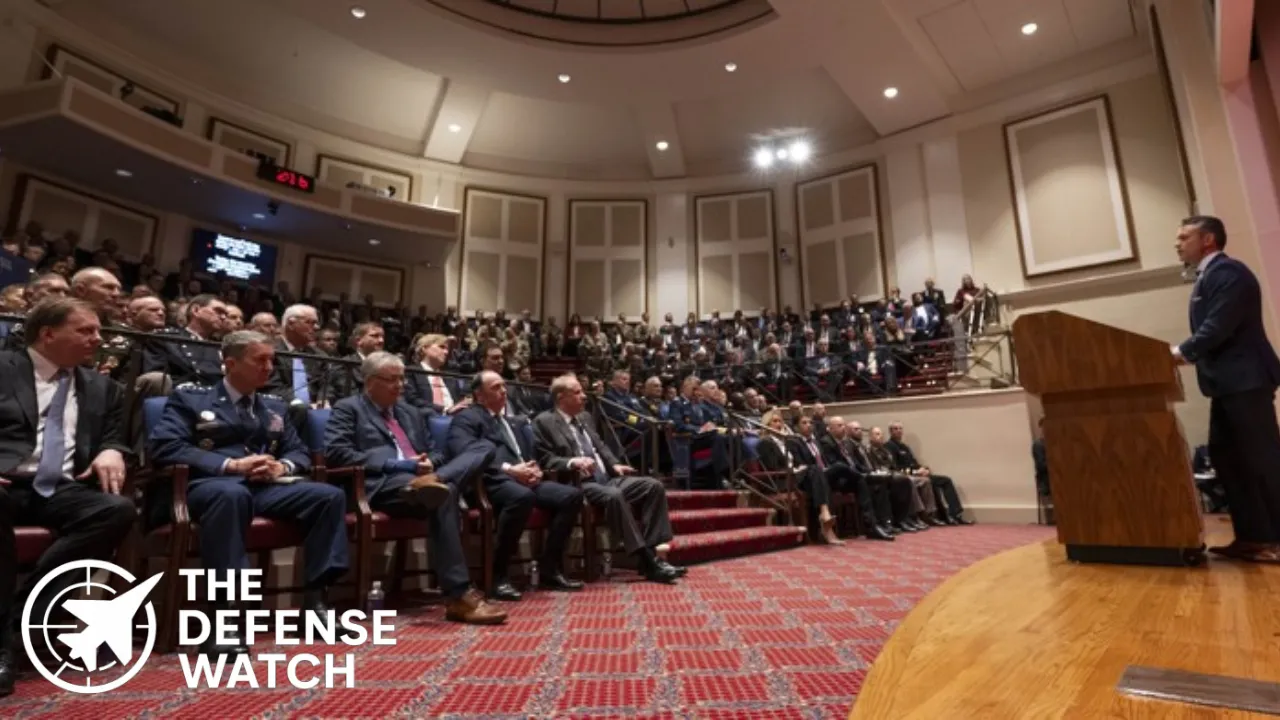
Chief Pentagon Spokesman and Senior Advisor Sean Parnell introduces Assistant Secretary of War for Special Operations and Low-Intensity Conflict Derrick Anderson; Acting Secretary of the Army Adam Telle; Secretary of War Pete Hegseth; Owen West, the chief executive officer of the Pentagon’s Direct Reporting Portfolio Manager for Unmanned Systems; Secretary of the Air Force Troy Meink and Acting Secretary of the Navy Hung Cao, during a panel discussion at the 2026 Association of the United States Army annual meeting and exposition in Washington, Oct. 14, 2026. (Image : DoW)
The approach reflects a problem that has challenged military modernization programs for years. New technologies can take considerable time to move from development and testing into operational service, particularly when requirements, procurement decisions and funding are managed by different organizations.
The Pentagon wants to shorten that cycle. Rather than treating a particular drone or robotic platform as the final product, the proposed model places greater emphasis on an ongoing process of experimentation, field testing and adaptation.
That distinction matters in autonomous warfare, where software updates, sensor integration, electronic warfare threats and changes in enemy tactics can affect a system’s usefulness after it enters service.
Why the Pentagon Wants a Four-Star Command
Hegseth has argued that the new organization needs sufficient authority to influence decisions across the military services. The planned command would be led by a four-star officer, although the Pentagon had not publicly named its intended commander at the October 14 discussion.
The proposed structure is intended to give autonomous and robotic warfare a stronger position in joint force planning. It could help align requirements and priorities among the Army, Navy, Air Force, Marine Corps and other participating organizations.
But creating a new headquarters does not automatically resolve the practical challenges of integrating autonomous systems. The services operate different platforms, communications networks, command structures and operational environments. A system designed for ground reconnaissance, for example, may have different technical and safety requirements from an autonomous aircraft or an uncrewed maritime vehicle.
The command will therefore need clear responsibilities for procurement coordination, testing, operational doctrine and the relationship between centralized decisions and service-level programs. Congress will also have a role in enabling the proposed structure, according to reporting by Defense One and Breaking Defense.
The focus extends beyond buying more drones
One of the initiative’s most important features is its emphasis on operational use, not simply procurement.
At the October 14 conference, Hegseth discussed getting systems into the hands of frontline leaders so they can be tested and refined under realistic conditions. Senior officials also discussed training, doctrine and efforts to make military test ranges more accessible to private-sector developers.
These priorities reflect several related requirements:
- Faster field testing: Military units need opportunities to assess systems in realistic operating environments and provide feedback to developers.
- Closer links between operators and industry: Developers need direct information about battlefield requirements, technical shortcomings and changing threats.
- Common priorities across the services: Joint operations depend on systems that can exchange information and function alongside other military capabilities.
- Continuous adaptation: Autonomous systems may need frequent software, sensor and mission updates as adversaries change their tactics.
The Army has already announced steps toward a service-level organization focused on autonomy. Defense One reported on October 14 that the Army had renamed its Futures and Concepts Command as Futures and Autonomy Command, positioning it as a component of the planned joint structure. The other services had not announced equivalent organizations at that time.
The eventual effectiveness of AUTOWARCOM will depend partly on how these service-level efforts are coordinated without creating another layer of approval that slows development.
Funding remains a major question
The proposed command will require resources to support research, procurement, testing, production and integration across the military.
According to National Defense magazine, the Pentagon’s fiscal year 2027 budget proposal seeks $53.6 billion for autonomous systems procurement, domestic production capacity and advanced capabilities. That figure is a proposed funding amount, not confirmation that Congress has approved the spending.
The distinction is important because a new organizational structure cannot deliver the intended capabilities without funding for the systems themselves, their supporting infrastructure and the personnel required to operate and maintain them.
Expanding production also presents practical challenges. The Pentagon will need suppliers capable of producing systems at the required scale, reliable access to components, and arrangements for software maintenance and technical support. Different platforms may also require separate training pipelines and sustainment arrangements.
The funding question therefore extends beyond how much the military spends on drones. It concerns whether the department can turn that spending into equipment that units can field, maintain and integrate into operational plans.
Autonomous warfare does not eliminate the need for human judgment
The term autonomous warfare covers a broad range of technologies, from systems that assist human operators to platforms capable of performing selected tasks without continuous human input. These categories should not be treated as interchangeable.
Many military systems already use automation to support navigation, surveillance, target detection and information processing. Greater autonomy could help forces manage large volumes of sensor data or respond to threats at speeds that make continuous manual control difficult.
However, greater technical autonomy also raises questions about reliability, accountability, communications resilience and the limits of delegated decision-making.
At the Army’s annual conference, Army Chief Technology Officer Alex Miller discussed maintaining appropriate levels of human judgment, particularly in activities such as counter-battery fire and air and missile defense. The challenge is to determine where human oversight is essential and where automated processes can safely reduce the burden on personnel.
Electronic warfare adds another complication. Jamming, disrupted navigation, degraded communications and misleading sensor inputs can affect the performance of unmanned systems. Autonomous functions may help a platform continue operating when communications are interrupted, but that does not guarantee that its decisions will remain accurate or appropriate.
For the Pentagon, the task is not merely to field more autonomous platforms. It is to establish the technical safeguards, command arrangements and operating procedures needed to use them reliably.
What the new command must demonstrate
The October 14 discussion established the administration’s intention to accelerate autonomous warfare, but senior officials disclosed few concrete operational milestones or performance measures for the future command. Defense One reported that the discussion left important questions about its eventual structure and implementation unanswered.
The next stages will require the Pentagon to define the command’s authorities, identify its leadership, coordinate service-level organizations and secure the necessary funding and congressional support.
The target date of October 1, 2027, provides a planning milestone. It does not, by itself, establish when the command will reach full operational capability or when particular autonomous systems will enter service.
For now, the most consequential change is organizational. The Pentagon is attempting to make autonomous and robotic systems a coordinated joint force priority, linking acquisition decisions more directly to operational experimentation.
Whether that approach improves battlefield performance will depend on implementation, production capacity, technical reliability and the ability of the services to work within a common framework.