(adsbygoogle = window.adsbygoogle || []).push({});Executive Summary:
Air rifles occupy a unique position in the United Kingdom, bridging recreational shooting, competitive marksmanship, and practical pest management. While airsoft focuses on simulation and training value, modern air rifles have evolved into highly accurate tools capable of delivering humane pest control at short to medium ranges.
Air rifles account for millions of shooting activities across the United Kingdom every year. Unlike firearms that require more extensive licensing and storage requirements, many air rifles remain accessible to lawful owners while delivering surprising levels of accuracy.
At the same time, airsoft has emerged as one of Britain’s fastest-growing tactical hobbies. Players use realistic replica weapons to recreate military scenarios, small-unit tactics, and competitive team-based engagements. Though both disciplines share common equipment aesthetics, their purposes differ dramatically.
One is built around marksmanship and practical field use. The other centers on simulation, teamwork, and tactical gaming.
Technical Analysis: Air Rifles, Airsoft Platforms, And Pest Control Performance
Modern air rifles have benefited from advances originally seen in precision firearms. Pre-Charged Pneumatic (PCP) systems, regulated air reservoirs, improved barrel manufacturing, and high-quality optics have transformed the sector.
A premium PCP air rifle can consistently produce sub-inch groups at 50 yards. Many professional pest controllers consider this level of precision essential when targeting rabbits, rats, pigeons, or invasive squirrels.
The most common UK air rifle calibers include:
- .177 caliber, favored for flatter trajectories and competitive shooting.
- .22 caliber, preferred by many pest controllers due to greater impact energy.
- .25 caliber, less common but increasingly popular for larger vermin at closer ranges.
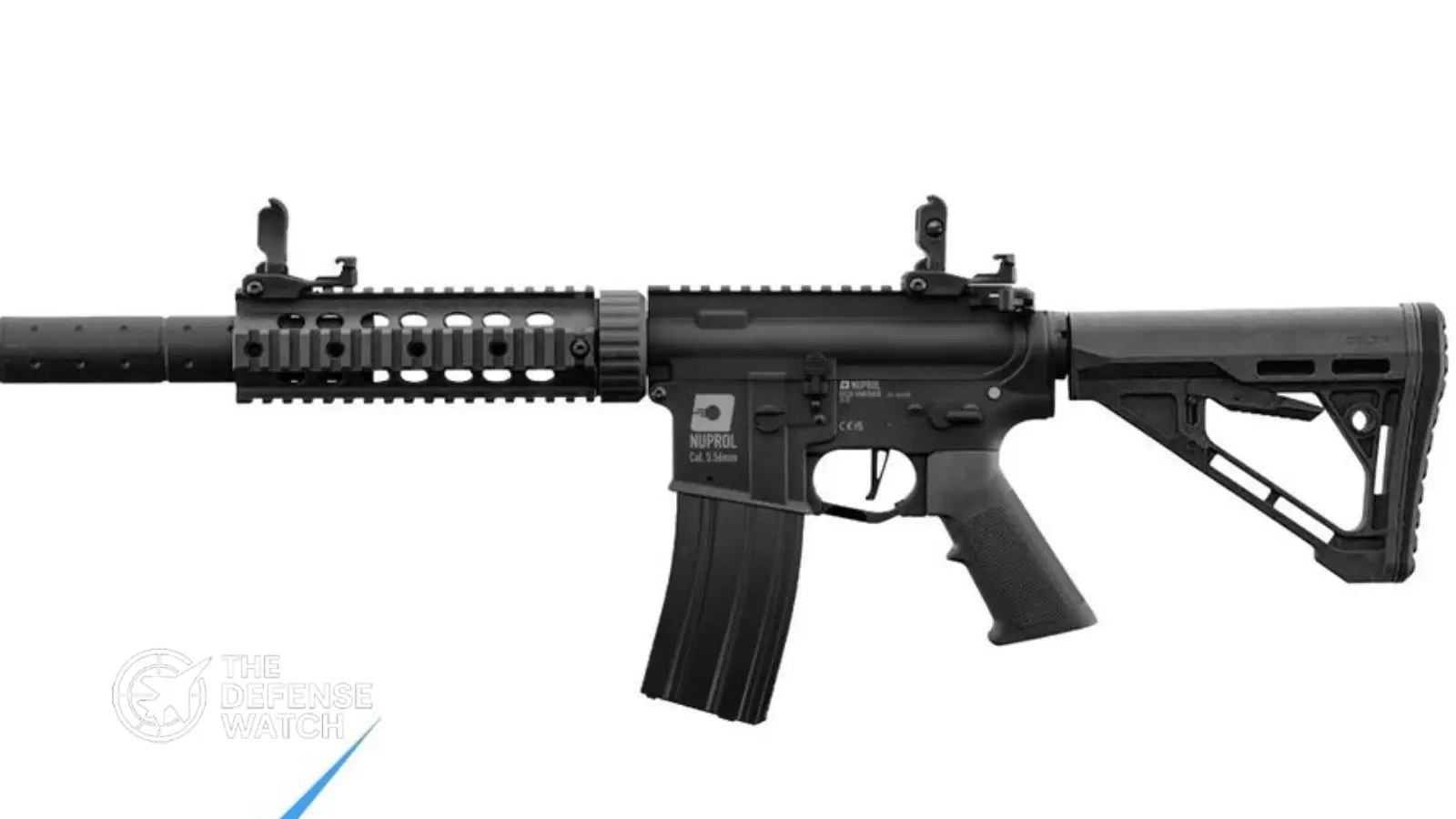
Airsoft platforms operate under an entirely different philosophy. Their projectiles are lightweight plastic BBs typically weighing between 0.20 and 0.40 grams. Engagement ranges often fall between 30 and 70 meters depending on platform configuration.
While airsoft guns replicate military weapons with impressive realism, they are not designed for hunting or pest control. Their primary value lies in training, recreation, and force-on-force simulation.
Data Block: Air Rifles Vs Airsoft Platforms
| Metric | Air Rifle (PCP) | Airsoft Rifle (AEG/GBB) |
|---|---|---|
| Primary Purpose | Pest control, target shooting | Tactical simulation, recreation |
| Typical Projectile | Lead pellet | Plastic BB |
| Caliber | .177, .22, .25 | 6mm, 8mm |
| Effective Accuracy Range | 30 to 80 yards | 30 to 70 meters |
| Muzzle Energy | Up to legal UK limits and beyond with licensing | Significantly lower |
| Average Platform Cost | £300 to £2,000+ | £150 to £1,000+ |
| Optics Compatibility | Extensive | Extensive |
| Hunting Capability | Yes | No |
| Training Value | Marksmanship | Team tactics and movement |
For pest control operations, shot placement matters far more than raw power. Experienced shooters often compare the process to precision sniping rather than traditional hunting.
A rat presenting only a small target area near agricultural infrastructure may require a shot measured in millimeters rather than inches. This is where modern PCP systems have established dominance over older spring-powered designs.
The Pest Control Mission
The United Kingdom faces persistent agricultural losses from rabbits, rats, feral pigeons, and other nuisance species. These animals damage crops, contaminate feed stores, and spread disease across farming environments.
Air rifles offer several operational advantages:
- Low noise signature compared with conventional firearms.
- Reduced risk of over-penetration.
- Lower operating costs.
- High precision in confined environments.
- Greater suitability around livestock facilities.
Many pest control specialists deploy thermal optics and night-vision equipment during low-light operations. Technologies once associated with military surveillance have steadily filtered into the civilian shooting market.
The result is a level of target identification and engagement capability that would have been difficult to imagine two decades ago.
The Insight: What Airsoft And Military Gaming Reveal About Real-World Shooting Skills
Airsoft’s popularity stems partly from its ability to replicate military decision-making under pressure.
Competitive players learn communication, movement, observation, and terrain exploitation. While airsoft cannot replicate recoil, ballistic effects, or terminal performance, it develops many cognitive skills relevant to tactical environments.
The connection becomes particularly interesting when viewed through the lens of modern esports and military simulation games.
Players who excel in tactical titles often understand concepts such as fire-and-maneuver, overwatch positioning, choke-point control, and reconnaissance. Airsoft transforms many of these virtual concepts into physical actions.
Air rifle shooting represents the opposite end of the spectrum.
Instead of rapid movement and team coordination, success depends on patience, range estimation, wind reading, trigger discipline, and precision shot execution.
Together, the two activities mirror the broader distinction between tactical maneuver warfare and precision engagement missions found in modern military doctrine.
(adsbygoogle = window.adsbygoogle || []).push({});Key Takeaway: Precision wins in pest control just as it does in military marksmanship. Equipment matters, but consistent shot placement, observation, and discipline remain the decisive factors.
Historical Perspective
Britain’s airgun tradition stretches back more than a century. Early pneumatic rifles were used for training and recreational shooting long before modern airsoft existed.
The arrival of affordable PCP technology during the late twentieth century dramatically improved performance standards. What began as a simple sporting tool evolved into a sophisticated precision platform capable of delivering exceptional accuracy.
Airsoft followed a different path, emerging from replica shooting cultures before expanding into organized skirmishes and large-scale tactical events. Today, major UK venues host military-style scenarios involving hundreds of participants.
Both communities continue to grow because they appeal to different aspects of shooting culture.
One rewards precision and patience.
The other rewards teamwork and tactical creativity.
Conclusion & Takeaway
UK air rifles and airsoft platforms occupy distinct but complementary roles within Britain’s shooting ecosystem. Airsoft offers realistic tactical experiences and team-based competition, while air rifles remain among the most effective and economical tools for lawful pest control and precision shooting.
Advances in optics, air systems, and manufacturing continue to narrow the gap between sporting equipment and professional-grade precision platforms. For farmers, pest controllers, and shooting enthusiasts alike, the modern air rifle represents a blend of affordability, effectiveness, and accuracy that few other systems can match.
The enduring lesson is simple: whether managing pests on a rural farm or navigating a tactical airsoft field, success depends less on equipment alone and more on the skill of the person behind it.