

Table of Contents
F-35 Stealth Fighters and Saudi Arabia
The prospect of selling F-35 stealth fighters to Saudi Arabia is re-emerging as a major discussion in U.S. defense and geopolitical circles. The potential transaction, long constrained by laws protecting Israel’s Qualitative Military Edge (QME), now faces a shifting Middle Eastern landscape where former adversaries confront new common threats. The F-35 stealth fighters sale to Saudi Arabia, if executed, would mark a significant evolution in U.S. arms export policy.
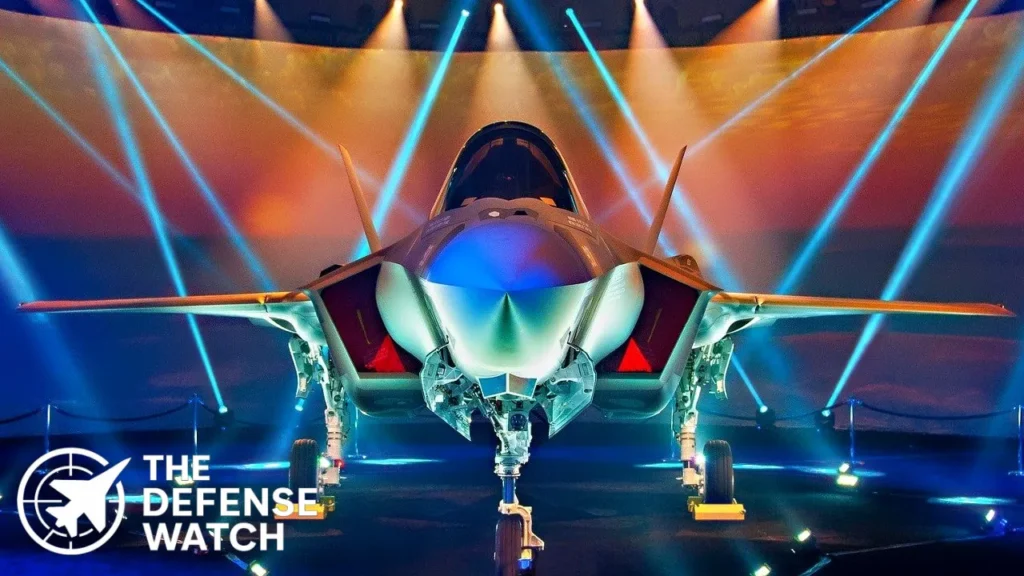
Historical Context: Qualitative Military Edge
The U.S. established the Qualitative Military Edge to ensure Israel maintained technological superiority over neighboring Arab states. Historically, military sales to regional countries were carefully managed to prevent any erosion of Israel’s edge. F-35 sales to Israel and discussions with the United Arab Emirates illustrate the sensitive balance the U.S. has maintained for decades. While the UAE considered 50 F-35s in 2021, the deal was suspended due to concerns over usage restrictions and embedded U.S. technology.
Changing Geopolitical Dynamics
The regional security environment has evolved. Former Arab adversaries and Gulf states now share common concerns regarding Iran and Turkey. This realignment opens new possibilities for arms sales that were previously politically unfeasible. Saudi Arabia’s potential acquisition of F-35 stealth fighters highlights this shift, suggesting that historical restrictions could be revisited under modern security imperatives.
Framework for a Sale
A proposed F-35 sale to Saudi Arabia would require a robust framework to maintain Israel’s QME. Analysts suggest conditional requirements, including formal diplomatic relations with Israel, embassy presence in Jerusalem, and active measures against designated terrorist organizations like Hamas. Additionally, stability assessments should ensure the purchaser remains a reliable partner for the foreseeable decade. Restrictions on technology collaborations with Chinese companies, such as Huawei, would mitigate risks associated with transferring advanced military capabilities.
Lessons from Past Sales
Historical U.S. arms transfers, such as the controversial 1981 AWACS sale under President Reagan, demonstrate that Israel’s QME has been protected through careful legislative and diplomatic oversight. Congress could leverage any Saudi F-35 sale to establish a new precedent, ensuring high-end weapons transfers are coupled with stringent political, strategic, and security conditions.
Analysis: Strategic Implications
Selling F-35 stealth fighters to Saudi Arabia could redefine U.S. influence in the Gulf. It would signal Washington’s willingness to adapt arms sale policy to current geopolitical realities, prioritizing shared threats over legacy rivalries. Moreover, a well-structured sale could enhance regional stability by reinforcing alliances, deterring common adversaries, and encouraging diplomatic normalization between Israel and Gulf partners. However, the long-term success of such a sale depends on sustained regime stability and compliance with U.S. strategic safeguards.
F-35 Lightning II Fighter Jet – Full Specifications
FAQs
Why has the F-35 sale to Saudi Arabia been controversial?Due to U.S. laws protecting Israel’s Qualitative Military Edge, advanced weapons sales to regional powers are heavily regulated.
How could Saudi Arabia’s F-35 purchase affect regional security?It could strengthen deterrence against shared threats like Iran while promoting strategic cooperation with Israel.
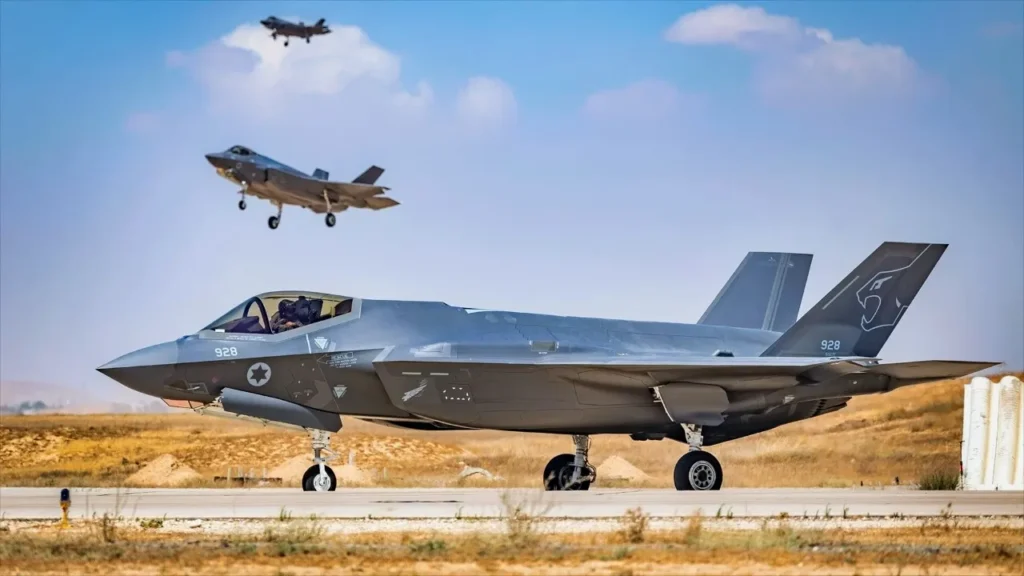
Have other countries received F-35s in the Middle East?Yes, Israel operates the F-35I Adir, and the UAE previously considered a purchase.
What safeguards could the U.S. implement for such a sale?Conditions could include formal relations with Israel, embassy in Jerusalem, anti-terrorism measures, and restrictions on Chinese tech partnerships.
Could this sale set a precedent for future arms deals?Yes, it could redefine U.S. export policy and establish a stricter, more politically conditioned framework for high-end weapons transfers.
Get real time update about this post category directly on your device, subscribe now.

19 comments
[…] buyers in the Middle East and Asia, the Su-57E represents a compelling, sovereign-rich path to fifth-generation combat […]
[…] capable of targeting Israel from any corner of western Iran. This range encompasses critical strategic targets throughout the Middle East, including Israeli military installations and U.S. bases in the […]
[…] to the White House, the deal “fortifies deterrence across the Middle East” and builds on burden-sharing mechanisms to bring “hundreds of American jobs” into the […]
[…] and India’s pavilion highlights capabilities from HAL, DRDO, and other firms in its push for defense exports and technological […]
[…] For decades, the U.S. has enshrined in its defense policy a doctrine that guarantees Israel maintains a technological and operational edge over regional adversaries. Known as Israel’s qualitative military edge, this principle is codified in American law and has influenced arms sales across the Middle East. […]
[…] acquires fifth-generation U.S. stealth jets, significantly altering the military balance in the Middle East and challenging long-standing U.S. policy to preserve Israel’s qualitative military edge […]
[…] a major policy and capability change. The Eurofighter Typhoon is widely used across Europe, the Middle East, and Asia, and the aircraft sits in the top tier of fourth generation plus […]
[…] also argued that past US action had prevented a broader Middle East crisis, suggesting that a settlement would have been impossible without the earlier strikes on […]
[…] drones have played a major role in recent conflicts, particularly in Eastern Europe and the Middle East. These systems are difficult to detect, fly at low altitudes, and can be launched in large numbers. […]
[…] layer of strain to an already volatile security environment, with multiple flashpoints across the Middle East and limited channels for de […]
[…] to the officials, the expected US military buildup Middle East could match or exceed the scale seen prior to previous US strikes on Iranian nuclear related […]
[…] deployment comes amid heightened regional tensions in the Middle East, where allied nations have increased military presence to deter potential threats and reassure […]
[…] of the industry effort to highlight capabilities. Public statements from Chinese officials frame export policy as measured and aimed at friendly […]
[…] and infrastructure capabilities across 21 nations spanning from Northeast Africa through the Middle East to Central and South […]
[…] Investment Plan, expected before the end of 2025. This announcement will clarify the UK’s planned path forward for medium lift helicopter acquisition and related industrial […]
[…] for British military operations in the region. The base’s location provides rapid access to key strategic areas across the Middle East, North Africa, and the Eastern Mediterranean. The addition of six F-35B Lightning II aircraft […]
[…] Saudi F-35 fleet would alter airpower capabilities in the Middle East. Israel has long been the only regional operator of the F-35, and its qualitative edge has been a […]
[…] The president added that he planned to discuss the project soon with German Chancellor Friedrich Merz to seek a path forward. […]
[…] strategic focus on AI military applications Saudi Arabia and C4ISR systems Middle East represents an evolution in the partnership’s scope. Artificial intelligence applications in […]