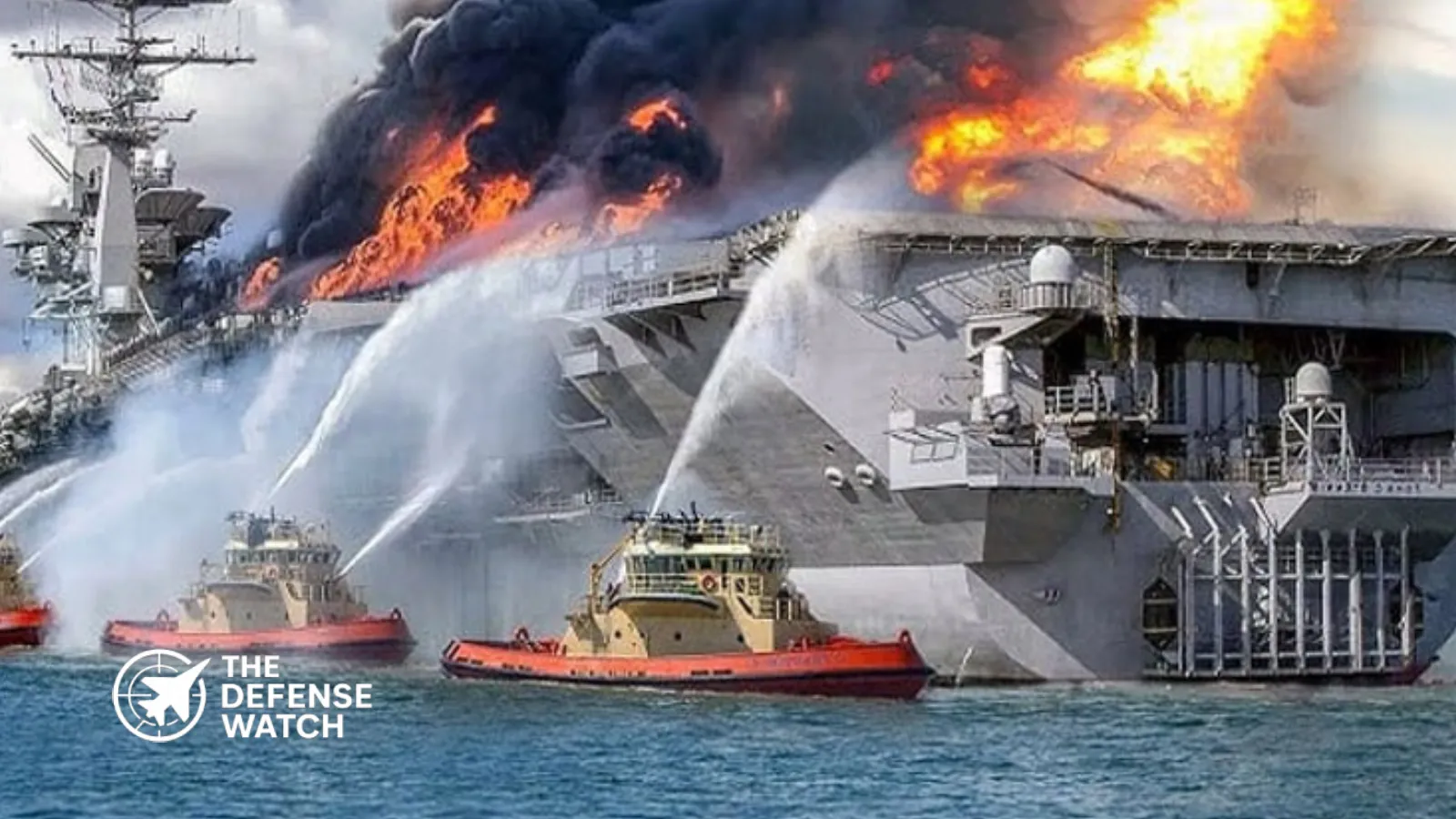
- Fire aboard USS Gerald R. Ford lasted nearly 30 hours before being contained.
- Over 600 crew members lost access to normal living spaces during the incident.
- Extended deployment of 10 months contributed to operational strain on personnel.
- Dozens of sailors reported smoke inhalation related health issues.
- Incident may temporarily impact US Navy carrier readiness and maintenance cycles.
USS Gerald R. Ford Fire Incident
The USS Gerald R. Ford fire incident underscores the risks faced by deployed US Navy carriers, after a prolonged onboard blaze disrupted operations and affected hundreds of sailors.
The Big Picture
The US Navy aircraft carrier fleet remains central to American power projection, particularly in contested regions such as the Indo Pacific and the Middle East. The USS Gerald R. Ford, the lead ship of its class, represents the most advanced carrier design, incorporating electromagnetic aircraft launch systems, advanced radar, and improved sortie generation capabilities.
Sustained deployments have become more common as the US Navy balances global commitments with a limited number of available carriers. This operational tempo places increasing pressure on both platforms and personnel.
The incident highlights a persistent challenge. Even the most advanced platforms remain vulnerable to onboard hazards such as fires, especially during extended deployments where maintenance cycles are compressed.
What’s Happening
Reports from major US outlets, including The New York Times, indicate that a significant fire broke out aboard the USS Gerald R. Ford during ongoing operations at sea.
The fire lasted approximately 30 hours before crews brought it under control. During that period:
- More than 600 sailors lost access to their berthing areas
- Crew members were forced to sleep on floors and workspaces
- Dozens experienced breathing issues due to smoke exposure
The carrier had reportedly been deployed for nearly 10 months, conducting missions and training activities. US Navy officials confirmed that once the fire was extinguished, safety checks and repair efforts began immediately.
No fatalities have been reported, but the scale and duration of the fire indicate a serious onboard emergency.
Why It Matters
The USS Gerald R. Ford fire incident matters because it directly affects operational readiness at a time when US carrier presence is in high demand.
Aircraft carriers function as mobile airbases. Any disruption, especially one lasting more than a day, can degrade sortie generation rates, delay missions, and reduce overall combat effectiveness.
Crew fatigue adds another layer of concern. Sailors operating under sleep deprivation and stress are more likely to face reduced performance, increasing risks during flight operations and damage control scenarios.
The incident also raises questions about maintenance intervals. Extended deployments often delay routine inspections, which can increase the likelihood of technical failures or onboard hazards.
Strategic Implications
The US Navy relies on a limited number of carriers to maintain global presence. A temporary reduction in availability, even from a single ship, can ripple across multiple theaters.
The USS Gerald R. Ford fire incident may force adjustments in deployment schedules or require other carriers to fill operational gaps. This could strain the broader fleet, particularly as older Nimitz class carriers approach retirement.
The event also highlights the importance of damage control training. US Navy crews are known for strong firefighting capabilities, and successfully containing a 30 hour fire demonstrates resilience. However, the duration suggests the complexity of the incident and the challenges posed by modern carrier systems.
Competitor View
China and Russia closely monitor US carrier operations as indicators of American naval readiness.
China, in particular, is expanding its own carrier fleet and may view such incidents as evidence of operational strain within the US Navy. Beijing continues to invest in anti access and area denial systems designed to challenge US carriers in the Western Pacific.
Russia may interpret the event through a different lens, focusing on maintenance and deployment sustainability issues within the US fleet.
While a single incident does not alter the balance of power, repeated operational disruptions could influence perceptions of US naval reliability.
What To Watch Next
The immediate focus will remain on damage assessment and repair timelines aboard the USS Gerald R. Ford.
Key developments to monitor include:
- Official US Navy investigation into the cause of the fire
- Duration of repairs and any required port visits
- Impact on the carrier’s deployment schedule
- Crew recovery and rotation measures
The Navy may also review safety protocols and maintenance procedures, particularly for carriers on extended deployments.
Capability Gap
The USS Gerald R. Ford fire incident highlights a broader capability gap related to sustained operations at sea.
The US Navy aims to maintain continuous global presence, but limited carrier numbers force longer deployments. This increases wear on systems and personnel.
Modern carriers are highly complex platforms. While advanced systems improve combat capability, they also introduce new maintenance challenges. Fires remain one of the most dangerous onboard threats, capable of disrupting operations regardless of technological sophistication.
The incident reinforces the need for balanced deployment cycles, adequate maintenance windows, and continued investment in crew resilience.
The Bottom Line
The USS Gerald R. Ford fire incident reveals how even advanced US Navy carriers face operational strain during extended deployments, with direct implications for readiness and global naval posture.
Get real time update about this post category directly on your device, subscribe now.