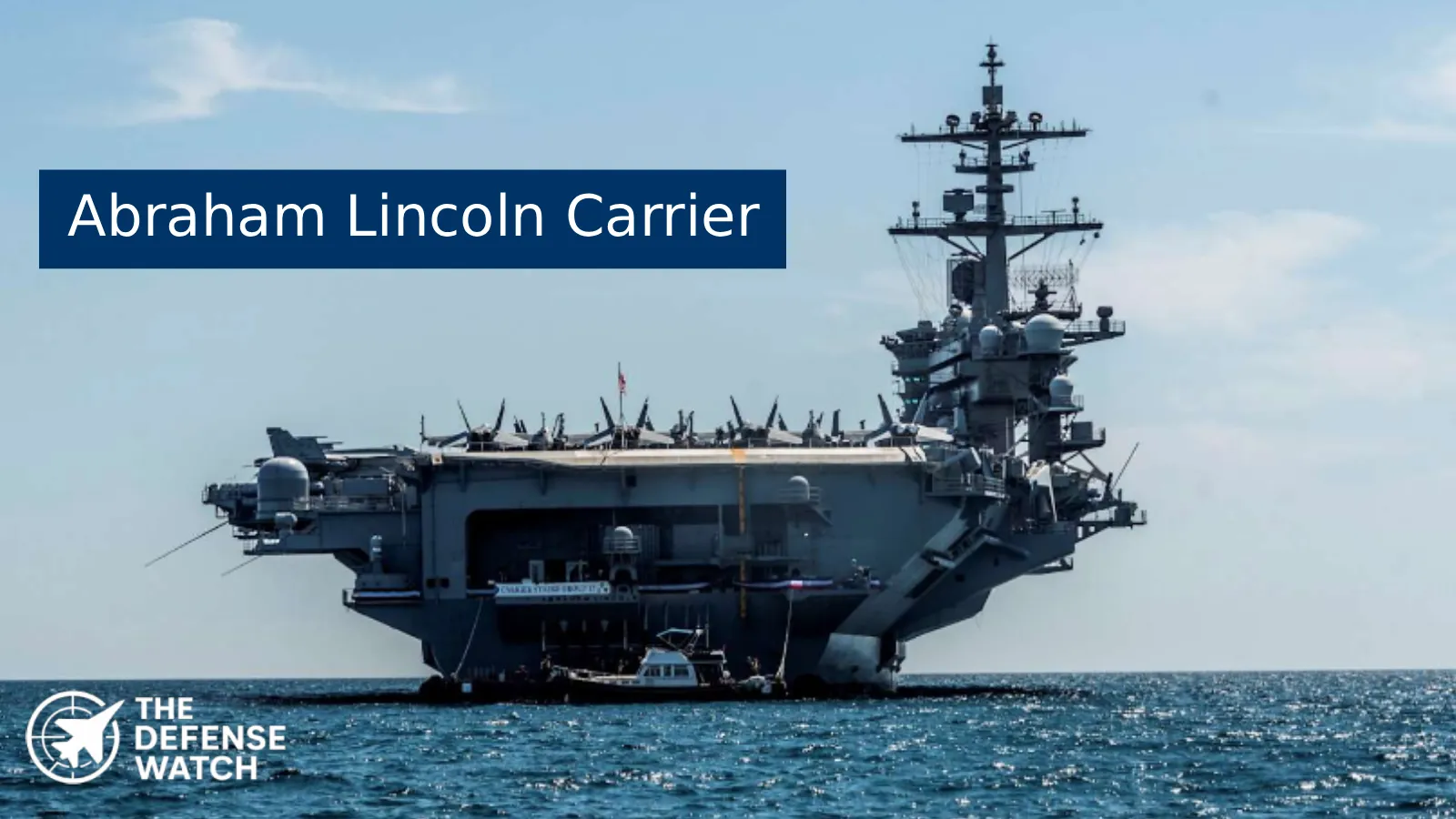
USS Abraham Lincoln Anchors New US Pressure Campaign
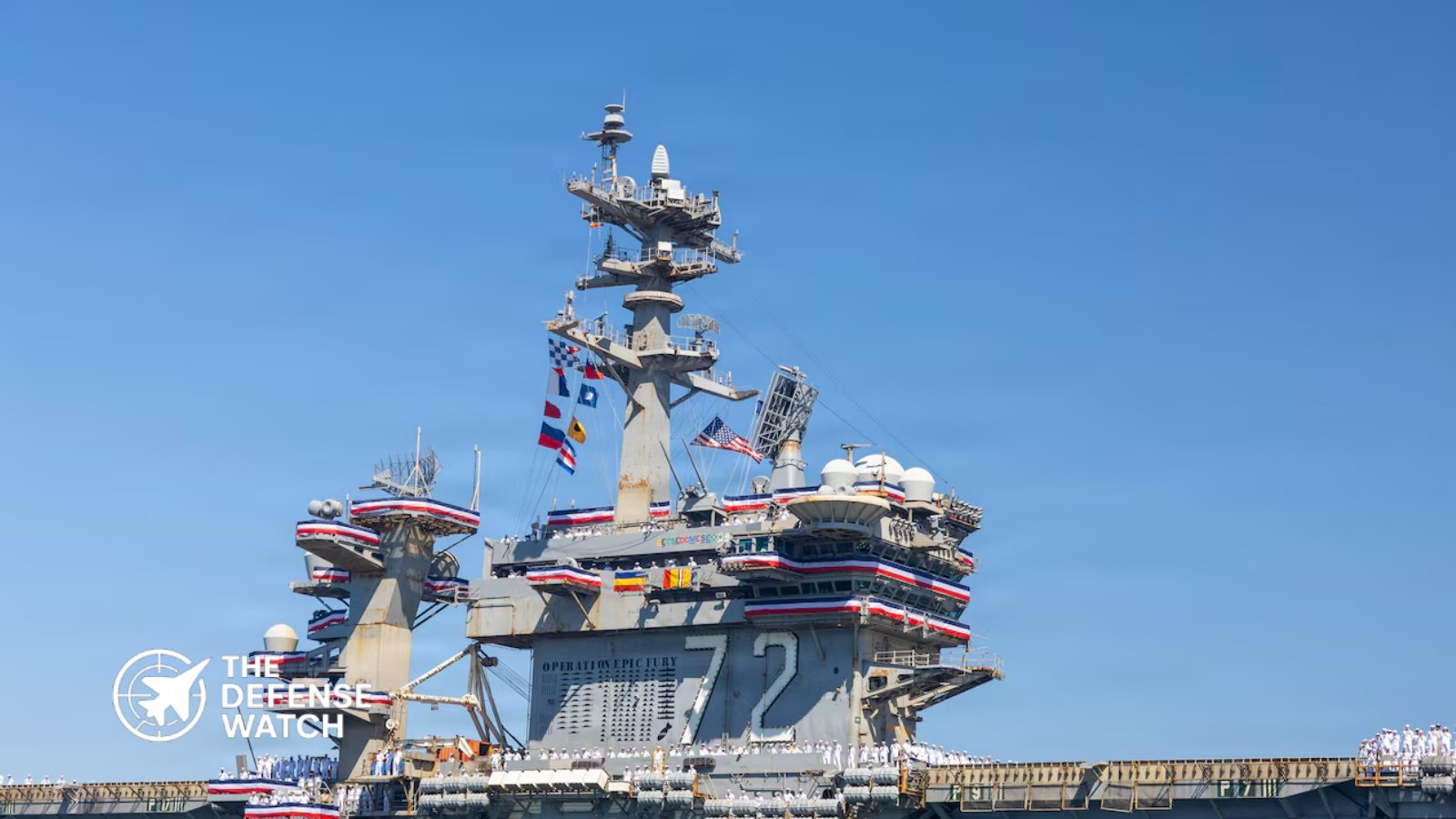
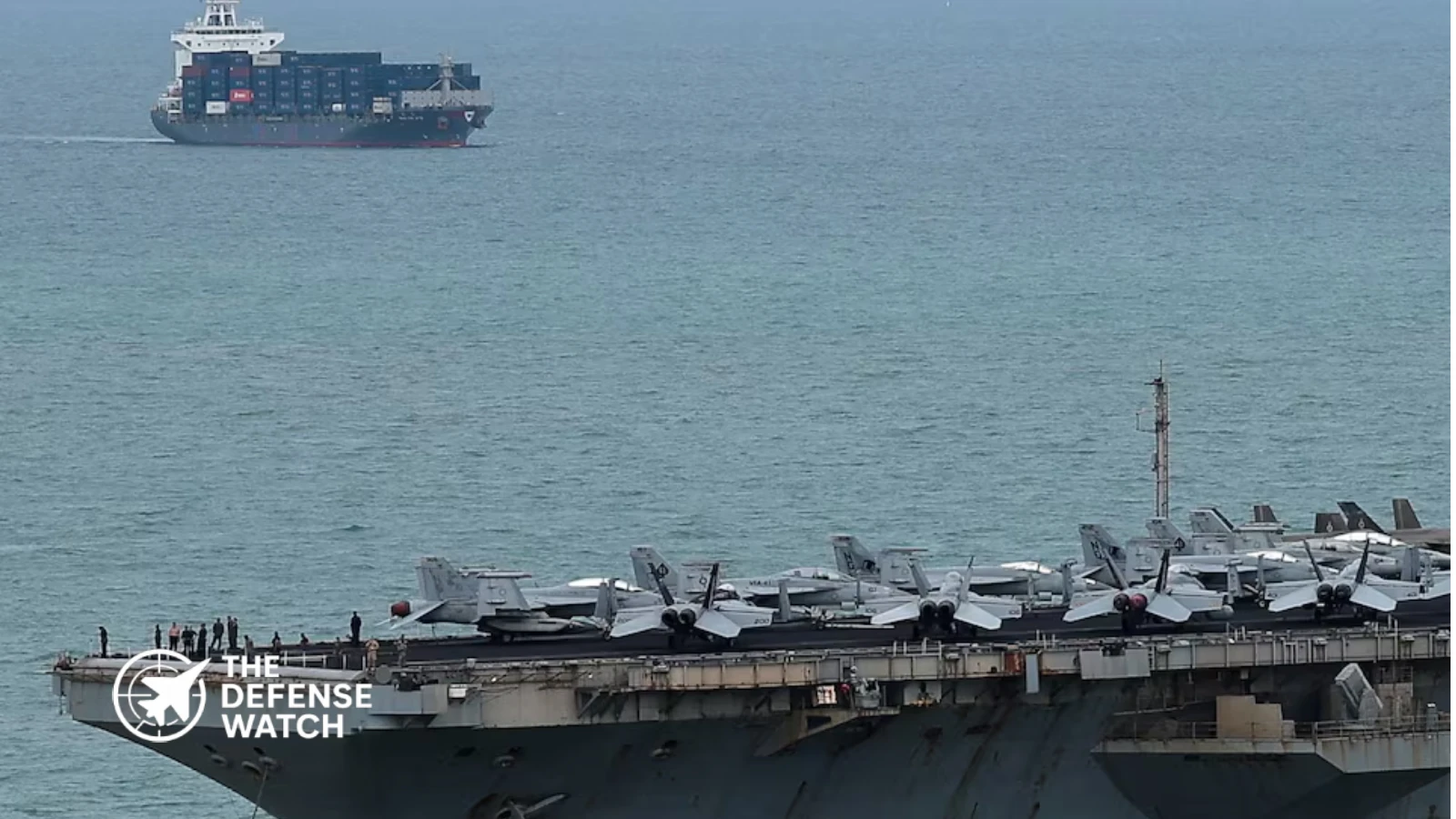
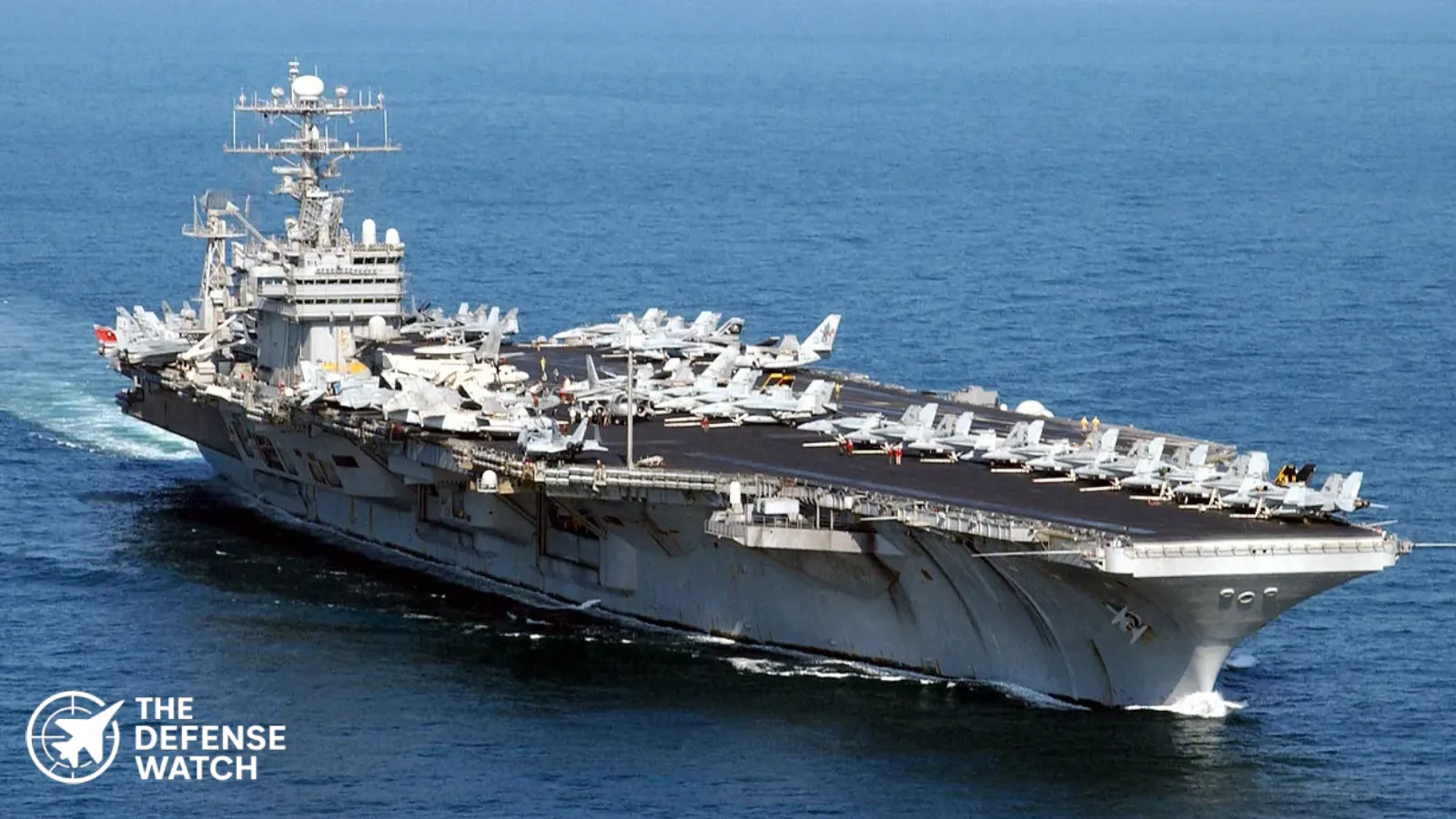
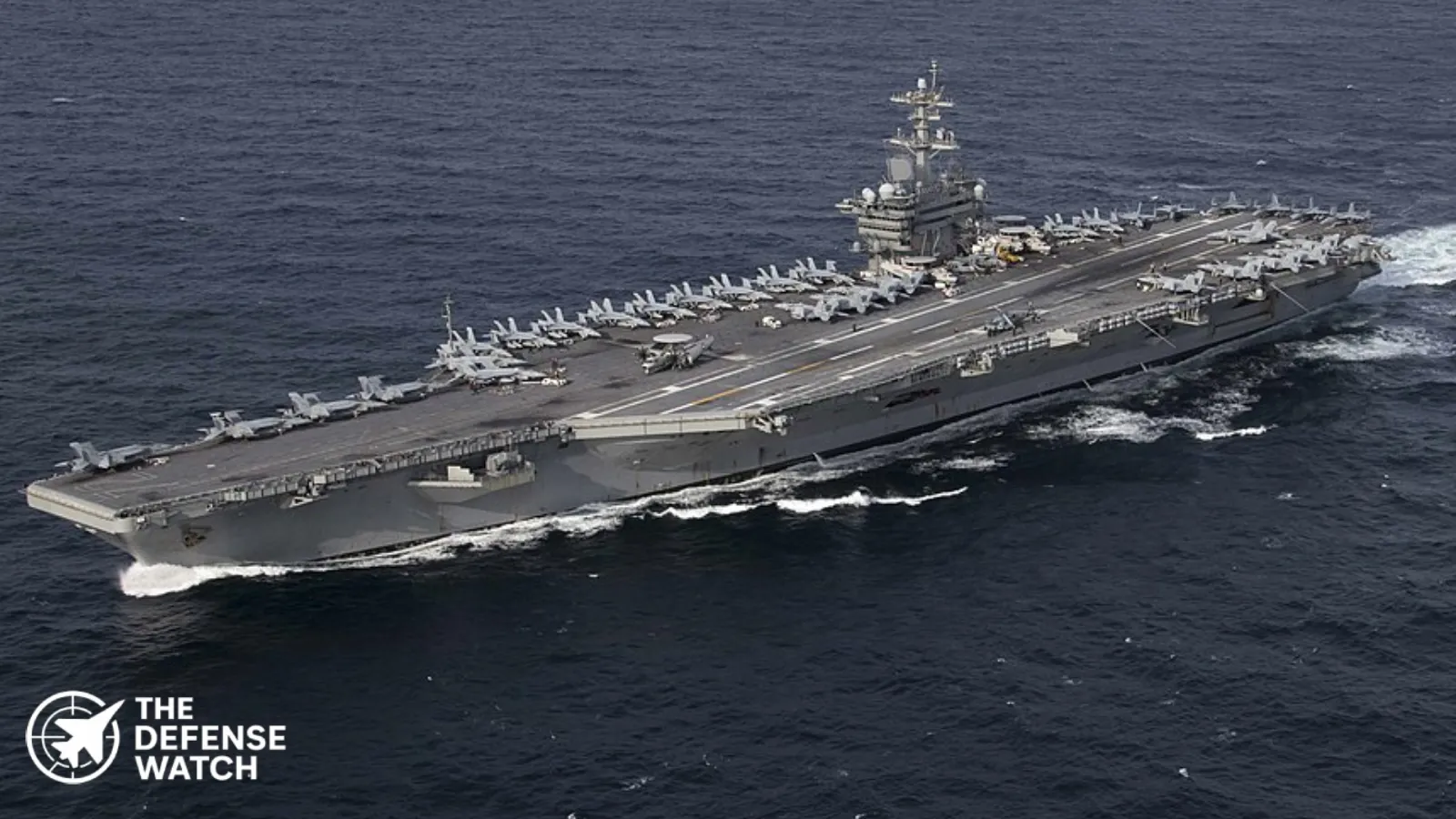
The USS Abraham Lincoln blockade mission has become the centerpiece of a wider US maritime operation aimed at increasing pressure on Iran and controlling access to regional sea lanes. Multiple open source and media reports indicate the Nimitz-class aircraft carrier is operating in or near the Arabian Sea with escorts from Carrier Strike Group 9.
- USS Abraham Lincoln is reported to be leading US carrier operations tied to an Iran maritime blockade.
- More than a dozen US naval vessels and over 100 aircraft are reportedly supporting enforcement efforts.
- US destroyers, surveillance aircraft, and support ships are central to interception and sea control missions.
- Additional carrier and mine countermeasure forces are reportedly moving toward the region.
- The deployment raises pressure on Tehran while securing key shipping lanes near the Strait of Hormuz.
The deployment reflects a strategic shift from airpower alone toward sustained naval coercion. Carrier groups can remain on station for long periods, generate continuous air sorties, and project force without relying on host nation bases. That gives Washington a flexible tool during periods of regional instability.
Why USS Abraham Lincoln Matters
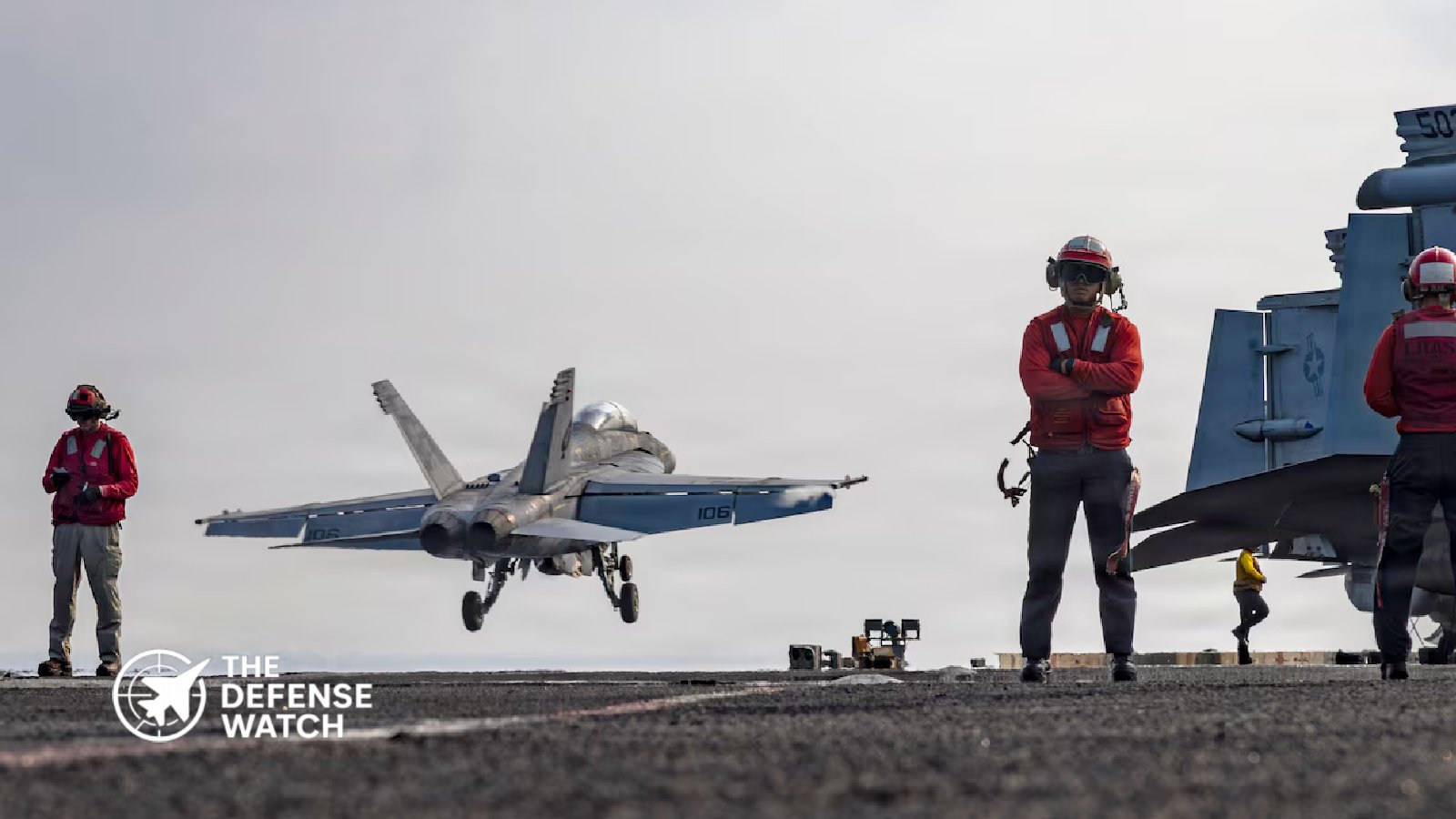
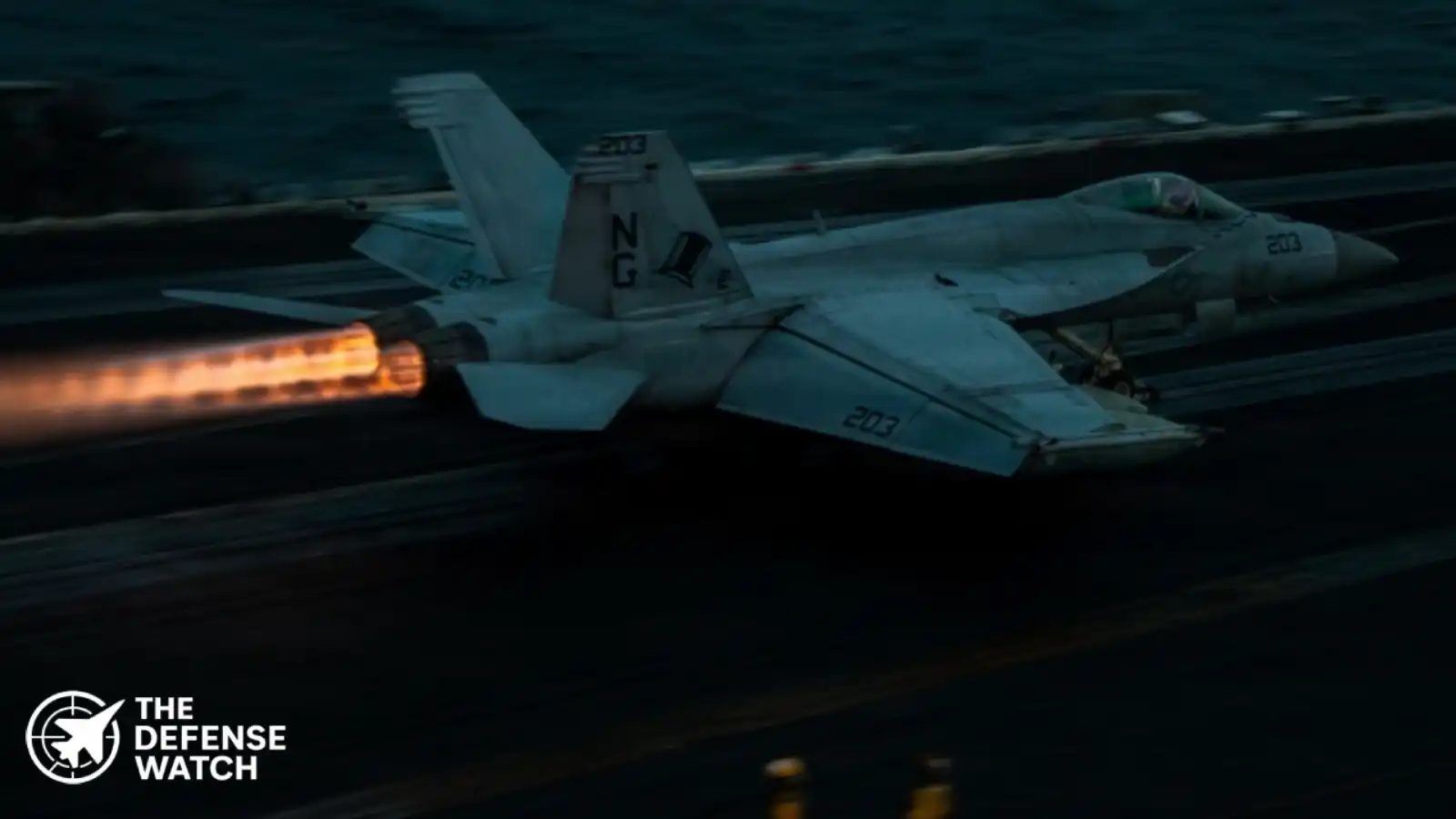
USS Abraham Lincoln is one of the US Navy’s most proven nuclear-powered carriers. It typically embarks a mix of strike fighters, electronic warfare aircraft, airborne early warning platforms, and helicopters. Previous reporting tied the ship to Carrier Air Wing 9, including F/A-18 Super Hornets, EA-18G Growlers, E-2D Hawkeyes, and rotary-wing detachments.
That matters because a carrier strike group can perform several missions at once:
- Air defense over fleet units
- Maritime surveillance across large sea areas
- Strike operations ashore
- Escort and deterrence patrols
- Rapid response to Iranian naval moves
In practical terms, USS Abraham Lincoln gives US commanders a floating air base that can reposition quickly.
Destroyers And Escorts Are Doing The Hard Work
While the carrier draws headlines, destroyers are often the workhorses of blockade enforcement. Recent reporting says Arleigh Burke-class destroyers are central to screening, boarding support, missile defense, and ship interception tasks.
These ships bring advanced radar, vertical launch missile cells, helicopters, and endurance. In a blockade environment, they are often the first ships to challenge approaching vessels, monitor suspicious traffic, and maintain constant patrol lines.
That suggests the operation is less about symbolic carrier presence and more about layered sea control.
Strait Of Hormuz Remains The Strategic Center
Any major US Iran naval operation inevitably points toward the Strait of Hormuz, one of the world’s most important maritime chokepoints. A large share of global energy shipments normally transits the waterway.
By massing naval power near the area, Washington gains leverage beyond the immediate Iran crisis. It reassures commercial shipping, signals resolve to regional partners, and preserves freedom of navigation options if tensions rise further.
This is why minesweepers, reconnaissance aircraft, and logistics ships matter as much as combat vessels. A carrier cannot sustain pressure alone. It needs a network.
Strategic Analysis: What Comes Next
The current posture suggests three likely US objectives:
- Economic pressure on Iran through maritime restrictions
- Deterrence against missile or swarm boat attacks
- Readiness for rapid escalation if diplomacy fails
For Tehran, direct confrontation at sea would carry high risk. Iran may instead rely on indirect pressure, drone threats, proxy activity, or legal and political messaging.
That means the naval contest could become a battle of endurance rather than a traditional fleet clash.
Broader Defense Implications
The USS Abraham Lincoln deployment also highlights how aircraft carriers remain relevant despite modern missile threats. Critics often question carrier survivability, yet Washington continues to use them first during crises because they combine mobility, airpower, command capability, and visible deterrence in one platform.
In that sense, the operation is also a message to rivals beyond the Middle East: the US still uses carrier strike groups as frontline instruments of state power.
US Navy Operates F-35C And EA-18G Aircraft From USS Abraham Lincoln In Red Sea
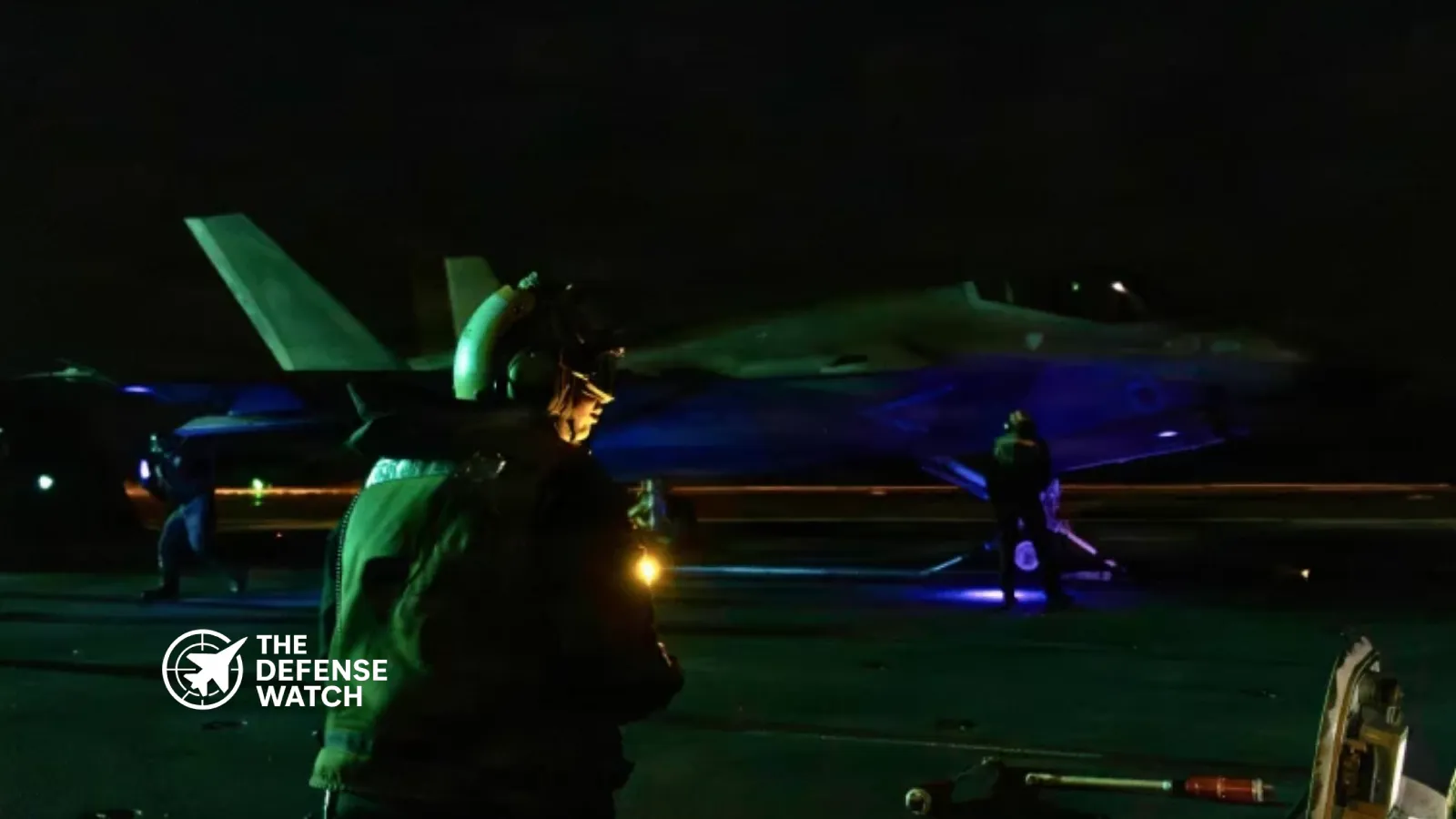
The US Navy is flying F-35C Lightning II and EA-18G Growler aircraft from the USS Abraham Lincoln (CVN-72) in the Red Sea, reinforcing carrier strike group presence amid ongoing regional tensions. The carrier air wing’s flight operations show sustained naval aviation activity in the region under US Central Command.
Images and operational details released by US Central Command on February 16 show Marine Fighter Attack Squadron 314 F-35C stealth fighters and Electronic Attack Squadron 133 Growlers preparing for launch from the carrier’s flight deck in international waters.
Carrier Air Wing Composition And Mission
The USS Abraham Lincoln Carrier Air Wing 9 includes a mix of strike fighters, electronic attack aircraft, airborne early warning platforms, and logistics helicopters. This mix provides layered capability for air defense, surveillance, and electronic warfare.
F-35C Lightning II jets from Marine Fighter Attack Squadron 314 bring fifth-generation stealth, sensor fusion, and networked operations to the carrier wing. The naval variant has a larger wing and strengthened landing gear for carrier operations, and uses advanced radar and sensor systems to support air-to-air and air-to-surface tasks.
EA-18G Growlers from Electronic Attack Squadron 133 deliver electronic attack and suppression of enemy air defenses, integrating receivers and jamming pods to disrupt hostile radars, communications, and targeting systems. The aircraft can carry AGM-88 HARM missiles to target radar emitters.
The air wing is supported by E-2D Advanced Hawkeye early warning aircraft that extend aerial surveillance and coordinate combat air patrols around the carrier strike group.
Strategic Context And Regional Security
The carrier’s presence in the Red Sea comes as the United States maintains operations to safeguard key maritime lines of communication. The broader region, including the Gulf of Aden, Bab el Mandeb, and Arabian Sea, remains an area of heightened maritime security activity due to asymmetric threats such as unmanned systems and regional state tensions.
In early February, a US Navy F-35C from the Abraham Lincoln successfully intercepted and shot down an Iranian-origin unmanned aerial system that was approaching the carrier strike group. The engagement caused no damage to the carrier or accompanying vessels.
US naval statements highlight continuous flight operations as part of efforts to deter threats to freedom of navigation and reassure partners in the region. The operations also underline the carrier strike group’s ability to project power without reliance on host nation basing.
Capability Integration At Sea
Operating together from a forward-deployed carrier allows the mix of F-35C, EA-18G, and supporting aircraft to share sensor data, conduct distributed operations, and respond to emerging challenges at range. The F-35C’s data links integrate with surface and airborne assets to build a common operational picture.
Electronic attack aircraft work ahead of strike fighters to shape the electromagnetic environment, reducing the effectiveness of hostile air defenses and creating windows for precision missions.
The sustained carrier air operations from USS Abraham Lincoln reflect US Navy doctrine for persistent presence in key maritime theaters and support for regional stability.
U.S. Central Command Chief Visits USS Abraham Lincoln
The U.S. Central Command chief visited USS Abraham Lincoln during its ongoing deployment in the Arabian Sea, underscoring the carrier strike group’s role in U.S. military operations across the Middle East.
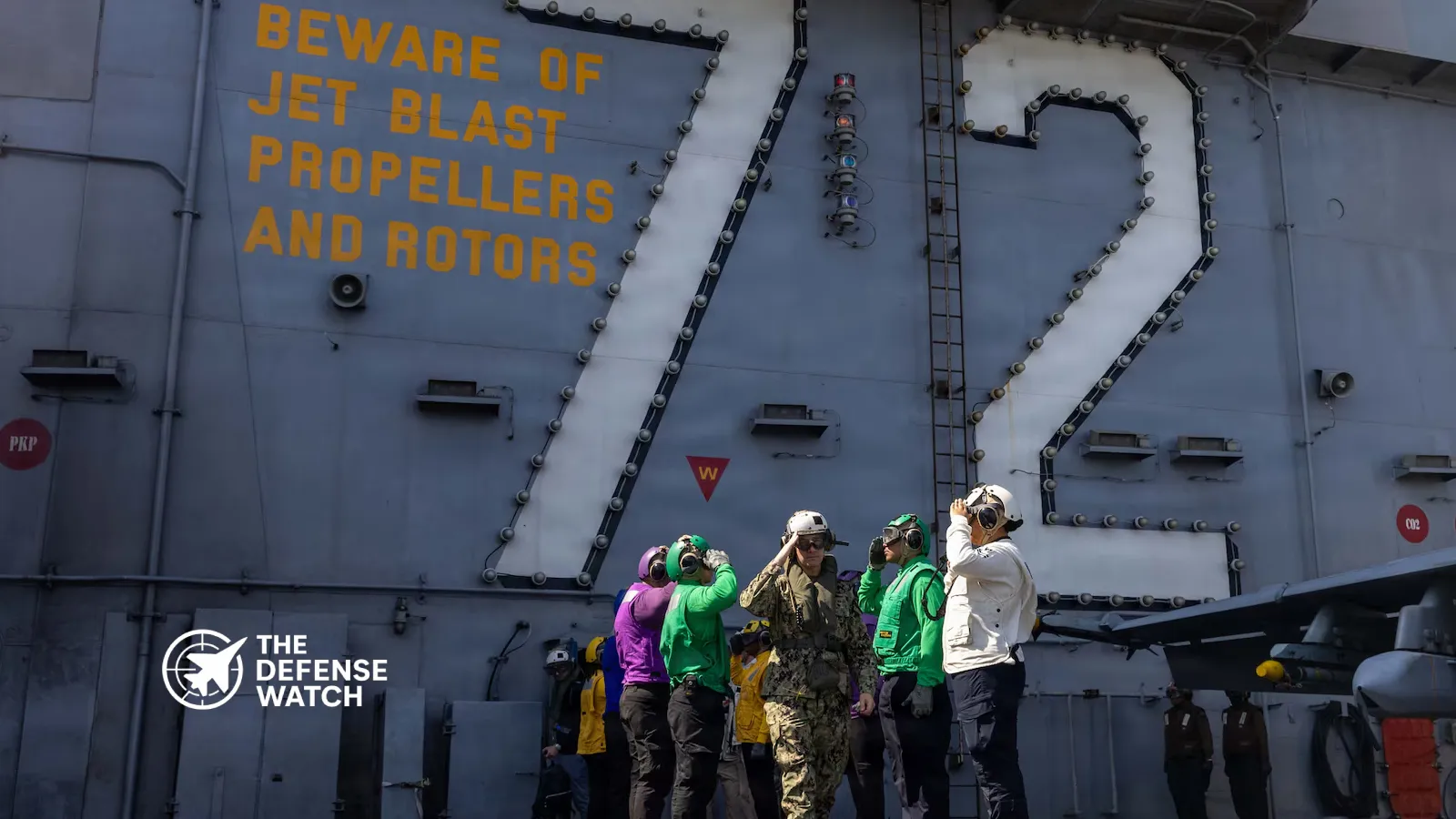
According to U.S. Navy and Central Command reporting, the visit took place while the Nimitz class aircraft carrier was transiting the Arabian Sea in support of regional maritime security and air operations. The engagement included meetings with ship leadership, air wing commanders, and enlisted sailors supporting the mission.
USS Abraham Lincoln is operating under U.S. Fifth Fleet and Central Command tasking, a key element of Washington’s forward deployed naval presence in a region marked by ongoing security challenges, freedom of navigation concerns, and air and maritime operations tied to deterrence and crisis response.
Leadership Engagement Aboard a Deployed Carrier
During the visit, the CENTCOM commander received operational briefings on current carrier air wing sorties, maritime security patrols, and sustainment efforts supporting extended deployment operations. Navy officials said the discussions focused on readiness, force protection, and the carrier’s integration with joint and coalition partners operating in the region.
Senior leaders also met with sailors from across the ship’s departments, including flight deck crews, engineering teams, and command staff. Such visits are standard practice during major deployments and are intended to reinforce command priorities, assess conditions firsthand, and maintain direct engagement with deployed forces.
The U.S. Navy has emphasized that aircraft carriers remain central to U.S. power projection in the Middle East, providing flexible options ranging from strike operations to intelligence, surveillance, and reconnaissance support.
USS Abraham Lincoln and Carrier Strike Group Operations
USS Abraham Lincoln is one of the U.S. Navy’s nuclear powered Nimitz class aircraft carriers and embarks a full carrier air wing composed of strike fighters, electronic attack aircraft, airborne early warning platforms, helicopters, and support aircraft.
Operating in the Arabian Sea allows the carrier strike group to support missions across the U.S. Central Command area of responsibility while maintaining access to key maritime routes linking the Red Sea, Gulf of Oman, and Indian Ocean.
Carrier strike groups typically operate with guided missile cruisers and destroyers equipped with the Aegis combat system, providing layered air and missile defense. These escorts also contribute to maritime security operations and regional deterrence.
Strategic Context in the Arabian Sea
The Arabian Sea remains a strategically important operating area due to its proximity to major shipping lanes and ongoing regional tensions. U.S. naval deployments in the area are intended to reassure partners, deter state and non state threats, and ensure the free flow of commerce.
Central Command has stated that carrier deployments provide commanders with scalable options that do not rely on host nation basing, a factor that continues to shape U.S. force posture decisions in the Middle East.
The visit by the CENTCOM chief signals continued senior level attention to naval operations, even as the U.S. military balances global commitments across Europe and the Indo Pacific.
Carrier Air Power and Joint Operations
Carrier air wings embarked aboard USS Abraham Lincoln are capable of conducting a wide range of missions, including precision strike, close air support, maritime interdiction, and airborne command and control.
Officials note that carrier based aviation remains closely integrated with U.S. Air Force, allied, and partner nation forces operating in the region. Joint and combined operations are a routine part of Central Command missions, particularly for intelligence sharing and coordinated air tasking.
The presence of a carrier strike group also provides rapid response capability during emerging crises, allowing U.S. leaders to adjust force posture without requiring new deployments from the continental United States.
Sailor Welfare and Readiness
In addition to operational briefings, leadership visits often address sailor welfare, maintenance status, and sustainment challenges associated with long deployments. Navy leadership has acknowledged the strain placed on crews during extended operations, particularly in high tempo regions like the Middle East.
USS Abraham Lincoln’s deployment reflects ongoing efforts by the U.S. Navy to maintain readiness while managing maintenance cycles and personnel demands across the carrier fleet.
US Shoots Down Iranian Drone Near Aircraft Carrier
On February 3, 2026, the US Navy shot down an Iranian drone that was approaching the aircraft carrier USS Abraham Lincoln in the Arabian Sea, the US military said in an official statement. The Iranian Shahed-139 unmanned aerial vehicle (UAV) was intercepted and destroyed by an F-35C fighter jet operating from the carrier in international waters.
US Central Command described the drone’s approach as “aggressive” and said the aircraft continued toward the carrier despite de-escalatory measures taken by US forces. No US personnel were harmed and no equipment was damaged during the encounter.
Intercept Details and Military Response
The USS Abraham Lincoln (CVN-72), a Nimitz-class nuclear-powered aircraft carrier, was transiting the Arabian Sea roughly 500 nautical miles from Iran’s southern coast when the threat developed. US forces assessed that the Shahed-139 drone’s approach posed a potential risk to the carrier and its crew, prompting the F-35C engagement.
CENTCOM spokesman Captain Tim Hawkins said the decision to engage the UAV was taken in self-defense and to protect the carrier and personnel on board. The US military said multiple attempts to get the drone to stand down or alter its course had failed before the shootdown.
Broader Regional Context
The incident comes amid a backdrop of heightened US-Iran tensions in the Middle East, including recent confrontations at sea and ongoing diplomatic efforts aimed at reviving nuclear negotiations. On the same day as the drone shootdown, reported harassment of a US-flagged merchant vessel, the Stena Imperative, by Iranian Revolutionary Guard Corps boats in the Strait of Hormuz was noted by US military officials.
Officials also said the maritime harassment did not result in damage or injuries and that the US Navy destroyer USS McFaul responded to escort the tanker safely.
Iranian Response
Iranian state-linked media acknowledged losing contact with an unmanned aircraft in the region but did not directly confirm it had been shot down or provide details about the mission. Independent verification of Tehran’s account was not immediately available.
Strategic Implications
The use of an F-35C to neutralize a UAV near a major US carrier strike group demonstrates a layered approach to protecting high-value naval assets. It also highlights the risks of miscalculation in a tense maritime theatre where unmanned systems operate alongside manned vessels and aircraft. Analysts note that incidents of this type underscore the need for clear rules of engagement and robust force protection measures.
Despite the shootdown, US officials reiterated that diplomatic channels remain open and that negotiations between the US and Iran are still in play, even as military postures remain heightened.
Growing Military Pressure on Tehran
President Donald Trump issued a stark warning to Iran on January 28, 2026, declaring that failure to negotiate a nuclear weapons agreement would result in military action exceeding the destructive scope of last summer’s strikes on Iranian nuclear facilities. The ultimatum comes as the USS Abraham Lincoln carrier strike group entered U.S. Central Command’s area of responsibility, substantially increasing American military capability in the Persian Gulf region.
In a Truth Social post, Trump stated that a “massive Armada is heading to Iran” led by the aircraft carrier Abraham Lincoln, describing it as larger than the fleet deployed to Venezuela and one that is “ready, willing, and able to rapidly fulfill its mission, with speed and violence, if necessary.”
The president’s message was unambiguous: “Hopefully Iran will quickly ‘Come to the Table’ and negotiate a fair and equitable deal — NO NUCLEAR WEAPONS — one that is good for all parties. Time is running out, it is truly of the essence.”
Reference to Operation Midnight Hammer
Trump explicitly referenced Operation Midnight Hammer, the June 2025 military operation that targeted Iranian nuclear infrastructure, warning: “The next attack will be far worse! Don’t make that happen again.”
Operation Midnight Hammer involved seven B-2 Spirit stealth bombers that struck three Iranian nuclear facilities—Fordow, Natanz, and Isfahan—using fourteen GBU-57A/B Massive Ordnance Penetrator bunker buster bombs and Tomahawk cruise missiles fired from submarines. The operation, conducted on June 22, 2025, was described by Joint Chiefs Chairman General Dan Caine as the “largest B-2 operational strike in U.S. history,” involving more than 125 aircraft and approximately 75 precision-guided weapons.
The strikes inflicted severe damage to Iran’s nuclear enrichment capabilities, with the operation employing advanced deception tactics and achieving complete tactical surprise—Iranian air defenses failed to engage the strike package.
Carrier Strike Group Deployment
U.S. Central Command confirmed Monday that the USS Abraham Lincoln aircraft carrier strike group had entered the Middle East region “to promote regional security and stability,” marking the first carrier presence in the area since the USS Gerald R. Ford departed for Caribbean operations in October 2025.
The Abraham Lincoln Carrier Strike Group includes the flagship nuclear-powered aircraft carrier USS Abraham Lincoln (CVN-72) with Carrier Air Wing 9 embarked, operating F/A-18E/F Super Hornets, EA-18G Growlers, F-35C Lightning II stealth fighters, and MH-60R/S helicopters. Three guided missile destroyers accompany the carrier: USS Frank E. Petersen Jr., USS Spruance, and USS Michael Murphy.
The carrier strike group’s deployment reinforces at least three F-15 squadrons already stationed in the region, along with additional U.S. air defense batteries deployed in recent weeks. Other U.S. Navy guided-missile destroyers have been positioned in the Gulf and the Red Sea.
Iranian Response and Regional Reactions
Iran’s response was defiant. Foreign Minister Abbas Araghchi stated that Iran’s armed forces “are prepared—with their fingers on the trigger—to immediately and powerfully respond to ANY aggression.” Iran’s mission to the United Nations warned that Tehran “stands ready for dialogue based on mutual respect and interests—BUT IF PUSHED, IT WILL DEFEND ITSELF AND RESPOND LIKE NEVER BEFORE.”
Ali Shamkhani, adviser to Supreme Leader Ayatollah Ali Khamenei, warned that any U.S. military action would result in Iran targeting the United States, Israel, and their supporters.
Regional U.S. allies have expressed caution about potential escalation. Saudi Arabia’s Crown Prince indicated the kingdom will not allow its airspace to be used for attacks on Iran, while the United Arab Emirates has signaled similar restrictions.
Nuclear Negotiations Background
Trump withdrew the United States from the Joint Comprehensive Plan of Action nuclear deal with Iran in 2018 during his first term, three years after Iran agreed to halt nuclear weapons development in exchange for sanctions relief. Following the U.S. withdrawal, Iran resumed uranium enrichment activities.
Prior to Operation Midnight Hammer, the International Atomic Energy Agency assessed that Iran had stockpiled sufficient uranium enriched to 60 percent purity to construct nine nuclear weapons if further enriched to weapons-grade levels.
Secretary of State Marco Rubio told a congressional committee on January 28 that the Iranian government is weaker than ever, with its economy in collapse, though multiple U.S. intelligence reports indicate the upper ranks of Iran’s government remain intact with no major fractures.
Turkish Foreign Minister Hakan Fidan suggested “Iran is ready to negotiate a nuclear file again,” though Iranian officials have publicly rejected negotiations under threat. Foreign Minister Araghchi stated there had been no recent contact with U.S. officials and emphasized that “negotiations cannot take place under threats.”
Military Posture and Deterrence
During Senate testimony, Secretary of State Rubio characterized the U.S. military deployment as necessary baseline force protection, stating: “We have to have enough force and power in the region just on a baseline to defend against that possibility that at some point, as a result of something, the Iranian regime decides to strike at our troop presence in the region.
Rubio also indicated Trump “reserves the preemptive defensive option” if intelligence indicates Iran will strike U.S. forces, describing it as “wise and prudent to have a force posture within the region that could respond and potentially—if necessary—preemptively prevent the attack.”
U.S. Air Force units in the Middle East began exercises Monday practicing evasive maneuvers to disperse personnel and aircraft from major bases to smaller airfields throughout the region, designed to “demonstrate the ability to deploy, disperse and sustain combat airpower” under demanding conditions.
Strategic Implications
The deployment represents a significant escalation in U.S.-Iran tensions following relatively quiet months after Operation Midnight Hammer and the subsequent ceasefire between Israel and Iran in June 2025. The presence of a full carrier strike group provides Washington with enhanced strike options, intelligence-gathering capabilities, and defensive coverage for the approximately 30,000 U.S. military personnel stationed throughout the Middle East.
Military analysts note that while the United States maintains significant air, land, and maritime strike capabilities within Central Command’s area of responsibility, including strategic bombers and forward-based fighter wings, a carrier strike group provides a unique combination of sustained airpower, electronic warfare, maritime strike capabilities, and sea control unmatched by other platforms.
The coming days will prove critical as diplomatic channels remain open but under severe strain. Whether Iran responds to Trump’s ultimatum with renewed negotiations or increased defiance could determine whether the Middle East sees another round of military confrontation or a potential diplomatic breakthrough on one of the region’s most intractable security challenges.
Growing Concerns Over Naval Vulnerability to Drone Swarms
The USS Abraham Lincoln aircraft carrier and other U.S. naval assets face a credible threat from Iranian drone swarm attacks, according to Cameron Chell, CEO of Canadian drone manufacturer Draganfly. The warning comes as the aircraft carrier operates in strategically sensitive waters near Iran’s sphere of influence.
Chell’s assessment highlights a critical vulnerability in modern naval warfare: the ability of low-cost unmanned aerial vehicles to potentially overwhelm sophisticated ship-based air defense systems through sheer numerical superiority.
Canadian Defense Executive Outlines Attack Scenario
Cameron Chell, who leads Draganfly—a publicly-traded drone technology company based in Canada—emphasized the mathematical challenge facing naval defenders. If hundreds are launched in a short time, some are almost certain to penetrate air defenses and reach their targets,” Chell stated in his warning about Iranian capabilities.
The Draganfly CEO’s comments reflect growing recognition within the defense industry that traditional layered air defense systems, designed primarily to counter aircraft and anti-ship missiles, may struggle against coordinated swarm attacks involving dozens or hundreds of small, low-cost drones.
This assessment aligns with observations from recent conflicts, including the ongoing war in Ukraine and various Middle East engagements, where drone swarms have demonstrated effectiveness against conventional military targets.
Iranian Drone Capabilities and Regional Tensions
Iran has developed an extensive unmanned aerial vehicle program over the past two decades, producing a range of platforms from small quadcopters to larger fixed-wing strike drones. The Islamic Revolutionary Guard Corps and Iranian military forces have showcased these capabilities through proxy forces in Yemen, Iraq, Syria, and Lebanon.
The Houthi movement in Yemen, backed by Iran, has repeatedly deployed drone and missile attacks against maritime targets in the Red Sea and Gulf of Aden, forcing U.S. and allied naval forces to maintain heightened defensive postures. These attacks have demonstrated Iran’s ability to project power through asymmetric means.
Iranian-designed drones, including the Shahed-136 and various reconnaissance platforms, have been deployed in multiple conflict zones. The relatively low cost of these systems—often thousands of dollars per unit compared to millions for interceptor missiles—creates a concerning cost-exchange ratio for defenders.
Aircraft Carrier Defense Systems Face New Challenges
The USS Abraham Lincoln Carrier Strike Group employs multiple layers of defense, including the Aegis Combat System, Rolling Airframe Missiles (RAM), Evolved Sea Sparrow Missiles (ESSM), and Close-In Weapon Systems (CIWS) like the Phalanx. However, these systems were primarily designed to counter traditional aerial threats.
Naval air defense doctrine has historically focused on defeating sophisticated anti-ship cruise missiles and aircraft rather than large numbers of small, slow-moving targets. The saturation point—where incoming threats exceed a ship’s ability to engage them—becomes a critical vulnerability in swarm scenarios.
Recent U.S. Navy exercises and assessments have acknowledged the drone swarm challenge, leading to increased investment in counter-drone technologies, including electronic warfare systems, directed energy weapons, and artificial intelligence-enabled targeting solutions.
The carrier strike group’s defensive perimeter typically extends dozens of miles from the vessel, with E-2D Advanced Hawkeye aircraft providing airborne early warning and F/A-18 Super Hornets capable of intercepting threats. However, small drones flying at low altitudes can be difficult to detect and track using conventional radar systems.
Cost Asymmetry Favors Attackers
Defense analysts have long warned about the economic imbalance inherent in counter-drone operations. A small quadcopter costing $1,000 might require a $2 million missile to intercept, creating an unsustainable cost ratio for defenders facing mass attacks.
Chell’s warning underscores this mathematical reality: even with sophisticated defenses, a numerically superior attack has statistical advantages. The sheer volume problem is real,” noted one U.S. defense official speaking on background about counter-drone challenges, though not specifically addressing Chell’s comments.
The Pentagon has prioritized development of more cost-effective counter-drone solutions, including high-power microwave weapons, laser systems, and electronic warfare capabilities that can disable or redirect multiple drones simultaneously at a fraction of the cost of kinetic interceptors.
Regional Security Implications
The USS Abraham Lincoln has operated in U.S. Central Command’s area of responsibility, which includes the Persian Gulf, Arabian Sea, and surrounding waters where Iranian forces maintain significant presence. The carrier’s proximity to potential Iranian launch sites reduces warning time and complicates defensive operations.
Iran’s Islamic Revolutionary Guard Corps Navy operates numerous small, fast attack craft in addition to drone capabilities, creating multi-domain threats that could support coordinated swarm attacks. The convergence of unmanned aerial systems with traditional naval threats represents a evolving challenge for U.S. maritime forces.
Recent incidents in the region, including attacks on commercial shipping and oil infrastructure, have demonstrated Iran’s willingness to employ asymmetric tactics. While direct attacks on U.S. naval vessels remain unlikely given potential escalation risks, the technical capability exists and continues to develop.
U.S. Navy Counter-Drone Initiatives
The United States Navy has accelerated counter-unmanned aerial systems (C-UAS) programs in response to the evolving threat landscape. These initiatives include:
Directed Energy Weapons: The Navy has deployed laser weapon systems aboard several vessels, with plans for wider adoption. These systems can engage multiple targets at minimal cost per shot, addressing the economic asymmetry problem.
Electronic Warfare: Jamming and spoofing capabilities can disrupt drone navigation and control systems, potentially neutralizing multiple threats simultaneously without kinetic engagement.
AI-Enabled Detection: Advanced sensor fusion and artificial intelligence systems improve detection and tracking of small, low-radar-cross-section targets that might evade traditional systems.
Layered Defense Integration: The Navy continues refining integration between ship-based systems, aircraft, and land-based assets to create comprehensive defense networks.
Despite these investments, military analysts acknowledge that perfect defense against determined swarm attacks remains elusive. The fundamental challenge of defending high-value assets against numerous low-cost threats continues to drive doctrinal and technological evolution.
International Perspectives on Drone Warfare
Chell’s position as CEO of a Canadian drone technology company provides him with industry insight into unmanned systems capabilities and limitations. Draganfly specializes in commercial and public safety drone applications, though the company’s expertise in autonomous flight systems offers relevant perspective on military applications.
International defense cooperation on counter-drone technologies has intensified, with NATO allies sharing intelligence and developing coordinated responses to drone threats. The challenge transcends individual national concerns, affecting coalition naval operations worldwide.
Allied naval forces operating in Middle Eastern waters have coordinated defensive measures, sharing sensor data and intercept responsibilities to maximize coverage. However, the distributed nature of modern naval operations means individual vessels or small groups may face threats without immediate support.
Future of Naval Air Defense
The drone swarm threat represents a broader shift in military technology where quantity can challenge quality. Traditional naval superiority, built on platforms like aircraft carriers, faces new asymmetric challenges that demand innovative responses.
Military experts anticipate continued evolution in both offensive drone tactics and defensive countermeasures. The race between swarm capabilities and counter-swarm technologies will likely define naval warfare dynamics for the coming decades.
Chell’s warning, while focused on current Iranian capabilities, applies broadly to any adversary developing drone swarm technologies. China, Russia, and other nations have invested heavily in unmanned systems, creating global implications for naval operations.
The U.S. Navy’s response will likely include continued technological investment, tactical adaptation, and potentially doctrinal changes in how carrier strike groups operate in contested environments. The fundamental question remains whether traditional high-value platforms can be adequately defended against distributed, low-cost threats—or whether naval strategy must evolve to reduce vulnerability.
USS Abraham Lincoln Arrives Near Iran as U.S. Pressure Increases
The USS Abraham Lincoln arrives near Iran as the United States sharply increases its military and economic pressure on Tehran, deploying a carrier strike group into the Middle East while announcing new sanctions targeting Iran linked shipping networks.
The arrival, reported Sunday evening by Israel Channel 13, places a U.S. nuclear powered aircraft carrier within operational range of Iran at a moment of heightened regional tension, marking one of the most visible U.S. naval movements in the area in years.
Carrier Strike Group Enters the Region
According to regional media reports, the USS Abraham Lincoln Carrier Strike Group entered Middle Eastern waters accompanied by guided missile destroyers and supporting naval assets. The deployment includes layered missile defense capabilities designed to counter cruise missiles, ballistic missiles, and unmanned aerial threats.
U.S. officials have not publicly disclosed the carrier’s exact operating area, consistent with Navy practice. However, the positioning places the strike group within reach of the Persian Gulf, Gulf of Oman, and Arabian Sea, all key maritime corridors tied to Iran’s security calculus.
President Donald Trump described the deployment as an approaching U.S. armada, signaling a willingness to apply overwhelming force if American interests or partners are threatened.
Sanctions Expand Alongside Military Pressure
The carrier deployment coincides with fresh U.S. sanctions imposed on nine vessels and their management companies, according to U.S. Treasury statements issued earlier this week. The sanctions target shipping networks accused of facilitating Iranian oil exports and revenue generation in violation of U.S. restrictions.
U.S. officials say the measures are intended to restrict Iran’s access to hard currency while reinforcing deterrence through visible military presence. The dual track approach reflects a broader U.S. strategy of economic pressure backed by forward deployed military power.
Treasury officials emphasized that maritime sanctions remain a core tool for limiting Iran’s regional activities and funding streams.
Role and Capabilities of USS Abraham Lincoln
The USS Abraham Lincoln is a Nimitz class aircraft carrier powered by two nuclear reactors, allowing virtually unlimited range and sustained operations. The carrier typically embarks a full air wing of strike fighters, electronic warfare aircraft, airborne early warning platforms, and helicopters.
A standard carrier air wing provides:
Strike and close air support
Air superiority missions
Intelligence, surveillance, and reconnaissance
Electronic attack and suppression of enemy air defensesWhen combined with escorting destroyers armed with Aegis missile defense systems, the carrier strike group forms a self contained force capable of sustained combat operations.
Defense analysts note that the presence of a carrier near Iran significantly complicates Tehran’s military planning, particularly in the maritime domain.
Strategic Signal to Iran and Regional Actors
The U.S. naval buildup near Iran sends a clear signal not only to Tehran, but also to U.S. allies and adversaries across the Middle East. Carrier deployments are among the most visible indicators of American military intent, often used to reassure partners and deter escalation.
Iran has previously responded to carrier movements with naval exercises, missile tests, and rhetoric emphasizing its anti access and area denial capabilities. These include fast attack craft, shore based missile systems, and armed drones.
U.S. defense officials argue that forward naval presence reduces the risk of miscalculation by maintaining clear deterrent lines.
Regional Security Context
The arrival of the USS Abraham Lincoln near Iran occurs amid broader instability across the Middle East, including maritime security concerns, regional proxy conflicts, and heightened alert levels among Gulf states.
U.S. naval forces routinely conduct freedom of navigation operations and maritime security patrols in the region. However, the introduction of a carrier strike group represents a significant escalation in posture rather than routine presence.
Military planners stress that carriers offer decision makers flexible response options without requiring basing agreements or permanent ground deployments.
U.S. Navy Force Posture in the Middle East
The U.S. Navy maintains rotational forces across the Fifth Fleet area of responsibility, headquartered in Bahrain. Assets typically include destroyers, patrol aircraft, logistics ships, and allied naval forces.
Carrier strike groups are deployed as needed, often during periods of crisis or elevated risk. The Abraham Lincoln deployment reinforces U.S. commitments to freedom of navigation and regional stability.
Pentagon officials have emphasized that the United States seeks to deter conflict, not provoke it, while remaining prepared to respond decisively if required.
What Comes Next
While U.S. officials have avoided setting timelines or objectives for the deployment, analysts expect the USS Abraham Lincoln Carrier Strike Group to remain in the region as long as tensions persist.
Future developments will likely depend on diplomatic signaling, Iranian responses, and regional security dynamics. For now, the carrier’s presence underscores Washington’s intent to pair economic pressure with credible military capability.
U.S. Carrier Live-Fire Drill in South China Sea
The U.S. Navy’s USS Abraham Lincoln conducted a live-fire drill in the South China Sea in early January, with the carrier’s defensive weapons systems firing during operations aimed at deterring aggression and supporting allied presence in the Indo-Pacific region, the Navy says.
Routine Patrols With Live-Fire Serial
According to U.S. Navy reporting and imagery, the Nimitz-class aircraft carrier USS Abraham Lincoln executed Close-In Weapon System live-fire serials on January 8 while underway with its Carrier Strike Group in the U.S. 7th Fleet area of operations.
The carrier’s embarked air wing and accompanying escorts, including destroyers USS Frank E. Petersen Jr., USS Spruance and USS Michael Murphy, are operating in the South China Sea and Philippine Sea as part of regular Indo-Pacific patrols.
The Navy frames such live-fire drills as part of routine readiness and deterrence posture to counter potential aggression, strengthen alliances and partnerships, and sustain forward naval presence.
Carrier Capabilities and Operational Context
USS Abraham Lincoln, commissioned in 1989, is equipped to carry about 90 fixed-wing aircraft and helicopters. Defensive systems aboard include the Phalanx CIWS, Rolling Airframe Missiles and Sea Sparrow missiles for layered protection against air and missile threats.
Images released by the service show sailors conducting post-exercise checks on the carrier deck following the live-fire drill in the region.
Indo-Pacific Presence and Strategic Messaging
The live-fire activity occurs amid sustained U.S. naval operations in the Indo-Pacific, where the 7th Fleet routinely patrols to demonstrate freedom of navigation and reassure regional allies. U.S. forces continue to operate alongside allied navies and conduct joint exercises across the region.
This activity also comes as China conducts its own live-fire drills and naval exercises near Taiwan and in the broader region, reflecting a broader pattern of military signaling by both sides.