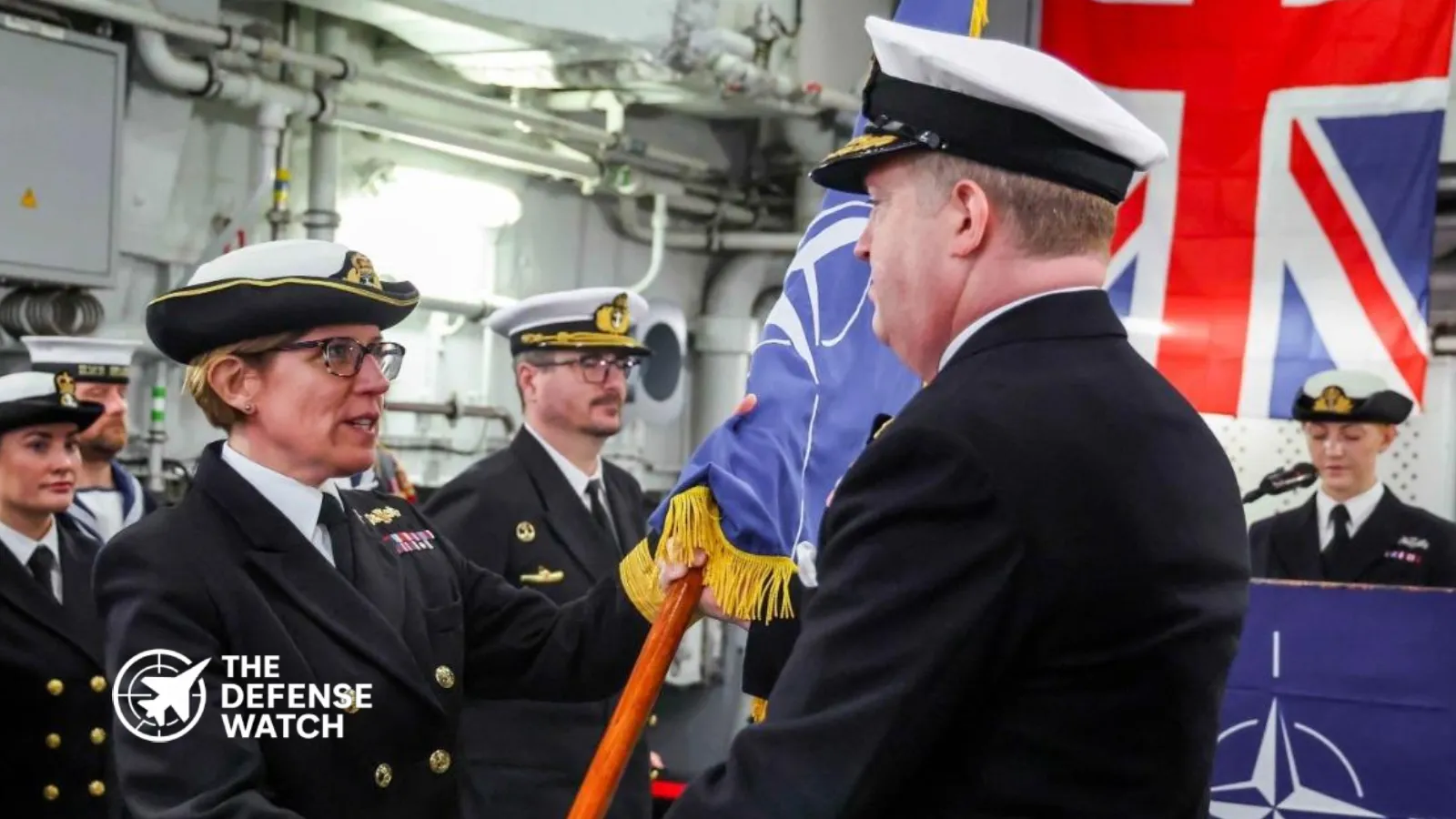
Royal Navy NATO Task Group Command Strengthens Alliance Maritime Posture
The Royal Navy NATO task group leadership has shifted to the United Kingdom, marking a significant step in reinforcing alliance naval coordination and readiness in the Atlantic and surrounding waters.
The Royal Navy has formally taken command of a NATO maritime task group, placing British naval leadership at the center of ongoing multinational operations. The deployment includes multiple allied vessels operating under NATO’s standing maritime framework, designed to ensure rapid response and sustained presence in key strategic areas.
This transition comes at a time when NATO is placing renewed emphasis on maritime security, particularly across the North Atlantic, where undersea infrastructure protection, sea lane security, and deterrence operations have become increasingly critical.
- The Royal Navy has assumed command of a NATO maritime task group, reinforcing alliance naval coordination.
- The deployment focuses on Atlantic and European waters, a key region for transatlantic security.
- The task group includes multiple allied warships operating under NATO’s integrated command structure.
- The mission supports deterrence, maritime security, and freedom of navigation operations.
- The move reflects NATO’s increased emphasis on naval readiness amid evolving geopolitical tensions.
Strategic Role Of NATO Maritime Task Groups
NATO’s standing maritime groups serve as one of the alliance’s most flexible and responsive military tools. These formations are multinational by design, allowing participating navies to integrate seamlessly under a unified command structure.
The Royal Navy NATO task group now under UK leadership is expected to conduct a range of operations, including:
- Maritime security patrols
- Joint training and interoperability exercises
- Presence missions in contested or sensitive regions
- Support for broader NATO deterrence objectives
Such task groups are typically composed of frigates, destroyers, and support vessels contributed by member states, ensuring both capability diversity and operational depth.
From an operational standpoint, rotating command among allied nations strengthens cohesion while allowing each navy to demonstrate leadership within NATO’s integrated force model.
Why The Atlantic Theater Matters Now
The decision to place the Royal Navy NATO task group under UK command carries broader strategic implications. The Atlantic remains a vital artery for transatlantic reinforcement, logistics, and trade. Any disruption in this region would have immediate consequences for NATO’s ability to mobilize forces between North America and Europe.
Recent years have seen increased attention to:
- Subsea cable security
- Monitoring of naval activity in the North Atlantic
- Protection of critical maritime infrastructure
The UK, with its geographic position and long-standing naval capabilities, plays a central role in this environment. By leading the task group, the Royal Navy reinforces its position as a key pillar of NATO’s maritime strategy.
Operational Impact And Capability Integration
The Royal Navy NATO task group command is not just symbolic. It directly affects how multinational naval forces are coordinated and deployed.
British command enables:
- Centralized operational planning aligned with NATO objectives
- Enhanced interoperability across allied fleets
- Faster decision-making in dynamic maritime environments
In practical terms, this means improved readiness for real-world contingencies, from crisis response to high-end naval warfare scenarios.
The Royal Navy’s experience in carrier strike operations, anti-submarine warfare, and expeditionary missions adds further depth to the task group’s capabilities.
Analysis: NATO’s Shift Toward Persistent Maritime Presence
This leadership transition reflects a broader shift within NATO toward maintaining a more persistent and visible maritime presence.
Unlike previous decades, where naval deployments were often episodic, the alliance is now emphasizing continuous operations. This approach aims to deter adversaries through presence rather than reaction.
The Royal Navy NATO task group plays a central role in this model. By maintaining a steady operational footprint, NATO can:
- Monitor emerging threats in real time
- Reassure member states along critical maritime corridors
- Demonstrate unity and readiness to potential adversaries
Additionally, the integration of multiple allied navies under a single command enhances collective defense credibility. It signals that any maritime challenge would be met with a coordinated multinational response.
Geopolitical Context And Alliance Signaling
The timing of the UK assuming command is notable. NATO continues to adapt to a complex security environment marked by increased competition in both the Atlantic and adjacent regions.
Maritime forces are often the first line of presence and deterrence. As such, leadership of a NATO task group carries both operational and political significance.
By taking command of the Royal Navy NATO task group, the UK reinforces its commitment to NATO’s collective defense mission, particularly in the maritime domain. It also underscores the alliance’s focus on unity and burden-sharing among member states.
Get real time update about this post category directly on your device, subscribe now.