
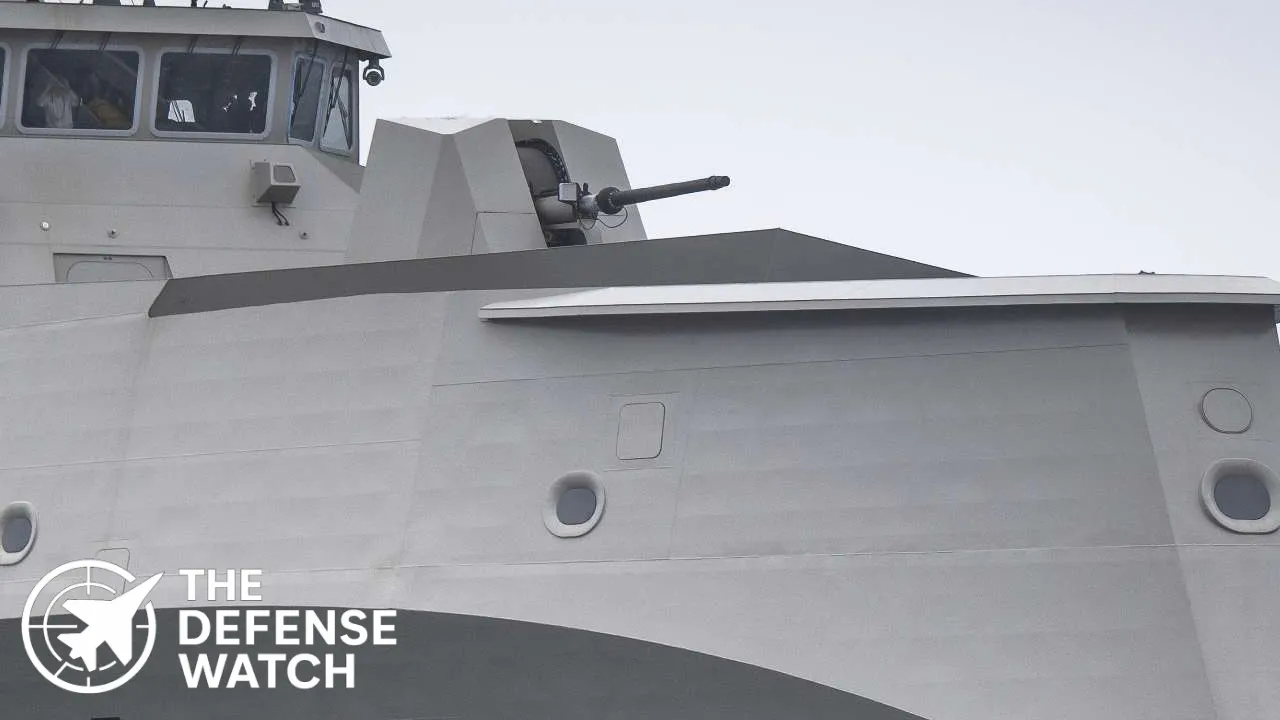
Greece has officially signed a contract with France’s Naval Group for a fourth FDI (Frégate de Défense et d’Intervention) frigate for the Hellenic Navy. The deal, worth approximately €982 million, was formalized on 14 November 2025 by Major General Ioannis Bouras of Greece’s defense acquisition office and Pierre Éric Pommellet, CEO of Naval Group.
This marks the exercise of an existing option: Greece had originally ordered three FDI frigates in 2021, with a fourth unit built into the procurement agreement. The new ship is widely expected to receive the name HS Themistocles and the hull number F-600.
Background: Why It Matters
Greece’s decision to add a fourth FDI frigate builds on a broader naval modernization strategy. Under a 2021 defense pact with France, Greece committed nearly €3 billion to acquire three FDI frigates, and this option for a fourth reflects strategic foresight.
The FDI frigates for Greece differ from their French counterparts: they are more heavily armed, featuring enhanced air-defense, anti-ship, and anti-submarine capability. The Greek versions are being built with a strong domestic industrial component: Naval Group has committed to 25% industrial return, channeling significant work into Greek defense companies.
Strategically, the move strengthens Greece’s deterrence in a tense regional environment, particularly amid longstanding rivalry with Turkey over territorial waters, airspace, and maritime rights in the Eastern Mediterranean.
Frigate Details: Capabilities & Timeline
Ship and Configuration
- The fourth frigate will be part of the Kimon-class (FDI HN), a local variant of France’s FDI design.
- It will be built in Lorient, France, under Naval Group’s supervision.
- The contract includes in-service support (maintenance), not just the build.
Armament & Systems
Greek FDI frigates are being tailored for high-end missions, with advanced systems including:
- 32 Aster 30 B1 surface-to-air missiles, using Sylver A50 vertical launchers.
- RAM (Rolling Airframe Missile) Block 2B launcher for short-range point defense.
- MM40 Block 3C Exocet anti-ship missiles (eight per vessel).
- MU90 torpedoes, launched from dual torpedo tubes.
- 76 mm main gun, paired with two remote 20 mm systems.
- Electronic warfare suite, including decoy launchers and countermeasures.
- Sensors: Thales Sea Fire fixed-panel AESA radar, Kingklip Mk II hull sonar, CAPTAS-4 towed array, and a panoramic intelligence module.
- Aviation: capability to host a helicopter (e.g., MH-60R Seahawk) or UAV (e.g., Schiebel Camcopter S-100).
Future Upgrades
- The Themistocles (fourth FDI) is expected to be delivered in “Standard 2+” configuration and possibly upgraded later to Standard 2++, incorporating advanced capabilities such as new cruise missile systems (e.g., MdCN) and enhanced CMS/electronic systems.
- Greece has discussed integration of European Long-Range Strike Approach (ELSA) cruise missiles, suggesting future strike capability.
Timeline
- The first FDI for Greece, HS Kimon (F-601), is nearing delivery by end of 2025.
- HS Nearchos (F-602) and HS Formion (F-603) are under construction; Formion was launched in June 2025.
- The new Themistocles is projected to enter service by 2028, according to Greek and French sources.
Strategic and Policy Implications
Regional Deterrence
- By expanding its FDI fleet to four high-end frigates, Greece boosts its ability to project power in the Aegean and Eastern Mediterranean.
- The upgraded capabilities—especially strong air defense, anti-ship weapons, and potential cruise missile integration—are clearly aimed at countering regional maritime threats.
Industrial Impact and European Defense
- The 25% industrial offset means around €200–250 million of the contract value will flow into Greek companies.
- This deepens Franco-Hellenic industrial cooperation and strengthens Greece’s defense industrial base.
- Naval Group has also made proposals for building additional FDI frigates locally in Greece, signaling long-term industrial partnership.
Budget and Long-Term Modernization
- The deal fits into Greece’s broader defense modernization plan, which includes investments in frigates, aircraft (Rafales), helicopters (NH90), and potentially more frigates and corvettes.
- The structured payment plan (amortized across 2025–2030) aims to balance cost and operational readiness.
What to Watch
- Delivery of Themistocles: Will it meet the 2028 target, and will it come fully equipped with cruise missile capability?
- Local Construction Proposals: Will Naval Group and Greece move forward with building even more FDI frigates in Greek shipyards?
- Further Modernization: How will this contract fit with Greece’s other procurement plans (e.g., missile systems, corvettes, anti-drone/seasurface assets)?
- Geopolitical Tensions: Whether enhanced Greek naval power will alter strategic dynamics in the Eastern Mediterranean, especially vis-à-vis Turkey.
Get real time update about this post category directly on your device, subscribe now.

7 comments
[…] of Patriot batteries to intercept Kinzhal hypersonic missiles and other ballistic threats reshaped European defense planning and triggered one of the largest missile procurement surges since the Cold […]
[…] simple acquisition: it is a strategic investment in Poland’s defense industrial base. Under the deal signed on 1 July 2022, the Polish government committed some 8.25 billion złoty (around €1.95 billion / […]
[…] reduce radar exposure. At the end of the ingress, the AASM 1000 was released against a designated naval target on Greece’s Karavia firing […]
[…] in the western Mediterranean between the southern coast of Spain and the northern coast of Morocco. French maritime authorities and Macron said the action was carried out in full compliance with the United Nations […]
[…] Naval power remains a central tool in U.S. strategy toward Iran. The Strait of Hormuz, through which roughly one fifth of global oil supply transits, remains a critical vulnerability. Any disruption could have global economic consequences. […]
[…] of these, HS Kimon, was delivered and commissioned at the end of 2025, marking a milestone in the Hellenic Navy’s surface fleet […]
[…] Mohammed VI, a FREMM (Frigate European Multi-Mission) class vessel, brings balanced capabilities to the multinational screen. Designed […]