Executive Summary:
Greece has confirmed interest in acquiring Embraer C-390 Millennium military transport aircraft as part of a broader modernization effort for the Hellenic Air Force. The move reflects Athens’ push to improve tactical airlift, NATO interoperability, and regional operational readiness amid evolving European security challenges.
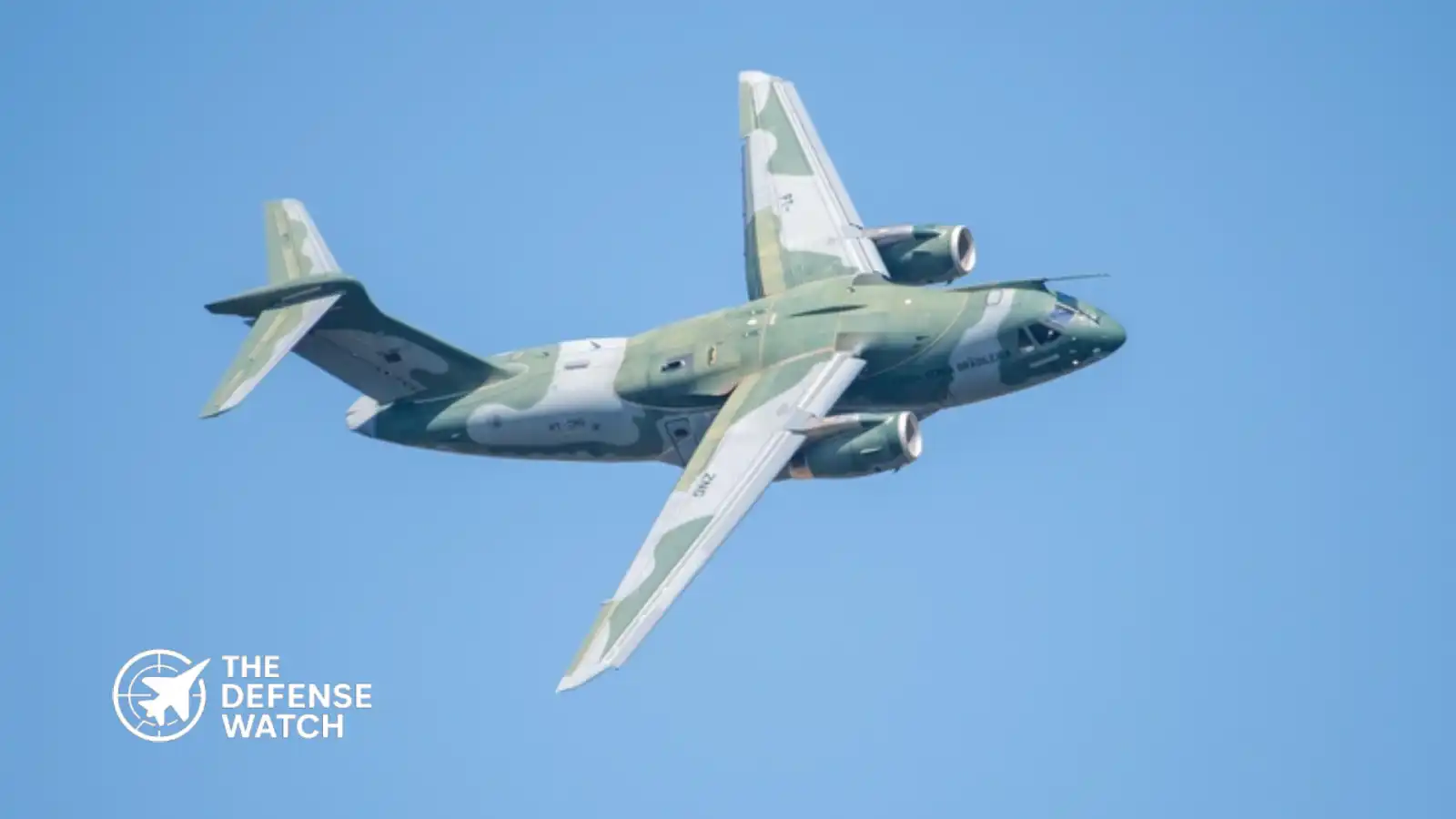
Greece Evaluates C-390 Military Aircraft For Airlift Modernization
Greece is considering the acquisition of Embraer C-390 Millennium military transport aircraft, according to statements made by Greek Defense Minister Nikos Dendias during a visit to Brazil this week. The potential procurement marks another step in Athens’ long-term effort to modernize the Hellenic Armed Forces and strengthen logistical support capabilities across the Eastern Mediterranean.
Greece expressed formal interest in the Brazilian-made transport aircraft during talks with Brazilian officials and representatives from Embraer. The discussions come as several NATO members continue replacing aging tactical transport fleets with newer multi-role platforms.
The Embraer C-390 Millennium is designed to perform a wide range of missions, including troop transport, cargo delivery, aerial refueling, medical evacuation, firefighting, and humanitarian relief operations. The aircraft has increasingly gained traction in Europe, with countries such as Portugal, Hungary, Austria, the Netherlands, and the Czech Republic selecting the platform in recent years.
Why Greece Is Looking At The C-390 Millennium
The Greek Air Force currently operates older transport aircraft, including variants of the C-130 Hercules fleet, many of which have faced readiness and maintenance challenges over the past decade. Acquiring the C-390 would provide Greece with a newer generation airlift capability featuring higher speed, improved cargo capacity, and modern avionics.
The aircraft can carry up to 26 tons of payload and operate in austere environments, making it suitable for both military and disaster response missions. Its compatibility with NATO operational standards is another key factor driving interest among European operators.
For Greece, the move aligns with a wider defense modernization strategy that includes investments in fighter aircraft, naval assets, air defense systems, and unmanned technologies. Athens has accelerated procurement efforts in response to growing regional security concerns and the evolving strategic environment in southeastern Europe.
The potential C-390 acquisition also reflects Europe’s increasing diversification of defense procurement sources beyond traditional American suppliers. While the Lockheed Martin C-130J remains a major competitor in the tactical transport segment, the C-390 has positioned itself as a cost-effective alternative with strong performance metrics.
Growing European Demand For Tactical Airlift Platforms
The European defense market has seen renewed demand for tactical airlift aircraft since the start of the Russia-Ukraine war, with NATO members reassessing logistics readiness, rapid deployment capability, and supply chain resilience.
Military planners increasingly view transport aircraft as essential assets for reinforcing alliance mobility across Europe’s eastern flank. Faster deployment of personnel, ammunition, vehicles, and humanitarian assistance has become a central requirement for NATO operations.
The C-390 Millennium has benefited from this trend. Embraer has marketed the aircraft as a modern solution capable of combining strategic reach with tactical flexibility. The jet-powered platform offers faster cruise speeds than many turboprop competitors while maintaining short runway performance.
Greece’s interest could also strengthen defense ties between Athens and Brasília, expanding military-industrial cooperation beyond Europe’s traditional defense networks. Although no contract value or delivery timeline has been announced, the discussions indicate that the aircraft is under active consideration by Greek defense officials.
Strategic Implications For NATO Operations
A future Greek acquisition of the C-390 could improve interoperability with other NATO operators already integrating the platform into service. Shared logistics, training, and operational procedures are becoming increasingly important as alliance members seek greater efficiency in multinational missions.
The Eastern Mediterranean remains a strategically sensitive region, with NATO focusing on rapid response capabilities, maritime security, and regional crisis management. Enhanced airlift capacity would allow Greece to support alliance deployments more effectively while also improving domestic disaster response operations.
Athens has emerged as one of Europe’s more active defense spenders in recent years. The country has pursued major procurement programs involving advanced fighter aircraft, frigates, and modernization initiatives aimed at maintaining operational readiness across all branches of the armed forces.
While the Greek government has not formally announced a procurement decision, the public expression of interest suggests the C-390 Millennium is being seriously evaluated as part of the country’s future air mobility framework.
Greece F-16V Viper Marks Major Upgrade Milestone
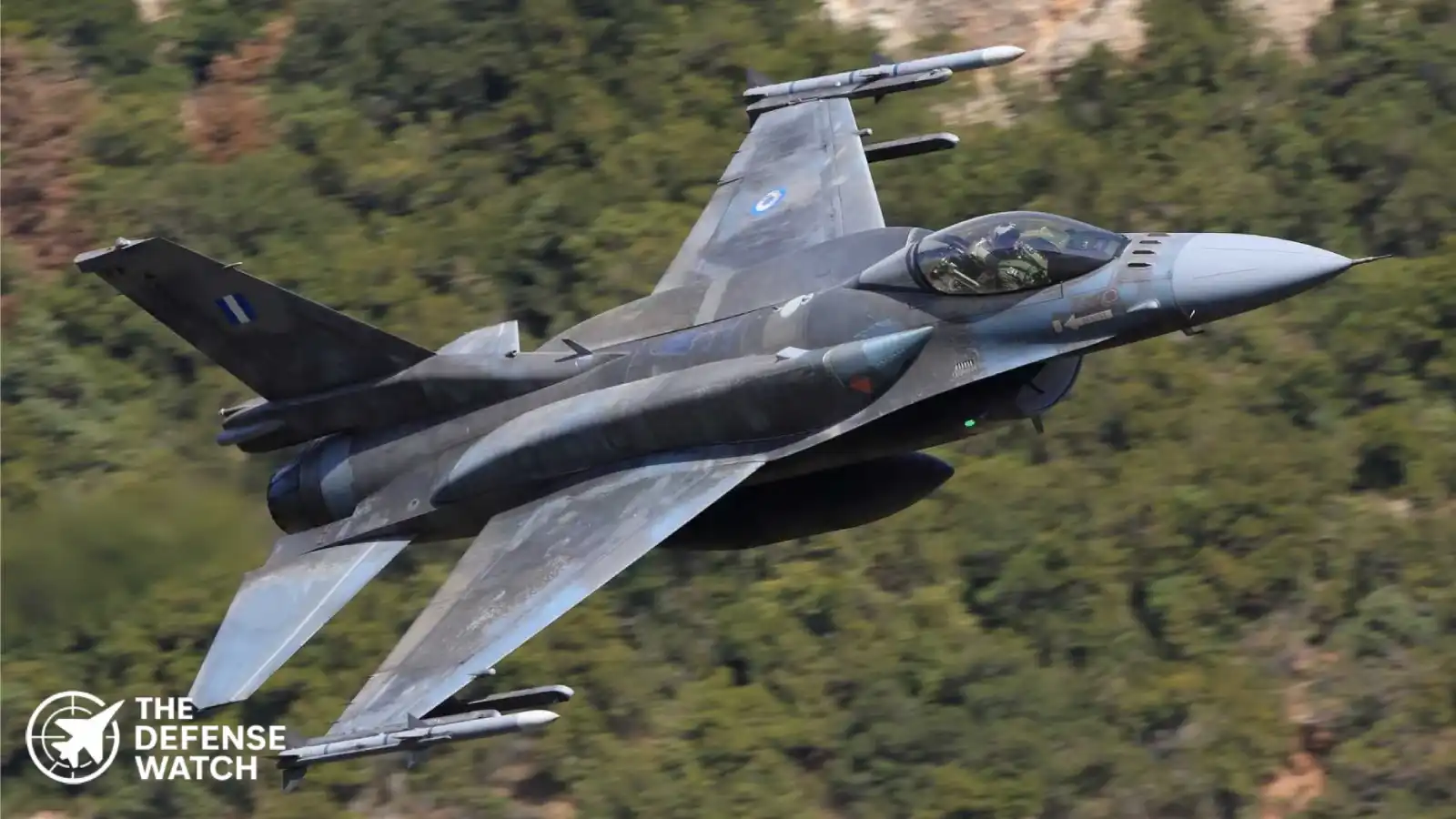
Greece F-16V Viper modernization reached a key milestone after the country received its 50th upgraded fighter jet. The delivery highlights Athens’ steady push to modernize frontline combat aviation and improve readiness across the Aegean.
The aircraft is part of a broader program to convert older Greek F-16s into the advanced Block 70/72 standard, commonly known as the Viper. The program is centered on extending fleet life while delivering next generation sensors, survivability improvements, and stronger strike capability.
- Greece has received its 50th upgraded F-16V Viper fighter aircraft.
- The F-16V adds AESA radar, modern avionics, improved targeting, and networked warfare capability.
- The milestone strengthens Greek deterrence and rapid response capacity in the Aegean region.
- Greece plans to modernize 83 aircraft under the national upgrade program.
- The upgraded fleet will operate alongside Rafale fighters and future F-35 acquisitions.
The Big Picture
Greece has spent the last several years accelerating military modernization amid persistent regional tensions, especially with neighboring Turkey over maritime boundaries, airspace management, and Eastern Mediterranean energy zones.
Air power remains central to that strategy. Fast reaction aircraft routinely intercept airspace violations, monitor maritime activity, and provide deterrence. For Greece, a modern tactical air fleet offers a relatively quick and scalable means of maintaining balance in a contested region.
Athens has therefore pursued a layered force structure built around upgraded F-16s, newly acquired French Rafale fighters, and a stated interest in acquiring the F-35 in the future.
What’s Happening
The latest delivery brings Greece to 50 completed F-16V aircraft under an upgrade effort expected to cover 83 jets. The work is led by the Hellenic Aerospace Industry in cooperation with Lockheed Martin.
The F-16V standard includes several major enhancements:
- AN/APG-83 AESA radar
- Modern mission computer
- Large center pedestal display
- Advanced datalink capability
- Improved electronic warfare systems
- Better precision strike integration
- Extended service life potential
These upgrades transform legacy fighters into platforms able to operate in dense electronic environments and engage targets faster at longer ranges.
Why It Matters
The Greece F-16V Viper program delivers capability faster than purchasing an entirely new fleet. By upgrading existing aircraft, Greece retains trained crews, support infrastructure, and proven logistics chains while gaining many features associated with newer generation fighters.
That matters operationally. In the Aegean, response times are short, distances are tight, and pilots may need to identify, track, and if required engage aircraft quickly. AESA radar and improved data fusion help crews make decisions faster.
The Viper configuration also improves survivability. Better sensors and electronic warfare systems can help aircraft detect threats sooner and operate more effectively in contested airspace.
Strategic Implications
A fleet of more than 80 upgraded fighters would significantly strengthen Greek readiness. Combined with Rafale aircraft carrying long range air to air and strike weapons, Greece gains a more credible layered deterrent posture.
For NATO, the modernization also supports alliance southern flank readiness. Greece occupies a strategically important location linking the Balkans, Eastern Mediterranean, Black Sea approaches, and Middle East transit routes.
A more capable Greek fighter force can contribute to alliance policing, maritime surveillance, and crisis response missions if required.
Competitor View
Regional military planners will likely view the Greece F-16V Viper milestone as part of a broader balance of power shift in the Eastern Mediterranean.
Turkey continues to pursue its own air modernization path through indigenous projects, drone expansion, and efforts tied to F-16 fleet upgrades. As a result, both sides are placing increasing emphasis on sensors, networking, standoff weapons, and pilot readiness rather than raw aircraft numbers alone.
That trend suggests future competition will depend as much on integration and training as on platforms themselves.
What To Watch Next
Several developments now matter most:
- Delivery pace toward the full 83 aircraft target
- Integration with Rafale fighter operations
- Weapons package expansion
- Potential Greek F-35 procurement timeline
- Sustainment funding and pilot training rates
If completed on schedule, Greece would field one of the most capable F-16 fleets in Europe.
Capability Gap
The upgrade directly addresses aging avionics and sensor limitations found in older fourth generation aircraft. Without modernization, legacy jets face declining relevance against modern radars, electronic attack systems, and long range missiles.
However, the F-16V is still not a stealth aircraft. In heavily defended environments, mission planning, electronic support, and standoff weapons remain essential.
The Bottom Line
Greece’s 50th F-16V delivery shows Athens is rapidly turning legacy fighters into a modern combat force built for deterrence and fast response in the Aegean.
- Greece approved a new air defense system acquisition alongside F-16 upgrades.
- The F-16 fleet will be upgraded to advanced configurations with improved avionics and combat systems.
- The move strengthens NATO’s southeastern flank amid tensions in the Eastern Mediterranean.
- The program reflects long-term defense investment priorities and modernization timelines.
- Greece aims to build a layered, interoperable air defense network integrated with allied systems.
Greece Air Defense System Purchase And F-16 Upgrade
Greece air defense system purchase and F-16 upgrade plans have been formally approved, marking a significant step in Athens’ ongoing military modernization effort and reinforcing its role within NATO’s southern defense architecture.
The decision reflects a coordinated approach to upgrading both ground-based air defense and tactical airpower, addressing evolving regional threats and capability gaps.
The Big Picture
Greece continues to position itself as a key security provider in the Eastern Mediterranean, a region shaped by persistent geopolitical friction, contested airspace, and expanding missile threats.
NATO has emphasized integrated air and missile defense as a priority, particularly along its southeastern flank. Greece’s modernization aligns with broader alliance goals to enhance interoperability, early warning capabilities, and rapid response readiness.
The move also comes as European states increase defense spending following Russia’s actions in Ukraine and ongoing instability across the Middle East.
What’s Happening
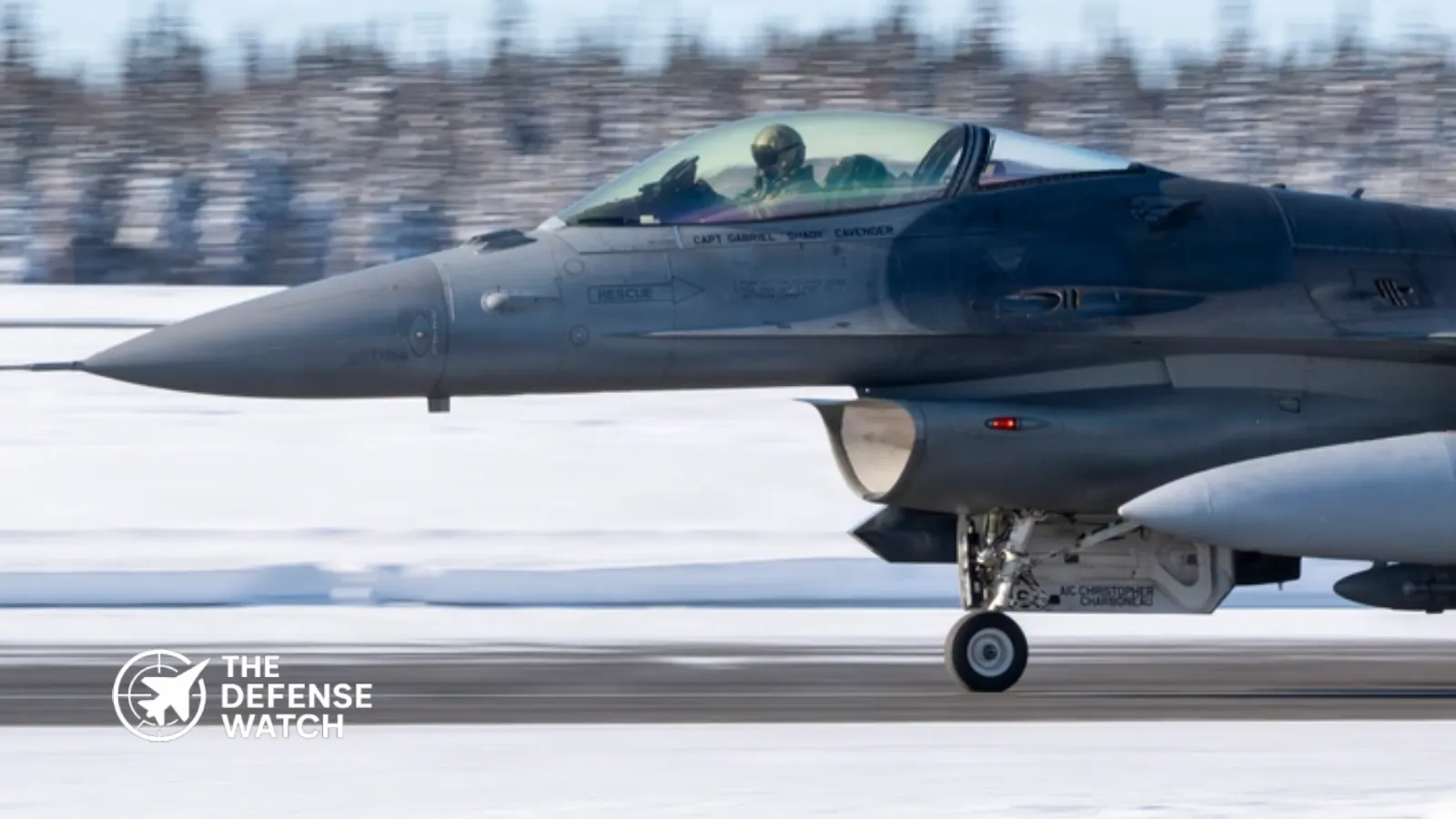
Greek lawmakers approved the procurement of a new air defense system and the modernization of the country’s F-16 fighter fleet, according to reporting from Reuters.
The program includes upgrades to existing F-16 aircraft, bringing them closer to advanced configurations with improved radar systems, mission computers, and network-centric capabilities.
The air defense acquisition aims to enhance Greece’s ability to detect, track, and intercept aerial threats, including aircraft, drones, and potentially cruise missiles.
The approvals were finalized in March 2026, with implementation expected to unfold over multiple years.
Why It Matters
The Greece air defense system purchase directly addresses the growing complexity of modern aerial threats. Regional actors increasingly rely on unmanned systems, precision-guided munitions, and stand-off weapons, which challenge legacy air defense networks.
Upgrading the F-16 fleet ensures Greece maintains a credible air superiority and strike capability. Modernized fighters equipped with advanced sensors and data links can operate effectively in contested environments and integrate with allied forces.
The combination of air defense and fighter upgrades creates a layered defense structure, improving survivability and operational flexibility.
Strategic Implications
Greece’s modernization enhances deterrence in the Eastern Mediterranean by increasing both defensive depth and offensive reach.
A modernized F-16 fleet improves rapid response capability, allowing Greece to patrol contested airspace and respond to incursions more effectively. At the same time, advanced air defense systems strengthen homeland protection and critical infrastructure security.
The integration of these systems into NATO frameworks also boosts alliance cohesion. Greece can contribute more effectively to joint operations, including air policing and missile defense missions.
The move reinforces Greece’s strategic value as a frontline NATO member bordering volatile regions.
Competitor View
Regional rivals, particularly Turkey, are likely to view the Greece air defense system purchase and F-16 upgrade as part of a broader military balancing effort.
Turkey has pursued its own air defense capabilities and fighter modernization programs, including indigenous platforms and missile systems. Greece’s upgrades could influence procurement decisions and operational planning in Ankara.
Russia may interpret the move as further consolidation of NATO’s integrated defense network near its periphery, particularly given the alliance’s emphasis on missile defense and interoperability.
Iran and other regional actors will likely note the strengthening of Western-aligned defense capabilities in the Eastern Mediterranean, though the direct impact remains limited to the regional balance.
What To Watch Next
Implementation timelines will be critical. Observers should monitor contract awards, system selection details, and integration milestones for the air defense component.
F-16 upgrade schedules, including delivery timelines and operational readiness milestones, will indicate how quickly Greece can field enhanced capabilities.
Joint exercises with NATO partners will also serve as a key indicator of how effectively these systems integrate into alliance operations.
Capability Gap
Greece has faced limitations in both legacy air defense coverage and the aging capabilities of parts of its fighter fleet.
Older systems struggle to counter low-observable threats, drones, and high-speed precision weapons. The new air defense system aims to close these gaps by improving detection range, tracking accuracy, and interception capability.
However, challenges remain. Integration across different platforms and maintaining readiness levels will require sustained investment, training, and logistical support.
Upgrading F-16s extends their service life, but it does not fully replace the need for next-generation platforms in the long term.
The Bottom Line
Greece’s approval of a new air defense system and F-16 upgrades marks a decisive step toward a more integrated, resilient, and NATO-aligned defense posture in a contested region.
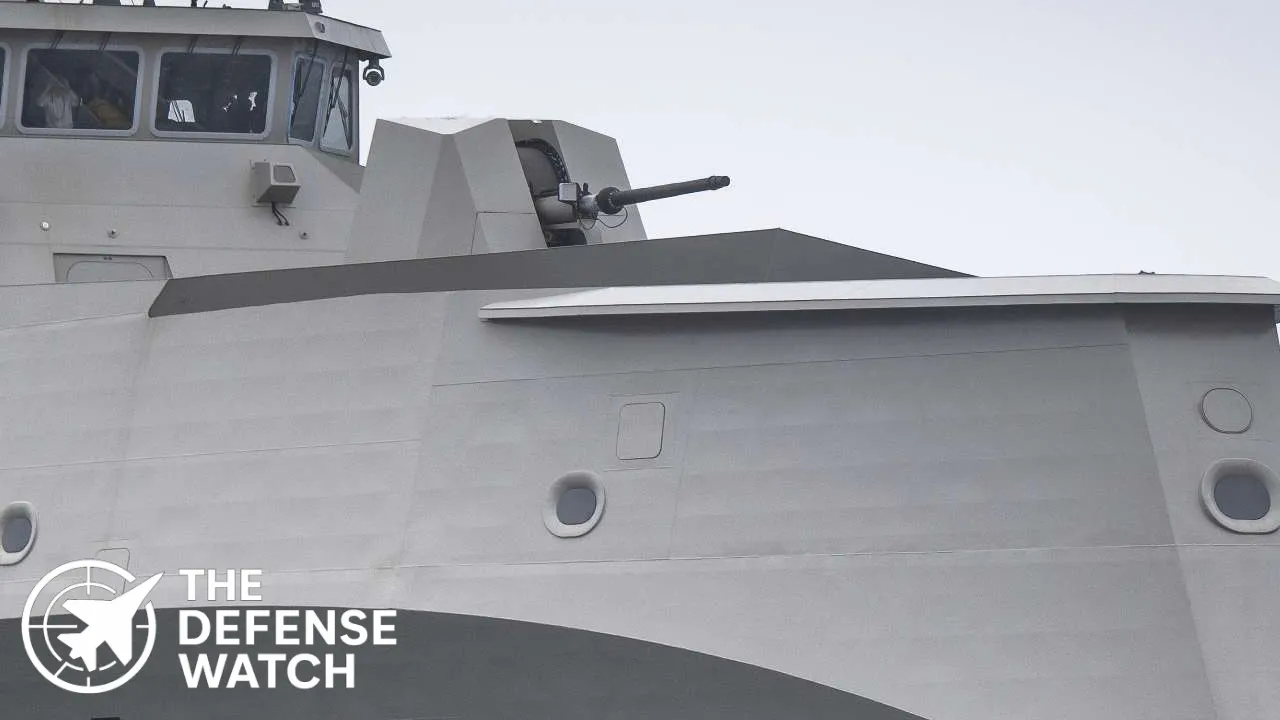
Greece has officially signed a contract with France’s Naval Group for a fourth FDI (Frégate de Défense et d’Intervention) frigate for the Hellenic Navy. The deal, worth approximately €982 million, was formalized on 14 November 2025 by Major General Ioannis Bouras of Greece’s defense acquisition office and Pierre Éric Pommellet, CEO of Naval Group.
This marks the exercise of an existing option: Greece had originally ordered three FDI frigates in 2021, with a fourth unit built into the procurement agreement. The new ship is widely expected to receive the name HS Themistocles and the hull number F-600.
Background: Why It Matters
Greece’s decision to add a fourth FDI frigate builds on a broader naval modernization strategy. Under a 2021 defense pact with France, Greece committed nearly €3 billion to acquire three FDI frigates, and this option for a fourth reflects strategic foresight.
The FDI frigates for Greece differ from their French counterparts: they are more heavily armed, featuring enhanced air-defense, anti-ship, and anti-submarine capability. The Greek versions are being built with a strong domestic industrial component: Naval Group has committed to 25% industrial return, channeling significant work into Greek defense companies.
Strategically, the move strengthens Greece’s deterrence in a tense regional environment, particularly amid longstanding rivalry with Turkey over territorial waters, airspace, and maritime rights in the Eastern Mediterranean.
Frigate Details: Capabilities & Timeline
Ship and Configuration
- The fourth frigate will be part of the Kimon-class (FDI HN), a local variant of France’s FDI design.
- It will be built in Lorient, France, under Naval Group’s supervision.
- The contract includes in-service support (maintenance), not just the build.
Armament & Systems
Greek FDI frigates are being tailored for high-end missions, with advanced systems including:
- 32 Aster 30 B1 surface-to-air missiles, using Sylver A50 vertical launchers.
- RAM (Rolling Airframe Missile) Block 2B launcher for short-range point defense.
- MM40 Block 3C Exocet anti-ship missiles (eight per vessel).
- MU90 torpedoes, launched from dual torpedo tubes.
- 76 mm main gun, paired with two remote 20 mm systems.
- Electronic warfare suite, including decoy launchers and countermeasures.
- Sensors: Thales Sea Fire fixed-panel AESA radar, Kingklip Mk II hull sonar, CAPTAS-4 towed array, and a panoramic intelligence module.
- Aviation: capability to host a helicopter (e.g., MH-60R Seahawk) or UAV (e.g., Schiebel Camcopter S-100).
Future Upgrades
- The Themistocles (fourth FDI) is expected to be delivered in “Standard 2+” configuration and possibly upgraded later to Standard 2++, incorporating advanced capabilities such as new cruise missile systems (e.g., MdCN) and enhanced CMS/electronic systems.
- Greece has discussed integration of European Long-Range Strike Approach (ELSA) cruise missiles, suggesting future strike capability.
Timeline
- The first FDI for Greece, HS Kimon (F-601), is nearing delivery by end of 2025.
- HS Nearchos (F-602) and HS Formion (F-603) are under construction; Formion was launched in June 2025.
- The new Themistocles is projected to enter service by 2028, according to Greek and French sources.
Strategic and Policy Implications
Regional Deterrence
- By expanding its FDI fleet to four high-end frigates, Greece boosts its ability to project power in the Aegean and Eastern Mediterranean.
- The upgraded capabilities—especially strong air defense, anti-ship weapons, and potential cruise missile integration—are clearly aimed at countering regional maritime threats.
Industrial Impact and European Defense
- The 25% industrial offset means around €200–250 million of the contract value will flow into Greek companies.
- This deepens Franco-Hellenic industrial cooperation and strengthens Greece’s defense industrial base.
- Naval Group has also made proposals for building additional FDI frigates locally in Greece, signaling long-term industrial partnership.
Budget and Long-Term Modernization
- The deal fits into Greece’s broader defense modernization plan, which includes investments in frigates, aircraft (Rafales), helicopters (NH90), and potentially more frigates and corvettes.
- The structured payment plan (amortized across 2025–2030) aims to balance cost and operational readiness.
What to Watch
- Delivery of Themistocles: Will it meet the 2028 target, and will it come fully equipped with cruise missile capability?
- Local Construction Proposals: Will Naval Group and Greece move forward with building even more FDI frigates in Greek shipyards?
- Further Modernization: How will this contract fit with Greece’s other procurement plans (e.g., missile systems, corvettes, anti-drone/seasurface assets)?
- Geopolitical Tensions: Whether enhanced Greek naval power will alter strategic dynamics in the Eastern Mediterranean, especially vis-à-vis Turkey.