
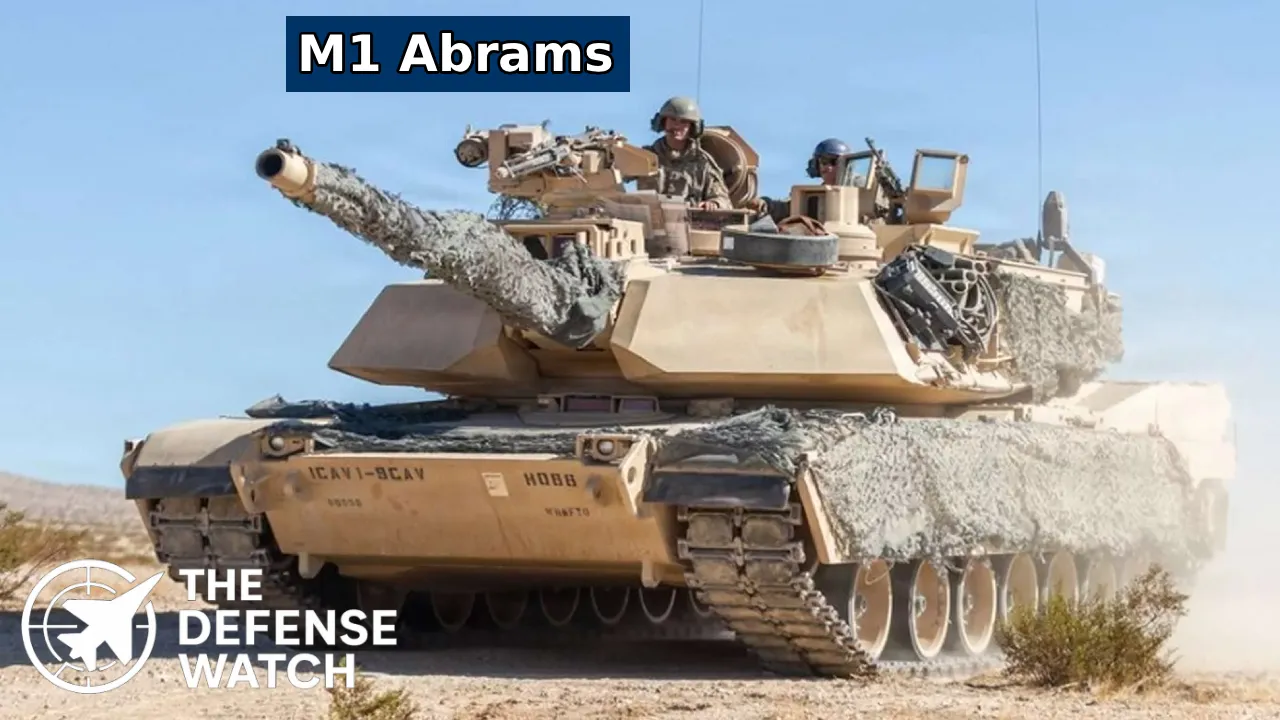
Saudi Arabia Greenlights 300 U.S.-Made Abrams Tanks
In a sweeping augmentation of its military capabilities, Saudi Arabia has confirmed the acquisition of nearly 300 M1 Abrams main battle tanks under a newly ratified Strategic Defense Agreement (SDA) with the United States, the White House announced on November 18, 2025.
Background: A Deepening of U.S.–Saudi Defense Ties
This announcement comes amid renewed high-level talks between Saudi leaders and the U.S. administration, signaling a major boost in the long-standing defense relationship between the two nations. According to a statement from the White House, the agreement not only includes tank sales but also provisions for F-35 stealth fighters – marking a significant milestone in U.S.-Saudi security cooperation.
The Abrams tanks, manufactured by General Dynamics Land Systems, represent a core component of U.S. armored warfare doctrine and have widespread adoption globally.
Key Deal Details and Strategic Implications
Scale and Purpose
- The confirmed order stands at roughly 300 Abrams tanks, making it one of the largest such sales to Riyadh in recent years.
- According to the White House, the deal “fortifies deterrence across the Middle East” and builds on burden-sharing mechanisms to bring “hundreds of American jobs” into the production chain.
Strategic Defense Agreement
- Under this Strategic Defense Agreement, Saudi Arabia is now formally recognized in a broader security framework with the U.S., allowing for streamlined defense cooperation.
- The pact is seen as a mechanism to deepen military industrial ties, affirm Riyadh’s role as a strategic U.S. partner, and potentially expand future arms sales.
Tank Variant and Capabilities
- While the White House did not specifically name the variant in its announcement, the most likely candidate is the M1A2S “Saudi Abrams”, a version tailored to Riyadh’s needs.
- The M1A2S variant is optimized for desert operations, featuring enhanced thermal sighting systems (second-generation FLIR), robust armor, and mission-management electronics suited to harsh environments.
Historical Context: Saudi Abrams Fleet
- Saudi Arabia already operates a substantial fleet of Abrams tanks. In late 2021, 153 M1A2 Abrams were delivered, upgraded to the M1A2S configuration.
- Previous U.S. Foreign Military Sales (FMS) arrangements also covered spare parts and logistic support under a Cooperative Logistics Supply Support Arrangement (CLSSA). For example, in 2024, Riyadh negotiated a $300 million CLSSA deal for repair parts for Abrams, Bradley fighting vehicles, and other systems.
- The 2016 U.S. State Department–approved sale of 153 M1A1/A2 tank structures to Saudi Arabia (for conversion to M1A2S) also included training, recovery vehicles, and support equipment.
Expert & Policy Perspectives
Defense analysts suggest this deal serves several strategic objectives:
- Burden sharing and industrial cooperation: By anchoring future procurement under the SDA, the U.S. may gain more predictable demand for its defense-industrial base, while Saudi Arabia strengthens its combat capabilities.
- Regional deterrence: The addition of advanced Abrams tanks bolsters Riyadh’s armored force posture in a region marked by simmering tensions, especially given proxy conflicts and rivalries.
- Integration and interoperability: The upgrade to M1A2S standard ensures compatibility with U.S. logistics, training regimes, and support – enhancing cooperation in joint operations or future exercises.
What’s Next: Challenges and Impact
Timeline and Delivery
- The White House did not disclose a specific delivery schedule. Given the scale of the order, deliveries could be phased over several years.
- Integration of the new tanks into Saudi doctrine and logistics could require additional training, infrastructure, and parts sustainment.
Political Considerations
- In Washington, some lawmakers may scrutinize the deal in light of broader human rights debates, export controls, and regional stability concerns.
- For Riyadh, the acquisition strengthens its long-term security architecture and deepens strategic alignment with the United States.
Industrial and Economic Effects
- The deal could generate thousands of U.S. manufacturing jobs, particularly at General Dynamics and its supply chain.
- On the Saudi side, a stronger armored force may spur further investments in maintenance, training, and possibly even co-production or localized assembly in the future.
Conclusion
Saudi Arabia’s confirmation of 300 Abrams tanks under a newly signed Strategic Defense Agreement with the United States marks a major deepening of military ties between Riyadh and Washington. The deal not only underscores the strategic importance of the Kingdom as a key U.S. partner in the Middle East but also bolsters Saudi armored capabilities with one of the world’s most advanced main battle tanks. As delivery and integration progress, both countries could further expand industrial cooperation and cement their shared defense architecture.
Get real time update about this post category directly on your device, subscribe now.


1 comment
[…] strategic advantage lies in the glide vehicle’s ability to maneuver unpredictably during its terminal phase. An HGV’s ability to maneuver as it […]