

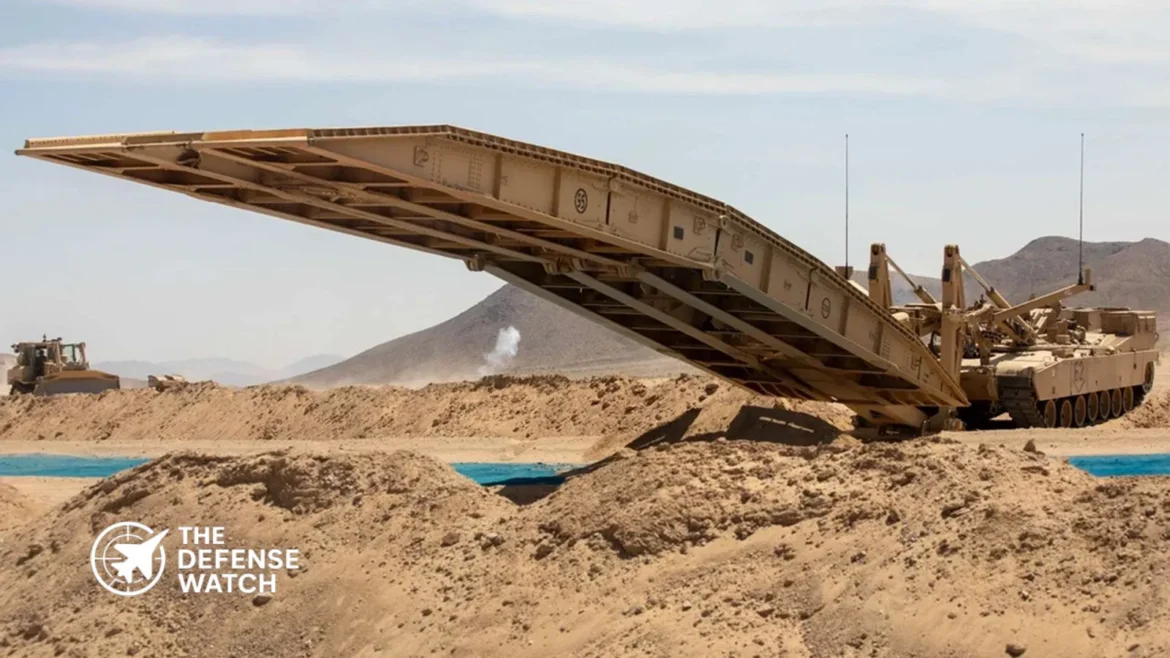
- U.S. Army is adding 20 M1074 Joint Assault Bridge systems to support M1 Abrams operations.
- The system is based on the M1 Abrams chassis and designed for rapid obstacle crossing.
- Bridges can span gaps of up to 18 meters and support heavy armored vehicles.
- The upgrade strengthens breaching and maneuver capabilities in contested environments.
- The move aligns with U.S. Army modernization priorities focused on mobility and survivability.
U.S. Army Expands M1 Abrams Breach Capability With M1074 Joint Assault Bridges
The U.S. Army is expanding M1 Abrams breach capability through the acquisition of 20 additional M1074 Joint Assault Bridge systems, reinforcing its ability to maneuver armored forces across complex battlefield obstacles.
The move is part of a broader effort to enhance combat engineering support for armored units, ensuring that main battle tanks can maintain operational momentum in high-intensity conflict environments.
The M1074 Joint Assault Bridge, built on the same chassis as the M1 Abrams, enables rapid deployment of armored bridges under combat conditions. This allows heavy vehicles to cross gaps, trenches, and other obstacles without delaying advancing forces.
Enhancing Armored Mobility In Contested Terrain
The expansion of M1 Abrams breach capability reflects a core operational requirement: maintaining mobility under fire. Modern battlefields, particularly in Europe and other potential theaters, are expected to feature extensive obstacles, including anti-tank ditches, destroyed infrastructure, and engineered defensive barriers.
The M1074 system addresses these challenges by deploying a scissor-type bridge capable of spanning gaps up to approximately 18 meters. Importantly, the bridge is designed to support the weight of heavy armored vehicles, including the Abrams itself.
Because the system shares the Abrams platform, it benefits from similar levels of armor protection and mobility. This reduces vulnerability during forward operations, where engineering units often operate close to enemy contact.
From an operational perspective, this significantly reduces the time required to breach obstacles, limiting exposure to enemy fires and preserving the tempo of armored advances.
Integration With M1 Abrams Formations
The decision to expand M1 Abrams breach capability is closely tied to how armored brigade combat teams are structured. Engineering assets such as the M1074 are integral to combined arms operations, enabling tanks and mechanized infantry to operate without interruption.
In practice, Joint Assault Bridges are deployed alongside Abrams units, allowing commanders to quickly respond to terrain challenges without waiting for follow-on engineering support.
This integration is especially relevant in large-scale maneuver warfare scenarios, where delays at obstacles can create bottlenecks and increase vulnerability to precision fires, drones, and artillery.
The additional 20 systems will likely be distributed across multiple units, improving redundancy and ensuring that breaching capability is available across a wider operational footprint.
Strategic Context: Lessons From Recent Conflicts
The emphasis on M1 Abrams breach capability aligns with lessons observed in recent conflicts, particularly in Eastern Europe. Combat operations have highlighted the critical importance of mobility, especially when facing layered defenses that combine mines, trenches, and anti-armor systems.
In Ukraine, for example, both Russian and Ukrainian forces have encountered significant challenges breaching fortified positions. These conditions have underscored the need for protected, rapid-deployment bridging systems that can operate under fire.
The U.S. Army’s investment in additional M1074 systems suggests a recognition that future conflicts will require not just firepower, but sustained maneuver capability in heavily contested environments.
Engineering Support As A Combat Multiplier
While often less visible than frontline platforms, combat engineering systems play a decisive role in determining battlefield outcomes. Expanding M1 Abrams breach capability effectively enhances the combat power of armored units without modifying the tank itself.
The ability to cross obstacles quickly can dictate whether a force maintains initiative or becomes stalled. In high-intensity warfare, even short delays can expose units to surveillance and targeting by advanced sensors and long-range fires.
By increasing the number of Joint Assault Bridges, the Army is strengthening a key enabler of maneuver warfare, ensuring that armored formations can adapt to terrain challenges in real time.
Industrial And Programmatic Considerations
The M1074 Joint Assault Bridge program builds on existing Abrams-based manufacturing and support infrastructure, which simplifies logistics and lifecycle management.
This commonality reduces training requirements and streamlines maintenance, as crews and support personnel are already familiar with the Abrams platform. It also ensures interoperability within armored formations.
While specific contract details were not disclosed in the report, the acquisition reflects ongoing investment in proven systems rather than entirely new platforms, a trend seen across several U.S. Army modernization efforts.
Operational Impact And Future Outlook
The expansion of M1 Abrams breach capability is likely to have immediate operational benefits, particularly for units preparing for deployment in regions where terrain and infrastructure present significant challenges.
Looking ahead, the integration of engineering systems with emerging technologies, such as autonomous breaching and remote bridge deployment, may further enhance capability. However, for now, the focus remains on fielding reliable, combat-proven systems at scale.
In the near term, the additional M1074 systems will improve the Army’s ability to sustain momentum in offensive operations, reinforcing the central role of mobility in modern warfare.
Saudi Arabia Greenlights 300 U.S.-Made Abrams Tanks
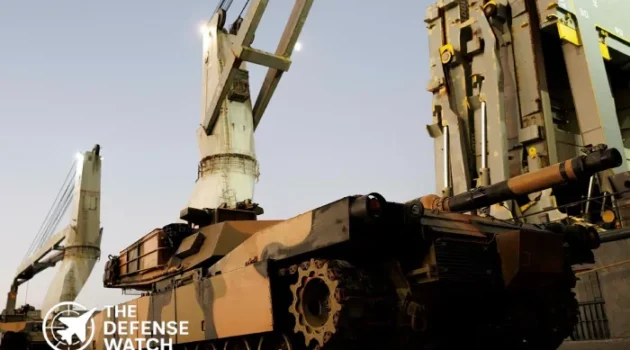
In a sweeping augmentation of its military capabilities, Saudi Arabia has confirmed the acquisition of nearly 300 M1 Abrams main battle tanks under a newly ratified Strategic Defense Agreement (SDA) with the United States, the White House announced on November 18, 2025.
Background: A Deepening of U.S.–Saudi Defense Ties
This announcement comes amid renewed high-level talks between Saudi leaders and the U.S. administration, signaling a major boost in the long-standing defense relationship between the two nations. According to a statement from the White House, the agreement not only includes tank sales but also provisions for F-35 stealth fighters – marking a significant milestone in U.S.-Saudi security cooperation.
The Abrams tanks, manufactured by General Dynamics Land Systems, represent a core component of U.S. armored warfare doctrine and have widespread adoption globally.
Key Deal Details and Strategic Implications
Scale and Purpose
- The confirmed order stands at roughly 300 Abrams tanks, making it one of the largest such sales to Riyadh in recent years.
- According to the White House, the deal “fortifies deterrence across the Middle East” and builds on burden-sharing mechanisms to bring “hundreds of American jobs” into the production chain.
Strategic Defense Agreement
- Under this Strategic Defense Agreement, Saudi Arabia is now formally recognized in a broader security framework with the U.S., allowing for streamlined defense cooperation.
- The pact is seen as a mechanism to deepen military industrial ties, affirm Riyadh’s role as a strategic U.S. partner, and potentially expand future arms sales.
Tank Variant and Capabilities
- While the White House did not specifically name the variant in its announcement, the most likely candidate is the M1A2S “Saudi Abrams”, a version tailored to Riyadh’s needs.
- The M1A2S variant is optimized for desert operations, featuring enhanced thermal sighting systems (second-generation FLIR), robust armor, and mission-management electronics suited to harsh environments.
Historical Context: Saudi Abrams Fleet
- Saudi Arabia already operates a substantial fleet of Abrams tanks. In late 2021, 153 M1A2 Abrams were delivered, upgraded to the M1A2S configuration.
- Previous U.S. Foreign Military Sales (FMS) arrangements also covered spare parts and logistic support under a Cooperative Logistics Supply Support Arrangement (CLSSA). For example, in 2024, Riyadh negotiated a $300 million CLSSA deal for repair parts for Abrams, Bradley fighting vehicles, and other systems.
- The 2016 U.S. State Department–approved sale of 153 M1A1/A2 tank structures to Saudi Arabia (for conversion to M1A2S) also included training, recovery vehicles, and support equipment.
Expert & Policy Perspectives
Defense analysts suggest this deal serves several strategic objectives:
- Burden sharing and industrial cooperation: By anchoring future procurement under the SDA, the U.S. may gain more predictable demand for its defense-industrial base, while Saudi Arabia strengthens its combat capabilities.
- Regional deterrence: The addition of advanced Abrams tanks bolsters Riyadh’s armored force posture in a region marked by simmering tensions, especially given proxy conflicts and rivalries.
- Integration and interoperability: The upgrade to M1A2S standard ensures compatibility with U.S. logistics, training regimes, and support – enhancing cooperation in joint operations or future exercises.
What’s Next: Challenges and Impact
Timeline and Delivery
- The White House did not disclose a specific delivery schedule. Given the scale of the order, deliveries could be phased over several years.
- Integration of the new tanks into Saudi doctrine and logistics could require additional training, infrastructure, and parts sustainment.
Political Considerations
- In Washington, some lawmakers may scrutinize the deal in light of broader human rights debates, export controls, and regional stability concerns.
- For Riyadh, the acquisition strengthens its long-term security architecture and deepens strategic alignment with the United States.
Industrial and Economic Effects
- The deal could generate thousands of U.S. manufacturing jobs, particularly at General Dynamics and its supply chain.
- On the Saudi side, a stronger armored force may spur further investments in maintenance, training, and possibly even co-production or localized assembly in the future.
Conclusion
Saudi Arabia’s confirmation of 300 Abrams tanks under a newly signed Strategic Defense Agreement with the United States marks a major deepening of military ties between Riyadh and Washington. The deal not only underscores the strategic importance of the Kingdom as a key U.S. partner in the Middle East but also bolsters Saudi armored capabilities with one of the world’s most advanced main battle tanks. As delivery and integration progress, both countries could further expand industrial cooperation and cement their shared defense architecture.

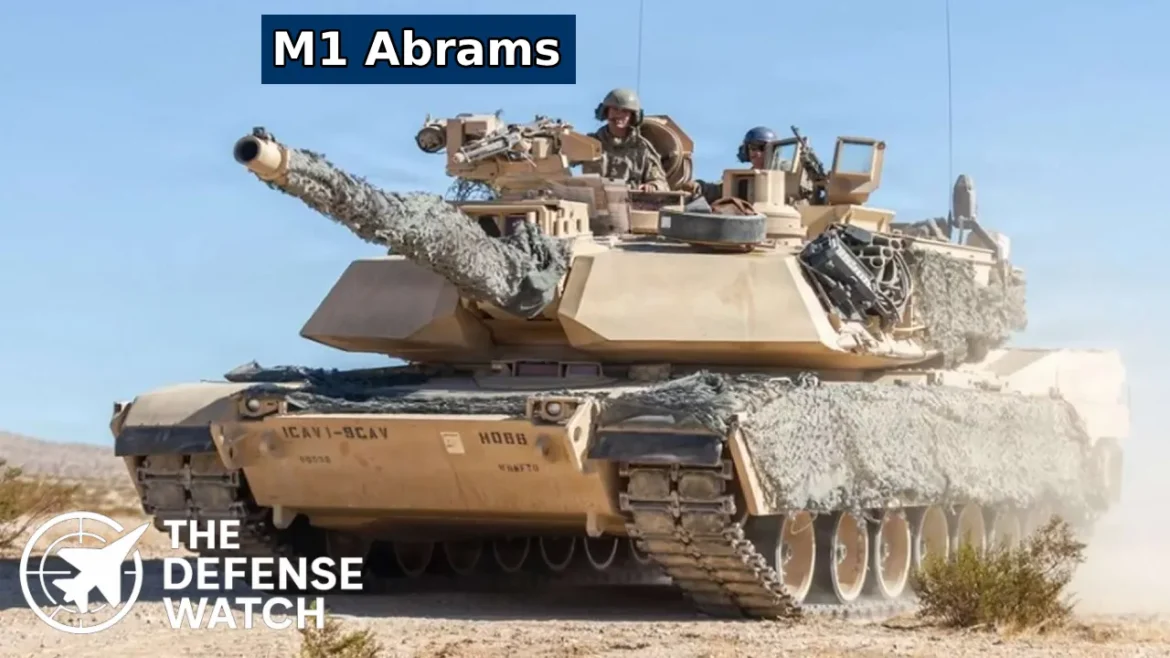
M1 Abrams Tank: Legacy, Upgrades, and the Future of America’s Main Battle Tank
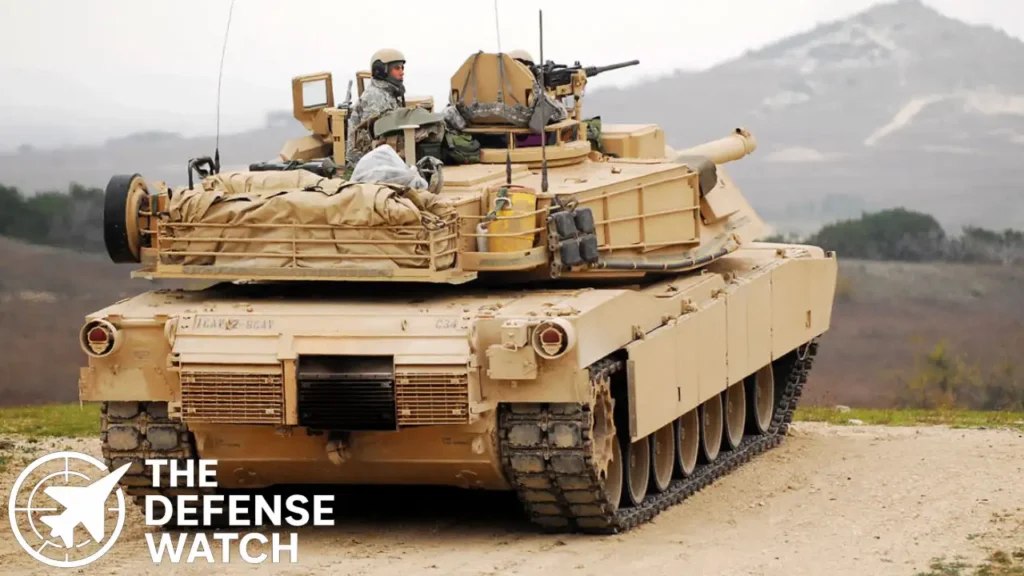
The M1 Abrams tank has served as the backbone of U.S. armored forces for over four decades. First entering service in 1980, it has proven its effectiveness in conflicts from the Persian Gulf to Iraq and Afghanistan. Despite its age, the Abrams continues to undergo major upgrades, ensuring its relevance in a rapidly evolving battlefield shaped by drones, precision weapons, and next-generation armored threats.
Today, the Abrams faces new challenges: peer adversaries like Russia and China are fielding advanced armor, while lightweight anti-tank weapons and loitering munitions threaten heavy formations. The U.S. Army is responding with significant modernization programs to keep the Abrams combat-ready well into the 2030s.
Source: U.S. Army Acquisition Support Center
The Abrams Legacy: From Cold War to Modern Conflicts
Designed at the height of the Cold War, the Abrams combined speed, protection, and firepower. Its 120mm smoothbore cannon, Chobham composite armor, and 1,500-horsepower gas turbine engine set a new global standard for tank warfare.
The Abrams first proved its dominance during the 1991 Gulf War, where it outperformed Soviet-designed T-72 tanks in Iraq. Its battlefield reputation was cemented in the 2003 invasion of Iraq, where it provided decisive armored support in urban combat.
However, those same wars exposed vulnerabilities. Urban warfare and improvised explosive devices (IEDs) highlighted the need for upgraded armor protection, reactive systems, and electronic enhancements.
Modernization Efforts: M1A2 SEPv3 and Beyond
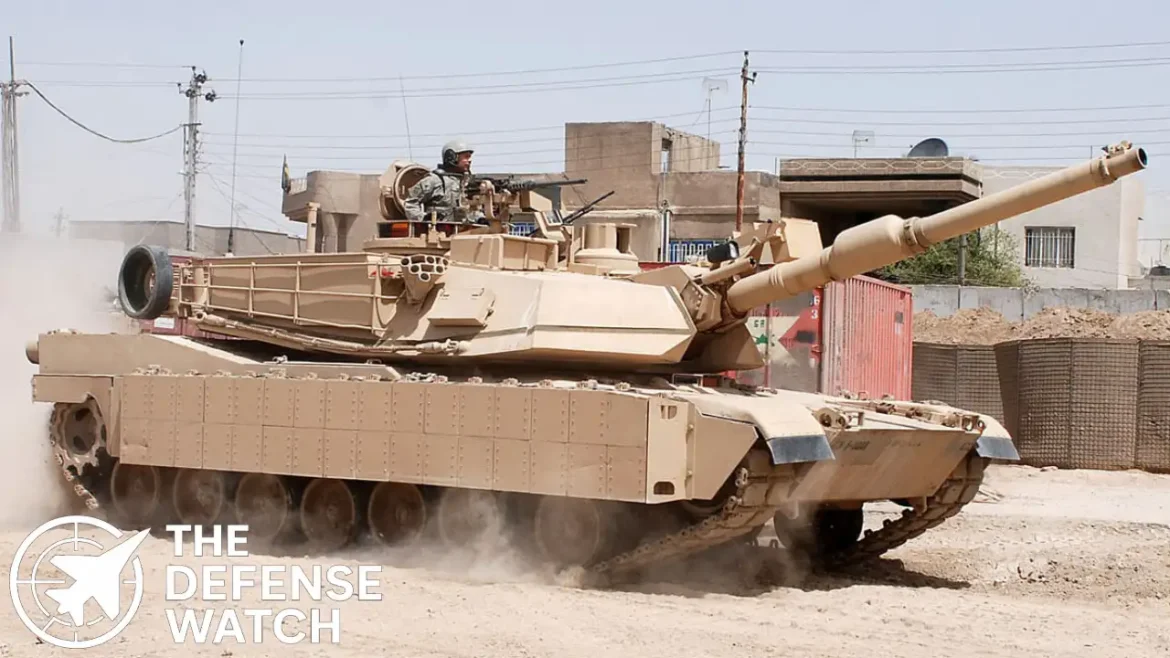
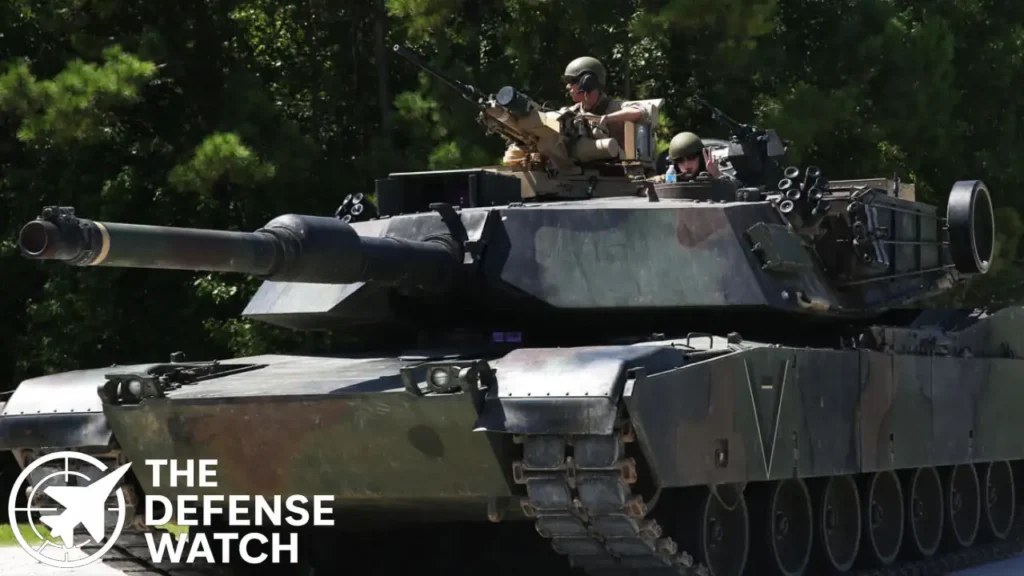
The current production standard, the M1A2 SEPv3 (System Enhancement Package Version 3), represents the most advanced Abrams variant in service. Key upgrades include:
- Improved armor protection against kinetic and chemical energy threats.
- Enhanced power generation to support modern electronics and battlefield networking.
- Upgraded communications systems for joint, multi-domain operations.
- Active protection systems (APS) such as Trophy to counter anti-tank missiles.
The upcoming M1A2 SEPv4, now under development, will further integrate advanced sensors, improved lethality, and next-generation targeting systems.
The Abrams in an Era of Drones and Precision Weapons
The war in Ukraine has underscored the vulnerability of heavy armor to drones, precision-guided artillery, and loitering munitions. For the Abrams, survivability will increasingly depend on layered defenses, electronic warfare support, and unmanned teaming.
U.S. Army modernization efforts are exploring integration with robotic combat vehicles, allowing Abrams formations to operate with unmanned scouts and decoys. This shift reflects a broader transition from traditional tank-on-tank warfare to multi-domain operations, where armor must survive in contested air and cyber environments.
Future Outlook: The AbramsX and Next-Generation Armor
General Dynamics Land Systems (GDLS) has unveiled the AbramsX technology demonstrator, a lighter, hybrid-electric concept tank that may shape the future of U.S. armored forces. AbramsX promises:
- Reduced weight for greater mobility and deployability.
- Hybrid-electric propulsion for fuel efficiency and reduced heat signature.
- AI-enabled targeting and crew support systems.
While AbramsX is not yet slated for full production, it reflects the Army’s recognition that the Abrams, despite its legendary record, may need a successor within the next two decades.
Analysis: Can the Abrams Stay Dominant?
The Abrams has continually proven adaptable, evolving from Cold War design to counter-insurgency and now preparing for great-power competition. Yet, its future dominance will depend on how effectively upgrades can counter drones, hypersonic threats, and electronic warfare.
While critics argue that heavy tanks are becoming obsolete in the age of drones, the Abrams remains a critical deterrent. It embodies armored presence, survivability, and firepower—qualities still essential on contested battlefields. The key question for the U.S. Army is whether modernization will keep the Abrams viable, or whether a clean-sheet next-generation design is inevitable.
FAQs
The latest operational version is the M1A2 SEPv3, with the SEPv4 currently in development.
The U.S. Army expects the Abrams to remain in service through the 2030s, with future upgrades extending its life further.
AbramsX is a technology demonstrator showcasing hybrid-electric propulsion, reduced weight, and advanced AI systems as potential features of future tanks.