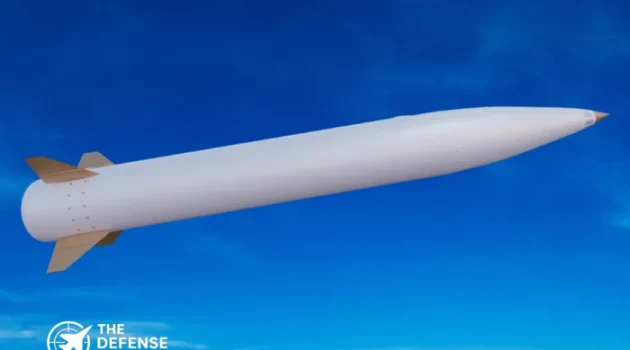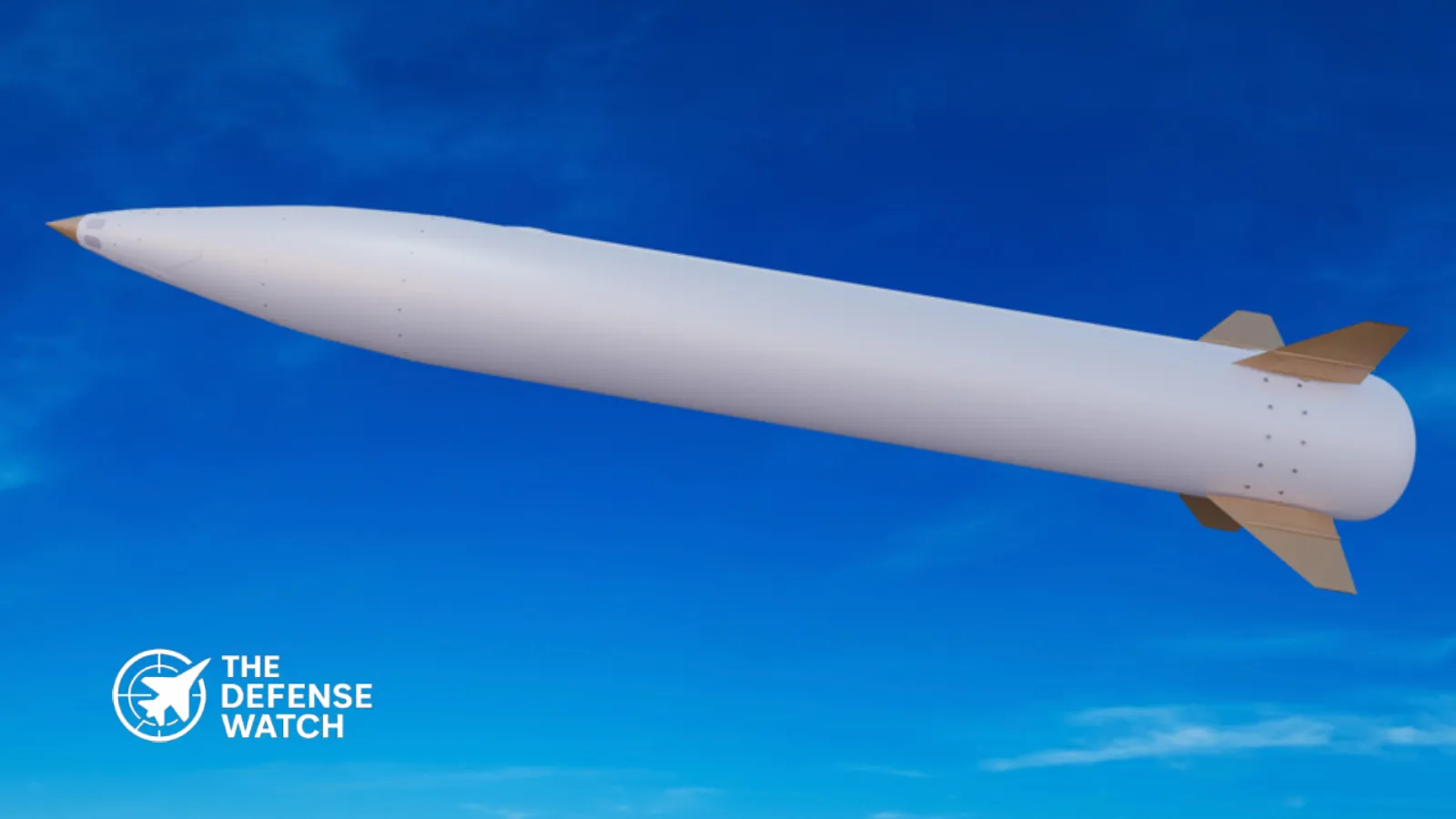
- The US Army and Lockheed Martin conducted a successful flight test of the Precision Strike Missile Increment 2.
- The new variant is designed to strike moving land targets and maritime targets at long range.
- The capability strengthens US long range precision fires and supports joint operations against naval threats.
- PrSM is designed to launch from HIMARS and M270A2 launchers that already serve in US and allied forces.
- Increment 2 development marks a key step toward operational deployment later in the decade.
PrSM Increment 2 Test Marks Major Step In Long Range Precision Fires
The Precision Strike Missile Increment 2 recently completed a flight test conducted by the Lockheed Martin and the US Army, demonstrating progress toward a new long range weapon capable of striking moving land and maritime targets.
The test represents another milestone in the evolution of the Precision Strike Missile program, which is replacing the aging Army Tactical Missile System. The new missile aims to extend range, improve precision, and enable new targeting capabilities across modern battlefields.
According to Lockheed Martin, the latest test successfully demonstrated the missile’s ability to support future moving target engagement missions. The capability would significantly expand the operational role of US ground based long range fires.
The Big Picture
Long range precision fires remain one of the central priorities in US military modernization. Army planners see deep strike weapons as critical tools for penetrating contested environments where aircraft or naval platforms may face heavy defenses.
The Precision Strike Missile program sits at the center of this effort. The missile allows ground forces to strike high value targets hundreds of kilometers away while operating from mobile launchers.
The introduction of a moving target capability reflects changing operational demands. Modern conflicts increasingly involve dynamic targets such as mobile missile launchers, command vehicles, or naval vessels operating within contested littoral zones.
US defense leaders have repeatedly emphasized that future conflicts may require land forces to help control maritime spaces. The development of maritime strike capability for the Precision Strike Missile supports that concept.
What Is Happening
Engineers from Lockheed Martin and the US Army conducted the recent flight test of PrSM Increment 2 as part of the program’s development campaign.
The test evaluated the missile’s ability to engage moving targets. This represents a major upgrade over the baseline PrSM design, which focuses primarily on fixed land targets.
The missile is designed to launch from existing US Army platforms including the M142 HIMARS and the M270A2 MLRS. Both launchers already serve widely across the US military and allied forces.
Using these launch systems allows the Army to integrate the new missile without major infrastructure changes. This approach speeds up deployment while maintaining interoperability with existing units.
The new Increment 2 version is expected to add a multi mode seeker that allows the missile to track and engage moving targets, including maritime vessels.
Why It Matters
Moving target capability fundamentally changes how the Precision Strike Missile can be used in combat.
Traditional long range artillery weapons are effective against fixed targets such as infrastructure, airfields, or logistics hubs. However, modern warfare increasingly involves mobile systems that relocate quickly to avoid detection.
A missile capable of tracking moving targets allows the Army to strike assets such as mobile missile launchers, armored formations, and naval vessels.
This capability also strengthens joint operations with the US Navy and Air Force. Army launchers deployed on islands or coastal areas could provide long range maritime strike support during regional conflicts.
Military planners often refer to this concept as land based anti ship capability. It creates additional dilemmas for adversaries by expanding the number of platforms that can threaten naval forces.
Strategic Implications
The development of PrSM Increment 2 fits into a broader US strategy focused on distributed strike capabilities.
Instead of relying on a limited number of high value platforms, the US military is spreading long range weapons across multiple services and domains. Ground based missile systems add another layer to that approach.
This concept is particularly relevant in the Indo Pacific. Island chains across the region could host mobile missile units capable of targeting hostile ships operating nearby.
A network of such systems would complicate adversary planning and increase deterrence by expanding the threat envelope.
The mobility of launchers such as the M142 HIMARS also allows units to relocate quickly after firing, reducing vulnerability to counter attacks.
Competitor View
China and Russia closely monitor US developments in long range precision fires.
Both countries have invested heavily in their own land based missile forces designed to threaten ships and bases across large regions.
China in particular has developed multiple anti ship ballistic missile systems as part of its anti access and area denial strategy.
The addition of maritime targeting capability to the Precision Strike Missile suggests the United States is moving toward a more symmetrical capability set. Land based strike systems could help counter adversary naval operations in contested regions.
Regional rivals may interpret the development as another step in expanding the reach of US ground forces into maritime domains.
What To Watch Next
Testing for PrSM Increment 2 is expected to continue as engineers refine guidance systems and target tracking capabilities.
Future flight tests will likely focus on validating the missile’s seeker technology and its ability to engage maneuvering targets in complex environments.
The US Army also plans additional increments of the Precision Strike Missile program. Later versions may introduce further range improvements and expanded target sets.
Operational deployment timelines will depend on the results of ongoing testing and procurement decisions by the Department of Defense.
Capability Gap
The Precision Strike Missile program addresses several limitations of earlier US Army missile systems.
The aging Army Tactical Missile System offers limited missile capacity per launcher and lacks the advanced targeting flexibility required for modern battlefields.
PrSM increases the number of missiles carried per launcher while adding improved accuracy and digital integration.
Increment 2 specifically addresses the challenge of engaging moving targets. Without that capability, long range artillery systems struggle against mobile adversaries.
However, long range targeting still depends on reliable sensors and networked data sources. Accurate tracking data from drones, satellites, or reconnaissance aircraft remains essential for successful engagements.
The Bottom Line
The Precision Strike Missile Increment 2 test signals a major step toward giving US ground forces the ability to strike moving land and maritime targets at long range.
Get real time update about this post category directly on your device, subscribe now.