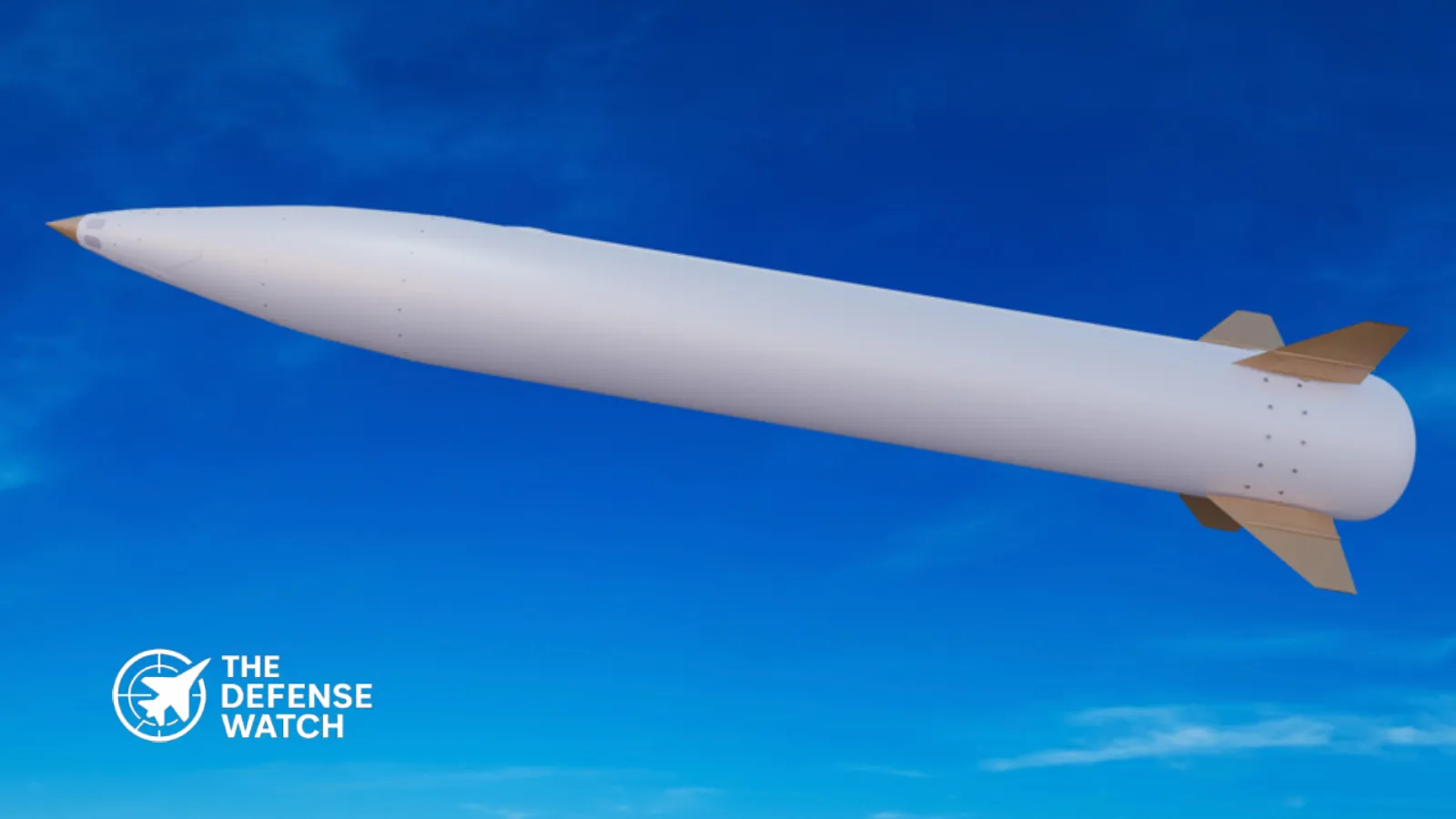
- The US Army and Lockheed Martin conducted a successful flight test of the Precision Strike Missile Increment 2.
- The new variant is designed to strike moving land targets and maritime targets at long range.
- The capability strengthens US long range precision fires and supports joint operations against naval threats.
- PrSM is designed to launch from HIMARS and M270A2 launchers that already serve in US and allied forces.
- Increment 2 development marks a key step toward operational deployment later in the decade.
PrSM Increment 2 Test Marks Major Step In Long Range Precision Fires
The Precision Strike Missile Increment 2 recently completed a flight test conducted by the Lockheed Martin and the US Army, demonstrating progress toward a new long range weapon capable of striking moving land and maritime targets.
The test represents another milestone in the evolution of the Precision Strike Missile program, which is replacing the aging Army Tactical Missile System. The new missile aims to extend range, improve precision, and enable new targeting capabilities across modern battlefields.
According to Lockheed Martin, the latest test successfully demonstrated the missile’s ability to support future moving target engagement missions. The capability would significantly expand the operational role of US ground based long range fires.
The Big Picture
Long range precision fires remain one of the central priorities in US military modernization. Army planners see deep strike weapons as critical tools for penetrating contested environments where aircraft or naval platforms may face heavy defenses.
The Precision Strike Missile program sits at the center of this effort. The missile allows ground forces to strike high value targets hundreds of kilometers away while operating from mobile launchers.
The introduction of a moving target capability reflects changing operational demands. Modern conflicts increasingly involve dynamic targets such as mobile missile launchers, command vehicles, or naval vessels operating within contested littoral zones.
US defense leaders have repeatedly emphasized that future conflicts may require land forces to help control maritime spaces. The development of maritime strike capability for the Precision Strike Missile supports that concept.
What Is Happening
Engineers from Lockheed Martin and the US Army conducted the recent flight test of PrSM Increment 2 as part of the program’s development campaign.
The test evaluated the missile’s ability to engage moving targets. This represents a major upgrade over the baseline PrSM design, which focuses primarily on fixed land targets.
The missile is designed to launch from existing US Army platforms including the M142 HIMARS and the M270A2 MLRS. Both launchers already serve widely across the US military and allied forces.
Using these launch systems allows the Army to integrate the new missile without major infrastructure changes. This approach speeds up deployment while maintaining interoperability with existing units.
The new Increment 2 version is expected to add a multi mode seeker that allows the missile to track and engage moving targets, including maritime vessels.
Why It Matters
Moving target capability fundamentally changes how the Precision Strike Missile can be used in combat.
Traditional long range artillery weapons are effective against fixed targets such as infrastructure, airfields, or logistics hubs. However, modern warfare increasingly involves mobile systems that relocate quickly to avoid detection.
A missile capable of tracking moving targets allows the Army to strike assets such as mobile missile launchers, armored formations, and naval vessels.
This capability also strengthens joint operations with the US Navy and Air Force. Army launchers deployed on islands or coastal areas could provide long range maritime strike support during regional conflicts.
Military planners often refer to this concept as land based anti ship capability. It creates additional dilemmas for adversaries by expanding the number of platforms that can threaten naval forces.
Strategic Implications
The development of PrSM Increment 2 fits into a broader US strategy focused on distributed strike capabilities.
Instead of relying on a limited number of high value platforms, the US military is spreading long range weapons across multiple services and domains. Ground based missile systems add another layer to that approach.
This concept is particularly relevant in the Indo Pacific. Island chains across the region could host mobile missile units capable of targeting hostile ships operating nearby.
A network of such systems would complicate adversary planning and increase deterrence by expanding the threat envelope.
The mobility of launchers such as the M142 HIMARS also allows units to relocate quickly after firing, reducing vulnerability to counter attacks.
Competitor View
China and Russia closely monitor US developments in long range precision fires.
Both countries have invested heavily in their own land based missile forces designed to threaten ships and bases across large regions.
China in particular has developed multiple anti ship ballistic missile systems as part of its anti access and area denial strategy.
The addition of maritime targeting capability to the Precision Strike Missile suggests the United States is moving toward a more symmetrical capability set. Land based strike systems could help counter adversary naval operations in contested regions.
Regional rivals may interpret the development as another step in expanding the reach of US ground forces into maritime domains.
What To Watch Next
Testing for PrSM Increment 2 is expected to continue as engineers refine guidance systems and target tracking capabilities.
Future flight tests will likely focus on validating the missile’s seeker technology and its ability to engage maneuvering targets in complex environments.
The US Army also plans additional increments of the Precision Strike Missile program. Later versions may introduce further range improvements and expanded target sets.
Operational deployment timelines will depend on the results of ongoing testing and procurement decisions by the Department of Defense.
Capability Gap
The Precision Strike Missile program addresses several limitations of earlier US Army missile systems.
The aging Army Tactical Missile System offers limited missile capacity per launcher and lacks the advanced targeting flexibility required for modern battlefields.
PrSM increases the number of missiles carried per launcher while adding improved accuracy and digital integration.
Increment 2 specifically addresses the challenge of engaging moving targets. Without that capability, long range artillery systems struggle against mobile adversaries.
However, long range targeting still depends on reliable sensors and networked data sources. Accurate tracking data from drones, satellites, or reconnaissance aircraft remains essential for successful engagements.
The Bottom Line
The Precision Strike Missile Increment 2 test signals a major step toward giving US ground forces the ability to strike moving land and maritime targets at long range.
Norway selects Hanwha K239 long range weapon system
Norway has selected the Hanwha K239 long range weapon system as its future long range fires capability, choosing the South Korean solution over competing offers from European and US industry. The decision was confirmed through an official announcement by Norwegian defense authorities, marking one of the most significant artillery and missile acquisitions in Europe in recent years.
The contract is valued at roughly two billion dollars and covers sixteen launchers, three types of missiles with ranges up to five hundred kilometers, as well as full logistics, training, and support packages. According to the official statement, Hanwha was the only bidder that met all Norwegian requirements related to performance, delivery timelines, and overall cost.
The selection concludes a lengthy competition under Norway’s long range weapon system program, aimed at strengthening national deterrence and improving the ability to conduct deep precision strikes in support of NATO operations.
Only bidder to meet all requirements
Norwegian officials stated that Hanwha’s proposal was the sole offer that fully complied with operational and industrial criteria. These included missile range, accuracy, system maturity, delivery schedules, and life cycle costs.
SAAB and Boeing did not submit a bid by the March 2025 deadline. Norway also examined the option of acquiring HIMARS through Lockheed Martin via the US Foreign Military Sales process, but no final proposal was pursued. KNDS, offering a European alternative, was reportedly eliminated from the competition in June 2025.
The outcome reflects a growing emphasis among European militaries on systems that are already in service, available at scale, and supported by established production lines.
Delivery timeline and system scope
Under the current plan, Hanwha will deliver the K239 launchers to Norway by 2029, with missile deliveries scheduled to begin by 2031. The acquisition includes three different missile types, allowing the Norwegian Armed Forces to conduct a wide range of missions from conventional precision fires to longer range strike operations.
The K239 multiple rocket launch system is designed to fire various classes of guided and unguided munitions. This flexibility was a key factor in Norway’s evaluation, as the armed forces seek a system that can adapt to evolving threats and mission profiles over the coming decades.
Growing European user base
Norway’s decision adds to a rapidly expanding European footprint for the K239 system. Hanwha recently signed a contract with Estonia, and Poland has already fielded the system at scale. Estonia and Norway are expected to participate in joint training exchanges with Polish forces, focusing on system operation, tactics, and sustainment.
A rocket manufacturing facility operated by Hanwha WB Advanced Systems is scheduled to be built in Poland. Ammunition produced at this site will be supplied to multiple users of the K239 family, strengthening regional supply chains and reducing dependence on external sources during crises.
This industrial setup aligns with broader NATO goals to expand European defense production capacity and ensure sustained access to key munitions.
Global deployment and production scale
The K239 is currently in operational service in South Korea, Poland, the United Arab Emirates, and Saudi Arabia. Alongside the US made HIMARS, it is among the most widely produced modern rocket artillery systems in the world.
Hanwha is actively marketing the K239 to countries across Northern Europe, the Baltic region, Eastern Europe, the Middle East, and Asia. Potential and existing customers include Latvia, Lithuania, Finland, Sweden, Egypt, the Philippines, and Malaysia.
The system’s appeal lies in its modular design, compatibility with different missile types, and the ability to integrate into NATO command and control architectures.
Strategic implications for Norway and NATO
For Norway, the acquisition significantly enhances long range strike capability at a time of heightened security concerns in Northern Europe. The ability to hold targets at extended ranges supports deterrence, improves joint operations with allies, and complements air and maritime strike assets.
From a NATO perspective, the selection of a non US system underscores the alliance’s growing diversification of suppliers, while still maintaining interoperability. It also highlights South Korea’s rising role as a major global defense exporter, particularly in land based firepower and missile technologies.
Hanwha Group offers capabilities across tactical, operational, and strategic missile domains. The company is also promoting advanced air and missile defense systems, including high altitude interception solutions such as L SAM and L SAM II, though these were not part of the Norwegian competition.
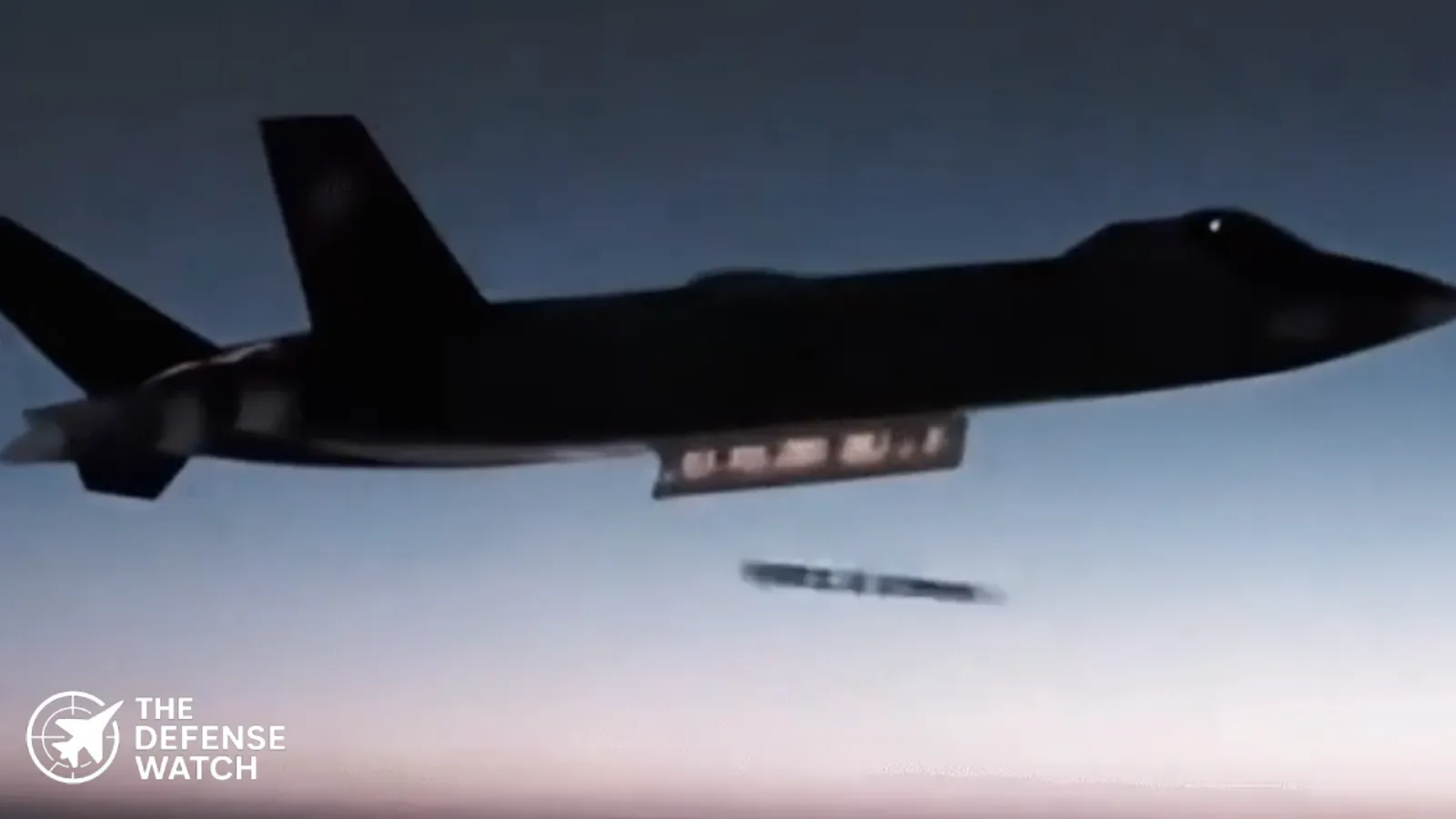
The PL 16 air to air missile has appeared publicly for the first time, shown during imagery of a Chinese J 20 stealth fighter conducting a missile launch. The reveal offers the clearest confirmation to date that China has developed a compact long range air to air weapon optimized for internal carriage on its fifth generation fighters.
Short clips and still images released through official and state linked channels show a J 20 launching the missile from its internal weapons bay. Defense analysts identify the weapon as the PL 16, a previously unconfirmed variant long discussed in open source reporting.
A compact evolution of the PL 15
According to available imagery and analyst assessments, the PL 16 is essentially a modified version of the PL 15 long range air to air missile. The most visible change is the use of folded control fins, allowing the missile to fit within the internal bays of stealth aircraft.
This design enables the J 20 and the carrier capable J 35 to carry up to six long range missiles internally, preserving low observable characteristics during air combat operations. The PL 15, by contrast, is typically carried in smaller numbers internally due to its size.
Despite its reduced external dimensions, the PL 16 is assessed to retain a range of around 300 kilometers, matching the reported reach of the baseline PL 15. If accurate, this suggests minimal performance tradeoffs despite the more compact form.
Implications for Chinese air combat capability
The public appearance of the PL 16 highlights China’s focus on long range air engagement and beyond visual range combat. A stealth fighter carrying six long range missiles internally would pose a significant challenge in high end air combat scenarios, particularly when paired with advanced sensors and networked targeting.
The development aligns with broader People’s Liberation Army Air Force efforts to enhance stealth, persistence, and first shot capability in contested airspace.
Germany moves ahead with TAURUS NEO missile production
Germany has taken a formal step toward serial production of the TAURUS NEO missile, signing a contract to establish a domestic manufacturing line for the upgraded long range stand off weapon. The agreement involves the Bundeswehr and TAURUS Systems GmbH, a joint venture between MBDA and Saab.
The move signals a shift in German defense planning, as Berlin seeks to rebuild deep strike capacity after years of limited missile stockpiles. TAURUS NEO is positioned as a central element of that effort, with production intended to take place at a German facility.
Building industrial capacity at scale
According to MBDA, the new agreement focuses on preparing the industrial infrastructure needed for high rate production. The company has framed TAURUS NEO as a capability enhanced evolution of the existing TAURUS cruise missile, optimized for modern air defense environments.
The missile is designed to offer a range beyond 500 kilometers, combined with low observability features and advanced guidance. These characteristics are intended to allow German Air Force aircraft to engage fixed targets from outside the reach of hostile surface to air systems.
Development already underway
MBDA confirmed that technology development for TAURUS NEO began under a maintenance and modernization contract signed in late 2024. Early work is aimed at reducing risk and accelerating initial deliveries once full scale production begins.
The company also emphasized that the missile retains a modular architecture, allowing future upgrades as operational requirements evolve.
Broader European production push
The TAURUS NEO effort comes as MBDA expands missile production across Europe. The manufacturer expects to have doubled output between 2023 and 2025 and plans to invest 2.4 billion euros from 2025 to 2029 to further increase capacity.
For Germany, the program reflects a broader industrial and strategic realignment, reinforcing national manufacturing capabilities while contributing to NATO deterrence.