Table of Contents
NGAD vs Tempest, Why Sixth Generation Airpower Matters
NGAD vs Tempest has become one of the most watched rivalries in global military aviation. Both programs aim to define what air dominance will look like beyond the era of fifth generation fighters like the F 22 Raptor and F 35 Lightning II. As peer competition intensifies, especially with China and Russia advancing their own next generation aircraft, the United States and Europe are investing heavily in new concepts that go far beyond stealth alone.
At its core, NGAD vs Tempest is not just a comparison of two aircraft. It is a comparison of two approaches to future warfare, one led by the United States Air Force and the other by a multinational European partnership anchored by the United Kingdom.
What Is NGAD
A Family of Systems, Not Just a Fighter
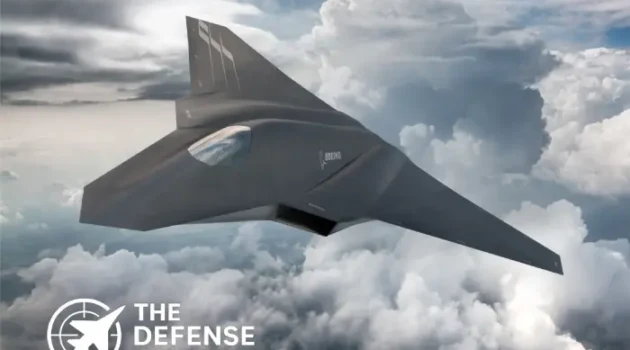
The Next Generation Air Dominance program, known as NGAD, is the US Air Force’s top modernization priority for air combat. Unlike past fighter programs, NGAD is designed as a family of systems rather than a single aircraft. At its center is a crewed sixth generation fighter, supported by uncrewed collaborative combat aircraft, advanced sensors, secure networks, and next level propulsion.
Senior US officials have confirmed that at least one NGAD demonstrator has already flown, signaling that the program is well into its development phase. NGAD is intended to replace the F 22 and operate in the most heavily defended airspace imaginable.
Core Design Goals of NGAD
NGAD emphasizes flexibility, rapid upgrade cycles, and digital engineering. Instead of operating one aircraft design for decades, the Air Force plans to field multiple designs over shorter service lives. This approach aims to stay ahead of evolving threats.
Key priorities include
• Extreme survivability against advanced air defenses
• Long range operations across the Indo Pacific
• Tight integration with uncrewed wingmen
• Dominance in electronic warfare and cyber contested environmentsThe NGAD vs Tempest debate often centers on how far this system of systems concept can be pushed in real world operations.
What Is Tempest
Europe’s Answer to Future Air Combat
Tempest is the centerpiece of the Global Combat Air Programme, or GCAP, led by the United Kingdom with Italy and Japan as core partners. Sweden was involved in early concept work but GCAP now focuses on the UK Japan Italy partnership. Tempest is intended to replace the Eurofighter Typhoon from the mid 2030s onward.
Unlike NGAD, Tempest is more openly discussed by its developers, with regular concept reveals and technology demonstrations led by BAE Systems, Rolls Royce, Leonardo, and Mitsubishi Heavy Industries.
Tempest Design Philosophy
Tempest is also a sixth generation fighter, but its design philosophy leans toward modularity and coalition operations. The aircraft is expected to operate seamlessly with allied forces and integrate emerging technologies without full redesigns.
Key focus areas include
• Advanced stealth shaping and materials
• Adaptive cycle engines for range and power
• Artificial intelligence assisted decision making
• Optional crewed operations in later variantsIn the NGAD vs Tempest comparison, Tempest is often viewed as more transparent and collaborative, reflecting Europe’s emphasis on multinational defense programs.
Stealth and Survivability, Different Paths to the Same Goal
Both NGAD and Tempest place survivability at the top of their requirements, but they may achieve it in different ways.
NGAD is believed to push stealth beyond traditional radar cross section reduction. This includes advanced electronic attack, cyber effects, and dynamic signature management. The goal is to remain effective even if an adversary detects the aircraft.
Tempest also emphasizes stealth, but pairs it with powerful onboard sensors and long range weapons. European officials often stress information dominance rather than pure invisibility.
In the NGAD vs Tempest discussion, analysts note that survivability is increasingly about managing detection rather than avoiding it entirely.
Crewed and Uncrewed Teaming
NGAD’s Heavy Focus on Collaborative Aircraft
One of NGAD’s defining features is its reliance on uncrewed systems. These collaborative combat aircraft are designed to fly alongside the crewed NGAD fighter, carrying sensors, weapons, or jamming payloads. They extend the reach and resilience of the overall force.
The Air Force views this as essential for high risk missions in contested airspace. Losing an uncrewed aircraft is far less costly than losing a pilot.
Tempest’s Approach to Uncrewed Integration
Tempest also incorporates uncrewed teaming, but its approach appears more incremental. Developers envision swarming drones that can be tasked dynamically by the pilot or by onboard AI systems.
The NGAD vs Tempest comparison shows that both programs see human machine teaming as unavoidable, even if their execution timelines differ.
Engines and Range, A Key Differentiator
Range is a critical issue, especially for the United States, which must plan for operations across vast distances in the Pacific.
NGAD is expected to feature adaptive cycle engines that can shift between high efficiency and high thrust modes. This allows longer range, better fuel economy, and improved thermal management for sensors and weapons.
Tempest also plans to use next generation engines, developed by Rolls Royce, with a strong emphasis on electrical power generation. This supports directed energy weapons and advanced electronic warfare systems.
In NGAD vs Tempest comparisons, range and endurance often tilt in NGAD’s favor due to US operational needs, while Tempest focuses on flexibility and exportability.
Artificial Intelligence and Data Fusion
Both programs rely heavily on artificial intelligence to reduce pilot workload and speed up decision making.
NGAD’s AI is expected to manage sensor fusion, threat prioritization, and control of uncrewed aircraft. The pilot becomes a mission commander rather than a traditional stick and throttle operator.
Tempest developers describe a virtual copilot that assists with targeting, navigation, and battle management. This aligns with European efforts to keep humans firmly in the decision loop.
The NGAD vs Tempest debate highlights different cultural approaches to AI in combat aviation, even as the underlying technology converges.
Cost, Timelines, and Industrial Impact
NGAD Cost and Schedule
NGAD remains classified in many areas, but US officials have acknowledged that it will be expensive. Unit costs could exceed those of current fighters, though the Air Force argues that shorter production runs and faster upgrades justify the expense.
Operational capability is expected in the early 2030s.
Tempest Cost and Schedule
Tempest aims for entry into service around 2035. European partners emphasize affordability and long term sustainment, partly to ensure export success.
The NGAD vs Tempest comparison here reflects broader differences between US and European defense spending models.
Strategic Context, More Than Just Aircraft
NGAD vs Tempest must be understood within a wider strategic picture. NGAD is designed primarily with China in mind, focusing on anti access and area denial environments in the Indo Pacific.
Tempest, by contrast, is shaped by NATO requirements, European defense autonomy, and interoperability with allies like Japan.
Both programs signal a shift away from single platform thinking toward networked air combat ecosystems.
Analysis, What NGAD vs Tempest Really Tells Us
The competition between NGAD and Tempest is less about which fighter is better and more about how airpower is evolving. Both programs accept that future air dominance depends on networks, data, and integration across domains.
NGAD reflects US confidence in rapid innovation and high end specialization. Tempest reflects a coalition based approach that balances capability with political and industrial realities.
Neither program exists in isolation, and both will influence allied and adversary designs for decades to come.
FAQs
What does NGAD stand forNGAD stands for Next Generation Air Dominance, the US Air Force program for sixth generation air combat systems.
Is Tempest a single aircraft or a programTempest is both a sixth generation fighter and a broader combat air system developed under the Global Combat Air Program.
Which will enter service first, NGAD or TempestCurrent indications suggest NGAD may reach operational status earlier, possibly in the early 2030s, while Tempest targets the mid 2030s.
Are these fighters meant to replace the F 35No. NGAD is intended to replace the F 22, while Tempest will replace the Eurofighter Typhoon. The F 35 will continue operating alongside them.
Will NGAD or Tempest be exportedTempest is expected to be marketed for export. NGAD is likely to remain US only, at least initially.
Get real time update about this post category directly on your device, subscribe now.