
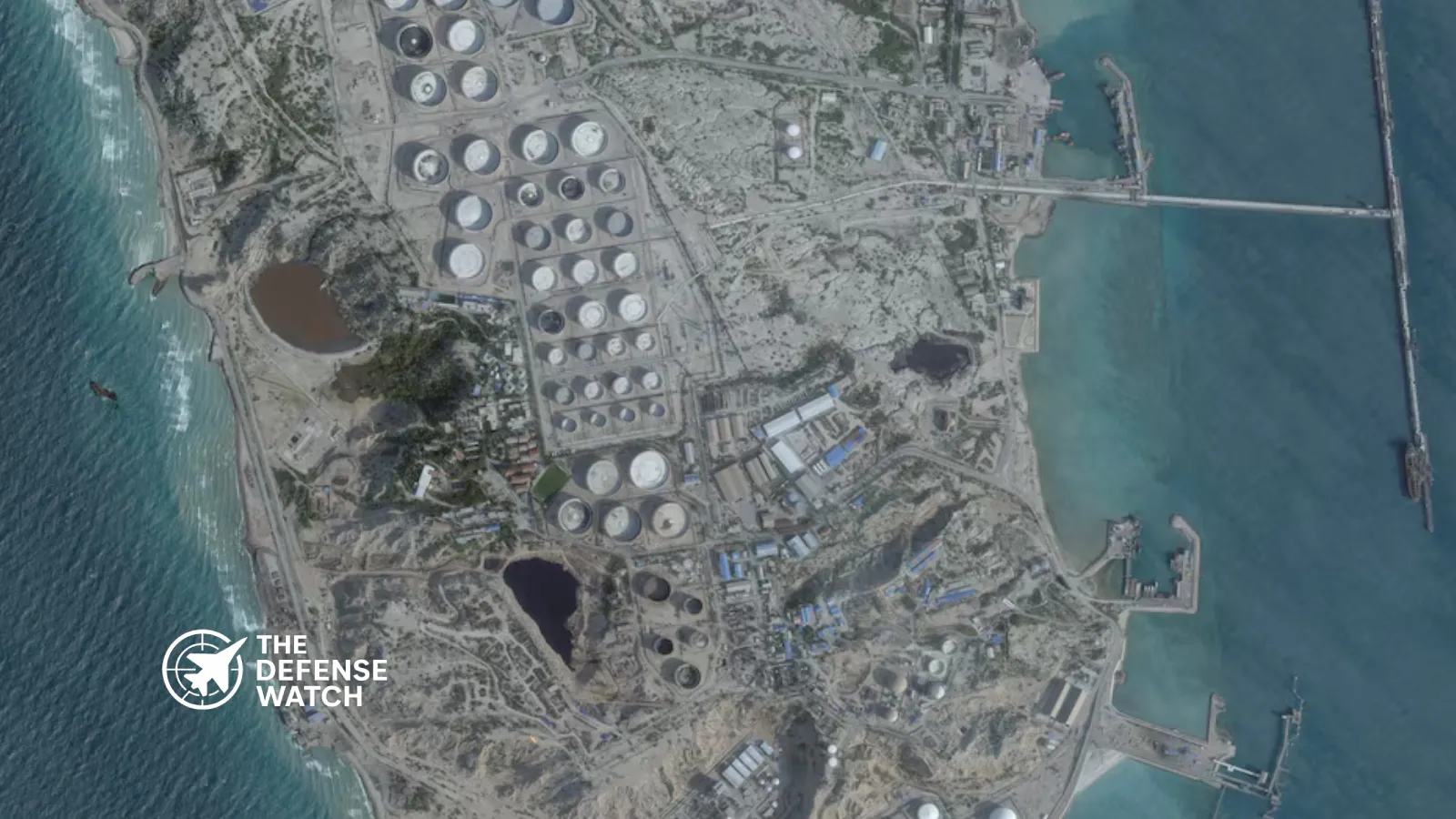
- US President Donald Trump warned Iran that its Kharg Island oil network could be targeted if shipping disruptions in the Strait of Hormuz continue.
- US forces recently struck military facilities on Kharg Island but reportedly avoided damaging oil infrastructure.
- Kharg Island handles roughly 90 percent of Iran’s oil exports, making it the country’s most critical energy hub.
- The escalating conflict has severely disrupted shipping through the Strait of Hormuz, a corridor for about 20 percent of global oil trade.
- Iran warned that attacks on its energy infrastructure could trigger retaliation against regional facilities tied to US interests.
Trump Threatens Strike On Iran Kharg Island Oil Network
The threat to strike Iran Kharg Island oil network marks a major escalation in the ongoing confrontation between Washington and Tehran, as tensions in the Persian Gulf continue to disrupt global shipping and energy markets.
US President Donald Trump warned that Iranian interference with commercial shipping in the Strait of Hormuz could prompt direct strikes on the island’s oil export infrastructure. The warning followed confirmed US strikes on military installations on Kharg Island, Iran’s primary crude export hub.
According to statements reported by Reuters, US forces targeted air defenses, naval facilities, and airport infrastructure on the island while deliberately avoiding oil production and export terminals.
However, Trump indicated that restraint could change quickly if maritime disruptions continue.
The Big Picture
The confrontation around Kharg Island sits at the center of a broader crisis affecting global energy security and maritime trade.
The Strait of Hormuz serves as one of the world’s most important strategic chokepoints. Roughly 20 percent of global oil supply normally transits the narrow waterway between Iran and Oman.
Since late February, regional conflict involving Iran, the United States, and Israel has severely disrupted shipping through the strait. Tanker traffic has collapsed as insurance costs surged and shipping companies suspended operations due to missile and drone threats.
The resulting disruption has already pushed oil markets into volatility, raising concerns about a prolonged supply shock.
Within that strategic environment, Kharg Island represents a critical pressure point.
What Is Happening
US military strikes on Kharg Island reportedly destroyed multiple Iranian military targets on the island, which sits roughly 25 kilometers off Iran’s southwestern coast in the Persian Gulf.
The island functions as the main export terminal for Iranian crude oil. Analysts estimate that approximately 90 percent of Iran’s oil exports flow through its terminals and storage facilities.
At the time of the strikes, US officials emphasized that energy infrastructure was not targeted.
Trump stated that the decision was deliberate, but warned that Iran’s oil network could be attacked if Tehran continues to interfere with the free passage of commercial vessels in the Strait of Hormuz.
Iran responded by warning that any attack on its energy infrastructure would trigger retaliatory strikes against facilities linked to US interests in the region.
Why It Matters
Targeting Kharg Island would represent a major escalation in the conflict because of the facility’s central role in Iran’s economy.
Iran exports roughly 1.1 to 1.5 million barrels of oil per day, with most shipments routed through Kharg Island.
Disabling the island’s export terminals, pipelines, or storage tanks could sharply reduce Iranian oil exports and remove a meaningful share of global supply.
Energy analysts note that the island also serves as a key logistical node with large storage capacity and tanker loading infrastructure. Even limited damage could disrupt exports for weeks or months.
Because Iran remains a significant oil producer within OPEC, a prolonged shutdown could tighten global markets at a time when shipping disruptions are already constraining supply.
Strategic Implications
The threat to strike Iran Kharg Island oil network signals a shift toward targeting economic infrastructure rather than purely military assets.
For Washington, the strategy appears designed to pressure Tehran into reopening the Strait of Hormuz and ending attacks on maritime traffic.
Energy infrastructure has historically been considered a highly escalatory target because of the global economic impact that could follow.
Military planners also recognize that infrastructure attacks risk widening the conflict across the Gulf.
Major oil facilities in Saudi Arabia, the United Arab Emirates, and other Gulf states remain within range of Iranian missiles and drones.
If Iran were to retaliate against those sites, the crisis could quickly expand into a broader regional energy war.
Competitor View
Iranian leadership views the Strait of Hormuz as one of its strongest strategic leverage points.
By threatening global energy flows, Tehran can exert pressure on Western governments and energy markets even when facing conventional military disadvantages.
Iran has repeatedly signaled that attacks on its oil infrastructure would trigger reciprocal strikes on energy facilities linked to US partners in the region.
China also closely monitors the situation.
Chinese refineries remain among the largest buyers of Iranian crude, meaning any disruption to Kharg Island exports could affect Beijing’s energy supply chain.
Capability Gap
The crisis highlights a longstanding vulnerability in global energy infrastructure.
Large centralized export hubs such as Kharg Island offer efficiency and scale, but they also create single points of failure in the global oil supply system.
Unlike dispersed offshore production platforms, a small number of terminals handle most of Iran’s export capacity.
That concentration makes them attractive targets in a conflict environment.
At the same time, military strikes on energy infrastructure can produce unintended consequences, including environmental damage, economic shock, and escalation across the region.
What To Watch Next
Several developments will determine whether the confrontation escalates further.
First, maritime traffic through the Strait of Hormuz remains a key indicator. A sustained reopening of shipping lanes could reduce pressure for additional US strikes.
Second, US naval deployments may expand as Washington considers escort operations for commercial tankers.
Third, Iran’s response will shape the next phase of the crisis. Missile or drone attacks against Gulf infrastructure could trigger broader regional military operations.
Finally, global oil markets will remain highly sensitive to any confirmed damage to Kharg Island’s export facilities.
The Bottom Line
The threat to strike Iran Kharg Island oil network places the Middle East’s most critical energy infrastructure at the center of an escalating military confrontation with global economic consequences.
Get real time update about this post category directly on your device, subscribe now.
