
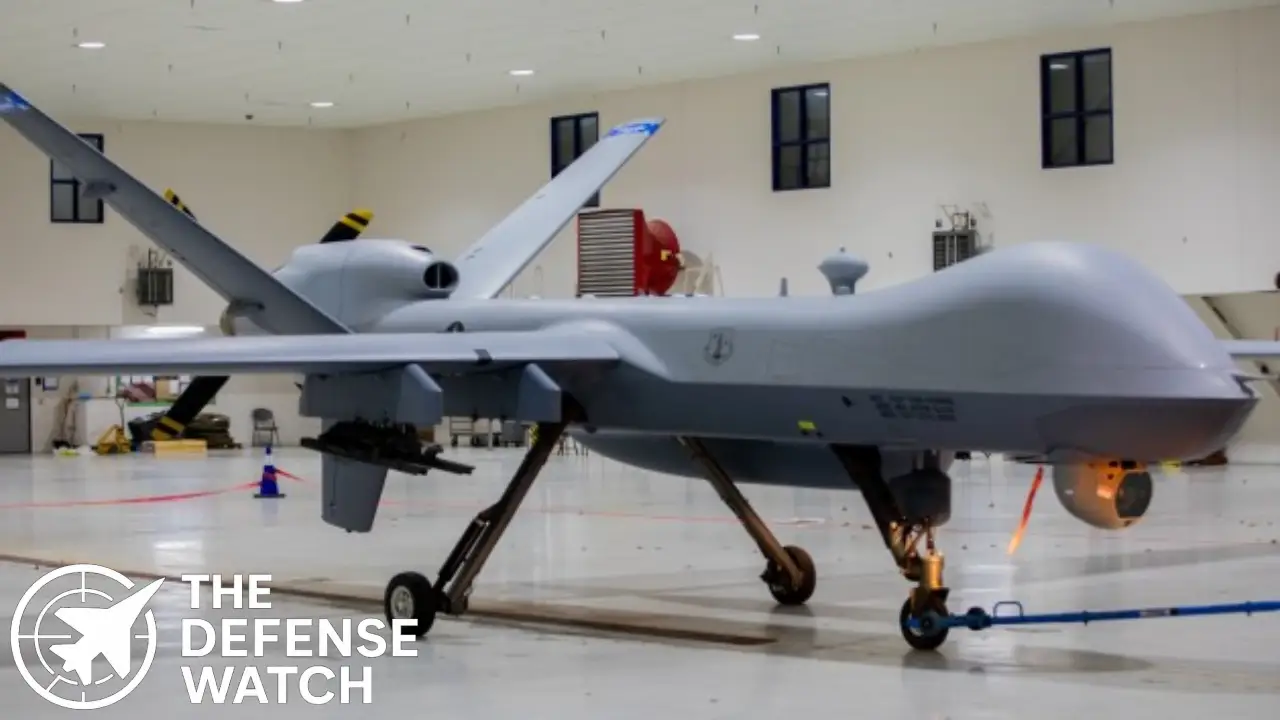
In both military and civilian contexts, the term drone—officially known as an Unmanned Aerial Vehicle (UAV) or Unmanned Aircraft System (UAS)—refers to an aircraft capable of operating without a human pilot on board, controlled remotely or autonomously. Derived originally for missions deemed “dull, dirty or dangerous,” these systems are now central to modern warfare and everyday life.
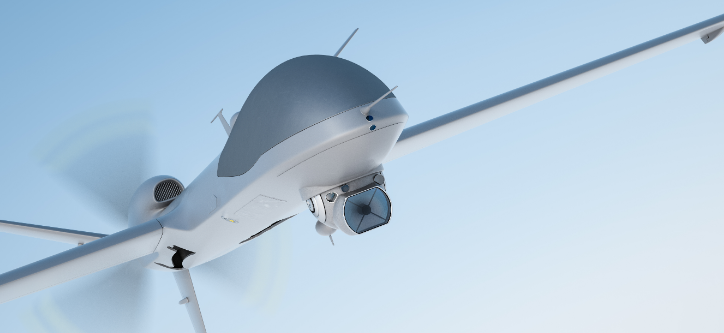
What Is a Drone? The Terminology Explained
The term “drone” is the common parlance used by the general public, while UAV is more precise, often reserved for technical, industrial, or military applications. The broader term UAS incorporates the drone itself plus its control station, communication link, and payload.
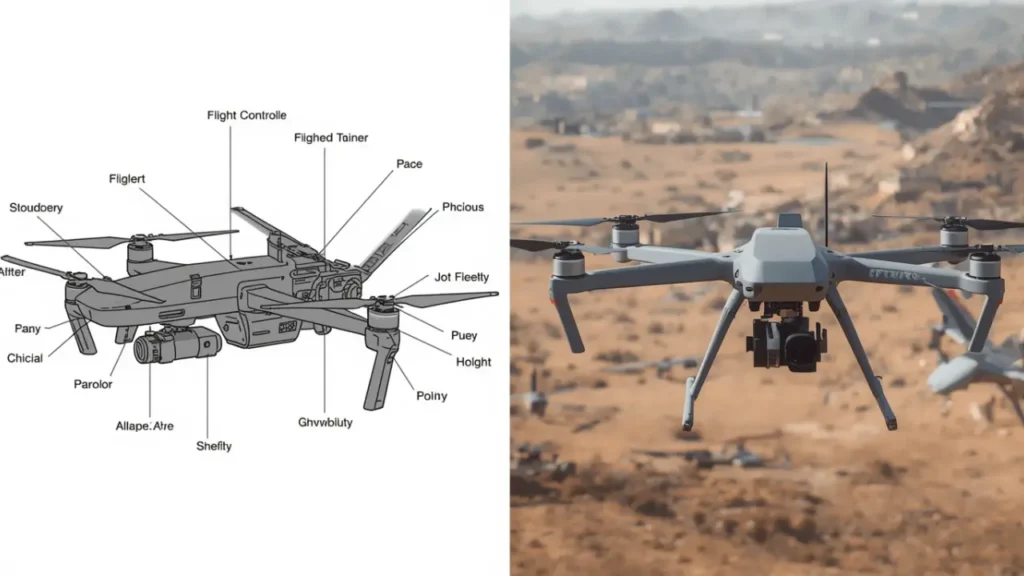
Types of Military Drones and Their Roles
- Surveillance UAVs: Equipped with cameras, thermal imaging, radar sensors—used for intelligence, monitoring borders, battlefield awareness.
- Unmanned Combat Aerial Vehicles (UCAVs): Armed with precision munitions for direct strikes—examples include Predator, Reaper drones.
- Tactical vs. Strategic Drones: Tactical UAVs weigh under 150 kg (e.g., FLIR Black Hornet), designed for close-range missions. Strategic drones exceed 150 kg—like the MQ-9 Reaper—offering extended endurance and heavier payloads.
Notable Examples
- MQ-9 Reaper: A long-endurance, medium-altitude UCAV used by the U.S. Air Force for surveillance and hunter-killer roles.
- RQ-7 Shadow: A smaller, tactical reconnaissance UAV used by the U.S. Army, launched via catapult and recovered via arresting gear.
- RQ-170 Sentinel: A stealth UAV developed by Lockheed Martin’s Skunk Works for reconnaissance missions.
How Do Drones Operate?
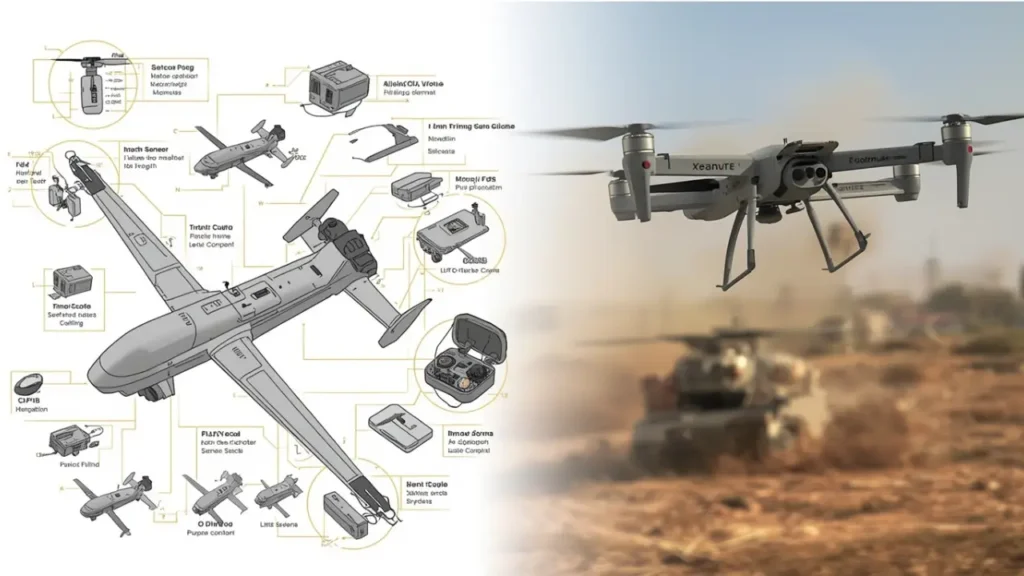
UAVs typically combine propulsion systems, flight controllers, GPS, sensors (IMUs, cameras), and communication links that allow remote or autonomous flight. Autonomy levels vary from manual control to AI-assisted operation.
Real-World Applications: Beyond Definitions
- Military and ISR: Critical for battlefield intelligence, surveillance, and reconnaissance.
- Commercial and Civil Uses: Agriculture, photography, delivery, inspections, environmental monitoring—all underscoring the drone’s versatility.
Why Drones Matter in Modern Warfare
Drones redefine warfare—impacting everything from troop safety to precision targeting. Their lower cost and adaptability make them force multipliers across domains, including air, ground, maritime, and subterranean arenas. Conflicts like Ukraine showcase drone warfare’s growing prominence, with low-cost FPV quadcopters and loitering munitions shifting combat dynamics significantly.
Analysis / Context
The evolution from basic remote-controlled aircraft to autonomous, weaponized systems underscores the urgent need for updated policies and defensive measures. As UAV capabilities expand—particularly with AI-driven swarms and loitering munitions—governments and armed forces must accelerate investment in detection, counter-UAS systems, and legal frameworks. Moreover, blurred lines between civilian and battlefield use demand rigorous oversight to prevent misuse, whether by state actors or extremist groups.
FAQs
“Drone” is a general term, while UAV refers to the aircraft itself; UAS covers the full system including control stations, communications, and payloads.
UCAVs are armed drones designed for direct combat and strike missions, unlike surveillance-only UAVs.
Tactical drones are small, short-range platforms under ~150 kg. Strategic drones are larger, higher-performance systems like MQ-9 Reaper for long-range missions.
Yes—ranging from operator-controlled to autonomous systems using AI, GPS, and onboard sensors. Complete autonomy remains limited to specific use cases.
Note: The images are AI-generated.
Get real time update about this post category directly on your device, subscribe now.

25 comments
[…] tactical displays. These enhancements are intended to support new weapons, sensors, and electronic warfare tools that are central to the Block 4 modernization […]
[…] growing proliferation of cheap, commercial-grade drones in conflict zones has forced militaries to diversify countermeasures. Systems such as Israel’s Iron Beam laser, the U.S. Army’s Mobile […]
[…] drones reportedly underwent testing at the Chebarkul military range in Russia’s Chelyabinsk […]
[…] overview highlights the top 5 U.S. Army weapons that define modern warfare, illustrating how each system strengthens deterrence and operational […]
[…] a domestic drone industry. Hundreds of small- and medium-scale firms reportedly produce millions of drones for reconnaissance and strike roles. Nonetheless, that decentralized ecosystem lacks the capital to scale to wartime industrial levels […]
[…] drone operations reaching industrial sites in the Urals suggest that Ukrainian forces possess or have […]
[…] and scalability are the priorities,” one defense analyst noted. “The Army understands that drone dominance will define who controls the modern […]
[…] Drones dominate reconnaissance and precision-strike missions across modern conflict zones. […]
[…] for military space operations globally. Space-based assets provide critical capabilities for modern warfare, including communications, navigation, reconnaissance, and early warning systems. The vulnerability […]
[…] modern warfare evolves, the ability to project force deep into contested airspace has become a critical […]
[…] modern warfare, experts say hypersonic weapons must have advanced navigation systems that make them nimble and […]
[…] proposed mobile anti-drone capability will be constructed from “off-the-shelf” military components: armored wheeled vehicles, remote-controlled weapon stations (RCWS), ammunition, and […]
[…] forces focused on human intelligence, direct raids, hostage rescue, and counterterrorism. But as modern warfare becomes increasingly networked — with security cameras, door locks, alarms, and building […]
[…] hostile drones proliferate across modern conflict zones — from small reconnaissance UAVs to armed loitering munitions — militaries […]
[…] drones proliferate on modern battlefields — from surveillance to low-cost loitering munitions — militaries worldwide face an […]
[…] civilian airspace, drones were detected over military sites, such as the Kleine-Brogel and Florennes air bases, prompting security reviews and […]
[…] technology capable of disrupting hostile unmanned aerial vehicles (UAVs), a growing concern in modern warfare. Polish defense officials indicated the systems will integrate with existing military […]
[…] broader challenge of countering small, low-signature unmanned aircraft on the ground. Electronic warfare systems such as the man-portable Stupor anti-drone rifle remain part of the toolkit, but drones […]
[…] successful range extension positions the British ultra heavy lift drone as one of the most capable fixed wing cargo UAVs currently under development in […]
[…] Lieutenant General Max A.L.T. Nielsen. Discussions centered on senior-level education programs, modern warfare trends, and preparing future strategic leaders. The NATO Defense College has trained over 9,000 […]
[…] will use its industrial expertise to produce long-range military drones similar to the strike drones seen in recent conflicts, capable of both intelligence gathering and […]
[…] list includes both domestic firms and international partners, notably including Ukrainian Defense Drones Tech Corp, reflecting lessons learned from ongoing conflicts where small unmanned systems have proven […]
[…] helicopter-drone integration capabilities occurs within a broader strategic context where Western militaries are investing heavily in uncrewed systems and artificial intelligence. The Royal Navy’s approach […]
[…] and fully adopt digital ways of working. These changes respond to the accelerating complexity of modern warfare and ensure the organization maintains readiness for evolving operational […]
[…] also ground control stations, training systems, maintenance equipment, and initial weapons stocks. Modern military drone programs require extensive supporting infrastructure to achieve full operational […]