
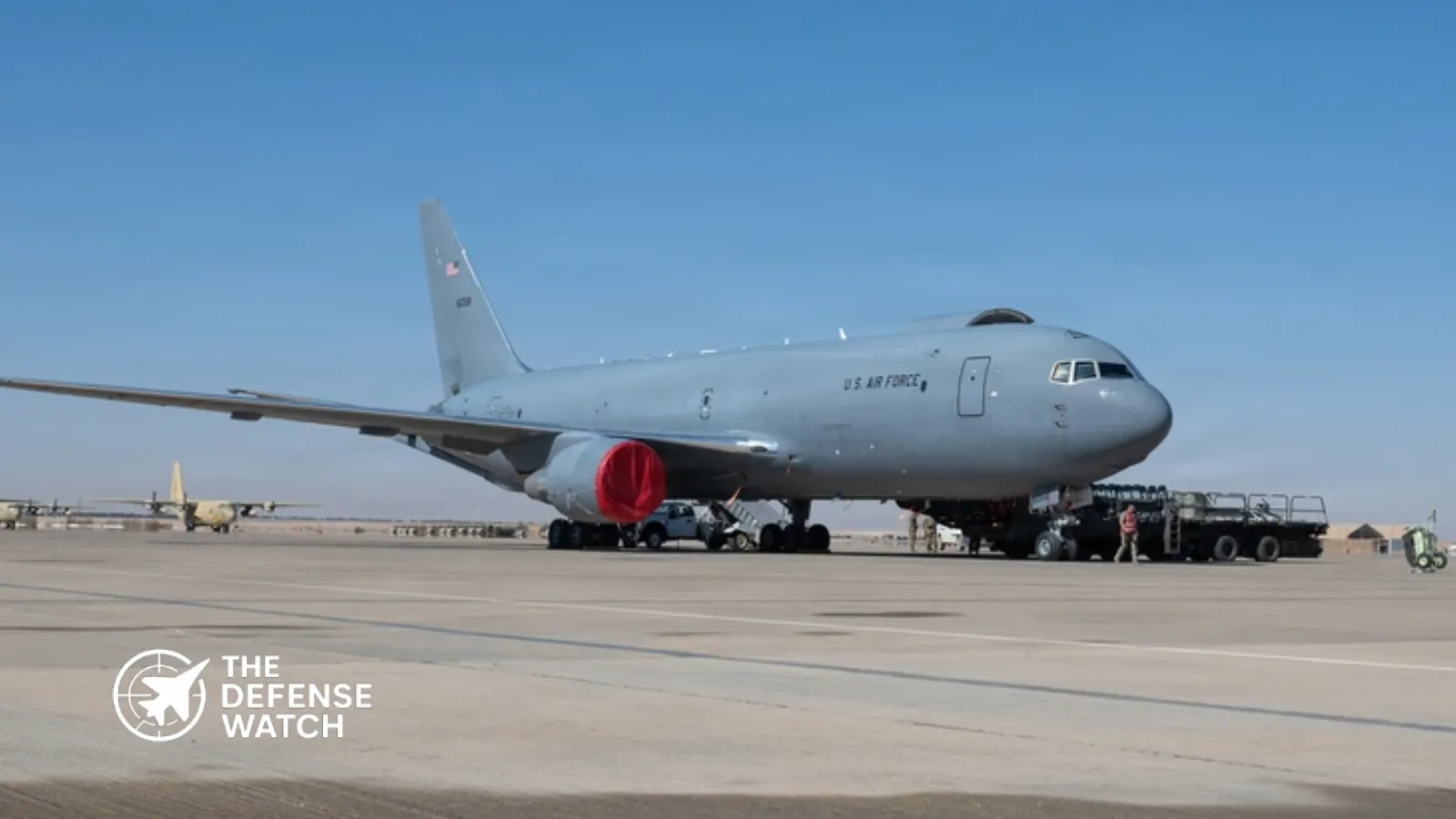
- The U.S. Air Force will not approve a follow-on contract for 75 KC-46 tankers until Boeing resolves existing deficiencies.
- Key issues include problems with the aircraft’s refueling boom and remote vision system used by boom operators.
- More than 100 KC-46 aircraft have already been delivered under the current procurement program.
- A decision on the next tanker procurement contract is expected in roughly two years.
- The tanker program is central to replacing aging KC-135 aircraft built in the 1950s and 1960s.
USAF Delays New KC-46 Tanker Orders Until Boeing Fixes Ongoing Problems
The KC-46 tanker program faces renewed scrutiny after U.S. Air Force leadership said Boeing must resolve persistent aircraft deficiencies before the service approves another major procurement order. Air Force officials told lawmakers that technical issues with the KC-46 Pegasus, particularly involving the refueling boom and remote vision system, must be fixed before the Pentagon moves forward with a potential purchase of 75 additional tankers. The warning highlights ongoing challenges in one of the Air Force’s most important modernization programs, which aims to replace aging KC-135 aircraft that have supported U.S. global air operations for decades.
The Big Picture
The KC-46 tanker program sits at the center of the U.S. Air Force’s long-term aerial refueling modernization effort.
Aerial refueling aircraft extend the operational range of fighters, bombers, and surveillance aircraft. They allow U.S. forces to project power across global theaters without relying heavily on forward bases. That capability has become increasingly critical as the Pentagon prepares for potential high-end conflicts, particularly in the Indo-Pacific.
The Air Force plans to replace large portions of its aging tanker fleet, including the KC-135 Stratotanker, many of which entered service more than six decades ago. The KC-46 Pegasus, built by Boeing and derived from the commercial 767 platform, represents the first step in that replacement strategy.
However, persistent technical issues have complicated the program and slowed the transition.
What’s Happening
A senior U.S. Air Force official recently told lawmakers that Boeing must resolve ongoing KC-46 tanker problems before the service approves a new order of 75 aircraft.
Speaking during a Senate Armed Services Committee hearing, Air Force Vice Chief of Staff Gen. John Lamontagne said the service is still working through several deficiencies with the contractor.
The Air Force has already ordered 183 KC-46 tankers, and more than 100 aircraft have been delivered so far.
Despite that progress, unresolved issues continue to affect the aircraft’s performance and operational reliability. The most notable problems involve:
- The refueling boom, which transfers fuel to receiving aircraft
- The remote vision system, a camera-based system used by the boom operator to guide refueling
Last year, the Air Force also temporarily paused tanker deliveries after cracks were discovered in several newly built aircraft awaiting delivery.
According to Lamontagne, a decision on a new procurement contract could come within the next two years, assuming the problems are successfully addressed.
Why It Matters
The KC-46 tanker program is one of the most important aviation modernization efforts within the U.S. Air Force.
Aerial refueling capability underpins nearly every U.S. military air operation. Fighters rely on tankers to conduct long-range strike missions. Strategic bombers require refueling to reach targets across continents. Surveillance aircraft depend on tankers to maintain persistent intelligence coverage.
Without reliable tanker aircraft, the operational reach of U.S. airpower would shrink dramatically.
That is why delays in the KC-46 program carry strategic consequences. Every year the new tanker remains constrained by technical issues, the Air Force must rely more heavily on its KC-135 fleet, many of which were built during the Cold War.
The Air Force originally expected the KC-46 to become the backbone of its tanker fleet by the mid-2020s. Continued technical fixes have pushed that timeline further out.
Strategic Implications
The KC-46 program affects the United States’ ability to sustain global air operations across multiple theaters simultaneously.
In the Indo-Pacific, aerial refueling aircraft are essential for operating fighters over vast ocean distances. U.S. bases in the region are limited and vulnerable, which means aircraft often need tanker support to operate effectively.
The same logic applies to NATO operations in Europe and U.S. missions in the Middle East.
Flight records show that KC-46 tankers have already supported U.S. strike operations against Iran, demonstrating the aircraft’s growing operational role despite its development challenges.
However, the Air Force remains cautious about expanding procurement until the platform achieves full reliability.
A delay in the next KC-46 order could slow the retirement of older tanker aircraft and complicate long-term force planning.
Competitor View
Strategic competitors closely watch U.S. tanker modernization programs because aerial refueling directly affects power projection.
China has invested heavily in developing its own tanker fleet, including variants of the Y-20 aerial refueling aircraft, to support long-range fighter operations in the Pacific.
Russia also relies heavily on tanker aircraft to support strategic bomber patrols and long-distance aviation missions.
If the United States experiences prolonged delays in replacing its Cold War-era tankers, competitors may view it as a temporary constraint on U.S. global air operations.
However, the broader scale and experience of the U.S. tanker fleet still far exceeds those of its rivals.
What To Watch Next
Several developments will determine how quickly the KC-46 program stabilizes.
Key milestones include:
- Completion of upgrades to the aircraft’s remote vision system, which improves visibility for boom operators
- Resolution of mechanical issues affecting the refueling boom
- Continued aircraft deliveries planned for 2026
Boeing delivered 14 tankers in 2025 and plans to deliver 19 in 2026 as the company works to stabilize production.
The contractor has also absorbed significant financial losses on the program due to its fixed-price contract structure. Boeing has reported more than $7 billion in losses tied to the KC-46 effort.
Future bids for additional tankers are likely to reflect revised pricing structures.
Capability Gap
The KC-46 program aims to address a major structural gap in U.S. air mobility.
The Air Force still operates hundreds of KC-135 Stratotankers, many built between the late 1950s and early 1960s. While these aircraft have undergone multiple upgrades, their age increases maintenance demands and limits long-term viability.
The Pegasus tanker introduces several modern capabilities:
- Advanced defensive systems
- Greater cargo and medical evacuation capacity
- Digital refueling systems and improved avionics
However, unresolved technical issues have slowed the full realization of those capabilities.
Until the KC-46 reaches full operational maturity, the Air Force must continue balancing modernization goals with the realities of sustaining older aircraft.
The Bottom Line
The U.S. Air Force will move forward with additional KC-46 tankers only after Boeing demonstrates that the aircraft’s long-standing technical issues are fully resolved.
Get real time update about this post category directly on your device, subscribe now.


