(adsbygoogle = window.adsbygoogle || []).push({});Executive Summary:
The U.S. Air Force says it is confident Boeing has resolved a critical flaw affecting the KC-46 Pegasus aerial refueling tanker. The upgraded Remote Vision System 2.0 has completed testing and is expected to enter production aircraft in 2028, a key milestone for one of the Air Force’s most important mobility programs.
US Air Force Confident KC-46 Tanker Fix Is Working
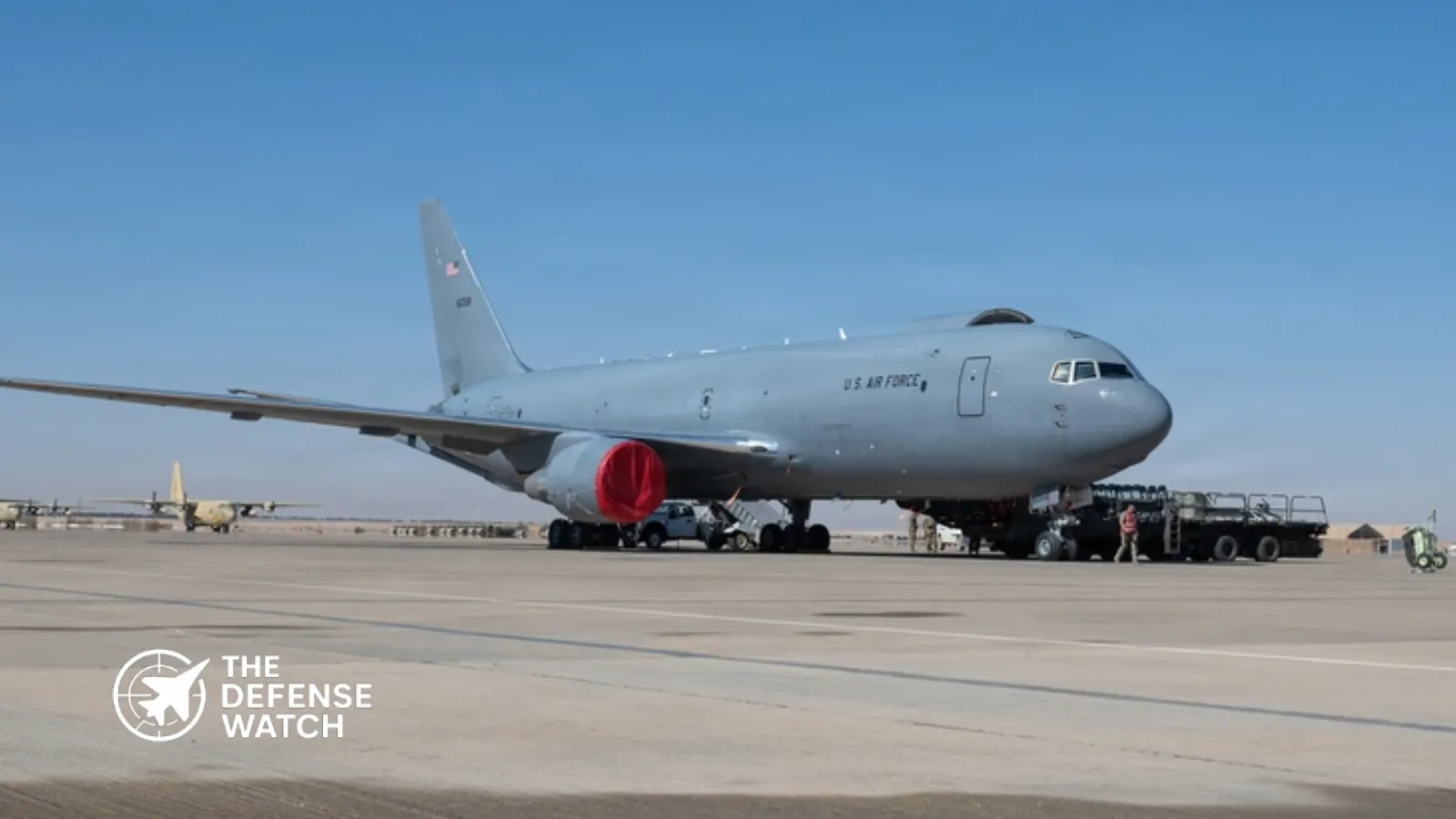
The KC-46 tanker upgrade program reached a significant milestone this week as U.S. Air Force Secretary Troy Meink told lawmakers that the service believes Boeing has successfully fixed the aircraft’s troubled Remote Vision System (RVS), a critical component used during aerial refueling operations.
Speaking before a Senate appropriations subcommittee, Meink said the new Remote Vision System 2.0 has been tested successfully and is expected to begin entering the production line in 2028. The announcement marks one of the strongest endorsements yet from Air Force leadership regarding Boeing’s efforts to address a problem that has plagued the tanker program for years.
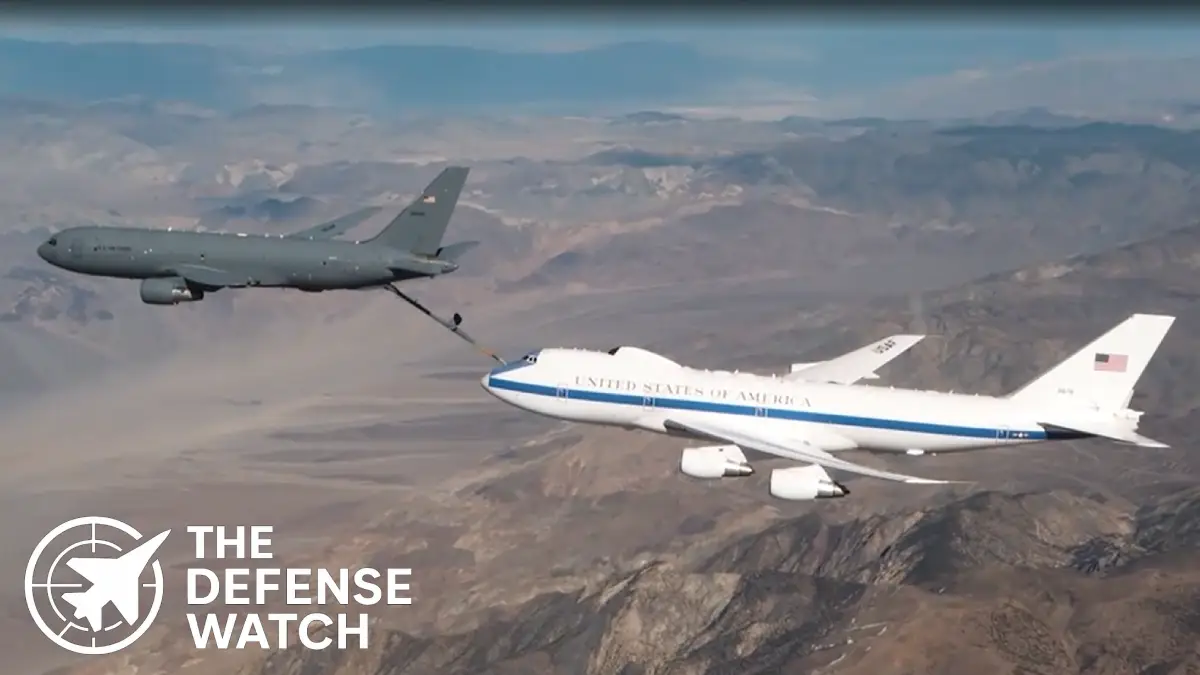
The KC-46 Pegasus relies on the vision system to allow boom operators to remotely guide the aircraft’s refueling boom into receiving aircraft. Deficiencies in image quality and depth perception under certain lighting conditions have limited the system’s effectiveness and delayed full operational capability.
(adsbygoogle = window.adsbygoogle || []).push({});A Decade-Long Challenge For Boeing
The KC-46 program has faced technical and schedule setbacks since its development phase. Beyond the Remote Vision System issues, Boeing and the Air Force have worked through problems involving the refueling boom, fuel systems, and production quality concerns.
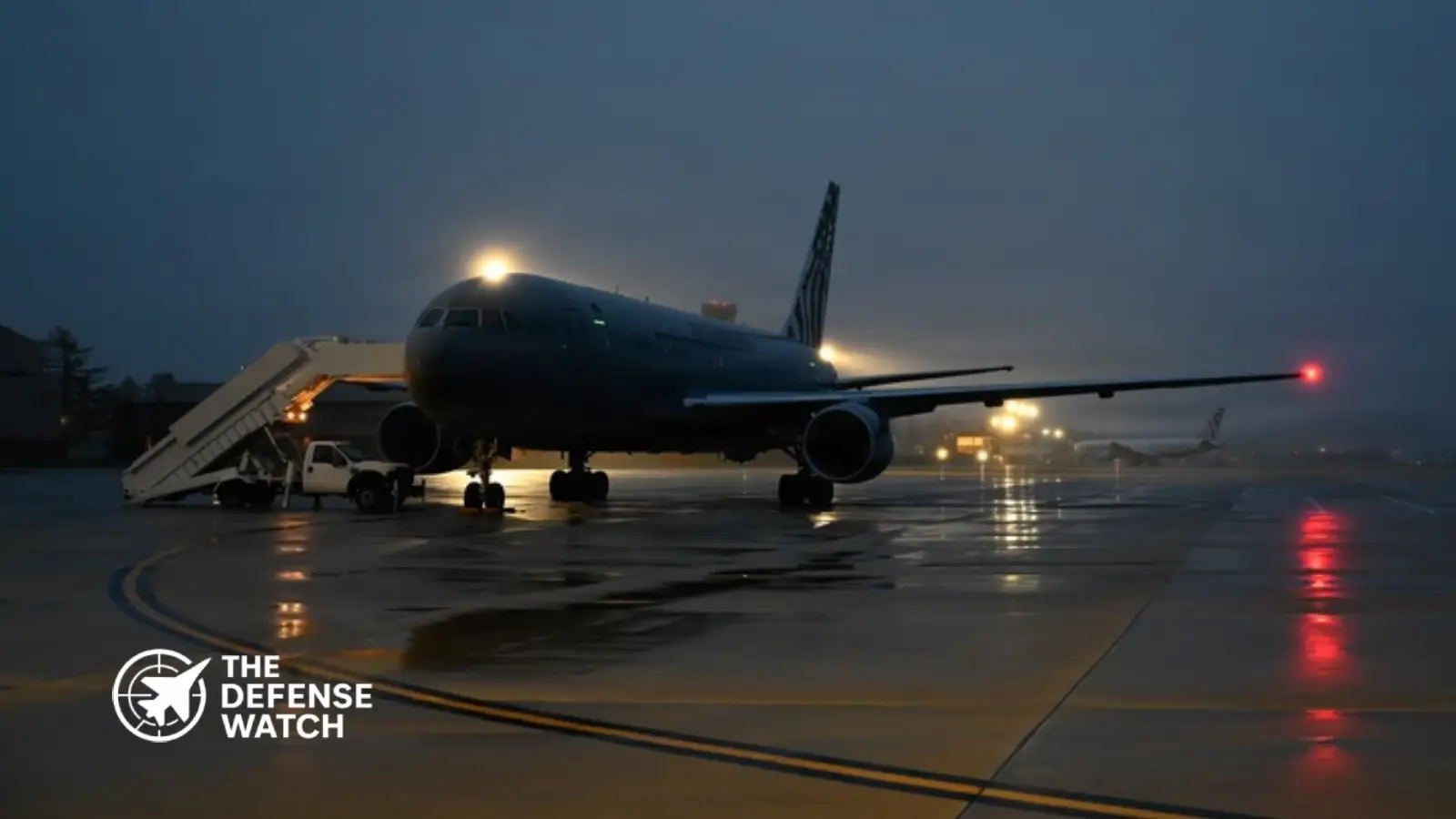
The aircraft, derived from the commercial Boeing 767 platform, was selected to replace portions of the aging KC-135 Stratotanker fleet. While the tanker has entered operational service and supports missions worldwide, unresolved deficiencies have prevented the program from fully meeting all Air Force expectations.
The latest timeline remains well behind original plans. Air Force officials had initially expected the upgraded vision system years earlier, making the anticipated 2028 production integration roughly five years later than first projected.
(adsbygoogle = window.adsbygoogle || []).push({});Why The KC-46 Matters To US Military Operations
Aerial refueling aircraft are among the most strategically important assets in the U.S. military inventory. They extend the range of fighters, bombers, intelligence aircraft, and transport fleets, enabling global power projection and sustained operations across multiple theaters.
The importance of tanker fleets has become increasingly apparent as the Pentagon focuses on long-range operations in the Indo-Pacific and maintains readiness across Europe and the Middle East. Modern air campaigns depend heavily on reliable aerial refueling capabilities to support extended missions far from established bases.
From an operational perspective, resolving the KC-46’s deficiencies is about more than fixing a single aircraft. It is about ensuring the Air Force can field a modern tanker force capable of supporting future high-end conflicts where range, endurance, and rapid deployment are critical factors.
This broader strategic role explains why Air Force leaders continue to invest heavily in the program despite years of technical challenges.
(adsbygoogle = window.adsbygoogle || []).push({});Additional Orders Depend On Successful Fixes
The Air Force has already ordered 188 KC-46 tankers and received more than 100 aircraft. However, future procurement plans remain tied to Boeing’s ability to fully resolve outstanding deficiencies.
Earlier this year, Air Force Vice Chief of Staff Gen. John Lamontagne stated that the service would not move forward with a potential follow-on order for an additional 75 aircraft until key issues are corrected.
That position makes the successful testing of RVS 2.0 particularly important. If the upgraded system performs as expected during further validation and fleet integration, it could remove one of the largest obstacles standing between Boeing and future tanker contracts.
The Air Force and Boeing recently announced a joint readiness improvement plan focused on accelerating upgrades, improving aircraft availability, and speeding installation of the new vision system across the fleet. Officials believe the effort could significantly improve tanker readiness by the end of the decade.
(adsbygoogle = window.adsbygoogle || []).push({});Analysis: A Critical Turning Point For The KC-46
The Air Force’s confidence in the upgraded Remote Vision System represents an important turning point for a program that has often been defined by technical setbacks rather than operational achievements.
While successful testing does not eliminate all remaining challenges, it signals that one of the aircraft’s most persistent deficiencies may finally be nearing resolution. The next phase, integrating the system into production aircraft and retrofitting the existing fleet, will determine whether Boeing can fully restore confidence in the KC-46 program.
Retrofitting aircraft already in service is expected to take several years, meaning the benefits of the upgrade will be realized gradually rather than immediately. Nevertheless, the Air Force’s public endorsement of the fix suggests that program leaders believe the effort is finally moving in the right direction.
For Boeing, which has absorbed more than $7 billion in losses on the fixed-price tanker contract, a successful RVS 2.0 rollout could help stabilize one of its most challenging defense programs and support future tanker production opportunities.
¦ KEY FACTS AT A GLANCE- The U.S. Air Force will not approve a follow-on contract for 75 KC-46 tankers until Boeing resolves existing deficiencies.
- Key issues include problems with the aircraft’s refueling boom and remote vision system used by boom operators.
- More than 100 KC-46 aircraft have already been delivered under the current procurement program.
- A decision on the next tanker procurement contract is expected in roughly two years.
- The tanker program is central to replacing aging KC-135 aircraft built in the 1950s and 1960s.
USAF Delays New KC-46 Tanker Orders Until Boeing Fixes Ongoing Problems
The KC-46 tanker program faces renewed scrutiny after U.S. Air Force leadership said Boeing must resolve persistent aircraft deficiencies before the service approves another major procurement order. Air Force officials told lawmakers that technical issues with the KC-46 Pegasus, particularly involving the refueling boom and remote vision system, must be fixed before the Pentagon moves forward with a potential purchase of 75 additional tankers. The warning highlights ongoing challenges in one of the Air Force’s most important modernization programs, which aims to replace aging KC-135 aircraft that have supported U.S. global air operations for decades.
The Big Picture
The KC-46 tanker program sits at the center of the U.S. Air Force’s long-term aerial refueling modernization effort.
Aerial refueling aircraft extend the operational range of fighters, bombers, and surveillance aircraft. They allow U.S. forces to project power across global theaters without relying heavily on forward bases. That capability has become increasingly critical as the Pentagon prepares for potential high-end conflicts, particularly in the Indo-Pacific.
The Air Force plans to replace large portions of its aging tanker fleet, including the KC-135 Stratotanker, many of which entered service more than six decades ago. The KC-46 Pegasus, built by Boeing and derived from the commercial 767 platform, represents the first step in that replacement strategy.
However, persistent technical issues have complicated the program and slowed the transition.
What’s Happening
A senior U.S. Air Force official recently told lawmakers that Boeing must resolve ongoing KC-46 tanker problems before the service approves a new order of 75 aircraft.
Speaking during a Senate Armed Services Committee hearing, Air Force Vice Chief of Staff Gen. John Lamontagne said the service is still working through several deficiencies with the contractor.
The Air Force has already ordered 183 KC-46 tankers, and more than 100 aircraft have been delivered so far.
Despite that progress, unresolved issues continue to affect the aircraft’s performance and operational reliability. The most notable problems involve:
- The refueling boom, which transfers fuel to receiving aircraft
- The remote vision system, a camera-based system used by the boom operator to guide refueling
Last year, the Air Force also temporarily paused tanker deliveries after cracks were discovered in several newly built aircraft awaiting delivery.
According to Lamontagne, a decision on a new procurement contract could come within the next two years, assuming the problems are successfully addressed.
Why It Matters
The KC-46 tanker program is one of the most important aviation modernization efforts within the U.S. Air Force.
Aerial refueling capability underpins nearly every U.S. military air operation. Fighters rely on tankers to conduct long-range strike missions. Strategic bombers require refueling to reach targets across continents. Surveillance aircraft depend on tankers to maintain persistent intelligence coverage.
Without reliable tanker aircraft, the operational reach of U.S. airpower would shrink dramatically.
That is why delays in the KC-46 program carry strategic consequences. Every year the new tanker remains constrained by technical issues, the Air Force must rely more heavily on its KC-135 fleet, many of which were built during the Cold War.
The Air Force originally expected the KC-46 to become the backbone of its tanker fleet by the mid-2020s. Continued technical fixes have pushed that timeline further out.
Strategic Implications
The KC-46 program affects the United States’ ability to sustain global air operations across multiple theaters simultaneously.
In the Indo-Pacific, aerial refueling aircraft are essential for operating fighters over vast ocean distances. U.S. bases in the region are limited and vulnerable, which means aircraft often need tanker support to operate effectively.
The same logic applies to NATO operations in Europe and U.S. missions in the Middle East.
Flight records show that KC-46 tankers have already supported U.S. strike operations against Iran, demonstrating the aircraft’s growing operational role despite its development challenges.
However, the Air Force remains cautious about expanding procurement until the platform achieves full reliability.
A delay in the next KC-46 order could slow the retirement of older tanker aircraft and complicate long-term force planning.
Competitor View
Strategic competitors closely watch U.S. tanker modernization programs because aerial refueling directly affects power projection.
China has invested heavily in developing its own tanker fleet, including variants of the Y-20 aerial refueling aircraft, to support long-range fighter operations in the Pacific.
Russia also relies heavily on tanker aircraft to support strategic bomber patrols and long-distance aviation missions.
If the United States experiences prolonged delays in replacing its Cold War-era tankers, competitors may view it as a temporary constraint on U.S. global air operations.
However, the broader scale and experience of the U.S. tanker fleet still far exceeds those of its rivals.
What To Watch Next
Several developments will determine how quickly the KC-46 program stabilizes.
Key milestones include:
- Completion of upgrades to the aircraft’s remote vision system, which improves visibility for boom operators
- Resolution of mechanical issues affecting the refueling boom
- Continued aircraft deliveries planned for 2026
Boeing delivered 14 tankers in 2025 and plans to deliver 19 in 2026 as the company works to stabilize production.
The contractor has also absorbed significant financial losses on the program due to its fixed-price contract structure. Boeing has reported more than $7 billion in losses tied to the KC-46 effort.
Future bids for additional tankers are likely to reflect revised pricing structures.
Capability Gap
The KC-46 program aims to address a major structural gap in U.S. air mobility.
The Air Force still operates hundreds of KC-135 Stratotankers, many built between the late 1950s and early 1960s. While these aircraft have undergone multiple upgrades, their age increases maintenance demands and limits long-term viability.
The Pegasus tanker introduces several modern capabilities:
- Advanced defensive systems
- Greater cargo and medical evacuation capacity
- Digital refueling systems and improved avionics
However, unresolved technical issues have slowed the full realization of those capabilities.
Until the KC-46 reaches full operational maturity, the Air Force must continue balancing modernization goals with the realities of sustaining older aircraft.
The Bottom Line
The U.S. Air Force will move forward with additional KC-46 tankers only after Boeing demonstrates that the aircraft’s long-standing technical issues are fully resolved.
KC-46 Pegasus vs. KC-135 Stratotanker: Comparing America’s Tanker Fleet Transition
The U.S. Air Force (USAF) is balancing two generations of aerial refueling capability: the Cold War-era KC-135 Stratotanker and the next-generation KC-46 Pegasus. While the KC-135 has been the backbone of U.S. global airpower projection since the 1950s, the KC-46 represents the future—designed to meet the demands of modern warfare, Indo-Pacific operations, and multi-role missions.
As of September 2025, the Air Force operates approximately 396 KC-135s alongside more than 70 KC-46s, with a total of 179 Pegasus aircraft planned under current contracts. The transition underscores both the reliability of the Stratotanker and the challenges of fielding a technologically advanced replacement.
Design and Performance
KC-135 Stratotanker: A Proven Workhorse
Introduced in 1957 and derived from the Boeing 707, the KC-135 has fueled U.S. fighters, bombers, and allies across every major conflict since Vietnam. Its four CFM International F108-CF-100 turbofans provide redundancy but consume more fuel compared to modern engines. The aircraft can carry about 200,000 pounds of fuel and up to 80 passengers, with limited aeromedical capabilities.
Despite its age, extensive upgrades—including re-engining and avionics modernization—have extended its service life well into the 2040s. Its lower operating costs (around $20,000 per flight hour) make it an economical platform for routine operations.
KC-46 Pegasus: Efficiency and Survivability
Based on the Boeing 767-200ER airframe, the KC-46 Pegasus brings a modern twin-engine design powered by Pratt & Whitney PW4062 turbofans. It can carry 212,299 pounds of fuel, nearly three times more cargo pallets than the KC-135, and up to 114 passengers—doubling personnel capacity.
Equipped with advanced Large Aircraft Infrared Countermeasures (LAIRCM), radar warning systems, and hardened systems for contested environments, the Pegasus offers survivability features the Stratotanker never had. Its fly-by-wire refueling boom and wing-mounted hose-and-drogue pods provide compatibility with U.S. and allied aircraft, reducing contact times and easing pilot workload.
Key Specifications Side by Side
Feature KC-135 Stratotanker KC-46 Pegasus Manufacturer/Base Model Boeing (707 prototype, 1950s design) Boeing (767-200ER airliner, 1980s design) Crew 3 (pilot, co-pilot, boom operator; navigator optional) 3 (pilot, co-pilot, boom operator; remote station) Engines 4 × CFM International F108-CF-100 turbofans (high-bypass upgrades) 2 × Pratt & Whitney PW4062 turbofans Max Takeoff Weight 322,500 lb (146,285 kg) 415,000 lb (188,240 kg) Fuel Capacity 200,000 lb (90,718 kg) 212,299 lb (96,297 kg) Refueling Methods Primarily flying boom; limited drogue adapters Boom + hose-and-drogue (wing pods for independent ops) Cargo Capacity Up to 6 pallets; ~83,000 lb total Up to 18 pallets (3x more than KC-135); ~65,000 lb Passenger Capacity Up to 80 Up to 114 (double the KC-135) Aeromedical Evac (Medevac) Limited (basic litter setup) Up to 54 patients (30% more capacity) Range ~7,000 nmi (unrefueled) ~7,200 nmi (unrefueled) Max Speed Mach 0.90 (530 kn, 981 km/h) Mach 0.86 (530 kn, 981 km/h) Service Ceiling 50,000 ft (15,240 m) 43,100 ft (13,140 m) Defensive Systems Basic radar warning; limited IR countermeasures Advanced: LAIRCM (IR countermeasures), RDR (radar warning), tactical datalinks Ramp Space Needed Larger footprint (4 engines) Smaller (2 engines; shorter runways viable) Unit Cost (FY2025 est.) ~$39.6M (upgraded R-model) ~$150M (includes modern avionics) Operational Advantages and Challenges
KC-135 Advantages
- Proven reliability across six decades of operations
- Lower cost per flight hour
- Massive fleet size for surge capacity
- Available across active, Reserve, and Guard units
KC-46 Advantages
- Multi-mission versatility: cargo, medevac, passengers, and refueling
- Advanced defensive systems for contested environments
- Glass cockpit and data links for modern battlespace integration
- Certified for 20+ receiver aircraft, including the F-35 Lightning II
KC-46 Challenges
Despite its strengths, the KC-46 has faced setbacks. Issues with the Auxiliary Power Unit (APU) led to temporary restrictions in July 2025, while boom nozzle binding incidents and structural cracks caused delivery pauses earlier this year. Only about 70 aircraft have been fielded, short of initial goals, though Boeing continues to address deficiencies.
Strategic Outlook
The USAF’s tanker recapitalization strategy is phased. The KC-46 will replace roughly half of the KC-135 fleet, while a future KC-Y program is expected to address long-term replacement needs. Until then, the KC-135 remains indispensable, ensuring global refueling capacity while the Pegasus matures.
For contested regions like the Indo-Pacific, where range and survivability are critical, the KC-46 will likely prove essential once fully operational. However, the KC-135’s endurance and cost-effectiveness ensure it remains a cornerstone during the transition period.
Analysis: The transition from KC-135 to KC-46 reflects broader defense modernization challenges: balancing legacy reliability with new capability. Like other next-generation programs, the Pegasus offers leap-ahead technology but faces cost overruns and technical hurdles. The USAF’s decision to maintain both fleets for the foreseeable future reflects pragmatism—leveraging the old while integrating the new.
Source: U.S. Air Force official fact sheets
FAQs
Why is the KC-135 still in service after nearly 70 years?The KC-135 has proven reliable, cost-effective, and adaptable through upgrades, making it indispensable until the KC-46 fleet is fully fielded.
What makes the KC-46 different from the KC-135?The KC-46 offers multi-role versatility, advanced defensive systems, and interoperability with allied aircraft—capabilities the KC-135 lacks.
When will the KC-46 fully replace the KC-135?Current USAF plans aim for phased replacement into the 2030s, but some KC-135s may remain operational into the 2040s.
How much does the KC-46 cost compared to the KC-135?The KC-46 costs about $150 million per unit, compared to an estimated $39.6 million for an upgraded KC-135R model.
KC-46 Pegasus APU Failures Put Spotlight on Reliability
The U.S. Air Force’s KC-46 Pegasus aerial refueling tanker continues to face scrutiny after auxiliary power unit (APU) failures forced Air Mobility Command (AMC) to restrict onboard startup use across the fleet. The APU, a small turbine engine crucial for powering aircraft systems on the ground and self-starting the main engines, has experienced premature breakdowns that limit the tanker’s ability to operate autonomously at austere bases.
This latest issue adds to the KC-46’s growing list of technical hurdles, raising questions about Boeing’s program management and the long-term readiness of the Air Force’s next-generation tanker.
What is the KC-46 Pegasus?
The KC-46 Pegasus is the U.S. Air Force’s newest aerial refueling aircraft, built by Boeing on the 767 commercial airliner platform. Designed to replace aging KC-135 Stratotankers and KC-10 Extenders, the Pegasus brings modern avionics, defensive systems, and multi-role capability.
Key features include:
- Aerial refueling: Equipped with both a boom system and wing-mounted hose-and-drogue pods, enabling support for a wide range of U.S. and allied aircraft.
- Cargo & passenger transport: Can carry pallets, passengers, and medical evacuation patients alongside its tanker role.
- Survivability upgrades: Infrared countermeasures, advanced communications, and defensive systems enhance survivability in contested environments.
- Expeditionary design: Built to operate from forward bases with limited support — a key reason why APU reliability is critical.
The Air Force plans to acquire 179 KC-46s, making it the backbone of the U.S. tanker fleet for decades to come. However, recurring technical issues — from fuel system leaks to refueling boom malfunctions — have complicated its path to full mission capability.
Timeline of KC-46 Pegasus APU Issues
2022–2023: Early Signs of Trouble
Reports of slower-than-expected startup times for the KC-46’s APU compared with the older KC-135 began surfacing during early fleet integration. At McConnell AFB, crews noted delays that complicated preflight readiness, prompting innovation efforts like the Auxiliary Power Unit Remote Start System (APURSS) to reduce wait times.
2024: Maintenance Strains Emerge
By 2024, maintainers reported an uptick in unscheduled APU removals due to hardware wear. Reliability data indicated the APU was failing earlier than expected, adding maintenance burdens and affecting sortie rates.

Photo from twz.com July 2025: Restrictions Ordered
In July 2025, AMC formally restricted APU use across the KC-46 fleet, ordering crews to rely primarily on ground power units (GPUs) and external air carts for engine starts. This measure aimed to preserve APU life cycles amid premature failures, while Boeing and the Air Force work on hardware and software fixes. By September 2025, ongoing investigations into related issues, like a July boom mishap, continue to highlight program challenges.
Operational Implications
Reduced Autonomy
The KC-46 was designed to enhance expeditionary flexibility, including operations from forward-deployed or minimally equipped bases. With APU restrictions, tankers may now require additional logistics support, undermining this vision.
Increased Logistical Footprint
Relying on external ground support for startup increases the tanker’s logistics burden, requiring more equipment and personnel. In distributed operations, this could delay sortie generation or limit forward basing options.
Broader KC-46 Reliability Concerns
The APU issues are not isolated. The KC-46 program has faced multiple setbacks:
- Boom mishaps: At least three incidents since 2022 where the refueling boom stuck in receiver aircraft, causing millions in damage.
- Structural defects: In early 2025, Boeing halted deliveries after cracks were found in newly built airframes.
- Fuel system issues: Ongoing reports of cracked receptacle drain lines and fuel leaks have prompted inspections.
Fixes in Motion
Boeing and the USAF are addressing KC-46 Pegasus APU issues through multiple initiatives. The Auxiliary Power Unit Remote Start System (APURSS), prototyped by maintainers, allows crews to activate the APU remotely, reducing startup delays and improving mission readiness. Additionally, Boeing is investigating APU duct clamps and other hardware to address premature wear, with design updates expected by late 2025. Meanwhile, inspections for KC-46 drain mast cracks, identified alongside APU issues, are being integrated into maintenance protocols to ensure fleet reliability.
KC-46 Pegasus Remote Start System
The KC-46 Pegasus remote start system (APURSS), pioneered at McConnell AFB, allows maintainers to start the APU remotely before crews board. This innovation reduces startup delays and helps mitigate the reliability issues caused by repeated manual cycling.
APU Duct Clamps KC-46
Maintenance teams have also flagged wear on APU duct clamps in the KC-46’s pneumatic system. The Air Force is tightening inspection schedules and replacing these clamps to ensure safe airflow and reduce strain on the APU during startup sequences.
Boeing-USAF Coordination
Boeing engineers are working with AMC to identify root causes of APU failures, with potential design changes in the pipeline. Maintenance protocols are being adjusted to reduce stress on APU components until upgrades are fielded.
Analysis: What This Means for the Fleet
The KC-46 Pegasus remains a critical investment in America’s global reach. However, recurring reliability issues risk eroding confidence in its ability to perform under high-end operational demands. The APU restrictions, though temporary, highlight a gap between design promise and operational reality.
Unless Boeing delivers permanent fixes soon, the Air Force may face reduced tanker availability at a time when aerial refueling demand is increasing — especially in the Indo-Pacific theater, where austere basing and long-range missions are central to U.S. strategy.
Source: Airandspaceforces | Sofrep | Twz.com
FAQs
What is the KC-46 Pegasus?It’s the USAF’s newest aerial refueling tanker, derived from Boeing’s 767 platform, designed to replace KC-135 and KC-10 aircraft.
Why has the Air Force restricted APU use?Premature APU failures prompted AMC to shift crews toward ground support equipment to preserve component life.
What solutions are being tested?Boeing is pursuing engineering fixes, while USAF units have prototyped a remote-start system to mitigate delays.
How does this affect KC-46 operations?The restrictions reduce expeditionary flexibility and increase the logistical footprint of deployments.