

Turkish Defense Industry Puts Baykar at Center of Unmanned Warfare Push
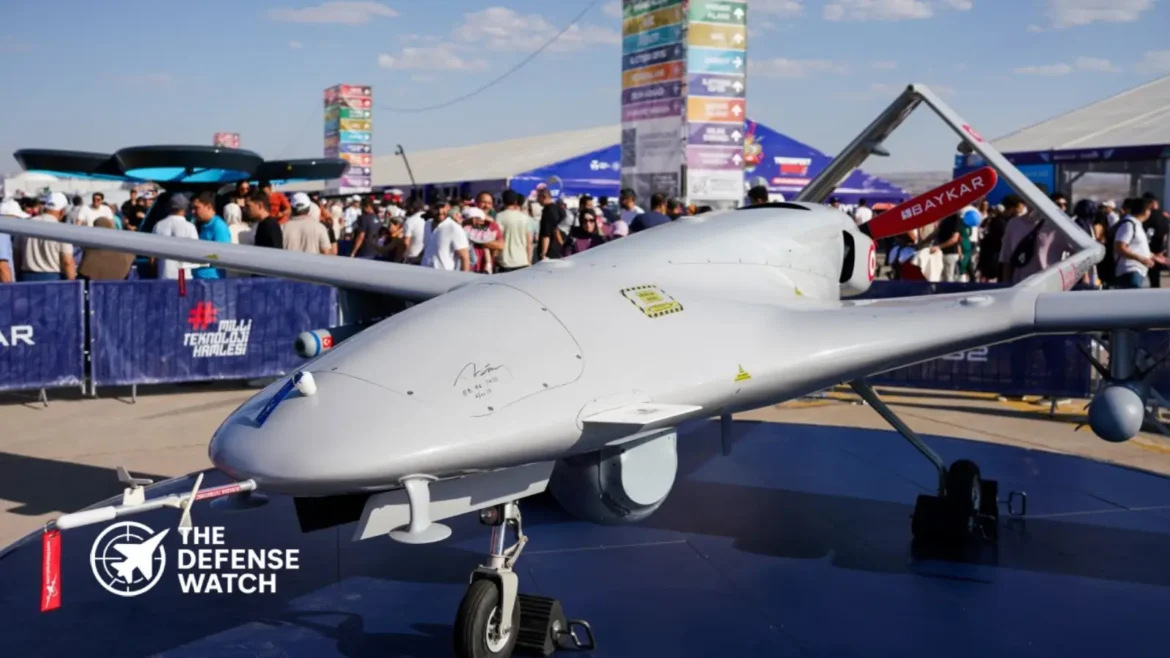
The Turkish defense industry is placing increasing emphasis on Baykar’s unmanned aircraft, precision weapons and emerging unmanned fighter technology as Ankara expands indigenous military capabilities. Türkiye’s Defense Ministry highlighted Baykar’s contribution to reconnaissance, surveillance, intelligence and attack capabilities during a September 3 briefing held at the company’s Özdemir Bayraktar National Technology Center in Istanbul.
Türkiye is expanding its indigenous unmanned warfare capabilities through Baykar’s established drone fleet and newer combat aircraft and precision weapons programs.
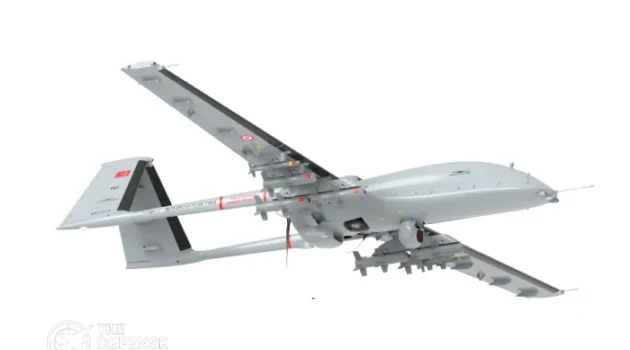
Defense Ministry spokesperson Zeki Aktürk said Baykar’s engineering and research capabilities were contributing to the Turkish Armed Forces while also strengthening Türkiye’s position in the international defense market. The ministry specifically identified the Bayraktar TB2, Akıncı, KIZILELMA, Kemankeş and K2 systems among the company’s products.
The significance of Baykar extends beyond one aircraft. Its portfolio now covers several layers of unmanned operations, from the mature TB2 to the heavier Akıncı, carrier-capable TB3 and the faster, more fighter-like KIZILELMA.
Baykar’s Portfolio Is Moving Up the Capability Ladder
Baykar’s current portfolio shows how Türkiye’s unmanned aircraft strategy has expanded beyond the relatively simple armed reconnaissance mission associated with the early TB2.
The company’s official product portfolio includes the TB2, Akıncı, TB3 and KIZILELMA, along with smaller unmanned systems and the Kemankeş family of mini cruise missiles.
| System | Primary Role | Key Development Significance |
|---|---|---|
| Bayraktar TB2 | Armed ISR and strike | Mature, widely exported UCAV |
| Bayraktar Akıncı | Heavy UCAV | Larger payload and higher-altitude operations |
| Bayraktar TB3 | Naval UCAV | Designed for operations from short-runway vessels |
| KIZILELMA | Unmanned combat aircraft | High-speed combat aircraft development |
| Kemankeş | Mini cruise missile | Adds long-range precision effects to unmanned platforms |
| K2 | Kamikaze UAV | AI-assisted autonomous and loitering capability |
The distinction matters because these platforms are not simply larger versions of the same aircraft. They represent different approaches to surveillance, strike, naval aviation and increasingly complex combat-air missions.
TB2 Established the Export Model
The Bayraktar TB2 remains the foundation of Baykar’s international business.
Baykar says it has signed TB2 export agreements with 36 countries and AKINCI agreements with 16 countries. The company reported $2.2 billion in exports in 2025, describing that figure as a record.
The company’s export expansion has also helped make unmanned systems a significant component of Türkiye’s defense-industrial presence abroad. That creates a feedback loop in which international sales support production capacity and provide an expanding installed base of Turkish-origin systems.
The TB2’s importance is therefore not limited to its technical specifications. Its widespread adoption has helped establish Türkiye as a major supplier in the global armed unmanned aircraft market.
Baykar says the TB2 has accumulated more than 1.25 million flight hours. Its published specifications include a 27-hour endurance, 12-meter wingspan and maximum speed of 120 knots.
TB3 Adds a Naval Aviation Dimension
The Bayraktar TB3 represents a different operational challenge because it is designed to operate from a short runway aboard a ship.
The aircraft successfully conducted autonomous takeoffs and landings from TCG Anadolu during testing, establishing a capability that connects unmanned aircraft operations with Turkish naval aviation.
That capability received additional exposure during NATO Steadfast Dart 2026. Baykar reported that TB3 operated from TCG Anadolu and conducted a live-fire MAM-L strike against surface targets during the exercise in the Baltic Sea.
Türkiye’s Defense Industry Agency also reported that TB3 conducted operations from TCG Anadolu during Steadfast Dart 2026, including 232 sorties and flight operations alongside Eurofighter aircraft over the Baltic Sea.
For naval forces, the operational value of a short-runway UCAV is tied to more than simply carrying weapons. It provides a way to extend surveillance and strike capacity from a ship without requiring a conventional aircraft carrier with catapults and arresting gear.
The principal challenge is maintaining reliable launch, recovery, communications and command-and-control performance in a maritime environment. Wind, deck movement, limited runway length and electromagnetic interference all impose constraints that do not exist to the same degree at a conventional land airfield.
KIZILELMA Marks a More Ambitious Step
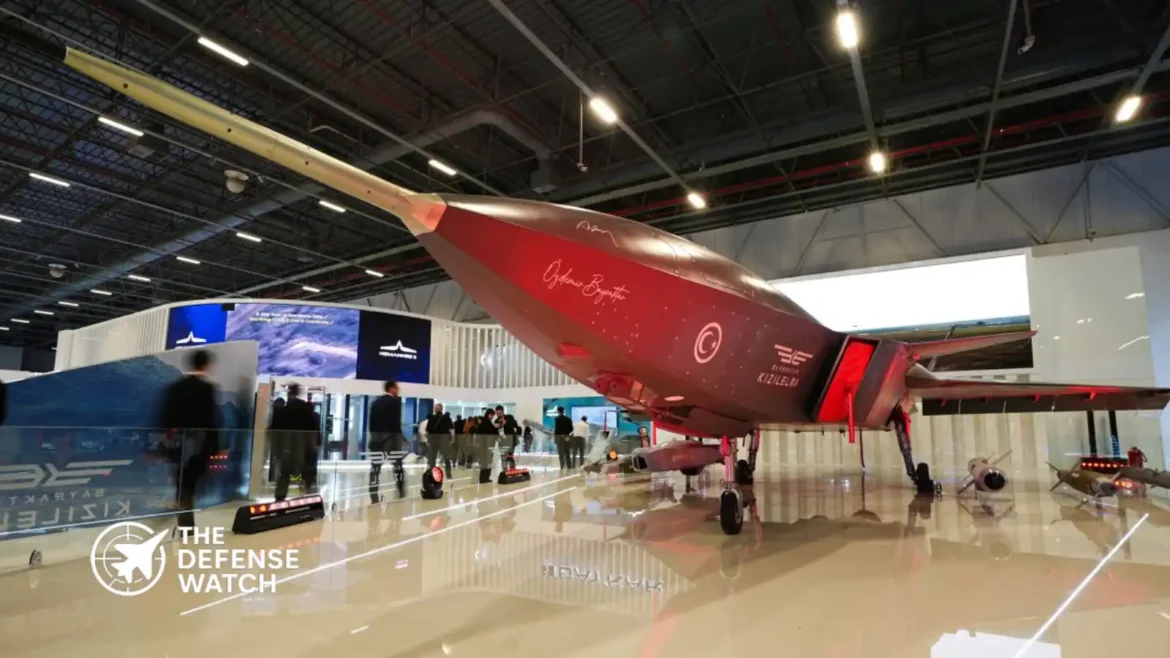
KIZILELMA represents Baykar’s move toward an unmanned combat aircraft rather than a conventional MALE-class UCAV.
The program has progressed through increasingly complex weapons and autonomy testing. In July 2026, the serial production S2 aircraft conducted its first firing tests from its internal weapons bay, using ROKETSAN TEBER-82 and ASELSAN TOLUN munitions.
The internal weapons bay is significant because weapon carriage affects an aircraft’s radar signature and aerodynamic characteristics. Baykar says the configuration is intended to support strike operations while maintaining a lower radar signature than external carriage.
KIZILELMA has also demonstrated air-to-air and air-to-ground weapons integration. Baykar reported that the aircraft successfully engaged a jet-powered aerial target with the GÖKDOĞAN beyond-visual-range missile during a November 2025 test.
In July 2026, the aircraft also conducted a firing test with Roketsan’s JET-230 supersonic air-to-ground missile.
These tests do not by themselves establish operational combat capability. They do, however, show the direction of the program: integrating an unmanned aircraft with sensors, weapons and autonomous flight functions normally associated with more complex combat aircraft.
Autonomy Is Becoming a Core Design Feature
Another important element of Baykar’s development strategy is autonomy.
In December 2025, two KIZILELMA prototypes conducted an autonomous close-formation flight using algorithms developed by Baykar. The company has also participated in the K-SWARM program with Leonardo, involving autonomous formation operations between KIZILELMA aircraft and Leonardo M-346 aircraft.
This points toward a broader concept of crewed and uncrewed aircraft working as a coordinated force.
For military planners, the challenge is not simply making an aircraft fly autonomously. Effective combat autonomy requires reliable navigation, sensor fusion, communications, identification and engagement controls, while maintaining human authority over critical decisions.
That makes software, data links and mission systems as important as the aircraft’s airframe.
Why Baykar Matters to U.S. and NATO Defense Planning
Baykar’s expansion is relevant beyond Türkiye because Turkish unmanned aircraft are increasingly appearing in NATO exercises and in the inventories of allied countries.
The TB3’s Steadfast Dart deployment is particularly significant because it demonstrated a Turkish unmanned naval aviation concept in a multinational NATO environment rather than solely during a domestic test program.
For NATO planners, the broader issue is interoperability.
A growing fleet of allied unmanned aircraft introduces requirements for common communications, airspace deconfliction, intelligence sharing, electronic warfare resilience and command-and-control integration. These considerations become more demanding as unmanned platforms move from intelligence and surveillance missions toward contested air operations.
The KIZILELMA program adds another layer. An unmanned combat aircraft operating alongside crewed fighters could eventually change how air forces approach high-risk missions, but doing so requires extensive validation of autonomy, communications resilience, weapons employment and human-machine teaming.
Türkiye’s experience therefore provides a useful case study in how a country can build an indigenous unmanned aviation ecosystem rather than purchasing individual platforms as isolated capabilities.
Export Growth Supports a Broader Defense Ecosystem
Baykar’s reported $2.2 billion in 2025 exports are important because the company has become a significant source of foreign demand for Türkiye’s defense sector.
The company’s product portfolio also illustrates a broader Turkish industrial model in which aircraft, sensors, weapons and mission systems are increasingly developed domestically or integrated through national defense companies.
KIZILELMA’s recent testing provides a clear example. Its weapons trials have involved systems from several Turkish companies, including ASELSAN and ROKETSAN, while the aircraft itself is developed by Baykar.
That level of domestic integration can reduce dependence on foreign suppliers for individual components and gives Türkiye greater control over how its aircraft evolve.
It also creates export opportunities for a wider group of Turkish defense companies when aircraft, sensors, communications systems and weapons are marketed as an integrated capability.
The Next Challenge Is Operational Maturity
The most important question for Baykar is no longer whether Türkiye can develop and export armed UAVs. The TB2 has already demonstrated that.
The harder challenge is scaling more advanced systems into reliable operational fleets.
For KIZILELMA, that means moving from successful individual demonstrations to repeatable performance across navigation, sensing, weapons employment, communications, maintenance and autonomous operations. For TB3, the challenge is sustaining shipborne operations at useful tempo while integrating the aircraft into wider naval and joint-force command structures.
The evolution also raises questions about survivability. Modern air defenses can combine radar, passive sensors, electronic warfare and short-range interceptors, making the operating environment considerably more difficult than the permissive conditions in which many earlier armed UAVs demonstrated their value.
Baykar’s trajectory suggests that Türkiye is addressing that challenge by developing a layered family of systems rather than relying on one platform.
The TB2 provides a mature and widely exported baseline. Akıncı increases payload and mission capacity. TB3 extends unmanned aviation to naval operations. KIZILELMA moves toward high-speed combat missions, while Kemankeş and other systems provide additional precision effects.
That progression is the central development to watch in Türkiye’s defense industry. The country’s unmanned warfare strategy is increasingly becoming an ecosystem of aircraft, weapons, sensors and autonomous systems rather than a single successful drone program.


Executive Summary:
Turkish defense firms signed approximately $8 billion worth of agreements during the opening days of SAHA Expo 2026 in Istanbul. The deals span aerospace, naval, missile, and unmanned systems, underscoring Türkiye’s expanding role in the global defense market and its push for greater defense industrial independence.
Turkish Defense Firms Accelerate Global Expansion At SAHA Expo
Turkish defense firms secured nearly $8 billion in agreements during the first days of SAHA Expo 2026, marking one of the largest deal volumes recorded at the country’s flagship defense exhibition.
Held in Istanbul, the event brought together domestic manufacturers, foreign delegations, military officials, and procurement agencies seeking partnerships across multiple defense sectors. The agreements reportedly covered unmanned systems, aerospace technologies, naval platforms, electronics, missile systems, and advanced military manufacturing.
The scale of the contracts highlights Türkiye’s continued effort to position itself as a major exporter of affordable and combat-tested defense technologies.
Turkish defense companies signed deals with both domestic and international partners during the early stages of the exhibition.
SAHA Expo Becomes Strategic Export Platform
SAHA Expo 2026 has increasingly evolved from a regional trade show into a strategic platform for defense exports and industrial diplomacy.
The exhibition reflects Türkiye’s broader defense industrial strategy, which focuses on reducing reliance on foreign suppliers while expanding international sales. Turkish companies have invested heavily in indigenous production capabilities over the past decade, especially after export restrictions and procurement disputes with several Western partners.
This strategy has produced rapid growth in several sectors, particularly drones, electronic warfare systems, armored vehicles, precision-guided munitions, and naval platforms.
Turkish defense exports have expanded significantly in recent years, supported by operational deployments and combat use in multiple theaters. Systems developed by Turkish manufacturers have attracted buyers across the Middle East, Africa, Central Asia, Eastern Europe, and Southeast Asia.
Industry observers view the $8 billion agreement figure as another indicator that Turkish defense manufacturers are becoming increasingly competitive in the mid-cost global defense market.
Drone And Aerospace Systems Continue To Drive Demand
Unmanned systems remain one of the strongest drivers behind Türkiye’s export momentum.
Turkish drone manufacturers have gained international visibility following operational use of combat UAVs in conflicts across Libya, Syria, Nagorno-Karabakh, and Ukraine. These systems are often marketed as lower-cost alternatives to Western platforms while still offering advanced surveillance and strike capabilities.
Companies participating in SAHA Expo also showcased developments in next-generation fighter aircraft programs, jet trainers, missile technologies, radar systems, and naval modernization projects.
The aerospace segment remains strategically important for Ankara as Türkiye seeks to develop a more self-sufficient aviation industry capable of supporting both domestic military requirements and export opportunities.
Growing investment in indigenous engines, avionics, sensors, and electronic warfare systems also reflects an effort to reduce dependence on imported technologies that could be vulnerable to future sanctions or export restrictions.
Defense Partnerships Expand Beyond Traditional Markets
Another notable trend at SAHA Expo 2026 was the diversification of Türkiye’s defense partnerships.
Turkish firms have increasingly targeted emerging markets seeking cost-effective military modernization programs without the political conditions sometimes attached to Western procurement agreements.
This has enabled Ankara to deepen defense relationships across Africa, the Gulf region, and parts of Asia. Several countries are pursuing joint production agreements, technology transfer arrangements, and long-term maintenance partnerships with Turkish manufacturers.
The emphasis on industrial cooperation has become a key competitive advantage for Türkiye’s defense sector.
Unlike some traditional suppliers, Turkish firms often offer localized production packages and flexible financing structures, making their systems attractive to countries with limited defense budgets but growing security requirements.
Strategic Importance For Türkiye’s Economy And Security
The agreements announced during SAHA Expo also carry broader economic significance for Türkiye.
Defense exports contribute valuable foreign currency revenues while supporting domestic manufacturing, engineering, and high-technology employment. The sector has become one of the country’s major industrial growth areas, with government officials frequently highlighting defense production as a pillar of national strategic autonomy.
The rapid expansion of the Turkish defense industry also aligns with Ankara’s geopolitical ambitions.
By strengthening indigenous production capabilities and expanding export relationships, Türkiye seeks greater strategic flexibility in regional and international affairs. Defense exports can also reinforce diplomatic influence and long-term security cooperation with partner states.
However, analysts note that sustaining export growth will require continued investment in advanced technologies, supply chain resilience, and international certification standards, especially as competition intensifies from both established Western defense firms and emerging Asian suppliers.
Outlook For Turkish Defense Industry
The strong opening performance at SAHA Expo 2026 suggests continued momentum for Turkish defense manufacturers despite growing competition in the global arms market.
Demand for cost-effective drones, missile systems, naval platforms, and integrated defense solutions remains strong, particularly among countries seeking rapid modernization capabilities.
As geopolitical tensions continue to drive military spending worldwide, Turkish defense firms appear positioned to expand their presence across multiple export markets.
The long-term challenge for the industry will be maintaining technological advancement while scaling production capacity to meet rising international demand.

Turkey to Deliver ALTAY Main Battle Tanks in 2026
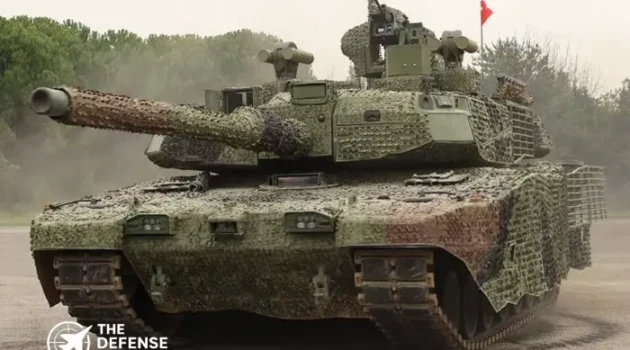
Turkey will deliver a double digit number of ALTAY main battle tanks to its Land Forces in 2026, marking a key milestone in the country’s long running armored vehicle modernization effort. The confirmation came from Haluk Görgün, head of Turkey’s Presidency of Defense Industries, who said the ALTAY Serial Production Project will accelerate during 2026 as domestic manufacturing capacity expands.
(adsbygoogle = window.adsbygoogle || []).push({});The announcement signals the transition of the ALTAY program from limited production to operational fielding, strengthening Turkey’s indigenous heavy armor capability at a time of growing regional security pressures.
ALTAY Serial Production Enters Critical Phase
The ALTAY main battle tank is the centerpiece of Turkey’s effort to replace aging Leopard 2A4 and M60 platforms with a locally produced armored system. According to Görgün, serial production will scale up during 2026, enabling the Turkish Land Forces to receive more than ten tanks within the year.
The ALTAY program has faced years of delays linked to powerpack availability, testing timelines, and supply chain localization. Recent progress in engine and transmission integration has allowed the program to move forward, clearing the way for sustained production runs rather than limited batches.
Turkey’s defense industry leadership has emphasized that the 2026 deliveries represent the start of regular induction, not a one time handover.
Key Capabilities of the ALTAY Main Battle Tank
The ALTAY main battle tank is designed to meet modern high intensity battlefield requirements. It features a 120 mm smoothbore main gun compatible with NATO standard ammunition, advanced fire control systems, and modular composite armor designed to counter kinetic and chemical threats.
The platform also incorporates digital battlefield management systems, modern thermal sights for day and night operations, and enhanced crew survivability measures. These features are intended to allow ALTAY units to operate effectively in combined arms formations alongside infantry, artillery, and unmanned systems.
Turkish defense officials have consistently positioned the ALTAY as a fully networked platform rather than a standalone armored vehicle.
Industrial and Strategic Significance
Beyond its military role, the ALTAY program is a flagship industrial project for Turkey’s defense sector. Serial production supports domestic suppliers across armor systems, electronics, fire control components, and logistics support infrastructure.
Officials from the defense industry have stated that increasing production tempo will reduce unit costs over time while strengthening Turkey’s export position in the global armored vehicle market. Several countries have previously expressed interest in the ALTAY platform, though no confirmed export contracts have been announced.
For Ankara, the program also reduces reliance on foreign suppliers for heavy armor, aligning with broader strategic goals of defense autonomy.
Integration Into Turkish Land Forces
The Turkish Land Forces are expected to deploy the initial ALTAY tanks with frontline armored units following delivery. Training, maintenance infrastructure, and spare parts pipelines are already being prepared to support operational service.
(adsbygoogle = window.adsbygoogle || []).push({});Defense planners see the ALTAY as a long term replacement platform that will serve for decades, with future upgrades planned for active protection systems, improved sensors, and potential integration with unmanned ground systems.
The 2026 delivery timeline suggests that Turkey aims to achieve initial operational capability shortly after induction.
Regional Context and Modernization Drive
Turkey’s push to field the ALTAY main battle tank comes amid wider regional military modernization across Europe, the Middle East, and Asia. Land warfare capabilities remain central to deterrence planning, particularly in scenarios involving high intensity conflict.
By advancing the ALTAY program, Turkey joins a small group of nations capable of designing and producing modern main battle tanks domestically. Analysts note that this capability enhances strategic flexibility during crises where foreign supply chains may be constrained.
Outlook
The confirmed double digit delivery of ALTAY tanks in 2026 marks a turning point for the program. While full scale production will take time to mature, the transition to regular deliveries underscores growing confidence within Turkey’s defense establishment.
As serial production ramps up, attention will shift to performance in field trials, sustainment costs, and the pace of future deliveries. For now, the ALTAY main battle tank is set to move from development headlines to active service within the Turkish Army.
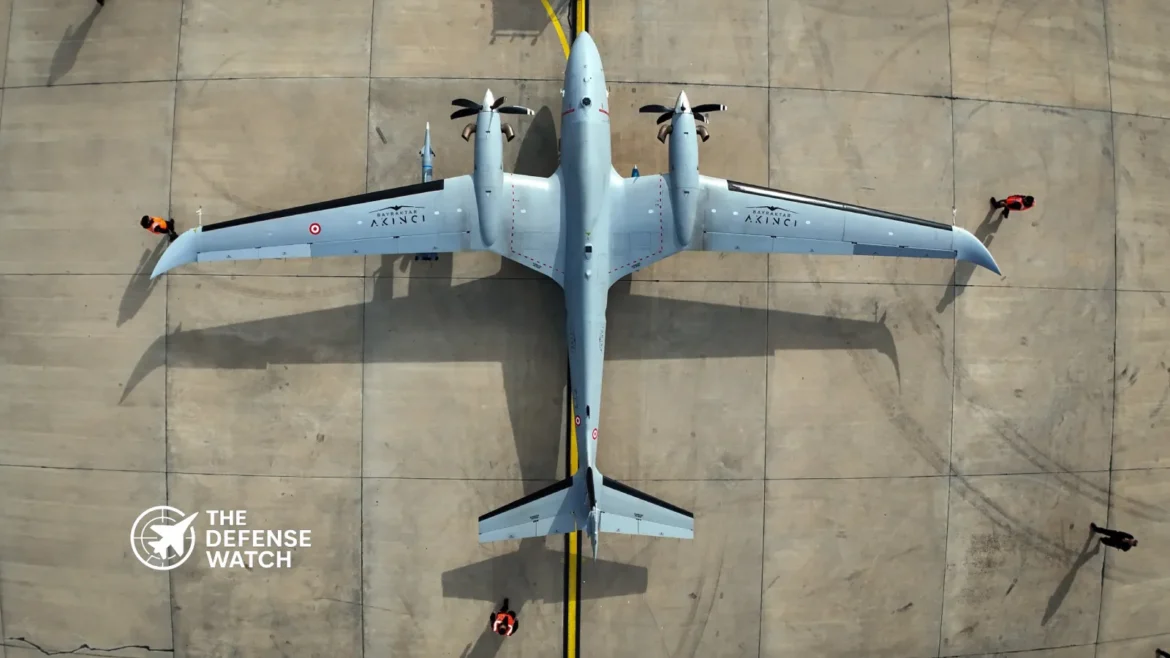
Turkey’s Defense Industry Enters 2026 With KAAN Flight Tests, Record Exports & Steel Dome Deliveries
Turkey’s Defense Industry Sets Ambitious 2026 Targets as Exports Cross $10 Billion
Turkey’s defense industry kicked off 2026 with a comprehensive press briefing coordinated by the Presidency of Defense Industries (SSB), laying out a delivery-heavy, export-driven strategy across aviation, naval, missile, and electronic warfare domains — as the sector records its first-ever annual defense and aerospace exports surpassing $10 billion.
(adsbygoogle = window.adsbygoogle || []).push({});The briefing, held on February 1, featured senior executives from the country’s largest state-linked and private defense primes — including Turkish Aerospace Industries (TUSAS), Roketsan, ASFAT, TEI, STM, ASELSAN, and MKE — each presenting program milestones achieved in 2025 and concrete deliverables for the year ahead. The collective message was unmistakable: 2026 is a year of execution, not just development.
KAAN Fifth-Gen Fighter Enters Flight Test Phase
The centerpiece of the briefing was the KAAN national combat aircraft, Turkey’s stealth, twin-engine, fifth-generation fighter developed by TUSAS to replace the Turkish Air Force’s aging F-16 fleet. TUSAS General Manager Dr. Mehmet Demiroğlu confirmed that the program has transitioned from ground testing to active flight testing, with the first non-demonstrator prototype — designated P1 — targeted for its maiden flight by the end of April 2026.
A second prototype, P2, is expected to follow shortly thereafter, with TAI aiming for a first flight in the May–June 2026 window. Together with a dedicated ground-test vehicle, the program now has three prototypes in various stages of completion at TUSAS’s Ankara facilities.
“Our goal is still the end of April. KAAN will begin test flights.”— Dr. Mehmet Demiroğlu, General Manager, TUSAS
The KAAN program has attracted significant international interest. Indonesia has signed up for 48 aircraft, marking the first confirmed export order for the platform. TUSAS officials have indicated that negotiations with additional countries — including potential interest reported from Saudi Arabia and Spain — are ongoing, though no additional firm orders have been publicly announced.
Powering the KAAN prototypes are twin General Electric F110-GE-129E turbofan engines, with an initial batch already delivered to TAI as of late 2025. However, Turkey is pursuing full engine autonomy: the domestic TF35000 engine program, led by TEI, reached its critical design review (CDR) milestone in 2025. Early ground testing of the indigenous engine is planned for 2026, with integration on a KAAN airframe targeted for 2032.
TUSAS: Trainer Jets, Helicopters, and Airbus Supply Chain
Beyond KAAN, TUSAS reported a broad portfolio of deliverable programs for 2026. The company plans to hand over 22 HÜRKUŞ light attack and training aircraft to the Turkish Armed Forces this year. The advanced jet trainer HÜRJET — which reached Mach 1.2 during flight testing in 2025 — is expected to see its first Block 0 production aircraft roll out between May and June, with three to four units targeted by year-end.
HÜRJET secured a high-profile export contract with Spain’s Royal Air Force, a deal reportedly valued at over €2.6 billion for 30 aircraft with deliveries beginning in 2028. This marks Turkey’s formal entry into the jet trainer export market and a landmark sale to a NATO ally.
The GÖKBEY utility helicopter program is also accelerating. TUSAS confirmed that a new contract for 57 additional helicopters has been signed with SSB, bringing the total order to 83 units. The fifth production helicopter was delivered recently, and the company plans a delivery cadence of one per month in 2026, rising to two per month in 2027. GÖKBEY completed cold-weather testing in Sweden in February 2025, and civilian certification is expected in early 2026.
On the structural aerostructures side, TUSAS delivered the 500th fuselage section (Section 18–19) to Airbus and Boeing programs in December 2025, underscoring the company’s role as a Tier-1 supplier in global commercial aviation manufacturing.
TEI Sets Engine Records and Advances TS1400
Turkish Aero Engines (TEI), the national engine manufacturer, reported near $700 million in revenues for 2025, with roughly $500 million attributable to exports — including a maintenance contract win with the Chilean Air Force that solidified its global credentials.
TEI’s PD170 turbofan, which powers the ANKA and AKSUNGUR UAV platforms, broke through the 42,000-foot altitude ceiling during testing — a record in its class. The company also completed delivery of 100 units of the Kara Şahin piston engine.
Looking ahead, TEI announced that the TS1400 turbofan — intended for the HÜRJET trainer — has largely completed certification and will begin deliveries to TUSAS in 2026. This engine will enable HÜRJET to transition from interim foreign powerplants to a fully indigenous propulsion solution.
ASELSAN and the Steel Dome Air Defense Network
ASELSAN, Turkey’s largest defense electronics firm and the 43rd largest defense company globally according to the Defense News Top 100, reported a combined direct-and-indirect export contribution of $958 million in 2025. The company signed new contracts worth $2.069 billion with 58 countries, raising its total export customer base to 95 nations.
A standout achievement was the $410 million electronic warfare system sale to Poland — the first such sale to a NATO member state and a clear indicator of Turkey’s expanding credibility within the alliance’s defense ecosystem.
On the domestic front, ASELSAN confirmed that over 100 components of the multi-layered Steel Dome air defense system have been delivered to the Turkish Armed Forces. Steel Dome integrates the SIPER long-range, HISAR mid-range, and SENGOKU short-range air defense platforms into a single, networked architecture. A $6.5 billion mass-production contract covering Steel Dome subsystems and related strategic defense systems was signed between SSB and ASELSAN/Roketsan in late 2025.
Roketsan Enters Serial Production on Key Missile Systems
Roketsan, ranked 71st globally among defense manufacturers, contributed over $750 million to Turkey’s sector-wide export figure in 2025 — helping push the national total past $10 billion. The company closed the year with revenues up more than 55 percent and doubled its backlog of orders.
Critically, Roketsan formally entered serial production on two systems in 2025: the AKATA anti-ship missile and the TAYFUN strategic cruise missile. Both had previously been in development. Roketsan also conducted 850 test events during the year to validate operational maturity across its product lines. The company’s products are now active in more than 40 countries, with local co-production arrangements established in several markets.
ASFAT Expands Naval and Armored Vehicle Exports
ASFAT, the state-owned defense manufacturer, reported its most significant year in terms of contract value — reaching roughly twice the combined total of the previous seven years. On the naval side, the company delivered Pakistan’s PNS Khaibar corvette under the MILGEM program in Istanbul and began sea trials on a corvette destined for Romania — opening the door to the European naval export market.
New contracts were signed with SSB for the TF-2000 frigate program’s second phase, the MİLDEN submarine program’s first phase, and open-sea patrol vessels. The 8×8 Panther integrated howitzer system entered the Turkish Army inventory, with one unit already delivered and three more expected in February. The remaining 36 units of the ARPAN variant are scheduled for delivery in three batches before year-end.
STM’s NETA Autonomous Submarine Nears Testing Completion
STM, a leading developer of unmanned naval systems, confirmed that the NETA autonomous underwater vehicle has completed the majority of its test program and is approaching final validation. The company also announced that construction of Turkey’s first national attack craft has begun, while submarine modernization work and İSTİF-class frigate construction continue on an intensive schedule.
(adsbygoogle = window.adsbygoogle || []).push({});STM’s tactical drone portfolio now spans more than 15 export markets. The company is conducting strategic business development across 50-plus countries in 2026, aiming to convert pipeline opportunities into firm contracts.
MKE Targets Eightfold Increase in Ammunition Capacity
The Machinery and Chemical Industry Corporation (MKE), Turkey’s state ammunition manufacturer, disclosed that it has invested nearly $1 billion over the past two years to raise production capacity to 65,000 rounds annually. The company’s stated ultimate target is 1 million rounds per year — an eightfold increase — supported by new factory construction in Samsun and Kırşehir.
MKE also reported the first-ever export of heavy weapons to Bangladesh and the introduction of what it described as the world’s first electric-powered armored combat vehicle into the Turkish Armed Forces inventory. The company currently exports to more than 10 countries and established a new R&D center focused on energetic materials to localize chemical production.
Strategic Outlook
The February 1 briefing collectively underscored a deliberate shift in Turkey’s defense industrial posture — from a decade dominated by R&D milestones and prototype demonstrations to a phase defined by serial deliveries, export volume, and industrial scaling. Five Turkish companies now appear in SIPRI’s global top 100, and the country’s domestic localization rate exceeds 80 percent, down from roughly 20 percent two decades ago.
Roketsan’s CEO Murat İkinci projected that sector-wide defense and aerospace exports would surpass $10 billion in 2026, maintaining a growth rate comparable to 2025’s roughly 48-percent year-on-year increase. ASELSAN has set a stated goal of entering the global top 20 defense firms and the European top 10 within the medium term.
For international observers — particularly in Washington, Brussels, and allied capitals — the trajectory carries strategic significance. Turkey’s expanding role as a credible arms exporter to NATO allies (Poland, Spain) and Indo-Pacific markets (Indonesia) positions Ankara as an increasingly consequential player in the global defense trade landscape, with direct implications for alliance dynamics and regional security architectures.
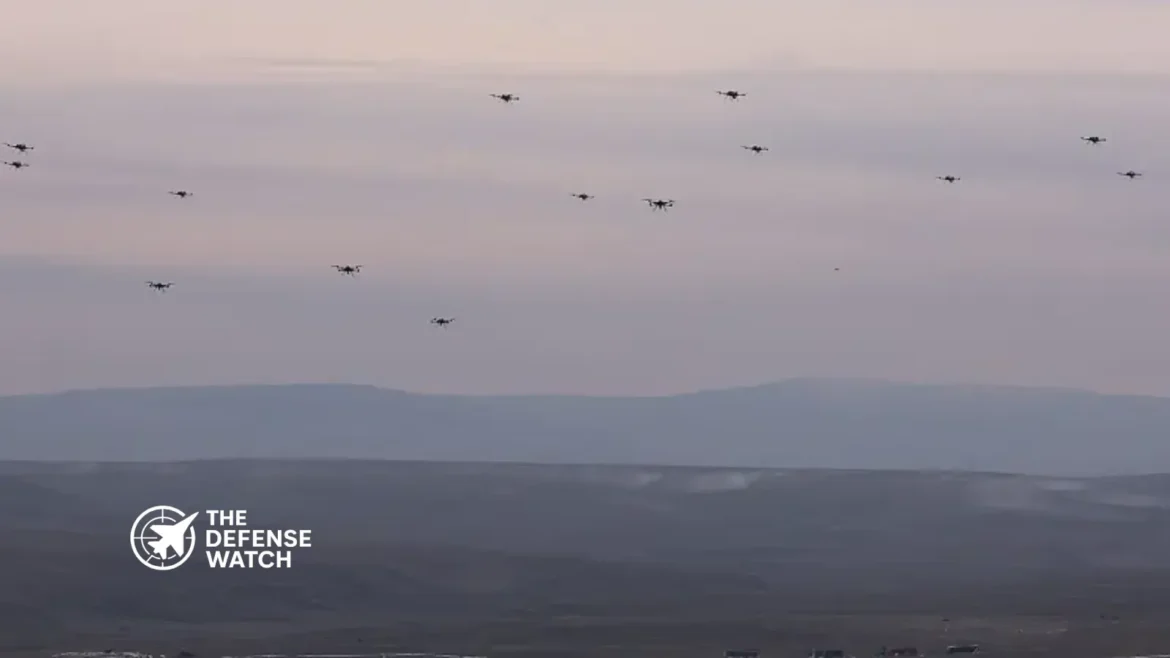
Türkiye completes first live fire drone swarm test
Türkiye has conducted its first live fire drone swarm operation using Kargu loitering munitions, marking a major milestone in the country’s autonomous weapons development. The test, executed by Turkish defense firm STM, involved the coordinated launch and strike of 20 Kargu systems operating as a single swarm.
According to STM, the live fire event demonstrated Türkiye’s ability to deploy multiple loitering munitions simultaneously, coordinate them autonomously, and engage designated targets under operational conditions.
A milestone for Türkiye’s drone swarm capability
The successful test represents the first confirmed instance of a live fire drone swarm attack conducted by Türkiye. While the country has previously demonstrated individual loitering munition launches and coordinated UAV operations, this event marks the first time multiple Kargu systems were used together in a synchronized strike scenario.
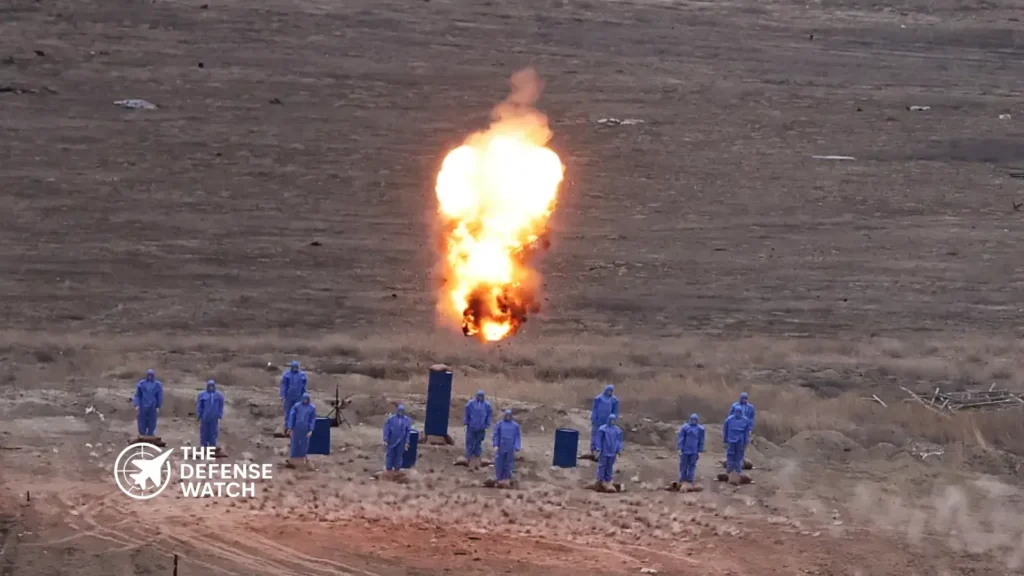
STM stated that the operation validated key elements of swarm warfare, including coordinated navigation, target assignment, and engagement timing. Each Kargu loitering munition was able to operate independently while remaining linked to the broader swarm architecture.
Defense analysts note that swarm capability is increasingly viewed as a critical component of future battlefield operations, particularly for suppressing air defenses, targeting mobile threats, and overwhelming traditional point defense systems.
Kargu loitering munition overview
The Kargu loitering munition is a man portable rotary wing system developed by STM for tactical use by ground forces. It is designed for intelligence, surveillance, reconnaissance, and precision strike missions.
Key characteristics of the Kargu system include vertical takeoff and landing capability, electro optical and infrared sensors, and a high explosive warhead optimized for anti personnel and light vehicle targets. The platform is designed to operate in both human in the loop and autonomous modes.
STM has previously confirmed that Kargu incorporates artificial intelligence based image processing and target recognition features, allowing it to operate in complex environments with limited operator input.
See also: Türkiye expands loitering munition production for special operations forces
How the drone swarm test was conducted
During the live fire demonstration, 20 Kargu loitering munitions were launched in a coordinated sequence. The systems reportedly shared mission data, deconflicted flight paths, and executed their strike profiles in a controlled manner.
While STM did not release detailed engagement parameters, the company confirmed that the swarm successfully completed its mission objectives and struck designated targets. The test also assessed communication resilience and mission continuity under simulated operational conditions.
Army Recognition reported that the exercise validated swarm level command and control, a key requirement for future autonomous operations.
Strategic implications for regional and global defense
Türkiye’s successful drone swarm test places it among a small group of countries actively testing live fire autonomous swarm capabilities. Defense experts view this as a significant step beyond traditional remotely piloted UAV operations.
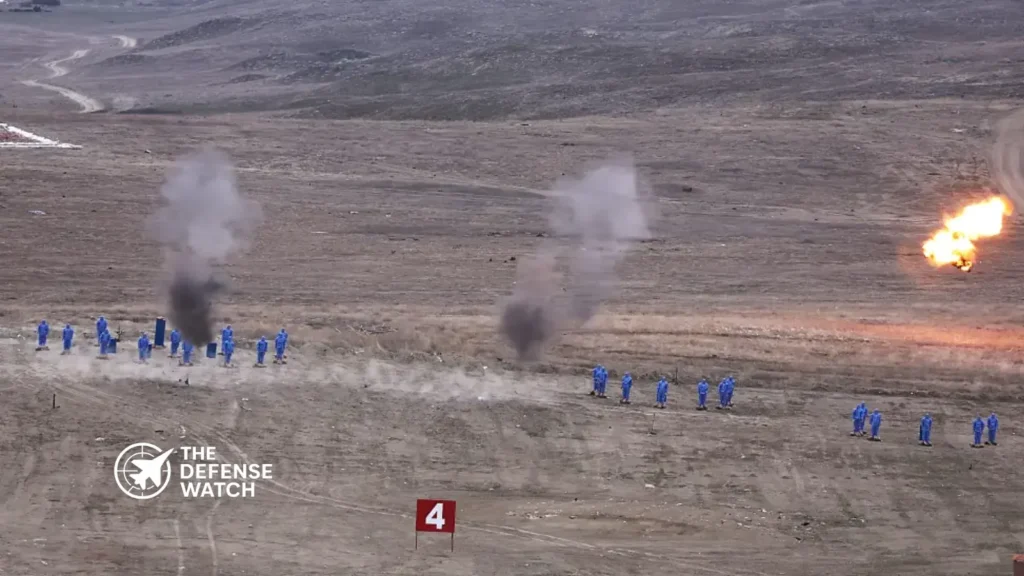
Swarm based loitering munitions offer several operational advantages, including redundancy, adaptability, and the ability to overwhelm defenses through mass and coordination. These systems are particularly relevant in contested environments where electronic warfare and air defense threats are present.
For NATO partners and regional actors, the demonstration highlights Türkiye’s continued investment in indigenous defense technologies and its growing role as a developer of advanced unmanned systems.
Ethical and operational considerations
The use of autonomous loitering munitions has drawn international attention due to concerns over human control and compliance with the laws of armed conflict. STM has previously stated that Kargu can be operated with human authorization and is designed to meet applicable legal and ethical standards.
The live fire swarm test did not indicate whether the systems were operating fully autonomously or under supervised control. However, defense observers emphasize that transparency around command authority will remain a key issue as swarm technologies mature.
Türkiye’s broader UAV modernization push
The drone swarm test aligns with Türkiye’s broader strategy to expand its unmanned systems portfolio across air, land, and maritime domains. Turkish firms have already gained international recognition for platforms such as Bayraktar TB2, Akinci, and Kizilelma.
STM’s work on Kargu and swarm technologies complements these efforts by focusing on tactical level autonomous strike systems intended for ground forces and special operations units.
As military planners worldwide increasingly prioritize unmanned and autonomous capabilities, Türkiye’s latest test underscores its ambition to remain competitive in this rapidly evolving field.
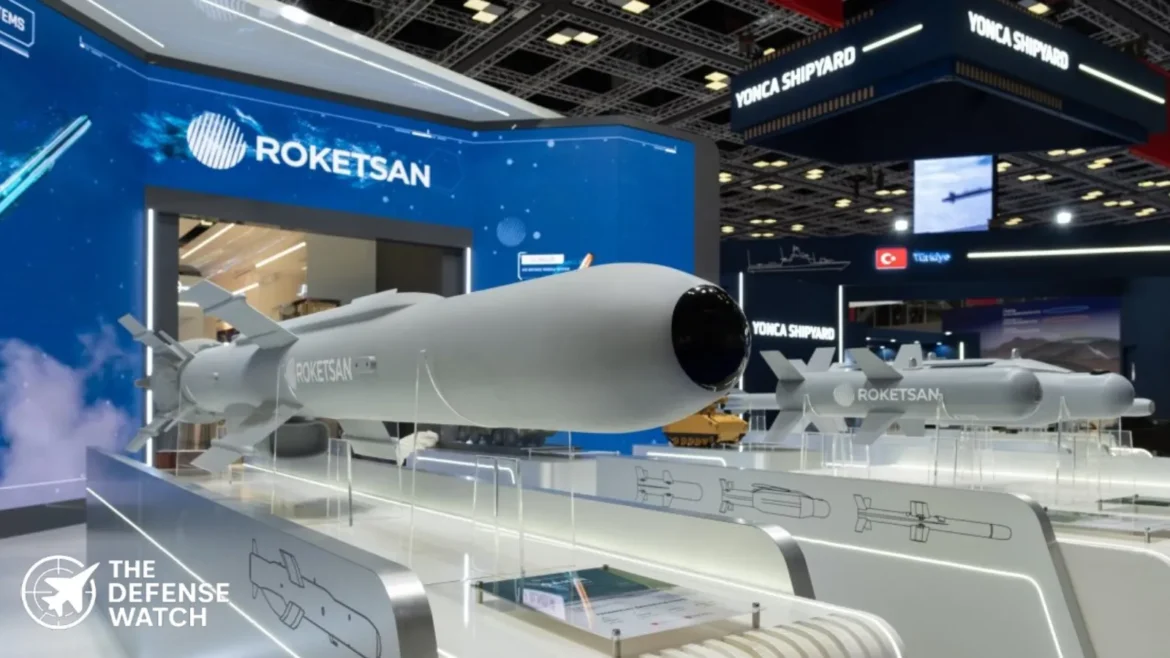
Turkey’s Roketsan says 2026 will be the year its long-term investments start yielding results as production capacity expands and key weapons programs move toward serial production, the company’s CEO told Anadolu Agency.
Turkey’s state-owned missile and defense systems maker Roketsan reported a big increase in output last year and expects 2026 to be a turning point as earlier investments come online, company leadership said.
CEO Murat Ikinci said Roketsan’s turnover grew by more than 50 percent in 2025 to over 2 billion dollars, with exports also up sharply. He framed 2025 as a year of testing, trials and development that laid the groundwork for expanded serial production this year.
Ikinci stressed that ballistic missiles, air defense systems and related technologies were major focus areas last year and will start moving into production or broader deployment in 2026. Among systems he cited were the Tayfun Blok-4 ballistic missile, the Gokbora air-to-air missile and the 300 ER missile, work on which “continues at full speed.”
The company also highlighted growth in its industrial ecosystem, with more than 100 partner firms now part of its business partner program and roughly 2,000 companies working with Roketsan on export and domestic projects.
Ikinci pointed to the importance of new production facilities that came online as part of the company’s long-term investment strategy, and said these will support higher production capacity in 2026.
Roketsan is preparing to showcase its portfolio and new developments at the 2026 SAHA Expo defense and aerospace exhibition, where the firm says it plans to highlight innovations across its weapons systems and production lines.
The company’s expanded focus includes drones, swarm technologies and air defense systems alongside missiles, reflecting broader trends in Turkey’s defense industry toward integrated and export-oriented capabilities.