

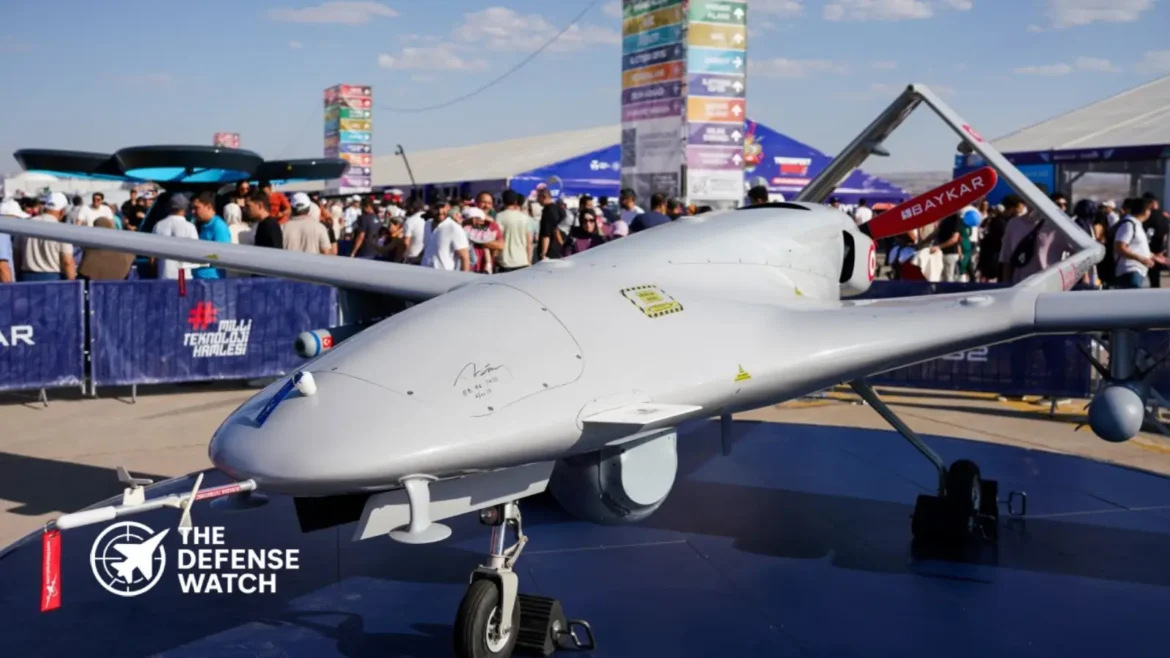
Turkish Defense Industry Puts Baykar at Center of Unmanned Warfare Push
The Turkish defense industry is placing increasing emphasis on Baykar’s unmanned aircraft, precision weapons and emerging unmanned fighter technology as Ankara expands indigenous military capabilities. Türkiye’s Defense Ministry highlighted Baykar’s contribution to reconnaissance, surveillance, intelligence and attack capabilities during a September 3 briefing held at the company’s Özdemir Bayraktar National Technology Center in Istanbul.
Türkiye is expanding its indigenous unmanned warfare capabilities through Baykar’s established drone fleet and newer combat aircraft and precision weapons programs.
Defense Ministry spokesperson Zeki Aktürk said Baykar’s engineering and research capabilities were contributing to the Turkish Armed Forces while also strengthening Türkiye’s position in the international defense market. The ministry specifically identified the Bayraktar TB2, Akıncı, KIZILELMA, Kemankeş and K2 systems among the company’s products.
The significance of Baykar extends beyond one aircraft. Its portfolio now covers several layers of unmanned operations, from the mature TB2 to the heavier Akıncı, carrier-capable TB3 and the faster, more fighter-like KIZILELMA.
Baykar’s Portfolio Is Moving Up the Capability Ladder
Baykar’s current portfolio shows how Türkiye’s unmanned aircraft strategy has expanded beyond the relatively simple armed reconnaissance mission associated with the early TB2.
The company’s official product portfolio includes the TB2, Akıncı, TB3 and KIZILELMA, along with smaller unmanned systems and the Kemankeş family of mini cruise missiles.
| System | Primary Role | Key Development Significance |
|---|---|---|
| Bayraktar TB2 | Armed ISR and strike | Mature, widely exported UCAV |
| Bayraktar Akıncı | Heavy UCAV | Larger payload and higher-altitude operations |
| Bayraktar TB3 | Naval UCAV | Designed for operations from short-runway vessels |
| KIZILELMA | Unmanned combat aircraft | High-speed combat aircraft development |
| Kemankeş | Mini cruise missile | Adds long-range precision effects to unmanned platforms |
| K2 | Kamikaze UAV | AI-assisted autonomous and loitering capability |
The distinction matters because these platforms are not simply larger versions of the same aircraft. They represent different approaches to surveillance, strike, naval aviation and increasingly complex combat-air missions.
TB2 Established the Export Model
The Bayraktar TB2 remains the foundation of Baykar’s international business.
Baykar says it has signed TB2 export agreements with 36 countries and AKINCI agreements with 16 countries. The company reported $2.2 billion in exports in 2025, describing that figure as a record.
The company’s export expansion has also helped make unmanned systems a significant component of Türkiye’s defense-industrial presence abroad. That creates a feedback loop in which international sales support production capacity and provide an expanding installed base of Turkish-origin systems.
The TB2’s importance is therefore not limited to its technical specifications. Its widespread adoption has helped establish Türkiye as a major supplier in the global armed unmanned aircraft market.
Baykar says the TB2 has accumulated more than 1.25 million flight hours. Its published specifications include a 27-hour endurance, 12-meter wingspan and maximum speed of 120 knots.
TB3 Adds a Naval Aviation Dimension
The Bayraktar TB3 represents a different operational challenge because it is designed to operate from a short runway aboard a ship.
The aircraft successfully conducted autonomous takeoffs and landings from TCG Anadolu during testing, establishing a capability that connects unmanned aircraft operations with Turkish naval aviation.
That capability received additional exposure during NATO Steadfast Dart 2026. Baykar reported that TB3 operated from TCG Anadolu and conducted a live-fire MAM-L strike against surface targets during the exercise in the Baltic Sea.
Türkiye’s Defense Industry Agency also reported that TB3 conducted operations from TCG Anadolu during Steadfast Dart 2026, including 232 sorties and flight operations alongside Eurofighter aircraft over the Baltic Sea.
For naval forces, the operational value of a short-runway UCAV is tied to more than simply carrying weapons. It provides a way to extend surveillance and strike capacity from a ship without requiring a conventional aircraft carrier with catapults and arresting gear.
The principal challenge is maintaining reliable launch, recovery, communications and command-and-control performance in a maritime environment. Wind, deck movement, limited runway length and electromagnetic interference all impose constraints that do not exist to the same degree at a conventional land airfield.
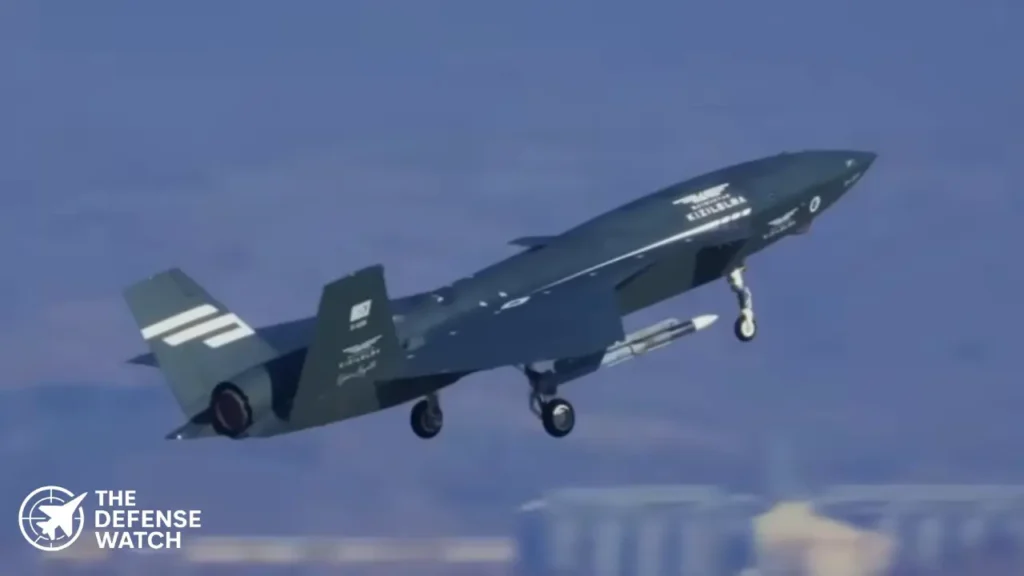
KIZILELMA Marks a More Ambitious Step
KIZILELMA represents Baykar’s move toward an unmanned combat aircraft rather than a conventional MALE-class UCAV.
The program has progressed through increasingly complex weapons and autonomy testing. In July 2026, the serial production S2 aircraft conducted its first firing tests from its internal weapons bay, using ROKETSAN TEBER-82 and ASELSAN TOLUN munitions.
The internal weapons bay is significant because weapon carriage affects an aircraft’s radar signature and aerodynamic characteristics. Baykar says the configuration is intended to support strike operations while maintaining a lower radar signature than external carriage.
KIZILELMA has also demonstrated air-to-air and air-to-ground weapons integration. Baykar reported that the aircraft successfully engaged a jet-powered aerial target with the GÖKDOĞAN beyond-visual-range missile during a November 2025 test.
In July 2026, the aircraft also conducted a firing test with Roketsan’s JET-230 supersonic air-to-ground missile.
These tests do not by themselves establish operational combat capability. They do, however, show the direction of the program: integrating an unmanned aircraft with sensors, weapons and autonomous flight functions normally associated with more complex combat aircraft.
Autonomy Is Becoming a Core Design Feature
Another important element of Baykar’s development strategy is autonomy.
In December 2025, two KIZILELMA prototypes conducted an autonomous close-formation flight using algorithms developed by Baykar. The company has also participated in the K-SWARM program with Leonardo, involving autonomous formation operations between KIZILELMA aircraft and Leonardo M-346 aircraft.
This points toward a broader concept of crewed and uncrewed aircraft working as a coordinated force.
For military planners, the challenge is not simply making an aircraft fly autonomously. Effective combat autonomy requires reliable navigation, sensor fusion, communications, identification and engagement controls, while maintaining human authority over critical decisions.
That makes software, data links and mission systems as important as the aircraft’s airframe.
Why Baykar Matters to U.S. and NATO Defense Planning
Baykar’s expansion is relevant beyond Türkiye because Turkish unmanned aircraft are increasingly appearing in NATO exercises and in the inventories of allied countries.
The TB3’s Steadfast Dart deployment is particularly significant because it demonstrated a Turkish unmanned naval aviation concept in a multinational NATO environment rather than solely during a domestic test program.
For NATO planners, the broader issue is interoperability.
A growing fleet of allied unmanned aircraft introduces requirements for common communications, airspace deconfliction, intelligence sharing, electronic warfare resilience and command-and-control integration. These considerations become more demanding as unmanned platforms move from intelligence and surveillance missions toward contested air operations.
The KIZILELMA program adds another layer. An unmanned combat aircraft operating alongside crewed fighters could eventually change how air forces approach high-risk missions, but doing so requires extensive validation of autonomy, communications resilience, weapons employment and human-machine teaming.
Türkiye’s experience therefore provides a useful case study in how a country can build an indigenous unmanned aviation ecosystem rather than purchasing individual platforms as isolated capabilities.
Export Growth Supports a Broader Defense Ecosystem
Baykar’s reported $2.2 billion in 2025 exports are important because the company has become a significant source of foreign demand for Türkiye’s defense sector.
The company’s product portfolio also illustrates a broader Turkish industrial model in which aircraft, sensors, weapons and mission systems are increasingly developed domestically or integrated through national defense companies.
KIZILELMA’s recent testing provides a clear example. Its weapons trials have involved systems from several Turkish companies, including ASELSAN and ROKETSAN, while the aircraft itself is developed by Baykar.
That level of domestic integration can reduce dependence on foreign suppliers for individual components and gives Türkiye greater control over how its aircraft evolve.
It also creates export opportunities for a wider group of Turkish defense companies when aircraft, sensors, communications systems and weapons are marketed as an integrated capability.
The Next Challenge Is Operational Maturity
The most important question for Baykar is no longer whether Türkiye can develop and export armed UAVs. The TB2 has already demonstrated that.
The harder challenge is scaling more advanced systems into reliable operational fleets.
For KIZILELMA, that means moving from successful individual demonstrations to repeatable performance across navigation, sensing, weapons employment, communications, maintenance and autonomous operations. For TB3, the challenge is sustaining shipborne operations at useful tempo while integrating the aircraft into wider naval and joint-force command structures.
The evolution also raises questions about survivability. Modern air defenses can combine radar, passive sensors, electronic warfare and short-range interceptors, making the operating environment considerably more difficult than the permissive conditions in which many earlier armed UAVs demonstrated their value.
Baykar’s trajectory suggests that Türkiye is addressing that challenge by developing a layered family of systems rather than relying on one platform.
The TB2 provides a mature and widely exported baseline. Akıncı increases payload and mission capacity. TB3 extends unmanned aviation to naval operations. KIZILELMA moves toward high-speed combat missions, while Kemankeş and other systems provide additional precision effects.
That progression is the central development to watch in Türkiye’s defense industry. The country’s unmanned warfare strategy is increasingly becoming an ecosystem of aircraft, weapons, sensors and autonomous systems rather than a single successful drone program.


Executive Summary:
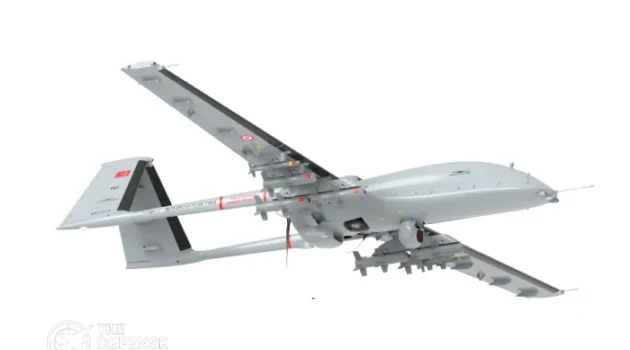
UAE-based EDGE Group and Turkish drone manufacturer Baykar have signed agreements to integrate Al Tariq precision-guided munitions onto the Akıncı combat drone. The move strengthens Türkiye-UAE defense cooperation while expanding the Akıncı UAV’s long-range strike capability with modular precision weapons.
EDGE And Baykar Advance Akıncı Combat Drone Integration
The Al Tariq guided munitions integration program for the Akıncı combat drone marks another step in expanding precision strike options for one of Türkiye’s most capable unmanned aerial systems.
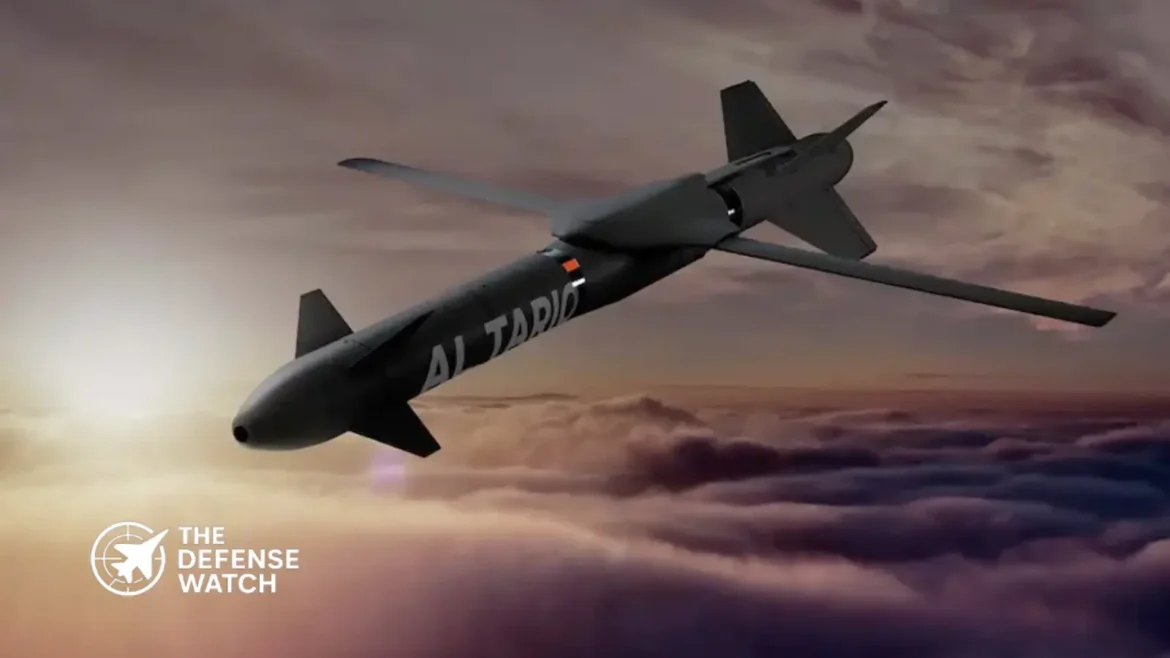
EDGE Group announced that its HALCON subsidiary signed agreements with Baykar to integrate the Al Tariq family of precision-guided munitions onto the Bayraktar Akıncı unmanned combat aerial vehicle (UCAV). The announcement highlights growing defense cooperation between the United Arab Emirates and Türkiye as both countries seek to strengthen indigenous aerospace and weapons manufacturing capabilities.
The integration effort focuses on enabling the Akıncı platform to deploy Al Tariq precision-guided bombs in multiple operational configurations. The munition family is designed for high-accuracy strikes against fixed and semi-mobile targets while allowing stand-off engagement ranges.
Baykar’s Akıncı UAV has become a flagship Turkish unmanned combat platform, capable of carrying a larger payload and operating at higher altitudes than the Bayraktar TB2 drone. Integrating Al Tariq weapons broadens the aircraft’s compatibility with international precision-guided weapon systems and may improve export attractiveness for operators seeking modular payload flexibility.
What The Al Tariq Integration Means
The Al Tariq system, developed by HALCON under EDGE Group, converts conventional gravity bombs into precision-guided munitions through the use of guidance kits equipped with GPS, INS, and optional infrared seekers.
The weapon family includes different variants tailored for various operational requirements, including extended-range strike missions. Depending on configuration, Al Tariq munitions can engage targets at significant stand-off distances while reducing aircraft exposure to enemy air defenses.
For Baykar, integration of the Al Tariq guided munitions onto the Akıncı combat drone provides several operational advantages:
- Expanded precision strike capability
- Greater compatibility with non-Turkish weapons
- Increased export market flexibility
- Enhanced payload diversity for customers
- Potential interoperability with Gulf defense partners
The agreement also reflects a broader trend in the unmanned systems market, where UAV manufacturers increasingly seek open-architecture payload integration to meet diverse customer requirements.
Growing Türkiye-UAE Defense Cooperation
The partnership between EDGE and Baykar comes amid steadily improving strategic and economic relations between Türkiye and the UAE.
In recent years, both countries have increased cooperation across aerospace, defense technology, autonomous systems, and advanced manufacturing sectors. Defense-industrial collaboration has become a particularly important area as regional powers invest heavily in domestic production and export-oriented military technology.
The Akıncı combat drone itself has emerged as one of Türkiye’s most advanced unmanned platforms. Developed for intelligence, surveillance, reconnaissance, and strike missions, the twin-engine UAV can carry air-to-ground missiles, smart bombs, electronic warfare payloads, and radar systems.
Unlike lighter tactical drones, the Akıncı is positioned closer to a high-end MALE (Medium Altitude Long Endurance) combat UAV. The platform is capable of operating at high altitudes for extended periods while carrying substantial payloads across multiple hardpoints.
By integrating Al Tariq munitions, Baykar continues expanding the aircraft’s mission adaptability. That flexibility could become increasingly important as export customers seek multi-role UAV solutions capable of integrating locally preferred weapons.
Strategic Implications For Regional Defense Markets
The integration agreement carries implications beyond technical compatibility.
Middle Eastern defense markets are increasingly prioritizing indigenous production, sovereign supply chains, and regional defense partnerships. The EDGE-Baykar cooperation aligns with this broader trend by combining Turkish UAV expertise with Emirati precision weapons development.
The agreement may also strengthen the competitive position of both companies in international drone and guided munition export markets. Many countries evaluating UAV acquisitions now consider not only aircraft performance, but also payload flexibility, logistics integration, and weapons compatibility.
For EDGE Group, partnering with Baykar provides access to one of the fastest-growing combat drone ecosystems globally. For Baykar, cooperation with Gulf defense firms can support broader market access in the Middle East and beyond.
The move also reflects the increasing convergence between unmanned systems and precision-guided weapons development. Modern UAV operators are demanding scalable strike capabilities that can adapt to different mission environments without requiring entirely new platforms.
Akıncı’s Expanding Weapons Ecosystem
Baykar has steadily expanded the Akıncı’s weapons integration portfolio since the drone entered service. The UAV has previously demonstrated compatibility with Turkish-made cruise missiles, air-to-ground missiles, smart munitions, and electronic warfare systems.
Adding the Al Tariq family further diversifies that ecosystem and supports the platform’s positioning as a flexible strategic strike UAV.
The integration may also support future collaborative programs between Turkish and Emirati defense firms in areas such as:
- Autonomous systems
- Smart weapons
- AI-enabled targeting
- ISR payloads
- Multi-domain battlefield networking
As demand for advanced unmanned combat systems continues growing worldwide, partnerships that combine airframe expertise with precision-guided weapon development are likely to become more common.
Executive Summary:
Baykar has signed an agreement to export its unmanned fighter jet to Indonesia, marking a significant step in Turkey’s defense export strategy. The deal highlights growing demand for advanced UAV capabilities and signals deeper Ankara–Jakarta defense cooperation. It also positions Turkey as a rising competitor in the global high-end drone market.
Baykar Unmanned Fighter Jet Deal Signals Strategic Expansion
The Baykar unmanned fighter jet deal with Indonesia underscores Turkey’s accelerating push into high-end UAV exports and reflects Jakarta’s effort to modernize its air combat capabilities.
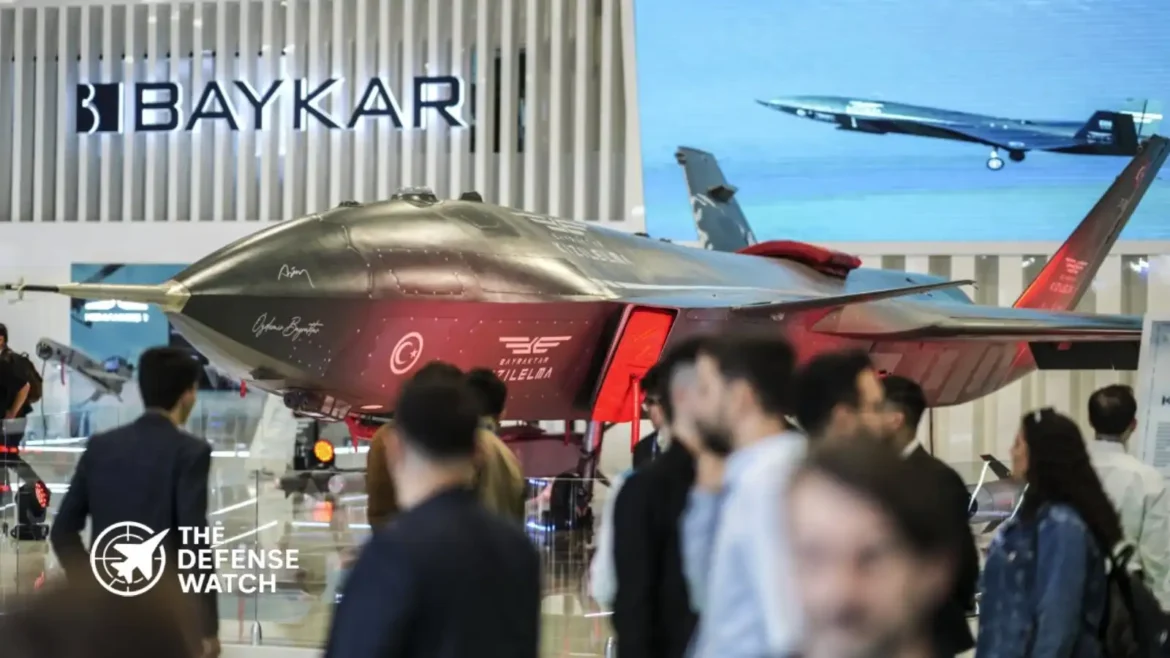
Baykar has reached an agreement with Indonesia for the sale of its next-generation unmanned combat aircraft, widely understood to be linked to the Kizilelma program. While financial details and delivery timelines remain undisclosed, the agreement represents one of the most advanced UAV export moves by Turkey to date.
The deal builds on a broader defense relationship between the two countries, which has expanded in recent years across naval platforms, armored vehicles, and aerospace collaboration.
Advancing The Kizilelma Unmanned Fighter Concept
At the center of the agreement is Baykar’s Kizilelma, a jet-powered unmanned combat aircraft designed for air-to-air and air-to-ground missions. Unlike traditional UAVs such as the Bayraktar TB2, Kizilelma is intended to operate in contested environments, including alongside manned fighter aircraft.
The platform is expected to feature:
- High subsonic or near-supersonic speed
- Reduced radar cross-section characteristics
- Compatibility with short-runway or carrier operations
- Advanced autonomy and AI-assisted mission systems
From an operational standpoint, this moves Turkey beyond tactical drones into the emerging category of unmanned fighter aircraft, an area also being explored by the United States, China, and Russia.
Analysis:
This deal reflects a shift in UAV demand from surveillance and strike roles toward multi-role combat systems. Countries like Indonesia are not just buying drones for counterinsurgency, but for peer-level deterrence and airpower augmentation.Indonesia’s Modernization Drive And Strategic Needs
For Indonesia, the Baykar unmanned fighter jet deal aligns with its broader military modernization goals. The Indonesian Air Force has been working to upgrade its fleet amid rising regional competition and growing operational demands across its vast archipelago.
Jakarta faces several challenges:
- Monitoring and securing expansive maritime zones
- Responding to gray-zone activities in contested waters
- Enhancing deterrence without the high cost of large fighter fleets
Unmanned fighter aircraft offer a cost-effective complement to manned platforms, enabling persistent presence and reduced risk to pilots.
Analysis:
Indonesia’s interest in advanced UAVs reflects a pragmatic approach. Rather than relying solely on expensive fourth- or fifth-generation fighters, Jakarta is diversifying its airpower mix with unmanned systems that can scale more quickly and operate flexibly.Turkey’s Rising Position In The Global UAV Market
The agreement further strengthens Turkey’s position as a major exporter of unmanned systems. Over the past decade, Baykar has gained international recognition through platforms like the Bayraktar TB2, which has been exported to multiple countries and used in various conflicts.
With Kizilelma, Turkey is attempting to move up the value chain.
Key implications include:
- Entry into the high-end UAV segment
- Increased competition with U.S., Chinese, and Israeli systems
- Expansion of defense diplomacy in Asia
Analysis:
Turkey’s strategy combines affordability, operational credibility, and fewer export restrictions compared to Western suppliers. This creates a competitive edge, particularly among countries seeking advanced capabilities without political constraints.Broader Geopolitical And Industrial Impact
The Baykar unmanned fighter jet deal also carries geopolitical weight. It strengthens ties between Turkey and Indonesia, two influential regional players with growing defense industries.
Potential long-term outcomes include:
- Technology transfer and co-production opportunities
- Expanded defense-industrial collaboration
- Greater Turkish presence in Southeast Asian defense markets
For Ankara, the deal supports its ambition to become a global defense exporter and reduce reliance on foreign technology. For Jakarta, it offers access to emerging capabilities that could reshape its airpower doctrine.
Operational Implications For Future Air Combat
The introduction of unmanned fighter aircraft like Kizilelma could alter how air forces approach combat operations.
Key trends include:
- Human-machine teaming in air combat
- Increased use of autonomous strike platforms
- Lower-cost force multiplication
Analysis:
If successfully deployed, systems like Kizilelma may reduce the dominance of traditional fighter fleets by enabling distributed, resilient air operations. This could be particularly relevant in regions with complex geography, such as Southeast Asia.Conclusion
The Baykar unmanned fighter jet deal with Indonesia marks a notable in the evolution of global UAV markets. It highlights the growing demand for advanced unmanned combat systems and reinforces Turkey’s emergence as a key defense exporter.
As countries seek cost-effective ways to enhance airpower, deals like this are likely to become more common, reshaping both procurement strategies and the future of aerial warfare.
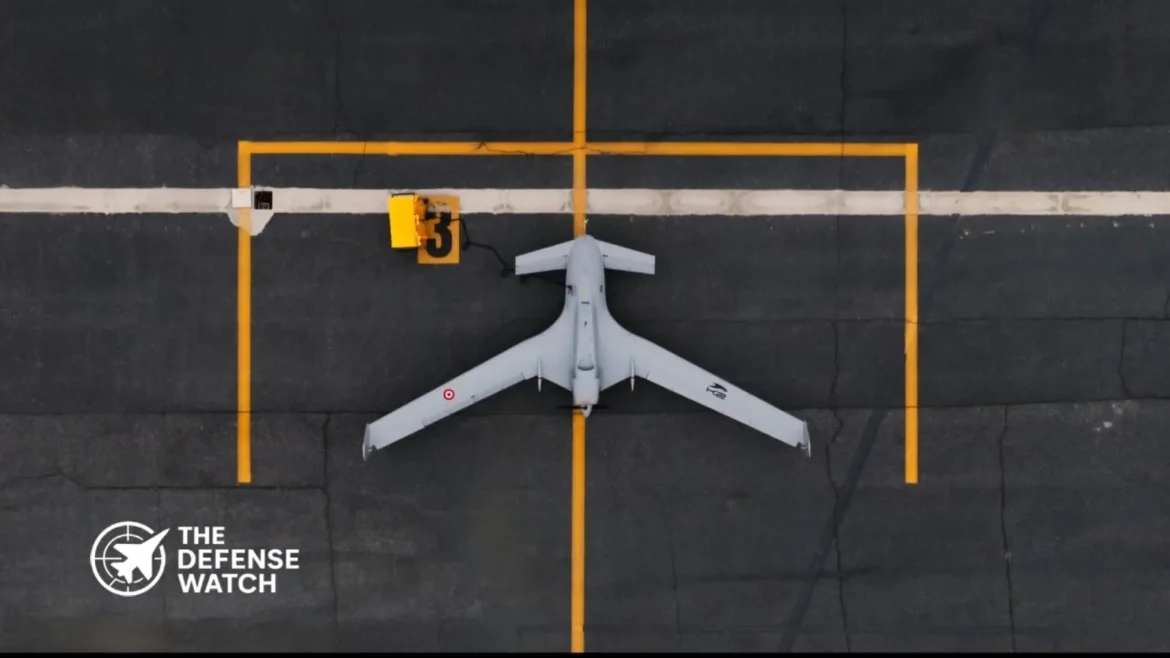
- Baykar has unveiled the AI powered K2 kamikaze drone designed for long range precision strike missions.
- The drone reportedly features autonomous navigation, AI based targeting, and swarm operation capability.
- The system is designed to strike targets more than 2,000 kilometers away while carrying a heavy warhead.
- K2 can operate from short or unprepared runways, expanding launch flexibility for dispersed operations.
- The platform reflects Turkey’s continued push into AI enabled unmanned strike warfare.
Baykar K2 Kamikaze Drone Expands Turkey’s AI Enabled Strike Arsenal
The AI powered K2 kamikaze drone has been introduced by Turkish defense company Baykar as part of the country’s growing portfolio of autonomous strike systems. The new platform is designed to conduct long range precision attacks using artificial intelligence assisted navigation, target recognition, and autonomous mission capabilities.
Baykar revealed the system as part of its expanding unmanned warfare ecosystem, which already includes combat drones such as the Bayraktar TB2 and the heavier AKINCI unmanned combat aerial vehicle.
The K2 represents a shift toward larger, longer range loitering munitions capable of conducting deep strike missions against high value targets.
The Big Picture
Autonomous loitering munitions have become a defining feature of modern warfare. Conflicts in Ukraine, the Middle East, and the Caucasus have demonstrated the growing role of expendable strike drones capable of penetrating defenses and striking critical infrastructure.
Nations are now developing larger and more sophisticated systems that combine the persistence of UAVs with the destructive effect of cruise missiles.
Turkey has emerged as one of the leading exporters and developers of unmanned systems in the past decade. Baykar alone generated roughly $1.8 billion in exports in recent years and has delivered UAV systems to dozens of countries, strengthening Turkey’s position in the global drone market.
The introduction of the AI powered K2 kamikaze drone reflects Ankara’s continued investment in autonomous strike technologies designed for both domestic defense and international export markets.
What’s Happening
Baykar has unveiled the K2 kamikaze drone, a large loitering munition designed to conduct autonomous long range strike missions.
According to reported specifications, the drone is capable of striking targets at distances exceeding 2,000 kilometers while carrying a warhead of roughly 200 kilograms. The platform has a maximum takeoff weight around 800 kilograms and can operate for extended periods before engaging its target.
The drone incorporates artificial intelligence based systems that allow it to:
• Navigate using visual terrain recognition
• Identify and track targets autonomously
• Coordinate with other drones during swarm missionsThe system is designed to take off from short or unprepared runways, allowing forces to launch missions from dispersed locations rather than fixed air bases.
Baykar says the AI architecture allows the drone to maintain mission capability even in contested electronic warfare environments where GPS signals may be degraded.
Why It Matters
The AI powered K2 kamikaze drone represents a notable step in the evolution of loitering munition technology.
Early loitering munitions typically carried small warheads and operated within relatively short ranges. Systems like the K2 combine extended range, heavier payloads, and AI assisted targeting, moving the concept closer to a reusable autonomous strike aircraft.
This capability offers several operational advantages:
First, the long range allows forces to strike strategic targets deep behind enemy lines without deploying manned aircraft.
Second, autonomous navigation and AI target recognition reduce reliance on constant operator control.
Third, swarm coordination allows multiple drones to overwhelm air defense systems through saturation tactics.
These features align with broader trends in military modernization, where autonomous systems increasingly support precision strike missions.
Strategic Implications
Turkey’s continued expansion into AI enabled drone warfare has clear implications for regional and global security dynamics.
The country has already demonstrated the battlefield impact of UAV systems through deployments in Syria, Libya, and Nagorno Karabakh.
Adding longer range autonomous strike drones could expand Turkey’s ability to conduct deep precision strikes while limiting risk to pilots and high value aircraft.
For NATO, Turkey’s drone industry provides an additional source of advanced unmanned systems within the alliance. At the same time, Ankara’s export policy means these technologies may appear in multiple regional security environments.
The K2 also signals a broader shift toward autonomous strike networks where UAVs, loitering munitions, and AI enabled sensors operate together.
Competitor View
Other major powers are pursuing similar capabilities.
Iran has fielded long range loitering munitions such as the Shahed 136, which have been widely used in the Ukraine conflict.
Israel pioneered the concept with systems such as the Harop loitering munition, designed to attack radar systems and air defense networks.
China and Russia are also investing heavily in autonomous swarm drones and AI assisted strike platforms.
The emergence of systems like the AI powered K2 kamikaze drone suggests that long range loitering munitions will remain a key focus area in the evolving unmanned warfare landscape.
What To Watch Next
Several developments will determine the operational impact of the K2 system.
First, flight testing and operational trials will reveal the platform’s true performance in contested electronic warfare environments.
Second, integration with existing Turkish UAV platforms and command networks could enable coordinated drone operations.
Third, export interest will likely emerge quickly given Baykar’s established international customer base.
Countries already operating Baykar drones may view the K2 as a complementary deep strike capability.
Capability Gap
The K2 system appears designed to address a key operational challenge faced by many militaries: conducting long range precision strikes without relying on expensive cruise missiles or risking manned aircraft.
Loitering munitions fill the gap between traditional UAV surveillance platforms and high cost missile systems.
However, systems like the K2 also face limitations. Large drones remain vulnerable to layered air defense networks that combine radar, missiles, and electronic warfare systems.
Operational effectiveness will therefore depend on tactics such as swarm deployment, electronic warfare integration, and coordinated strikes.
The Bottom Line
The AI powered K2 kamikaze drone highlights Turkey’s growing ambition to lead the next generation of autonomous long range strike systems.
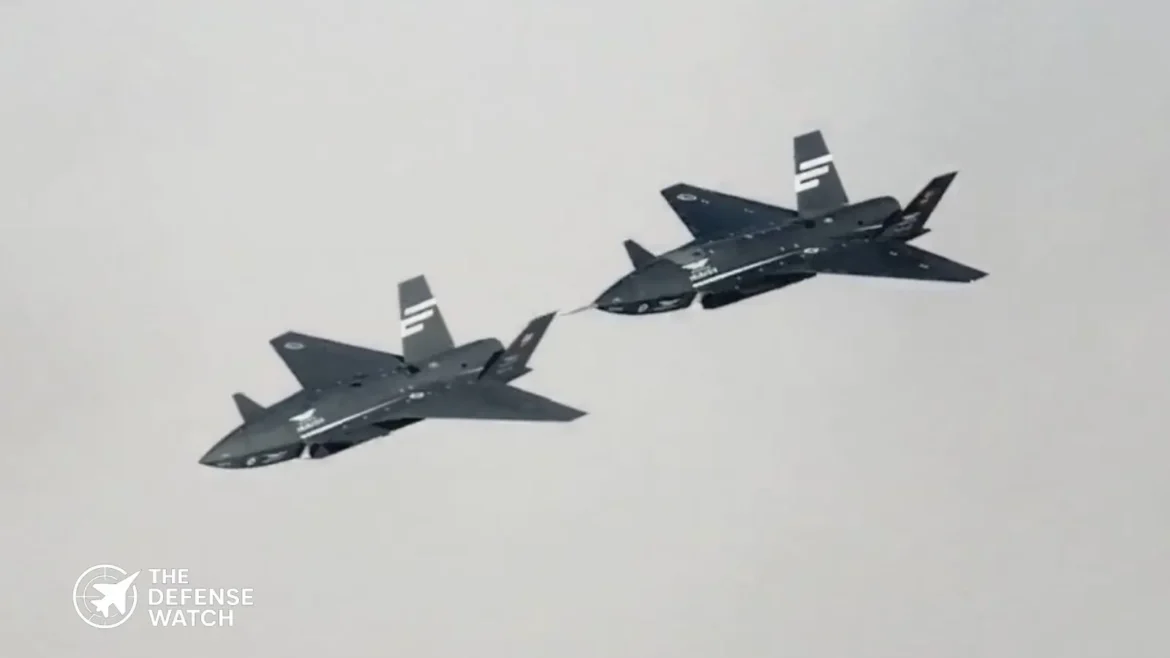
Turkiye’s Bayraktar Kizilelma unmanned fighter jets have completed the world’s first fully autonomous close-formation flight by jet-powered combat aircraft, Baykar announced on December 28, 2025. This milestone underscores a new level of autonomous capability for unmanned combat aircraft and advances Turkeys role in next-generation aerial warfare.
(adsbygoogle = window.adsbygoogle || []).push({});The test was conducted at the Akinci Flight Training and Test Center in Corlu, northwestern Turkiye. Two Kizilelma prototypes, designated PT3 and PT5, took off in sequence and, once airborne, executed synchronized maneuvers while maintaining close formation without any human input. The flight used smart fleet autonomy algorithms developed by Baykar’s engineering team.
According to Baykar, this is the first time unmanned fighter-class aircraft have flown in close formation autonomously, a role that has traditionally required highly trained human pilots and complex coordination.
Autonomous Combat Patrol Tested
In addition to formation flying, the Kizilelma jets carried out a Combat Air Patrol mission along a pre-defined route using fleet autonomy software. This demonstrated the system’s potential for autonomous air defence tasks that are core elements of modern air combat operations.
(adsbygoogle = window.adsbygoogle || []).push({});Baykar executives described the achievement as a world first, noting the development of indigenous autonomy capabilities. The company has previously highlighted export agreements for its unmanned systems, including TB2 and Akinci models.
Strategic and Industry Context
The Kizilelma program represents a shift in unmanned combat aviation. Unlike traditional ISR or light strike drones, Kizilelma is designed for contested airspace roles, including air-to-air engagements and joint operations with manned aircraft.
In a recent related milestone, Kizilelma was reported to have achieved a verified beyond-visual-range air-to-air kill using a domestically developed Gokdogan missile and an Aselsan AESA radar during tests over the Black Sea.
The ability to fly formation autonomously could support future scaling of unmanned fleets in combat roles and reduce reliance on direct human pilot control, aligning with global trends toward autonomous and AI-driven systems in defense aviation.
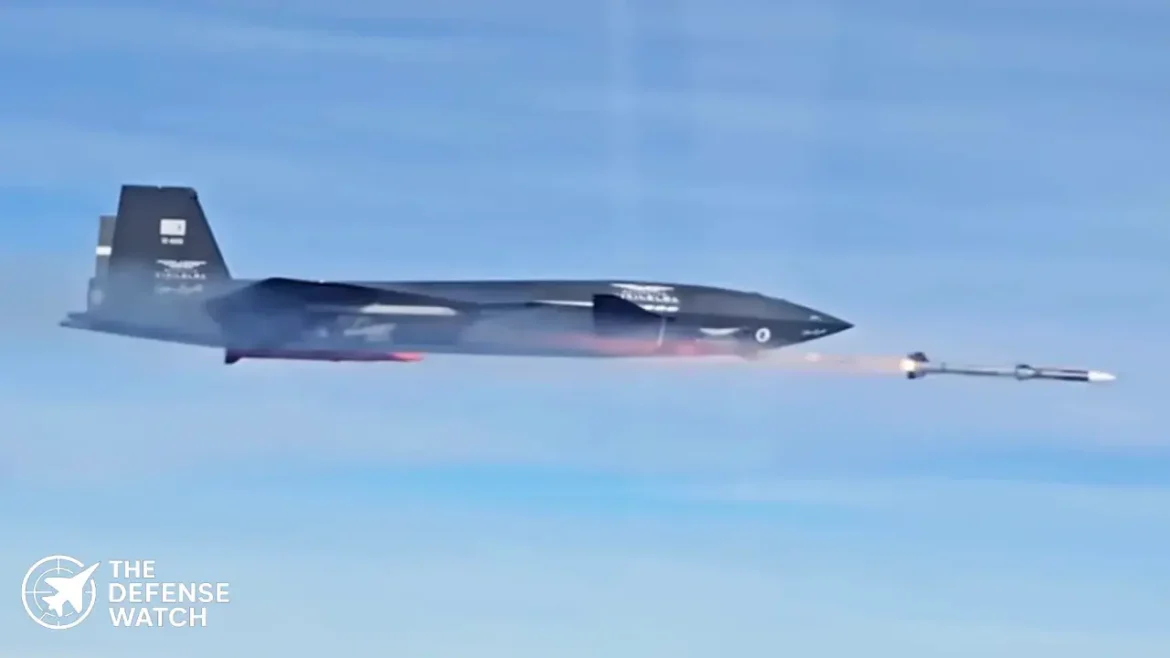
Turkey’s Kizilelma Drone Fires Radar-Guided Missile in Milestone Test
Turkey achieved a notable milestone in unmanned combat aviation when its Kizilelma UCAV successfully fired a radar-guided air-to-air missile at a target drone. The test, conducted alongside Turkish Air Force F-16s, marked the first known instance of a UCAV launching a radar-guided missile in a live-fire scenario, highlighting Turkey’s advancing aerial combat technology.
Background on Kizilelma and Turkish UAV Development
Developed by Baykar, the Kizilelma is a fighter-like unmanned combat air vehicle designed for air superiority missions. With stealth features, supersonic capability, and compatibility with advanced missiles, the Kizilelma represents Turkey’s push to enhance its autonomous and semi-autonomous aerial warfare capabilities. Previous attempts at arming drones with air-to-air weapons have largely focused on infrared-guided missiles, such as the U.S. MQ-1 Predator and MQ-9 Reaper programs, but the Kizilelma’s radar-guided engagement signals a new step forward.
Details of the Live-Fire Test
During the test, the PT-5 variant of Kizilelma took off with four F-16s, one of which acted as a safety chase plane. An Akinci high-altitude UCAV also participated in chase duties. Equipped with two Gökdoğan air-to-air missiles, one inert and one live, the Kizilelma successfully engaged and destroyed a target drone. Baykar released video footage showing the missile launch and subsequent target impact.
While details remain limited, questions linger regarding the level of assistance provided by crewed fighter aircraft in targeting and engagement. Analysts note that external missile carriage slightly compromises the UCAV’s radar signature reduction but does not diminish the operational significance of the demonstration.
Expert Perspectives
Defense analysts highlight that integrating radar-guided air-to-air missiles on UCAVs could redefine future aerial combat. “This test demonstrates Turkey’s capacity to expand drone roles beyond surveillance and strike missions to potential air-to-air engagements,” noted Thomas Newdick, a military aviation analyst.

The Kizilelma test may also influence regional UAV development trends, prompting other nations to explore similar capabilities for force multiplication in contested airspace.
Implications and Next Steps
Turkey’s successful demonstration reinforces its growing domestic defense industry and unmanned combat expertise. The Kizilelma could eventually operate alongside manned aircraft in mixed formations, providing enhanced strike and air defense flexibility. Further tests and operational deployment are expected to refine targeting autonomy and multi-missile engagement capability.
As UAV technology continues to evolve, the Kizilelma program underscores Turkey’s commitment to advancing unmanned combat operations and shaping future air warfare doctrines.

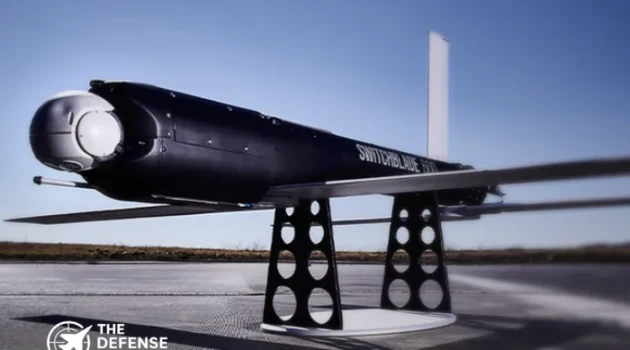
In a flight test conducted earlier in 2025 and announced on 29 November 2025, Turkish UAV manufacturer Baykar successfully demonstrated the mid-air deployment of a compact FPV drone from its Bayraktar Kalkan VTOL. According to Baykar’s official channels, the Kalkan operated as an airborne “mothership,” launching a small FPV kamikaze drone mid-sortie — a milestone showcasing the growing maturity of layered unmanned aerial systems.
Background: Drone-on-Drone Launch — A Growing Trend
The concept of a larger unmanned aerial vehicle acting as a “carrier” for smaller drones has gained traction globally, especially as militaries explore cost-effective, distributed strike architectures. In this model, a long-endurance UAV carries small loitering munitions or reconnaissance drones and deploys them deep in contested environments — reducing the risk to expensive platforms while maximizing tactical flexibility. The Kalkan VTOL’s recent success underscores this shift.
The Bayraktar Kalkan VTOL had already earned recognition for its hybrid lift-cruise design, combining vertical-takeoff electric motors with a gasoline cruise engine. This allows operation from compact sites — as small as 20 × 20 meters — without runways or catapults. Its medium-tactical endurance, internal payload capacity, and hybrid configuration made it a strong candidate for expanded roles beyond reconnaissance.
Test Details: From Launch to Strike
During the demonstration, the Kalkan — configured with the long-endurance carrier profile — released a compact FPV drone from its cargo. The released drone, identified as a Skydagger FPV kamikaze drone, underwent two distinct release profiles:
- Controlled drop and recovery — where the FPV separated cleanly, stabilized, and completed a safe landing.
- Dive-attack profile — where the FPV transitioned into a direct strike against a fixed ground target.
The dual-mode release demonstrated that Kalkan can function both as a persistent ISR (intelligence, surveillance, reconnaissance) node and as an aerial weapons platform — delivering small munitions or effectors while remaining outside the likely engagement zone of front-line air defenses.
According to specifications, the Kalkan VTOL features a roughly 5-meter wingspan, about 1.5 meters fuselage length, and uses a hybrid propulsion system combining four electric lift motors with a gasoline cruise engine. Its take-off weight falls within the 30–50 kg class, with an internal payload capacity around 3 kg (typically for EO/IR sensors, laser designators, etc.). In previous trials, it demonstrated up to eight hours of flight endurance and a service ceiling above 14,000 ft; line-of-sight data link range varies between roughly 70 and over 100 km depending on antennas.
On the FPV side, Skydagger’s compact attack drones — in their 7-, 10- and 15-inch variants — are reportedly able to carry warheads of roughly 2–5 kg, sustain flight for 12–20 minutes, reach ranges up to 10 km, and travel at speeds of 120–140 km/h.
Strategic Implications: From ISR to Strike, From Motherships to Swarms
Enhanced Tactical Flexibility
By enabling a relatively long-endurance VTOL UAV to act as a deployer for compact FPV drones, the Kalkan test expands mission profiles significantly. Rather than relying solely on satellites, ground launchers, or runway-based drones, militaries can now consider compact, flexible platforms capable of insertion, surveillance, and strike — all within a single sortie. This reduces risk to high-value assets and improves operational flexibility, especially in contested or runway-denied environments.
Layered Unmanned Architectures
The demonstration signals a shift toward layered unmanned systems — combining long-range carriers with expendable, small drones for reconnaissance or strike. As such, forces could employ a mixture of “mothership” UAVs and swarming FPV drones to overwhelm air defenses, saturate targets, or conduct persistent surveillance without exposing costly manned platforms or even larger UCAVs.
Industrial Maturation and Export Potential
For Baykar and its partner drone firms (e.g., Skydagger), the test underlines the progress of Turkish domestic drone industry toward mature, integrated systems. As the company continues refining hybrid-propulsion VTOL carriers and compact FPV strike drones, this capability could appeal to foreign buyers — particularly in regions where runway infrastructure is limited or contested. Further, this reflects Türkiye’s growing role in shaping drone-based doctrines and defense export potential.
What Comes Next
The successful FPV launch from Kalkan is likely just the beginning. As the technology matures, we may see:
- Multi-drone sorties, where a single Kalkan carries and releases several FPV drones, enabling swarm-style attacks or mass surveillance.
- Integration of more capable payloads — perhaps heavier loitering munitions or sensor packages, expanding Kalkan’s role beyond simple ISR to a more active strike and suppression platform.
- Doctrinal adoption by military forces seeking affordable, modular, and flexible force-multipliers — particularly in contested environments or conflicts characterized by anti-access/area denial (A2/AD).
- Export deals, especially with countries lacking large-runway infrastructure or operating in rugged terrain.
Conclusion
The mid-air deployment of an FPV drone from the Bayraktar Kalkan VTOL represents a major milestone in unmanned aerial systems — transitioning the UAV from a pure reconnaissance asset into a versatile airborne carrier capable of delivering payloads deep into contested areas. As layered drone architectures continue to evolve, this test highlights how relatively low-cost, hybrid-propulsion VTOL drones and small strike UAVs can combine to deliver flexible, scalable, and effective capabilities. For militaries and defense planners worldwide, such developments may soon reshape how they think about air-dominance, precision strike, and unmanned operations — making airborne “motherships” a key component of future drone-driven doctrines.
