
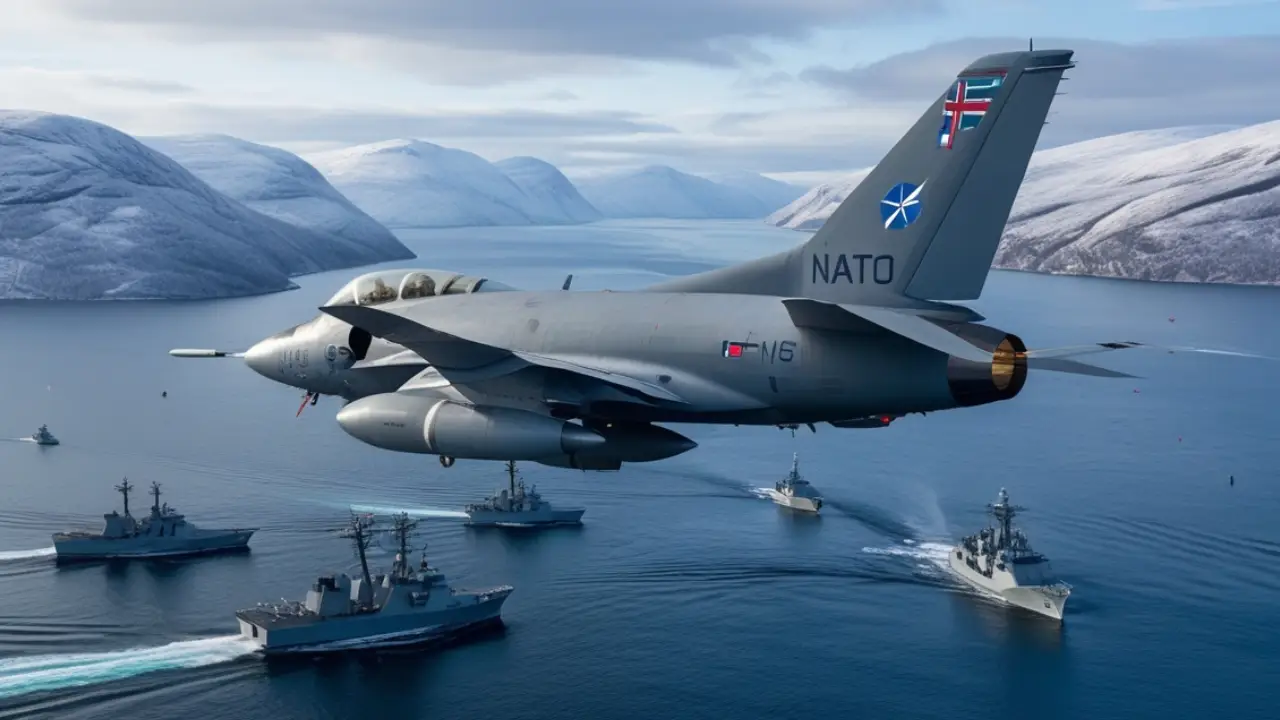
In 2025, NATO intensified its emphasis on airpower with a series of large-scale joint air and missile defense exercises. These exercises—ranging from integrated live-fire maneuvers to strategic reconnaissance deployments—highlight the Alliance’s commitment to maintaining air superiority amid evolving threats. This article explores the key exercises conducted and their significance for NATO’s global air dominance.
Key NATO Air Exercises in 2025
Formidable Shield (May 1–10, Northern Norway)
NATO conducted one of its largest at-sea live-fire exercises, Formidable Shield, across the North and Norwegian Seas. Hosted by the U.S. 6th Fleet and STRIKFORNATO, the drills focused on integrated air and missile defense (IAMD) capabilities. Around 2,500 personnel from ten countries practiced joint operations using NATO command-and-control structures.
Lively Sabre (Part of Swift Response 25, Southern Finland)
Under the broader Swift Response 25 within the Defender series, Lively Sabre simulated realistic airfield seizure and recapture scenarios. Finnish and Polish forces trained to defend and retake strategic airfields, mirroring potential threats posed by Russian aggression.
Atlantic Trident 25 (June–July, Finland)
This exercise saw the deployment of NATO’s RQ-4D Phoenix remotely piloted ISR aircraft to Finland—the first operation of its kind on Finnish soil. The deployment significantly enhanced situational awareness and interoperability between Finnish and NATO forces.
Strategic Significance of NATO’s Air Drills
Preserving Air Superiority & Integrated Defense
Exercises like Formidable Shield underscore NATO’s ability to neutralize aerial and missile threats through coordinated force projection—a critical component in sustaining air superiority.
Enhancing Interoperability & Deterrence
Joint drills not only refine tactical readiness but also strengthen interoperability across different platforms and national forces. These capabilities boost deterrence by presenting a unified, credible defense posture.
Leveraging New Technologies
The deployment of advanced ISR systems like the RQ-4D Phoenix reflects NATO’s increasing reliance on intelligence-driven operations to achieve air superiority in complex environments
Broader Context & Analysis
While these exercises bolster NATO’s deterrent capacity, they also signal a shift in airpower dynamics. Rapid asset deployment, live-fire readiness, and distributed ISR highlight NATO’s adaptability amid strategic uncertainty. As air and missile threats become more sophisticated, these drills ensure the Alliance stays ahead of adversaries and preserves dominance in the air domain.
Conclusion
NATO’s 2025 air exercises—from Formidable Shield and Lively Sabre to Atlantic Trident 25—demonstrate the Alliance’s focus on integrated defense, technological edge, and regional agility. As airspace competition intensifies, NATO’s continued investment in joint airpower exercises will be vital in maintaining global air superiority.
FAQs
Formidable Shield is NATO’s large-scale live-fire exercise that focuses on integrated air and missile defense, involving naval, air, and land forces in realistic combat scenarios.
Lively Sabre simulated the rapid recapture of airfields and involved Finnish and Polish forces, enhancing joint response to potential incursions or siege scenarios.
The deployment strengthened NATO’s ISR capabilities by providing real-time surveillance, improving situational awareness, and reinforcing Finland’s defense posture.
They build interoperability, validate defense doctrines, integrate command structures, and ensure readiness to respond swiftly to air and missile threats.
They reflect NATO’s strategic shift toward forward defense, rapid mobilization, technological integration, and deterrence under a more contested security environment.
Get real time update about this post category directly on your device, subscribe now.

34 comments
[…] Global Implications The New Space Race: Military Satellite Dominance – U.S., Russia &… Forging Air Dominance: How NATO’s 2025 Joint Air Exercises Reinforce Global… SUBSCRIBE […]
[…] Strategically, the J-36 seems intended as a next-generation heavy stealth tactical aircraft for the People’s Liberation Army Air Force (PLAAF), possibly serving roles beyond pure air superiority: […]
[…] Projects: The J-50 seems configured for medium weight roles; possibly more agile, with roles in air superiority or multi-role missions where stealth is primary. The larger J-36 – heavier, trijet, perhaps more […]
[…] trends where legacy fighters are being retrofitted to remain viable in environments increasingly dominated by stealth aircraft and integrated air […]
[…] Pentagon’s Ammo Crunch: Stockpiles Strained by Global Conflicts Amid Surge in… Forging Air Dominance: How NATO’s 2025 Joint Air Exercises Reinforce Global… SUBSCRIBE […]
[…] Implications How the U.S. Navy Is Training Sailors to Counter Drone-Ship Threats—and… Forging Air Dominance: How NATO’s 2025 Joint Air Exercises Reinforce Global… SUBSCRIBE […]
[…] Threats Global Hypersonic Arms Race Intensifies: China, India, Japan, Russia & U.S…. Forging Air Dominance: How NATO’s 2025 Joint Air Exercises Reinforce Global… China vs. U.S. Naval Expansion: Who Holds the Edge in the… SUBSCRIBE […]
[…] Cloud… Global Hypersonic Arms Race Intensifies: China, India, Japan, Russia & U.S…. Forging Air Dominance: How NATO’s 2025 Joint Air Exercises Reinforce Global… Columbia-Class Submarines Advance U.S. Nuclear Deterrence Amid Cost and Schedule Pressures […]
[…] Evolving Threats Defense Diplomacy: How Military Partnerships Shape the Global Power Balance Forging Air Dominance: How NATO’s 2025 Joint Air Exercises Reinforce Global… USCYBERCOM FY 2025 Priorities: Strengthening Infrastructure, Training, and Strategic Posture […]
[…] USCYBERCOM FY 2025 Priorities: Strengthening Infrastructure, Training, and Strategic Posture Forging Air Dominance: How NATO’s 2025 Joint Air Exercises Reinforce Global… F-35 Program in 2025: Record Deliveries Expected but Upgrade Delays Cloud… AI-Armored Cyber […]
[…] modern fighters, the F-22 stands out for its stealth, supercruise capability, and unmatched air dominance doctrine. Though produced in limited numbers, its advanced features and ceiling of performance make […]
[…] over long distances and through lossy media, building high-power quantum transmitters, and integrating quantum receivers into robust field systems are formidable engineering […]
[…] future of air dominance lies in human-machine teaming,” said a GA-ASI spokesperson. “We’re developing systems that […]
[…] as critical for enabling rapid adoption of emerging technologies, including autonomous systems, integrated air defense, and AI-driven decision support. Faster acquisition cycles also allow the services to test, refine, […]
[…] engines, long-range radars, and heavy weapons load, it provides Russia with a reliable platform for air dominance […]
[…] no longer in production, the F-22 still sets the benchmark for air dominance, excelling in supercruise performance, stealth shaping, and unmatched maneuverability. Its limited […]
[…] and nuclear strike capability make it strategically significant, while the Typhoon remains a vital NATO air superiority […]
[…] shorter-range systems from various partners, Ukraine is constructing one of the most comprehensive integrated air defense networks in […]
[…] subsonic cruise missiles face increasing vulnerability to modern integrated air defense systems. The combination of hypersonic speed, maneuverability, and depressed trajectory flight […]
[…] first-kill capability. Despite production ending in 2012, the Raptor continues to anchor high-end air dominance […]
[…] with a strong regional focus on air and missile defense systems. Other exhibitors include integrated air defense solutions from global suppliers and expanded demonstrations of unmanned systems and sensors tailored to Gulf security […]
[…] integrated air defense network, significantly enhanced through Western military assistance programs, continues to […]
[…] from well outside Iranian airspace. This capability avoids direct confrontation with Iran’s integrated air defenses, including systems like the Russian-supplied S-300 or indigenous equivalents that have been […]
[…] multi-role radar aims to boost situational awareness, air dominance, and mission effectiveness in complex threat environments. It represents a significant upgrade to […]
[…] conflicts increasingly rely on integrated air defense networks, digital command systems, and networked sensors. The EA-37B electronic warfare aircraft is […]
[…] threats, especially as fourth-generation fighters are called on to operate closer to sophisticated integrated air defenses. Planners see electronic warfare integration as critical to survivability and mission […]
[…] radar acquisition comes amid a broader regional focus on improving early warning and integrated air defense networks. Ground-based multi-mission radars like the GM400α and GM200 MM/A form a core layer in […]
[…] guidance radars. By degrading detection and tracking, the system reduces the effectiveness of integrated air defense networks and increases survivability for strike […]
[…] maintains a highly integrated air defense and command network, combining ground-based sensors, airborne early warning aircraft, and […]
[…] counter drone tactics, including electronic warfare, mobile fire teams, and radar cueing from integrated air defense […]
[…] reflects lessons from the conflict in Ukraine, where precision munitions, electronic warfare, and integrated air defenses proved decisive. American military planners studied these operations closely, identifying […]
[…] Short-range rocket-launched missiles such as AGM-114R Hellfire and the Joint Air-to-Ground Missile (JAGM) typically operate at distances measured in tens of miles. The new systems aim to extend helicopter-launched strike reach to more than 200 nautical miles, giving Marines a striking option from outside many integrated air defenses. […]
[…] 26 provides valuable data on multi-national air operations, communications interoperability, and integrated air defense. These lessons directly support France’s broader strategic objectives of maintaining autonomous […]
[…] China and Russia are closely watching U.S. progress in directed energy and integrated air defense. […]