
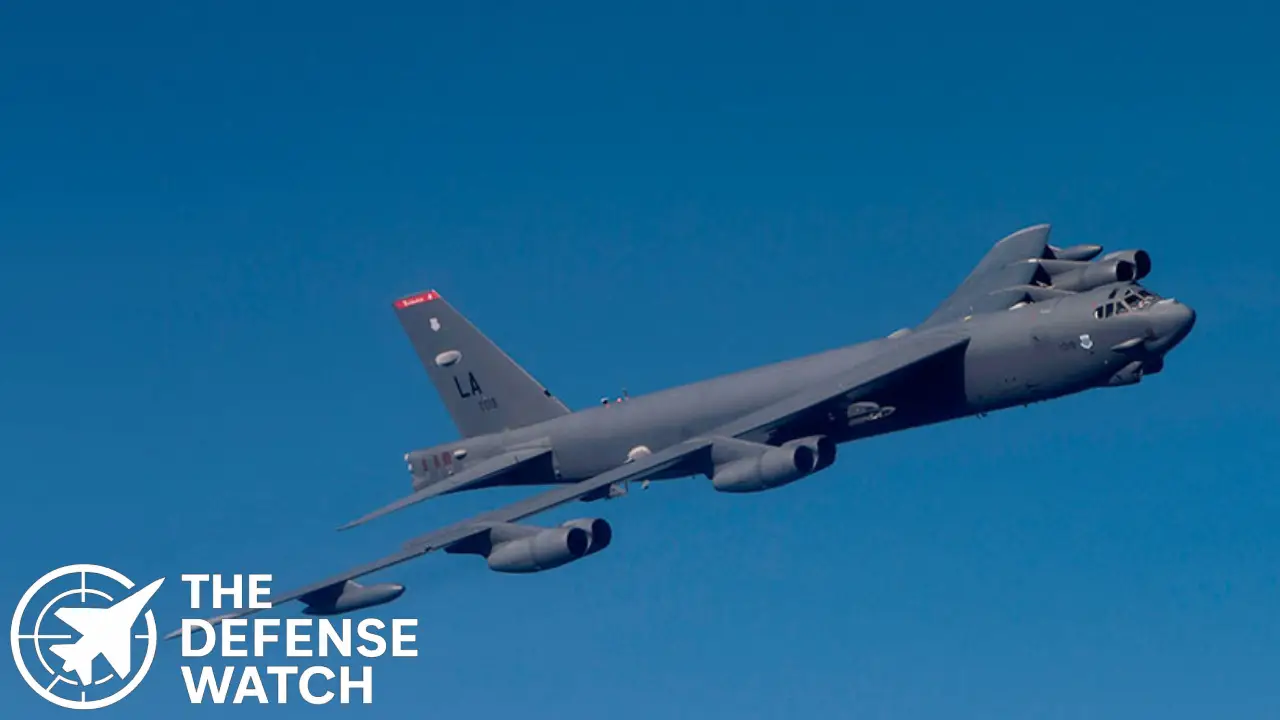
The Boeing B-52 Stratofortress, America’s enduring heavy bomber, recently celebrated 70 years of service with the U.S. Air Force. As the venerable aircraft continues to project strategic deterrence, its modernization programs—particularly radar and engine upgrades—are entering pivotal phases, albeit with notable delays.
This article examines the B-52’s continued relevance, the status of its upgrades, and the implications for its future service into the 2050s.
A Legacy of Strategic Reach
Introduced in 1955, the B-52 has remained a cornerstone of the Air Force’s long-range strike and nuclear capabilities. As of 2025, roughly 72 aircraft remain active, supported by others in storage.
Known for its large payload, long endurance, and cost-effectiveness, the Stratofortress continues to embody “peace through strength”
Radar Modernization Nears Flight Testing
The Radar Modernization Program (RMP)—which will equip B-52s with the advanced AN/APQ-188 AESA radar, improves detection, resistance to jamming, and multifunction capability. After years of schedule slips and cost growth, this milestone is now expected to enter flight testing soon.
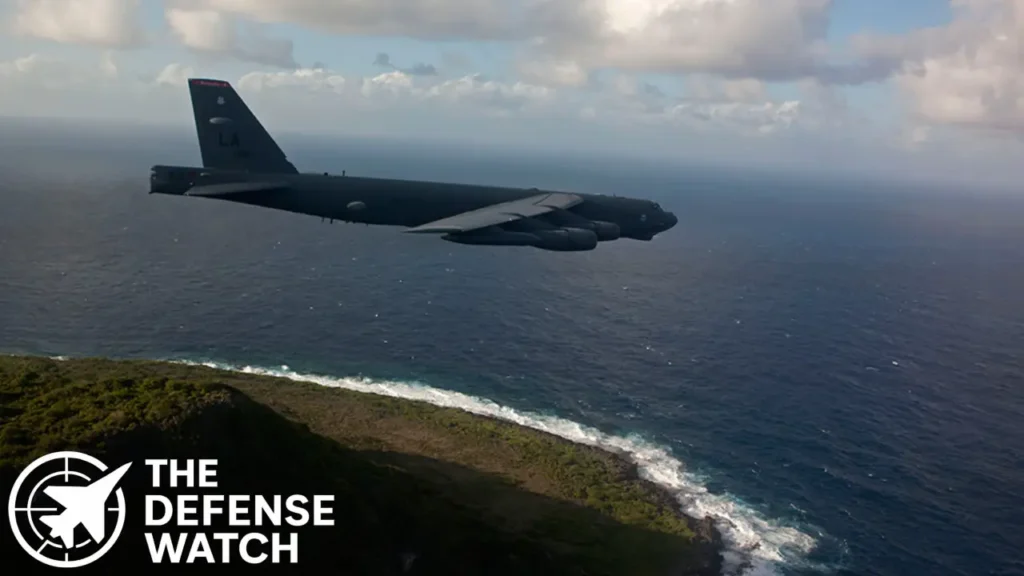
Originally targeting operational capability as early as 2027, the delays now push debut to 2028–2030.. Factors include integration challenges, environmental qualification setbacks, and Nunn-McCurdy cost breach reviews.
Engine Upgrade—Re-Engining Setbacks Continue
The Commercial Engine Replacement Program (CERP) aims to replace aging TF33 engines with modern Rolls-Royce F130 units—transforming the fleet into “B-52J” variants. However, design issues with the engine inlets have delayed progress. After digital redesign efforts, wind-tunnel testing is ongoing, and the new configuration is expected to be validated by 202.
The critical design review and initial production decision have both slipped – now anticipated for March 2028, three years behind initial plans.
Role and Relevance into the 2050s
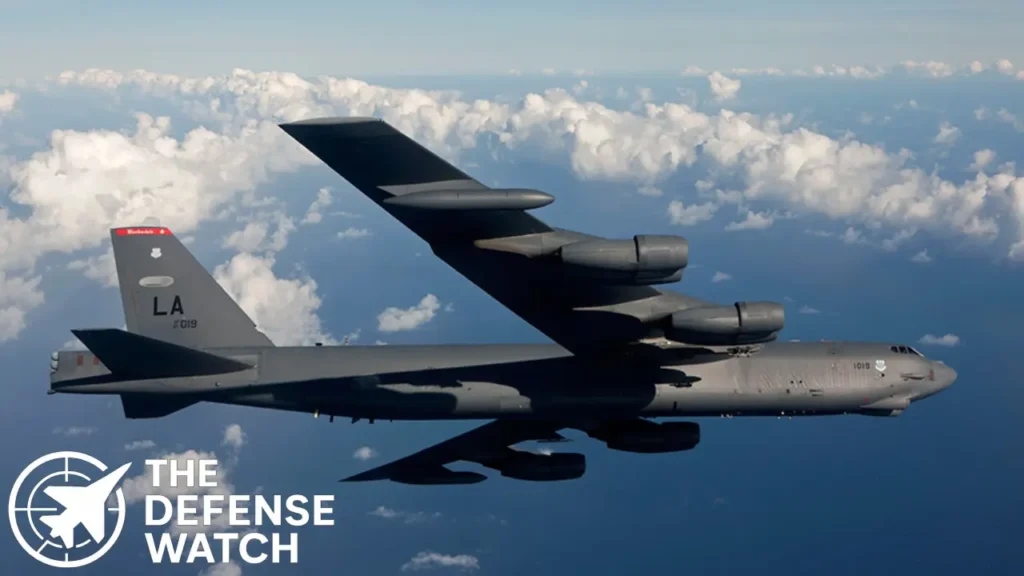
Despite modernization challenges, the B-52 remains slated to serve through the 2050s, thanks to incremental upgrades to radar, engines, avionics, and structural systems..
Its adaptability—integrating modern standoff weapons including hypersonic missiles—and robust logistics footprint make it a cost-effective workhorse well beyond its original design life.
Analysis and Context
- The B-52’s longevity underscores the U.S. Air Force’s strategy of extending proven platforms through modernization rather than costly replacements.
- The delays in critical upgrades highlight persistent challenges in modernizing legacy aircraft—especially in retrofitting advanced systems into Cold War-era designs. Yet, the commitment to keep the B-52 viable well into the 2050s reflects its unmatched payload, range, and flexibility in strategic deterrence.
FAQs
Its large payload, long range, dual nuclear/conventional capability, and cost-effective upgrades enable continued strategic utility far beyond its original life expectancy.
The AESA radar will enhance target acquisition, resolution, ground-moving-target indication, synthetic aperture radar modes, and electronic warfare resistance.
Initial testing continues. The critical engine inlet redesign testing is set to conclude by 2026, with initial production slated for around 2028.
The bomber is planned to remain in service through the 2050s, supported by ongoing modernization across avionics, weapons payloads, engines, and radar systems.
With upgrades enabling advanced standoff weapons and improved situational awareness, the B-52 will continue to serve in long-range strike, deterrence, and allied operations, complementing newer stealth bombers like the B-21.
Get real time update about this post category directly on your device, subscribe now.

40 comments
[…] test, officially designated Flight Test Other-26a (FTX-26a), featured an air-launched target over the northern Pacific Ocean, flying more […]
[…] Long-range strike / stand-off capability […]
[…] delays and cancellations have pushed back original deployment goals. For instance, a planned flight test in late FY2022/early FY2023 was delayed to allow for analysis of failures from prior […]
[…] equipment to Ukraine. The Indo-Pacific theater is also driving orders for air defense systems, long-range strike weapons, and naval platforms. According to the Stockholm International Peace Research Institute, […]
[…] Kupol personnel in assembly and technical training. They also traveled to Chebarkul to oversee flight tests and provide […]
[…] of the U.S.’ more visible steps has been the test flights of the Talon-A reusable hypersonic test aircraft (developed by Stratolaunch and Ursa Major). The […]
[…] of U.S.-made F-16s, Russian Su-27/30s, and British-origin platforms, many of which are aging or nearing modernization limits. The need for fleet renewal—with higher availability, supportability, and regional […]
[…] security viewpoint, the U.S. decision reflects caution about escalation management. Supplying very long-range strike weapons into a major great-power conflict zone could open risks of mis-calculation, particularly […]
[…] to meet revised delivery timelines for the advanced F-16 Block 70 aircraft. The jets, equipped with modern radar, avionics, and weapons systems, are intended to replace Taiwan’s aging fleet and improve its […]
[…] for allies reassured by U.S. extended deterrence and for adversaries monitoring capability. The test also generates telemetry and performance data that feed modernization decisions, particularly as the U.S. plans to eventually replace the Minuteman with the […]
[…] reach, B-21 will sustain that with more flexibility. H-20, if realised, would afford China a true strategic bomber capability — a major shift in the Indo-Pacific air-power balance.Production & cost: The U.S. […]
[…] to program officials, LRSO flight testing is expected to intensify in the years ahead as the weapon progresses toward initial operational capability in the early 2030s. The Air […]
[…] adversarial long-range strike capabilities continue evolving, systems like the Golden Dome Missile Defense System are positioned […]
[…] Kalibr, on the other hand, is engineered for long-range strategic strikes. With ranges exceeding 1,500 km in certain variants, it allows Russia to hit targets from deep […]
[…] countries acquiring the PL‑15E, the missile offers a credible long-range strike capability — particularly for nations that operate Chinese-made […]
[…] critical capability. Many European nations have traditionally depended on imported technologies for long-range strike. The introduction of indigenous systems like Narwhal and Nightray signals Czech ambitions to […]
[…] to serve as one of the most flexible airframes in U.S. inventory. Decades of upgrades—including modern radars, datalinks, and targeting systems—keep it relevant in modern air […]
[…] planning appeared to assume a rapid political collapse in Kyiv and swift territorial gains. Nearly three years later, the conflict has instead evolved into a prolonged war of attrition, with frontlines […]
[…] to Anduril, the test flight validated core aerodynamics, autonomy software, and safety architectures that will inform later […]
[…] artillery system and related equipment. The HIMARS sale, estimated at US$1.75 billion, signaled long-range strike ambitions by […]
[…] 2025 — a short-takeoff/vertical-landing (STOVL) variant, F-35B Lightning II, conducted the first test flights carrying an inert Meteor missile, flown by the U.S. Marine Corps out of Naval Air Station Patuxent […]
[…] by Anduril Industries. They were selected in 2024 for prototype development and are scheduled for flight testing […]
[…] on condition of anonymity, noted that the missions were planned well before the recent China-Russia flights and that similar joint sorties with strategic bombers had taken place in previous […]
[…] radar update is one key part of the B-52 Radar Modernization Program. Alongside radar replacement, the Air Force is also working on extensive upgrades that will […]
[…] plan to keep the Stratofortress operational into the 2050s. First introduced in the 1950s, the B-52 has undergone multiple modernization efforts, but its legacy radar has long been considered a limitation in contested […]
[…] UK officials say the programme will also generate experience that could inform future British long-range strike […]
[…] Strategic bombers and long range strike […]
[…] in US flight activity near Iranian airspace comes as strategic air assets reposition in the region. B-52 bombers provide long-range strike capability and aerial deterrence, while KC-135 tankers extend the reach of air operations. All […]
[…] on Stryker vehicles. Key components include the TacFLIR 280 HDEP EO/IR imaging system, Ranger R20SS long-range radar, and Cameleon tracking and targeting […]
[…] sustainment effort is scheduled for completion by January 31, 2027, providing nearly two additional years of support under the current contract […]
[…] Three-Dimensional Expeditionary Long-Range Radar, commonly known as 3DELRR, is a ground based, mobile radar designed to detect, track, and identify […]
[…] Flight testing is also progressing on schedule. The CEO highlighted the first flight of a second B-21 test aircraft as evidence of program momentum, building on the successful maiden flight of the initial test platform. […]
[…] The YH-1000 series, including the non-hybrid predecessor, uses a medium-altitude airframe with twin-engine configuration and cargo-oriented layout. The baseline model demonstrated a 10-hour endurance and ability to fly up to roughly 1500 km while carrying about 1.2 tons of payload in test flights. […]
[…] used operationally more than 2,300 times since its introduction, establishing itself as a primary long-range strike option for U.S. naval […]
[…] Gibraltar’s New Year celebrations, Tidespring departed for the final leg of her journey home, navigating through stormy conditions in […]
[…] routinely conducts surveillance and intelligence flights near areas of heightened tension to monitor potential threats and reassure member states. Flights over […]
[…] about high-speed targets approaching the region. The activity underlined the ongoing risk of long-range strikes even in western Ukraine, where such attacks are less common compared with frontline […]
[…] Flight performance highlights include a maximum speed nearing 250 kilometers per hour and more than 20 minutes of endurance on battery power. This positions the system for short-duration interception missions rather than extended surveillance operations. Integrated thermal and electro-optical sensors support day and night target detection and tracking. […]
[…] as the F-22 Raptor and F-35 Lightning II, along with legacy platforms like the F-15E Strike Eagle. Strategic bombers including the B-52 Stratofortress have also rotated through the region in recent months under bomber task force […]
[…] reflects growing demand for long-range strike capabilities amid global […]