Lockheed Martin DREXR Upgrade Advances E-2D Hawkeye Capability
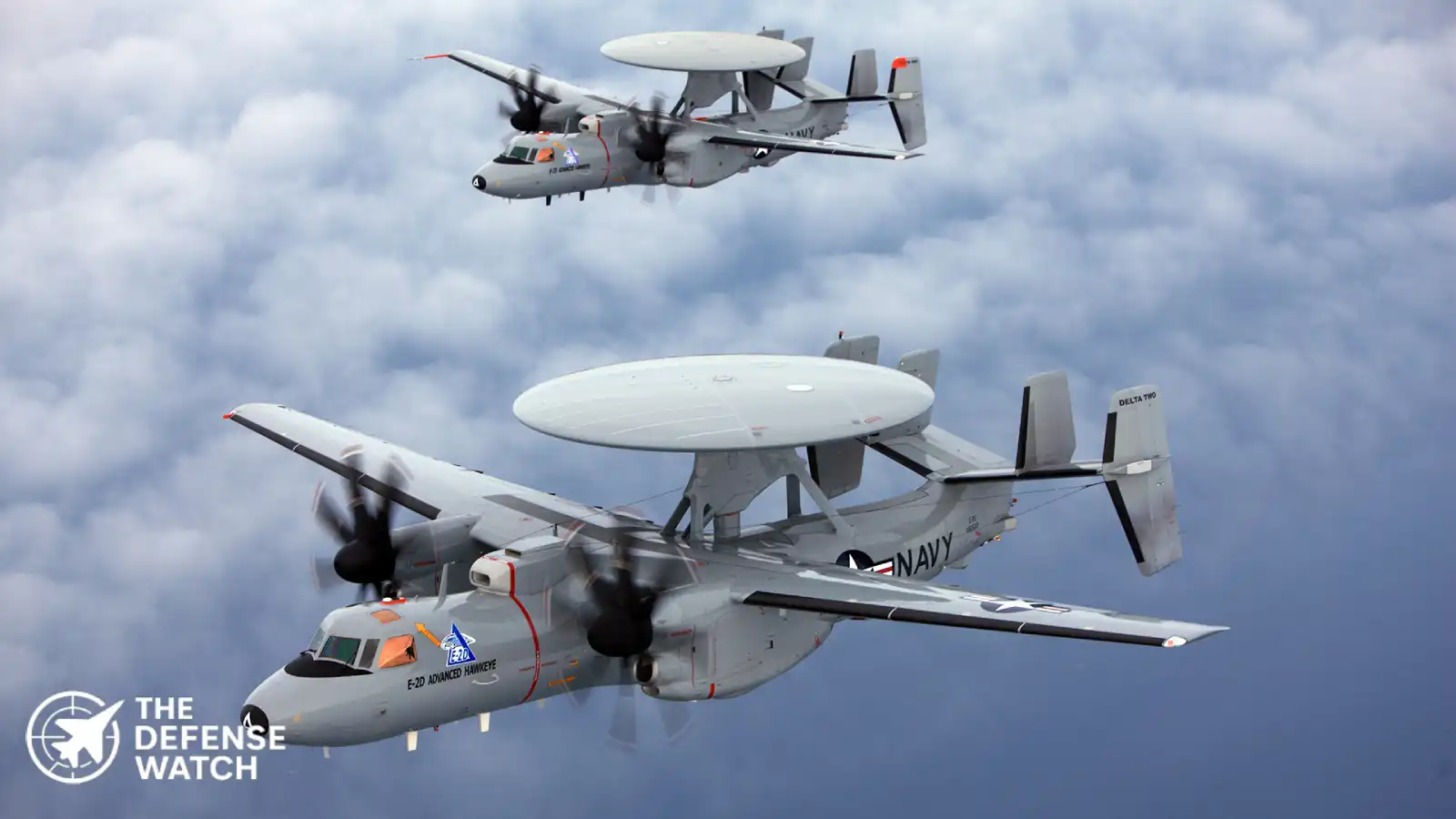
The Lockheed Martin DREXR upgrade has successfully completed flight testing on the U.S. Navy’s E-2D Advanced Hawkeye, marking an important step in keeping one of America’s most critical airborne early warning aircraft ready for future threats. The company announced the milestone on April 21, saying the program was completed in cooperation with Northrop Grumman.
The E-2D Advanced Hawkeye is the Navy’s carrier-based airborne surveillance and battle management aircraft. It provides long-range radar coverage, tracks hostile aircraft and missiles, and helps connect naval and joint forces across the battlespace.
- Lockheed Martin and Northrop Grumman completed flight testing of the DREXR upgrade for the U.S. Navy E-2D Advanced Hawkeye.
- DREXR stands for Digital Receiver Exciter Recorder and replaces legacy exciter and receiver subsystems.
- Tested capabilities included wideband transmit and receive, software-defined waveforms, and independent radar element transmission.
- Upgrade is designed to improve detection, tracking, and decision speed in contested environments.
- E-2D remains a key airborne command-and-control asset for U.S. Navy carrier strike groups.
The latest DREXR modernization effort focuses on upgrading core radar electronics rather than replacing the aircraft itself. That matters because the Hawkeye fleet remains central to U.S. carrier strike group operations, especially as potential adversaries field longer-range missiles, stealth aircraft, electronic warfare systems, and drone swarms.
What The DREXR Upgrade Changes
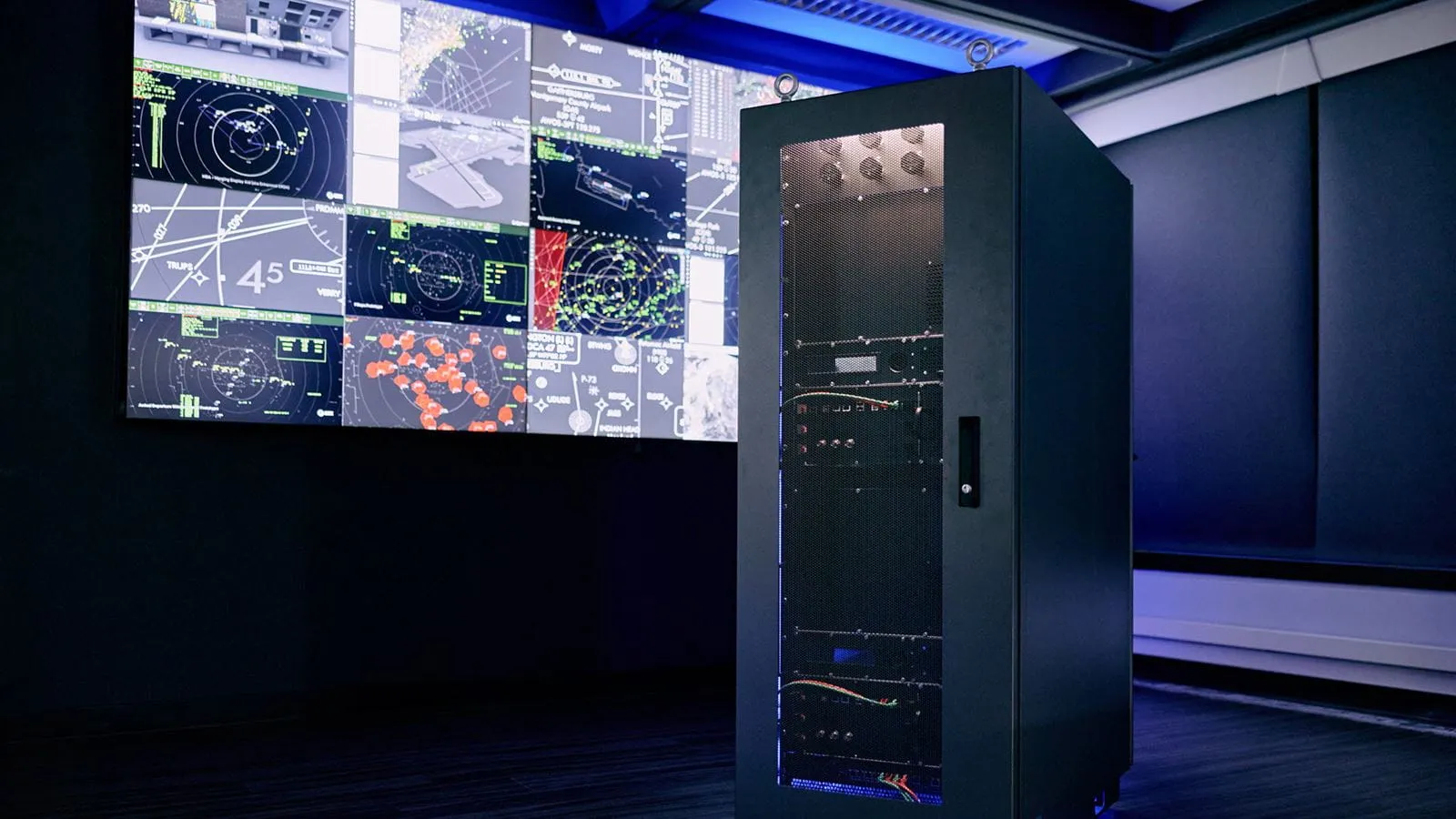
According to Lockheed Martin, DREXR, short for Digital Receiver Exciter Recorder, is a compact single-box system that replaces the current exciter and receiver subsystems aboard the aircraft.
During flight testing, the team validated:
- Wideband transmit and receive functions
- Independent transmit control for each radar element
- Software-defined waveform capability
- Integrated recording for mission analysis
- Data collection to support future AI-enabled capabilities
In practical terms, these upgrades should allow faster software changes, better signal processing, and improved adaptability against emerging threats.
That is increasingly important because modern radar competition is no longer only about range. It is also about how quickly a sensor can classify targets, reject jamming, and share data across multiple platforms.
Why The E-2D Hawkeye Still Matters
The E-2D Advanced Hawkeye is often overshadowed by fighter jets, but it is one of the most valuable aircraft on any carrier deck.
Its AN/APY-9 radar is designed to detect aircraft and cruise missiles at long range while supporting command-and-control functions. The platform also acts as a communications node linking ships, aircraft, and joint forces.
From an operational standpoint, fighters such as the F-35 can strike targets, but platforms like the Hawkeye help the fleet see first and react first.
That makes modernization programs like DREXR strategically significant. Improving sensing and battle management can increase the effectiveness of every other platform operating nearby.
Broader U.S. Navy Modernization Context
The DREXR milestone comes as the U.S. Navy and industry are also pursuing broader Block II modernization for the E-2D fleet, including cockpit, computing, and mission system upgrades.
This layered approach suggests the Navy intends to keep the Hawkeye relevant well into the next decade rather than rushing toward an entirely new replacement platform.
For Pentagon planners, that is a practical path. Incremental upgrades can deliver better performance faster and at lower risk than launching a clean-sheet aircraft program.
Analysis
The Lockheed Martin DREXR upgrade is more than a routine electronics refresh. It reflects a larger shift in military aviation where software speed, modular hardware, and sensor networking are becoming as important as airframe performance.
As maritime threats expand in the Indo-Pacific and other theaters, the side that detects first and coordinates faster gains a decisive edge. In that environment, the E-2D Hawkeye remains a high-value asset, and upgrades like DREXR help preserve that advantage.
RTX FAA Radar Contract Awarded to Deploy Next-Generation Surveillance Radars
RTX has won a $438 million contract from the Federal Aviation Administration to supply next generation surveillance radars as part of a broader effort to modernize the U.S. National Airspace System. The award comes through Collins Aerospace, a business unit of RTX, under the FAA’s Radar System Replacement program.
The new radar systems are designed to replace multiple legacy systems with modern, interoperable technology that delivers more reliable aircraft tracking and simplified air traffic operations.
Collins Aerospace will deliver cooperative and non-cooperative radar platforms to support the FAA’s mission of improving safety, reducing operational complexity, and increasing efficiency across the national airspace.
Short-range cooperative radars like the Condor Mk3 communicate with aircraft transponders, while non-cooperative radars such as the ASR-XM detect aircraft via reflected signals. Both systems are qualified to meet FAA surveillance requirements following prior test-site certifications.
More than 550 RTX radar systems already operate within the U.S. airspace, giving the company a track record of existing infrastructure support and long-term engagement with FAA surveillance needs.
This contract is part of the broader Brand New Air Traffic Control System initiative led by the Department of Transportation and FAA to overhaul aging air traffic control technology. Other reporting notes that the federal government plans to replace up to 612 outdated radar systems nationwide by mid-2028 through awards to RTX and other partners like Spain’s Indra Sistemas.
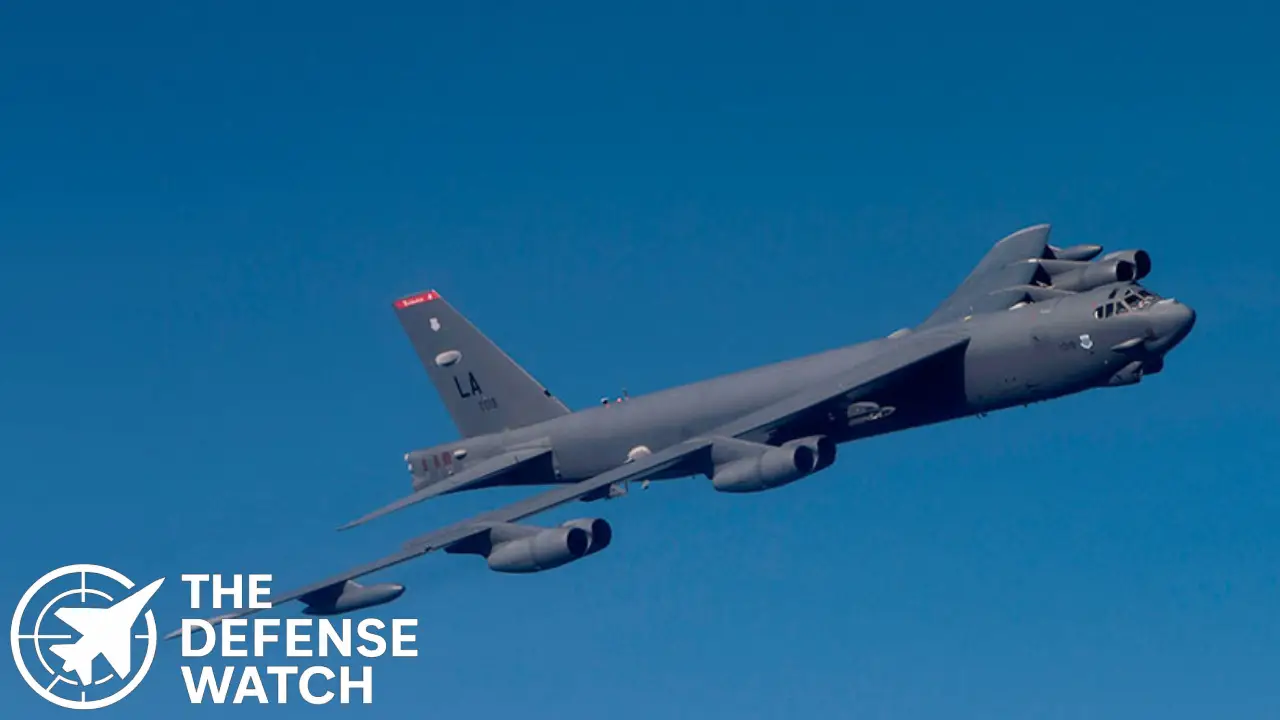
The Boeing B-52 Stratofortress, America’s enduring heavy bomber, recently celebrated 70 years of service with the U.S. Air Force. As the venerable aircraft continues to project strategic deterrence, its modernization programs—particularly radar and engine upgrades—are entering pivotal phases, albeit with notable delays.
This article examines the B-52’s continued relevance, the status of its upgrades, and the implications for its future service into the 2050s.
A Legacy of Strategic Reach
Introduced in 1955, the B-52 has remained a cornerstone of the Air Force’s long-range strike and nuclear capabilities. As of 2025, roughly 72 aircraft remain active, supported by others in storage.
Known for its large payload, long endurance, and cost-effectiveness, the Stratofortress continues to embody “peace through strength”
Radar Modernization Nears Flight Testing
The Radar Modernization Program (RMP)—which will equip B-52s with the advanced AN/APQ-188 AESA radar, improves detection, resistance to jamming, and multifunction capability. After years of schedule slips and cost growth, this milestone is now expected to enter flight testing soon.

Originally targeting operational capability as early as 2027, the delays now push debut to 2028–2030.. Factors include integration challenges, environmental qualification setbacks, and Nunn-McCurdy cost breach reviews.
Engine Upgrade—Re-Engining Setbacks Continue
The Commercial Engine Replacement Program (CERP) aims to replace aging TF33 engines with modern Rolls-Royce F130 units—transforming the fleet into “B-52J” variants. However, design issues with the engine inlets have delayed progress. After digital redesign efforts, wind-tunnel testing is ongoing, and the new configuration is expected to be validated by 202.
The critical design review and initial production decision have both slipped – now anticipated for March 2028, three years behind initial plans.

Role and Relevance into the 2050s
Despite modernization challenges, the B-52 remains slated to serve through the 2050s, thanks to incremental upgrades to radar, engines, avionics, and structural systems..
Its adaptability—integrating modern standoff weapons including hypersonic missiles—and robust logistics footprint make it a cost-effective workhorse well beyond its original design life.
Analysis and Context
- The B-52’s longevity underscores the U.S. Air Force’s strategy of extending proven platforms through modernization rather than costly replacements.
- The delays in critical upgrades highlight persistent challenges in modernizing legacy aircraft—especially in retrofitting advanced systems into Cold War-era designs. Yet, the commitment to keep the B-52 viable well into the 2050s reflects its unmatched payload, range, and flexibility in strategic deterrence.
FAQs
Its large payload, long range, dual nuclear/conventional capability, and cost-effective upgrades enable continued strategic utility far beyond its original life expectancy.
The AESA radar will enhance target acquisition, resolution, ground-moving-target indication, synthetic aperture radar modes, and electronic warfare resistance.
Initial testing continues. The critical engine inlet redesign testing is set to conclude by 2026, with initial production slated for around 2028.
The bomber is planned to remain in service through the 2050s, supported by ongoing modernization across avionics, weapons payloads, engines, and radar systems.
With upgrades enabling advanced standoff weapons and improved situational awareness, the B-52 will continue to serve in long-range strike, deterrence, and allied operations, complementing newer stealth bombers like the B-21.