• Home
  • About
  • Defense Systems
  • Manufacturer
  • Comparisons
  • Compare 
  • Tools
TheDefenseWatch.com
  • Aerospace & Aviation
  • Military & Ordnance
  • Naval & Maritime
  • Cyber & Space Defense
  • Policy & Strategy
  • Global News
  • Tools Library
    • Smart Calculator
    • Drone Flight Time Calculator
    • Drone Range Calculator
    • Counter-Drone Jammer Effective Range Calculator
    • Counter-Battery Radar Detection Calculator
    • Artillery Fire Correction Calculator
    • Thermal Camera Detection Range Calculator
    • Missile Range & Time-of-Flight Calculator
    • Radar Detection Range Calculator
    • FPV Strike Drone Payload vs Range Calculator
    • Loitering Munition Endurance Calculator
    • Sniper Ballistic Drop & Windage Calculator
    • Bullet Drop Calculator
    • U.S. Army Combat Fitness Test (ACFT) Calculator
    • Military Pension Calculator
    • Military Retirement Calculator
    • Military Pension Calculator
    • Large Number Calculator
Font ResizerAa

TheDefenseWatch.com

The Defense Watch | U.S. & Global Defense News, Analysis & Military Updates

Search
  • Home
  • About
  • Defense Systems
  • Manufacturer
  • Comparisons
  • Compare 
  • Tools

Stay Updated

Get the latest update

Subscribe

Explore

  • Drone
  • Fighter Jets & Military Aircraft
  • Hypersonic Weapons
  • Aircraft Carriers
  • Strategic History & Missions
  • Tools Library
Home » Russia Orders Two More Lada-Class Submarines for 2026
Naval & MaritimeSubmarines

Russia Orders Two More Lada-Class Submarines for 2026

TeamDefenseWatch
Last updated: September 12, 2026 10:50 am
TeamDefenseWatch
Share
2 Min Read
Lada-class submarines
SHARE

Russia Confirms New Lada-Class Submarines to Begin Construction in 2026

Russia’s Navy has announced plans to lay down two additional Project 677 Lada-class diesel-electric submarines in early 2026 at the Admiralty Shipyards in St. Petersburg, advancing the expansion of its non-nuclear submarine fleet. The confirmation came on December 16, 2025 from Russian Navy Chief Admiral Alexander Moiseyev following the flag-raising ceremony for the recently commissioned submarine Velikiye Luki.

Contents
  • Russia Confirms New Lada-Class Submarines to Begin Construction in 2026
  • Background on the Lada-Class Submarine Program
  • What’s Planned for 2026
  • Design, Capabilities, and Armament
  • Strategic Context and Naval Planning
  • Technical and Industrial Notes
  • What’s Next

The move signals a continued investment in the Lada-class submarine program, which has been central to Moscow’s effort to modernize its coastal and near-sea undersea forces in the decade since the design’s introduction.

Background on the Lada-Class Submarine Program

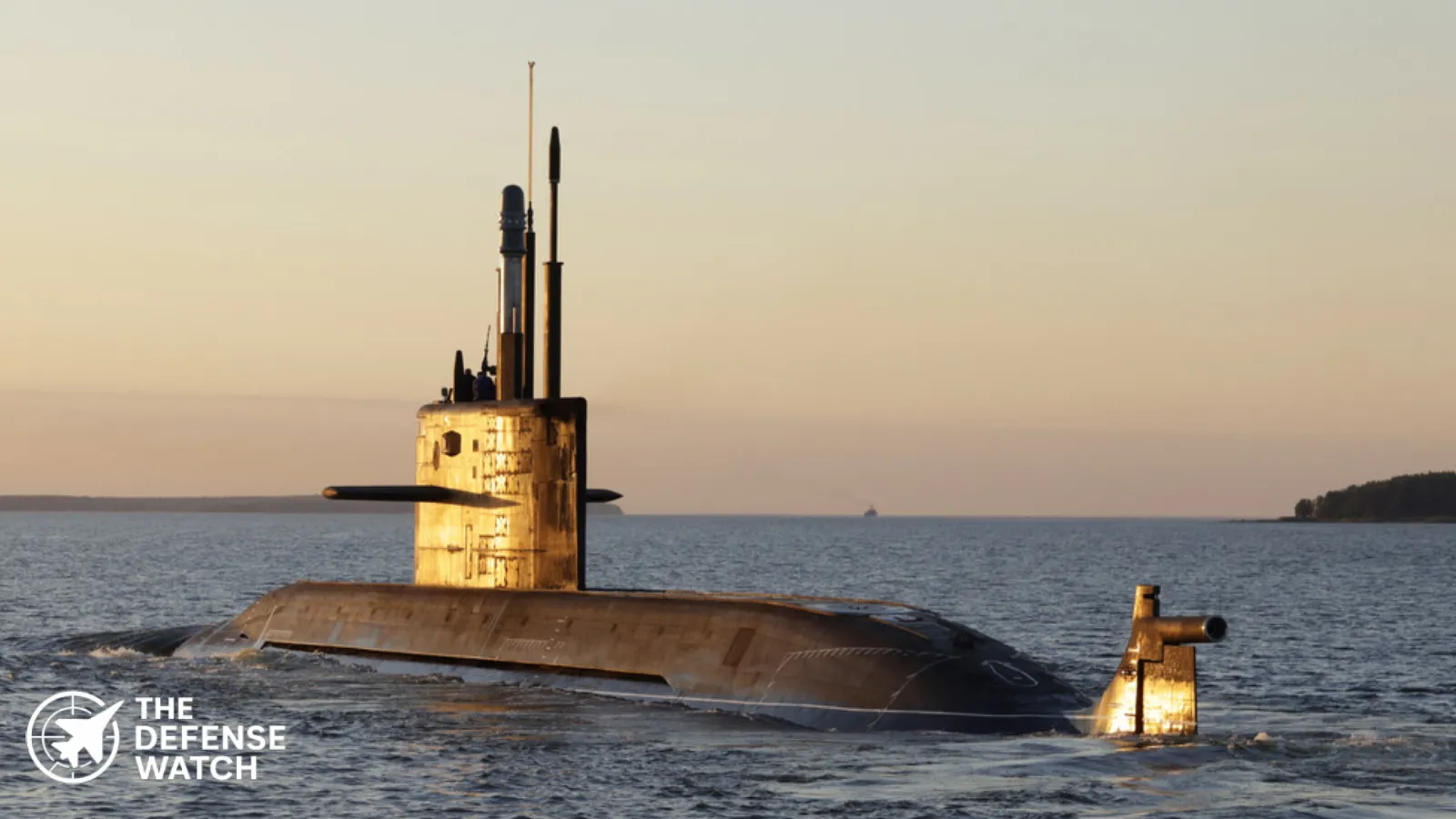
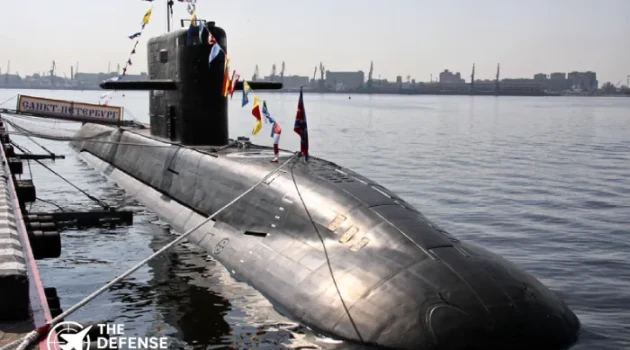
The Project 677 Lada-class submarines are a series of fourth-generation diesel-electric attack submarines developed by Russia’s Rubin Central Design Bureau. They were intended to replace older Soviet-era conventional boats with a quieter, more automated platform that could perform anti-surface, anti-submarine, reconnaissance, and sea-lane defense missions.
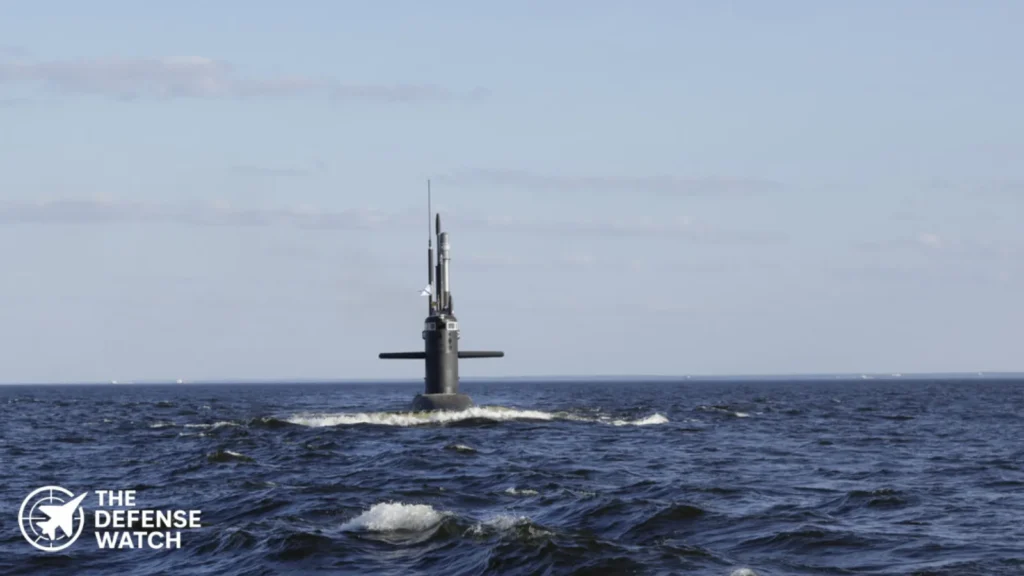
Lada-class submarines

The program has been slow and uneven in development. The lead vessel, Sankt-Petersburg, faced significant technical challenges and was eventually retired. Kronstadt, the first serial production submarine, was commissioned in early 2024 after years of trials and delays. Velikiye Luki, the third boat, was formally delivered to the Russian Navy in December 2025.

- Advertisement -

What’s Planned for 2026

According to Moiseyev, the two new submarines will be laid down under the state defense order early in 2026 at St. Petersburg’s Admiralty Shipyards. These units are expected to join others under construction, including Vologda and Yaroslavl, as part of a broader effort to sustain a modern conventional undersea force.

  • Lada Class Submarine

    Lada Class Submarine

    • Power: Diesel electric
    • Stealth: Anechoic coating, low noise propulsion
    • Weapons: Torpedoes, anti ship missiles, mines
    • Sensors: Advanced sonar suite
    • View Details →
    8.0

    Official statements from the Rubin Central Design Bureau indicate that the Lada-class design incorporates lessons from earlier boats in the series, with improvements in onboard systems and crew accommodations to meet current naval standards for non-nuclear submarines operating in littoral and near-sea environments.

    Design, Capabilities, and Armament

    Project 677 submarines are roughly 67–72 meters long with a submerged displacement of around 2,700 tons. They operate with a crew of about 35 and can remain at sea for up to 45 days without resupply. The submarines are designed for a maximum submerged speed of about 21 knots and can dive to depths near 300 meters.

    While early plans included integrating an air-independent propulsion system to extend underwater endurance, this technology has been delayed and has not yet been fielded on operational boats. As of now, Lada-class units operate with improved diesel-electric propulsion and battery systems.

    Armament centers on six 533 millimeter bow torpedo tubes that can fire heavyweight torpedoes, anti-ship cruise missiles, and Kalibr land-attack cruise missiles, giving the submarines a flexible strike and defense profile in regional waters.

    Strategic Context and Naval Planning

    Russia’s decision to expand production of the Lada-class submarine comes amid ongoing efforts to maintain a balanced undersea fleet. The Russian Navy continues to operate a mix of conventional submarines, including Project 636.3 Improved Kilo-class vessels, which remain numerous due to production delays and technical challenges with the Lada series.

    The new Lada-class units are expected to operate in the Baltic and Northern Fleets, where their quieter profile and missile capability will support coastal defense and sea-control missions. The integration of Kalibr cruise missiles gives these submarines a precision-strike capability that extends beyond traditional patrol roles.

    Technical and Industrial Notes

    The Admiralty Shipyards, part of the United Shipbuilding Corporation, has been the primary builder of Project 677 submarines. The 2026 keel laying aligns with Russia’s plan to sustain serial production of these boats after years of delays.

    Despite technical hurdles, including the absence of a fully operational AIP system, the Lada design is seen by Russian planners as an essential component of their conventional submarine strategy. Engineers continue to refine onboard systems and acoustic suppression to improve performance in the face of modern anti-submarine warfare threats.

    What’s Next

    With the 2026 construction schedule set, the Russian Navy will monitor progress of the new hulls as they take shape alongside existing units. Completion and commissioning timelines will shape the role of the Lada-class platform in future naval planning, particularly in contested littoral zones.

    As Russia balances its undersea fleet between conventional and nuclear boats, the performance and deployment of these new submarines will bear on broader naval strategy and regional maritime security dynamics.
TAGGED:Lada-classNaval DefenseNaval ShipbuildingRussia NavySubmarine Program
Share This Article
Facebook Copy Link Print
ByTeamDefenseWatch
TeamDefenseWatch is the official editorial byline of TheDefenseWatch.com. Working under one umbrella, TheDefenseWatch.com, the team delivers verified, factual reporting on global defense, military technology, aerospace systems, and security developments. Articles are sourced from official statements, defense industry releases, and trusted media, with editorial review to ensure accuracy and clarity.Contact: info@TheDefenseWtach.com
2 Comments
  • Pingback: U.S. Navy Workforce Push: 250,000 New Shipbuilders Needed for Golden Fleet Construction
  • Pingback: Taiwan's Domestically Built Narwhal Submarine Completes First Undersea Trial Amid Rising Regional Tensions | TheDefenseWatch.com

Leave a Reply Cancel reply

Your email address will not be published. Required fields are marked *

F-22 Reptor

Latest Defense Systems

  • B61 Nuclear Bomb B61 Nuclear Bomb
  • Japan E-767 Airborne Japan E-767 Airborne
  • Remington 870 Shotgun Remington 870 Shotgun
  • RUTA B1 Cruise Missile RUTA B1 Cruise Missile
  • XQ-67A Drone XQ-67A Drone
  • B-25 Mitchell Bomber B-25 Mitchell Bomber
  • F-100 Super Sabre F-100 Super Sabre
  • North American F-86 Sabre North American F-86 Sabre
  • North American XB-70 Valkyrie North American XB-70 Valkyrie

Recent Compares

  • J-10C vs JF-17 Thunder: Which Fighter Is More Capable? J-10C vs JF-17 Thunder: Which Fighter Is More Capable? View Comparison →
  • Tejas vs Gripen: Key Differences and Capabilities Tejas vs Gripen: Key Differences and Capabilities View Comparison →
  • Tejas vs MiG-21 Bison: How India Replaced Its Iconic Supersonic Fighter Tejas vs MiG-21 Bison: How India Replaced Its Iconic Supersonic Fighter View Comparison →
  • F-35 vs F-16: Stealth, Sensors and Combat Roles F-35 vs F-16: Stealth, Sensors and Combat Roles View Comparison →
  • Tejas Fighter Jet vs F-16 Fighting Falcon: Capability Compared Tejas Fighter Jet vs F-16 Fighting Falcon: Capability Compared View Comparison →
  • Rafale Fighter Jet vs F-16 Fighting Falcon : Which Fighter Has the Edge? Rafale Fighter Jet vs F-16 Fighting Falcon : Which Fighter Has the Edge? View Comparison →
  • Su-57 Fighter Jet vs J-20 Fighter Jet: Stealth and Air Combat Compared Su-57 Fighter Jet vs J-20 Fighter Jet: Stealth and Air Combat Compared View Comparison →
  • Mirage 2000 vs Tejas Mk1A: Legacy Combat Power vs Indigenous Modernization Mirage 2000 vs Tejas Mk1A: Legacy Combat Power vs Indigenous Modernization View Comparison →
  • Rafale Fighter Jet vs F-22 Raptor: Which Air Dominance Fighter Has the Edge? Rafale Fighter Jet vs F-22 Raptor: Which Air Dominance Fighter Has the Edge? View Comparison →
  • Tejas Fighter Jet vs. Rafale Fighter Jet: India’s Indigenous Fighter Meets France’s Proven Multirole Combat Aircraft Tejas Fighter Jet vs. Rafale Fighter Jet: India’s Indigenous Fighter Meets France’s Proven Multirole Combat Aircraft View Comparison →

Recent Posts

  • Remington 870 in Military Service: Mark 1 to MCS
  • Boeing Receives $16.9 Million Contract Modification for Japan’s E-767 AWACS Support
  • Lockheed Martin Wins $80 Million Air Force Mission Planning Software Contract
  • Pakistan Tests Indigenous Fa’az Air-to-Air Missile for First Time
  • Operation Unified Resolve Reports 70% Drop in Rio Grande Valley Border Crossings

You Might Also Like

Lockheed Martin Ultra Maritime acquisition
Naval & Maritime

Lockheed Martin Completes $3.45 Billion Ultra Maritime Acquisition

October 26, 2026
USS Oregon submarine Norway
Naval & MaritimeSubmarines

USS Oregon Visits Norway as U.S. Navy Maintains High North Presence

October 12, 2026
Stealth undersea drone technology
Naval & Maritime

U.S. Navy Advances Stealth Undersea Drone Technology to Revolutionize Maritime Security Operations

September 8, 2026
USS Guitarro sinking
Naval & MaritimeSubmarines

When a Manhole Killed a Sub: Lessons from the USS Guitarro Sinking

October 8, 2025

Logo

Copyright © 2026 TheDefenseWatch.com

Helpful Links

  • Home
  • About Us
  • Privacy Policy
  • Terms of Use / Disclaimer
  • U.S. Privacy Notice – CCPA Compliance

Defense Systems

  • Defense Systems
  • Comparisons 
  • Manufacturer
  • Tactical Calculators

Popuplar

Which 5 Air Forces Possess the Costliest Fighter Jet Fleets in the World
Evolving Strategic Value: Carrier Strike Groups in the Indo-Pacific’s Future Security Architecture
Autonomous Weapon Systems Spark U.S. Ethics Debate Amid Rapid Military AI Integration

We report on developments involving military forces, governments, defense companies, research organizations, and security institutions around the world. 

Welcome Back!

Sign in to your account

Username or Email Address
Password

Lost your password?