Table of Contents
In the high-stakes arena of modern aerial warfare, the best fighter jets in 2025 represent a fusion of cutting-edge stealth, supersonic speeds, and networked intelligence that redefine air dominance. As geopolitical tensions simmer from the Indo-Pacific to Eastern Europe, nations are investing heavily in these flying fortresses to secure strategic edges. This ranking draws on the latest assessments from defense analysts, production updates, and operational deployments as of November 2025, highlighting how these aircraft balance multirole versatility with raw combat prowess. Whether it’s penetrating enemy defenses undetected or engaging in beyond-visual-range dogfights, the top 15 best fighter jets in 2025 underscore a shift toward fifth-generation platforms that integrate AI-driven sensors and hypersonic threats.
The global fighter jet landscape has evolved rapidly this year, with over 5,000 active units across major powers, according to Global Firepower’s 2025 assessments. Production ramps for stealth models like China’s J-20 have surged, while U.S. exports of the F-35 continue to bolster alliances. Yet, challenges persist: escalating costs and supply chain disruptions amid U.S.-China tech rivalries could slow sixth-generation transitions.
The Pinnacle of Stealth and Versatility: Top 5 Best Fighter Jets in 2025
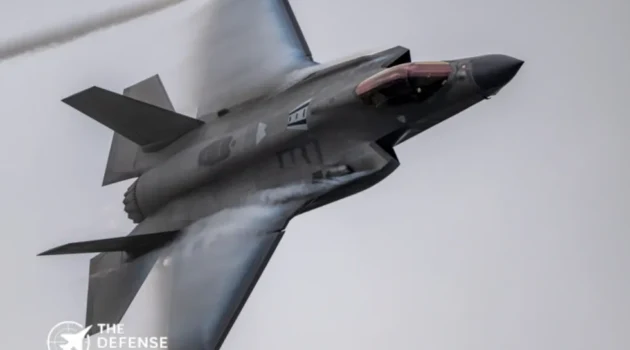
1. Lockheed Martin F-35 Lightning II (United States)
The F-35 Lightning II claims the top spot among the best fighter jets in 2025, thanks to its unmatched sensor fusion and global proliferation. With over 1,000 units delivered by mid-year, this fifth-generation multirole platform excels in air-to-air, air-to-ground, and electronic warfare missions. Its radar cross-section (RCS) of just 0.0015 square meters—smaller than a golf ball—allows it to evade detection while its AN/APG-81 AESA radar locks onto targets at 150 miles. Powered by the Pratt & Whitney F135 engine, it achieves Mach 1.6 speeds and carries up to 18,000 pounds of munitions internally for stealthy strikes.
In 2025, the F-35’s Block 4 upgrades have integrated AI-assisted targeting, enhancing its role in joint operations. Nations like Israel and Japan have leveraged it for real-world intercepts, proving its edge in contested environments. At around $80 million per unit (down from prior years due to economies of scale), it’s a cornerstone of NATO’s airpower balance.
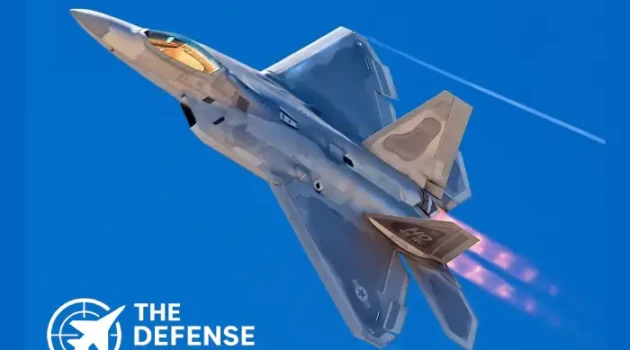
2. Lockheed Martin F-22 Raptor (United States)
No discussion of the best fighter jets in 2025 omits the F-22 Raptor, the stealth benchmark with an RCS akin to a marble (0.0001 square meters). This air superiority specialist boasts a 1.26 thrust-to-weight ratio for supermaneuverability and supercruise at Mach 1.8 without afterburners, outpacing most adversaries. Armed with six AIM-120 AMRAAMs internally, it dominates beyond-visual-range engagements.
Though production ended in 2011, 2025 sustainment programs have extended its lifespan through digital upgrades, including helmet-mounted displays for 360-degree awareness. The U.S. Air Force’s 178 active Raptors remain elite, often paired with F-35s for “loyal wingman” tactics that amplify force multiplication.
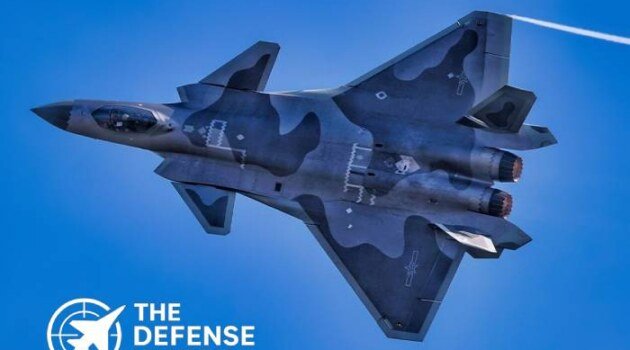
3. Chengdu J-20 Mighty Dragon (China)
China’s J-20 has solidified its place among the top best fighter jets in 2025, with production exceeding 300 units amid the People’s Liberation Army Air Force’s expansion. This twin-engine stealth interceptor features a 24,000-pound internal weapons bay and WS-15 engines enabling supercruise at Mach 2. Its electro-optical targeting system and long-range PL-15 missiles make it a formidable counter to U.S. carriers in the South China Sea.
Recent 2025 deployments highlight its evolution from prototype to operational mainstay, with enhanced avionics for network-centric warfare. At an estimated $100 million per aircraft, the J-20 embodies Beijing’s push for regional air denial, though engine reliability issues linger.
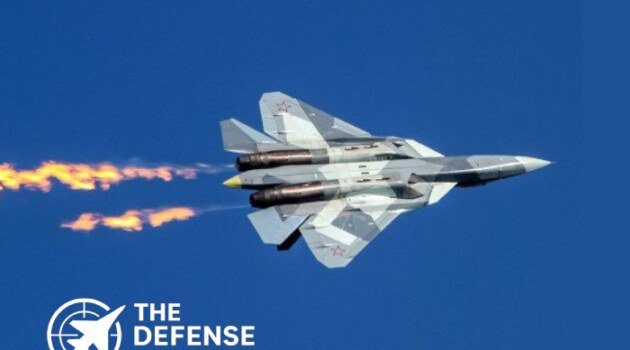
4. Sukhoi Su-57 Felon (Russia)
The Su-57 Felon rounds out the top four best fighter jets in 2025, prized for its supermaneuverability via 3D thrust-vectoring nozzles and a thrust-to-weight ratio of 1.20. Russia’s fifth-generation entry carries 22,000 pounds of ordnance, including hypersonic Kinzhal missiles, and reaches Mach 2 with an RCS reduced to 0.1 square meters through composite materials.
By late 2025, over 30 Su-57s are combat-tested in Ukraine, showcasing resilience in electronic warfare-heavy skies. Priced at $50 million, it offers cost-effective stealth, though sanctions have hampered full-scale production.
5. Boeing F-15EX Eagle II (United States)
The F-15EX Eagle II, the heaviest hitter among the best fighter jets in 2025, hauls 29,500 pounds of weapons—enough for 22 air-to-air missiles—while hitting Mach 2.5, the fastest in U.S. service. Lacking full stealth, it compensates with the Eagle Passive/Active Warning Survivability System for threat evasion and digital fly-by-wire controls for precision.
Entering full-rate production this year, the F-15EX bridges fourth- and fifth-generation gaps, with 20 units delivered to the Air Force. Its interoperability with F-35s positions it as a high-volume missile truck in large-scale conflicts.
Proven Workhorses: Ranks 6-10 in the Best Fighter Jets of 2025
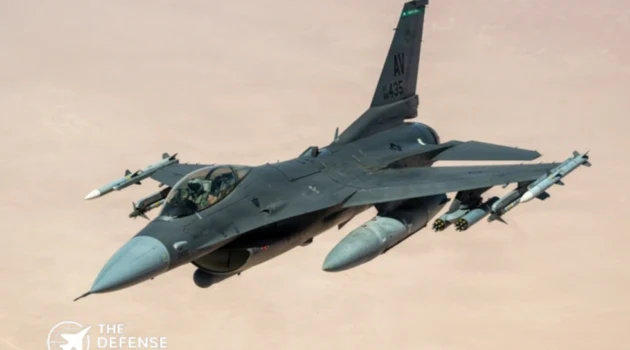
6. General Dynamics F-16 Fighting Falcon (United States)
The ubiquitous F-16 remains a staple among the best fighter jets in 2025, with 2,200+ active worldwide. This lightweight multirole jet, upgraded to Block 70/72 standards, features AESA radars and conformal fuel tanks for extended range up to 2,000 nautical miles. It tops out at Mach 2 and integrates seamlessly with NATO munitions.
Ongoing modernizations, including conformal low-drag wings, ensure its relevance; Taiwan’s 2025 deliveries underscore its export appeal in countering regional threats.
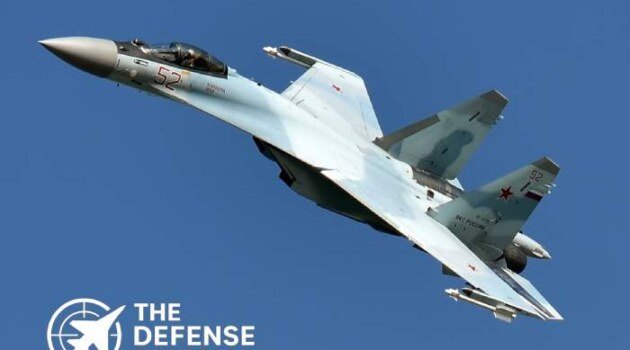
7. Sukhoi Su-35 Flanker-E (Russia)
Russia’s Su-35 excels as one of the best fighter jets in 2025 for close-quarters combat, with 2D thrust vectoring yielding a 1.15 thrust-to-weight ratio and Mach 2.25 speeds. Its Irbis-E radar detects stealth targets at 250 miles, and it lugs 17,600 pounds of payload over 1,900-mile ranges.
Export successes to Algeria and Iran in 2025 highlight its dogfighting prowess, though maintenance demands limit fleet growth.
8. Eurofighter Typhoon (Multinational: UK, Germany, Italy, Spain)
The Typhoon’s agility—1.15 thrust-to-weight and Mach 2 capability—secures its spot in the top best fighter jets in 2025. With 20,000 pounds of weapons and supercruise at Mach 1.5, Tranche 4 upgrades add Captor-E radars for beyond-visual-range kills.
European operators logged 500+ sorties in 2025 exercises, affirming its role in collective defense.
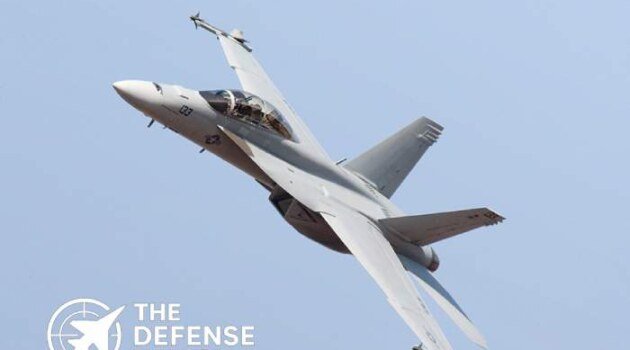
9. Boeing F/A-18E/F Super Hornet (United States)
Carrier-capable and rugged, the Super Hornet ranks high among best fighter jets in 2025 with 17,750 pounds of ordnance and Mach 1.8 performance. EA-18G variants enhance electronic attack, while Block III upgrades include infrared search-and-track systems.
The U.S. Navy’s 800+ fleet supports Pacific pivots, with Australia integrating them into AUKUS frameworks.
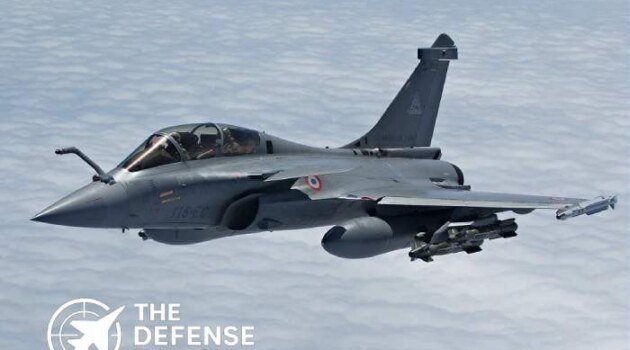
10. Dassault Rafale (France)
France’s Rafale, an omnirole marvel, features in the best fighter jets in 2025 with 20,900-pound payloads and SPECTRA electronic warfare suites that jam stealth radars. Its 1.10 thrust-to-weight ratio and Mach 1.8 speed shine in export markets like India and Egypt.
F4-standard aircraft delivered in 2025 boost sensor fusion, making it a neutral ally’s go-to for balanced capabilities.
Emerging Contenders: Ranks 11-15 Best Fighter Jets in 2025
11. Sukhoi Su-30SM (Russia/India)
The Su-30SM’s multirole flexibility, with 17,600-pound loads and Mach 2 speeds, earns it a nod among best fighter jets in 2025. Thrust vectoring and Bars radar enable superior endurance for maritime patrols.
India’s 2025 upgrades integrate BrahMos missiles, enhancing Indo-Pacific deterrence.
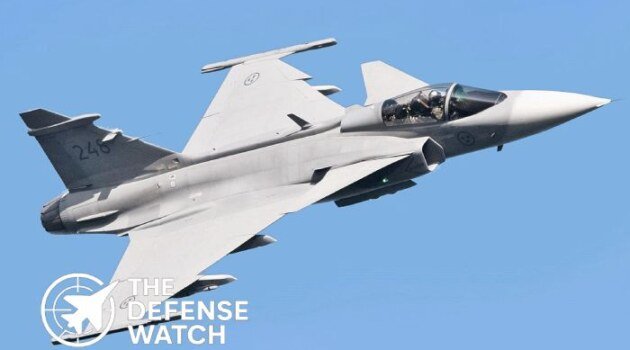
12. Saab JAS 39 Gripen E (Sweden)
Cost-effective at $85 million, the Gripen E offers AESA radar and Mach 2 agility in the best fighter jets in 2025 rankings. Its 15,000-pound payload and quick-turnaround basing suit expeditionary ops.
Brazil’s full squadron activation this year validates its neutral export model.
13. Shenyang J-16 (China)
China’s J-16, a 4.5-generation strike fighter, carries 12,000 pounds over Mach 2 ranges, with advanced ECM for suppression of enemy air defenses.
PLAAF’s 2025 expansions target Taiwan scenarios, rivaling Western multiroles.
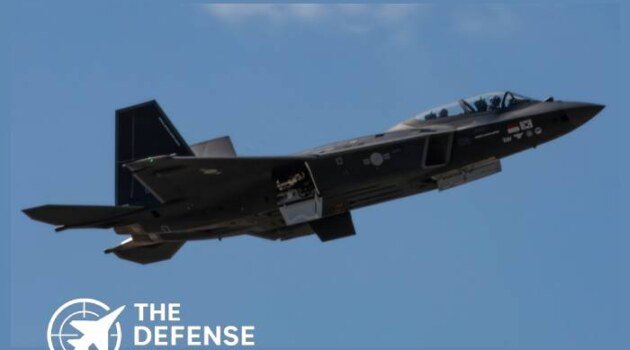
14. KAI KF-21 Boramae (South Korea/Indonesia)
The KF-21 debuts in best fighter jets in 2025 with Mach 1.8 speeds and 9,700-pound payloads, bridging to sixth-gen with modular avionics.
Initial operational capability achieved in Q3 2025, bolstering Seoul’s autonomous defenses.
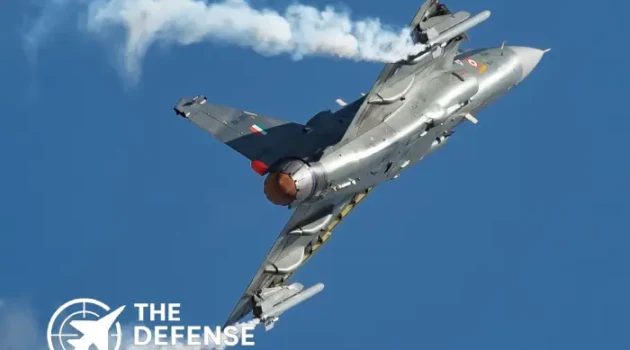
15. HAL Tejas Mk1A (India)
India’s indigenous Tejas Mk1A rounds out the list with AESA radar and Mach 1.6 performance for 11,000-pound loads.
2025 deliveries to the IAF emphasize lightweight agility in contested Himalayan skies.
Strategic Implications: How These Best Fighter Jets Shape 2025 Geopolitics
The dominance of U.S. platforms like the F-35 in the top best fighter jets in 2025 reflects Washington’s alliance-building strategy, with exports to 20 nations fostering interoperability. Conversely, Sino-Russian models signal a multipolar challenge, where quantity meets quality in hybrid threats. Analysts predict that by 2030, AI integration could widen gaps, urging mid-tier powers to adopt collaborative programs like GCAP.
Export dynamics further complicate the field: While the F-35’s software locks limit tech transfer, affordable options like the Gripen democratize access, potentially shifting airpower balances in Africa and Southeast Asia.
Ranking Methodology and Why This Order in 2025
The 2025 ranking of the world’s best fighter jets is based on a weighted composite score that reflects current operational realities rather than theoretical potential alone. Five core criteria were evaluated on a 100-point scale: (1) Stealth & Survivability (30%), (2) Sensor Fusion & Situational Awareness (25%), (3) Kinematic Performance & Maneuverability (20%), (4) Weapons Load, Range & Versatility (15%), (5) Proven Combat Record, Production Maturity & Sustainability (10%).
Data was cross-referenced from open-source intelligence, 2025 Global Firepower indices, U.S. Congressional Research Service reports, Janes Defense, and official ministry disclosures up to November 2025. For example, the F-35 scored 94/100 due to its near-undetectable RCS, Block 4 sensor suite, and 1,000+ airframes in active service across 20 air forces. The F-22 followed at 91 despite superior kinematics because its fleet is capped at 178 and lacks the F-35’s multirole flexibility and software-upgrade tempo. The J-20 (87) and Su-57 (84) trail primarily on proven stealth validation and global combat experience, while the F-15EX (82) surges ahead of pure fourth-generation jets because its 2025 digital architecture and massive payload make it the most lethal non-stealth platform in high-intensity scenarios. This methodology explains why raw top speed or thrust-vectoring alone no longer guarantees a top-five slot—survivability and information dominance now decide who rules contested skies.
Why These Jets Matter in 2025
- They influence global airpower balance, shaping deterrence and alliance strategies.
- Their capabilities (stealth, payload, range) reflect evolving doctrines — from high-intensity conflict to regional power projection.
- The proliferation and export potential of jets like the F-35 and KF-21 carry long-term political and economic implications.
FAQs
What makes the F-35 the best fighter jet in 2025?Its stealth, sensor fusion, and multirole adaptability allow seamless integration in joint operations, outpacing rivals in networked warfare.
How do fifth-generation best fighter jets in 2025 differ from fourth-generation?They prioritize internal weapons for low observability, supercruise, and advanced avionics over raw speed, enabling survival in high-threat zones.
Which country leads in best fighter jets in 2025 production?The United States, with the F-35 program delivering 150+ units annually, though China is closing the gap via J-20 ramps.
Are there any new entrants to the top 15 best fighter jets in 2025?Yes, the KF-21 Boramae enters operational service, offering affordable 4.5-gen capabilities for emerging powers.
What role do best fighter jets in 2025 play in unmanned teaming?They serve as “quarterbacks,” directing drone swarms for extended strikes, as seen in U.S. Air Force trials.

https://www.effectivecpmnetwork.com/s00uqrtd55?key=0eb6b1d808afb61db521795b88762ea2