Navy Tests E-2D Hawkeye at Gray Flag 2026
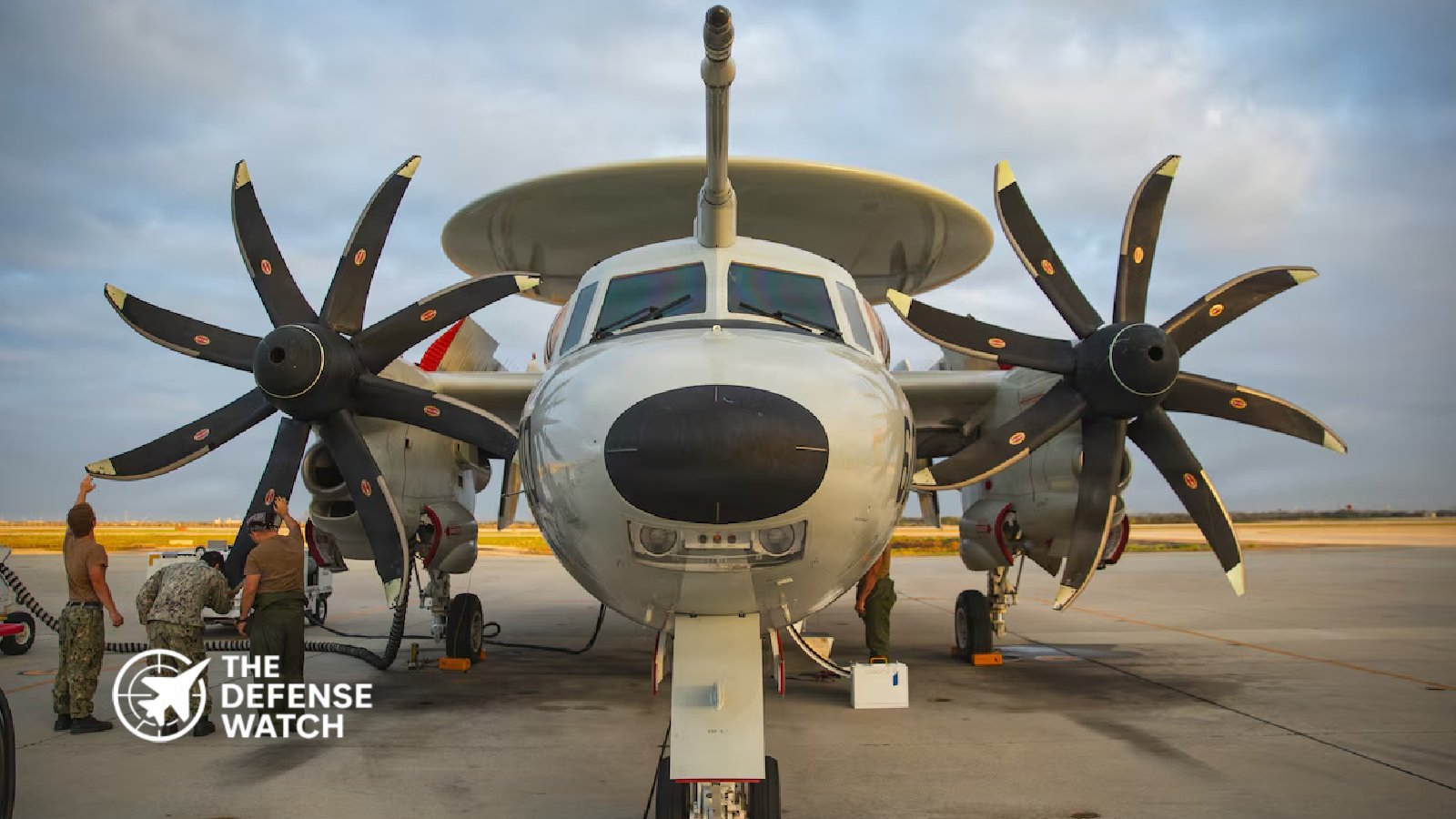
The U.S. Navy used Exercise Gray Flag 2026 to test the E-2D Advanced Hawkeye in a large-force environment, bringing the aircraft’s airborne command and control functions into an exercise designed to expose integration problems before they reach operational units.
Air Test and Evaluation Squadron One, or VX-1, deployed E-2D aircraft and associated maintenance personnel to Naval Base Ventura County, Point Mugu, California, for the event. The squadron’s participation gave Navy testers an opportunity to examine how the Hawkeye performs alongside other aircraft and systems during complex, multi-domain scenarios.
Gray Flag concluded on September 25 after more than 750 aircraft sorties. The two-week event involved more than 3,000 participants from more than 150 organizations and generated more than 2,000 flight hours across hundreds of test objectives, according to the Naval Air Warfare Center Weapons Division.
Testing the Hawkeye Beyond Individual Aircraft Performance
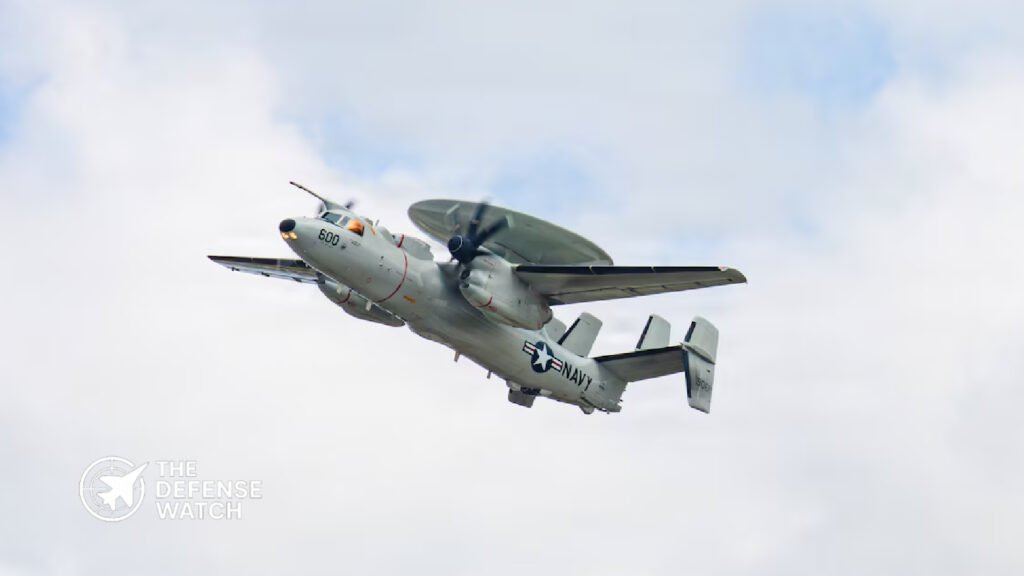
The E-2D is not primarily valuable because it is another aircraft in a carrier air wing. Its importance comes from the information it collects, processes and distributes.
According to Naval Air Systems Command, the E-2D combines airborne surveillance with command and control functions. Its radar and mission systems allow the aircraft to build and distribute a tactical picture while coordinating multiple missions.
That makes the aircraft particularly relevant to an exercise such as Gray Flag, where the objective extends beyond proving that an individual platform works as designed.
The central question is whether different aircraft, sensors, communications systems and command networks can exchange information reliably when operated together.
Gray Flag is structured around that problem. Naval Air Warfare Center Weapons Division describes the event as a large-force test environment for integrating emerging capabilities across services and platforms.
VX-1’s role therefore goes beyond flying the E-2D. The squadron’s broader test mission includes evaluating airborne command and control systems and determining how those systems perform in operationally relevant conditions.
Why E-2D Testing Matters
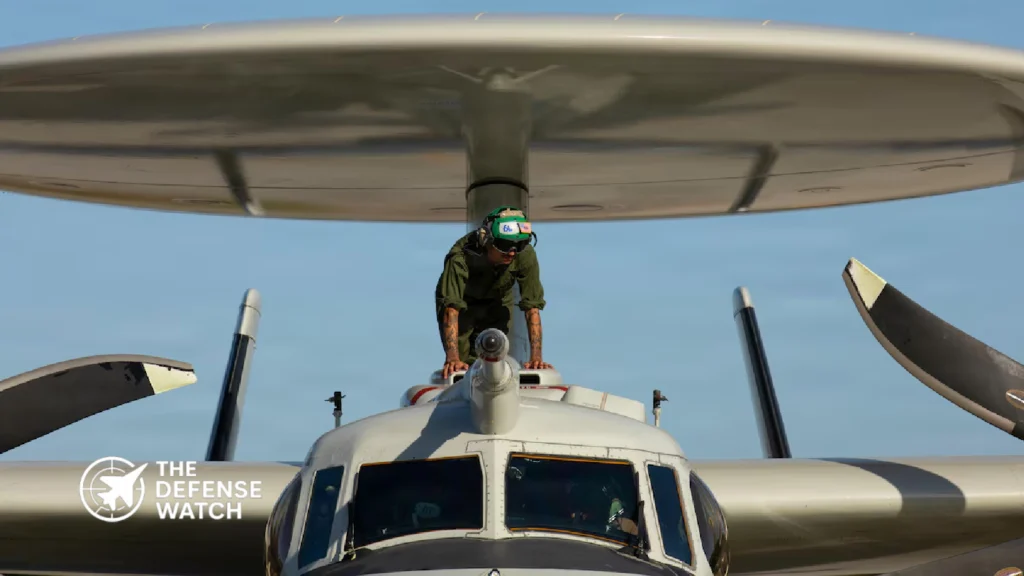
The E-2D Advanced Hawkeye provides airborne early warning and command and control for naval forces. NAVAIR describes it as a multi-mission aircraft capable of coordinating activities including air warfare, strike operations, surface warfare and search and rescue.
Its ability to connect multiple elements of a force makes software, communications and interoperability just as important as the aircraft’s physical performance.
That distinction is increasingly important as naval aviation moves toward larger networks involving F-35s, F/A-18E/F Super Hornets, EA-18G Growlers, unmanned aircraft, surface ships and other sensors.
A platform can perform successfully in isolation and still create operational problems if its information cannot be exchanged with the rest of the force.
Gray Flag provides a controlled environment for finding those problems.
The 2026 event was the largest Gray Flag iteration to date, with 78 aircraft launching for one test event on a single day. The scale allowed test teams to examine interactions that would be difficult to reproduce through individual platform testing.
Software Is Becoming Part of the Aircraft’s Combat Capability
The E-2D is also undergoing continuing modernization.
NAVAIR previously awarded Northrop Grumman an $845.5 million contract for Delta System Software Configuration 6, or DSSC 6. The upgrade is intended to modernize the E-2D cockpit and mission-system architecture, improve situational awareness and facilitate integration of additional capabilities.
NAVAIR said fleet introduction of DSSC 6 was scheduled to begin in 2028.
That creates an important connection between developmental testing and operational fleet requirements. The E-2D’s future effectiveness will depend not only on its radar and airframe, but also on how quickly its architecture can accommodate new software, communications capabilities and mission functions.
The Gray Flag environment provides a way to evaluate those changes alongside other systems rather than testing them entirely in isolation.
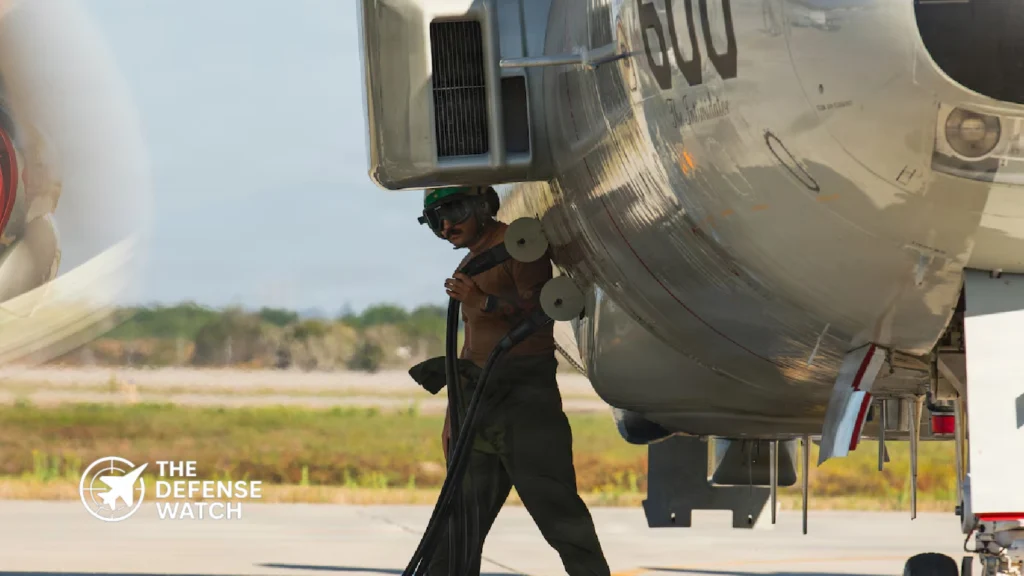
Navy Petty Officer 2nd Class Dakota Turner, an aviation structural mechanic assigned to Air Test and Evaluation Squadron 1, prepares to disconnect support equipment from an E-2D Hawkeye during Exercise Gray Flag at Naval Base Ventura County, Calif., Sept. 23, 2026. (Image : DoW)
A Test of the Naval Air Wing as a Network
The significance of VX-1’s participation is therefore broader than the E-2D itself.
The Navy’s carrier air wing is becoming increasingly dependent on information moving between platforms. An E-2D can detect and manage information, while fighters, electronic warfare aircraft, ships and other assets may act on that information.
Failures at those interfaces can undermine otherwise capable systems.
The Navy has increasingly used large-scale test events to identify such problems before deployment. Gray Flag 2026 brought together U.S. services as well as allied participants, including personnel from Australia, Canada and the United Kingdom.
That creates another layer of complexity. Interoperability is not limited to U.S. platforms and networks. Allied aircraft and systems must also exchange information under operational conditions.
For the E-2D, which functions as an airborne command and control node, that issue is particularly relevant.
What Gray Flag Can and Cannot Establish
The Navy’s public reporting establishes that E-2D aircraft from VX-1 participated in Gray Flag 2026 and that the exercise was designed to test integration and interoperability.
It does not publicly establish the performance of individual classified sensors, software configurations, communications links or specific mission systems tested during the event.
The Navy also has not publicly released detailed results for each test objective.
That distinction matters. Participation in a large-force test does not by itself demonstrate that a particular capability has achieved operational superiority or that every integration problem has been resolved.
The value of Gray Flag is partly in discovering failures. A test that identifies a software, communications or procedural problem can be useful even when the system does not initially perform as expected.
For the E-2D, the immediate significance of the 2026 event is therefore the opportunity to evaluate the aircraft as part of a larger combat network rather than simply as an airborne radar platform.
As naval aviation becomes more distributed, that network-level testing will increasingly determine whether individual aircraft can deliver their intended value when operating alongside the wider force.