Executive Summary:
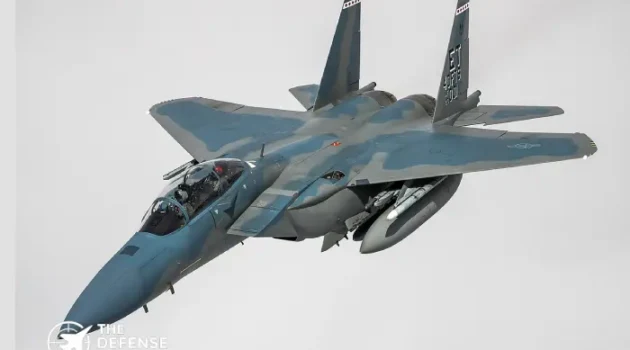
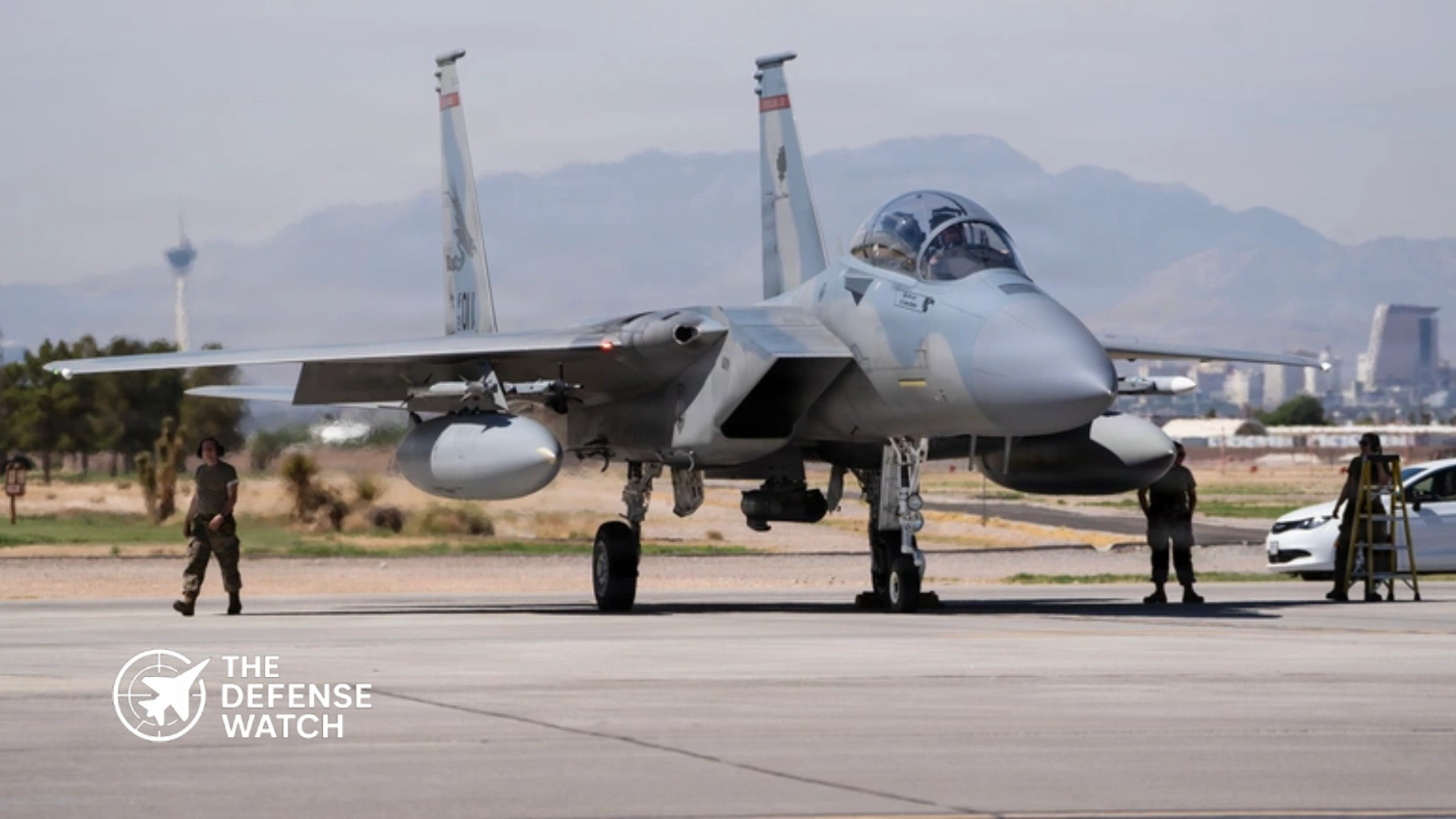
The U.S. Air Force’s first 16 F-15EX Eagle II fighters achieved an average materiel availability rate of 72.4% in fiscal 2026, according to a Department of War acquisition report. The result is 12.4 percentage points above the program’s 60% minimum sustainment threshold but 7.6 points below its 80% objective. The finding comes as the Air Force prepares to expand the planned F-15EX fleet to 268 aircraft, making sustainment performance increasingly important as production scales.
F-15EX Eagle II Availability Reaches 72.4%
The F-15EX Eagle II availability rate for the first 16 aircraft averaged 72.4% in fiscal 2026, according to an acquisition report cited in a Sept. 14 report by Defence Industry Europe. The reported performance applies to aircraft EX1 through EX16 and reflects demonstrated performance through Feb. 24, 2026.
The 72.4% figure clears the program’s minimum materiel availability threshold of 60%. However, it remains below the Air Force’s 80% objective established under the program’s acquisition baseline. The acquisition assessment characterized the result as slightly below the objective and reported no formal performance deviation.
That distinction matters. A threshold represents the minimum acceptable performance level, while an objective establishes the level the program is intended to achieve. The early F-15EX fleet therefore met its formal minimum requirement but has not yet demonstrated the higher availability level the Air Force ultimately wants.
Availability Gap Is 7.6 Percentage Points
The reported figures put the early F-15EX fleet in a relatively clear position:
| F-15EX Sustainment Measure | Reported Result |
|---|---|
| Average materiel availability | 72.4% |
| Program threshold | 60% |
| Program objective | 80% |
| Margin above threshold | 12.4 percentage points |
| Gap to objective | 7.6 percentage points |
| Aircraft covered | EX1 through EX16 |
| Performance date | Feb. 24, 2026 |
The most important point is that 72.4% should not be interpreted as a failure of the aircraft to meet its acquisition requirement. The reported rate is above the established threshold.
The more significant issue is whether the Air Force can improve availability as the fleet grows from a small initial population into a much larger operational force.
Why F-15EX Sustainment Matters
Materiel availability measures whether an aircraft is available for its intended mission rather than simply counting how many aircraft have been delivered.
For a fighter fleet, that distinction is important. An aircraft can be physically present in the inventory but unavailable because it is undergoing scheduled maintenance, awaiting parts, receiving repairs or otherwise unavailable for operational use.
The Air Force is now relying on the F-15EX for more than a limited replacement program. The aircraft was initially intended to replace aging F-15C and F-15D fighters, while also complementing fifth-generation aircraft in missions where its payload, range and weapons capacity provide useful additional capacity. The Air Force says the aircraft is designed around a digital backbone, open architecture and advanced electronic warfare capabilities.
That makes sustainment performance increasingly important as procurement expands.
Air Force Plans a Much Larger F-15EX Fleet
The availability result comes at a significant point in the program’s development.
The Air Force has substantially expanded its planned F-15EX procurement. A fiscal 2027 acquisition report identifies a planned fleet of 268 aircraft, a major increase from earlier procurement plans. Defence Industry Europe reported that 18 aircraft had been delivered as of April 14, 2026.
The expansion means that sustainment performance demonstrated by the first aircraft will become increasingly important.
A small early fleet can produce different maintenance dynamics from a mature fleet. As more aircraft enter operational units, the Air Force gains a larger pool of maintainers, spare parts, technical experience and maintenance data. At the same time, the larger fleet creates a much greater demand for engines, components, depot capacity and trained personnel.
The challenge will be converting a 72.4% early availability result into a consistently higher rate across a much larger operational population.
F-15EX Has Already Passed Major Operational Milestones
The availability result should also be viewed alongside the aircraft’s broader acquisition progress.
The F-15EX completed initial operational test and evaluation and live-fire testing in November 2023. The program subsequently achieved full-rate production approval in June 2024 and initial operational capability in July 2024, according to the acquisition reporting cited by Defence Industry Europe.
The Air Force has described the aircraft as a replacement for aging F-15C/D fighters and as a complementary platform to fifth-generation aircraft.
The service’s operational testing has included air-superiority missions and defensive and offensive counter-air missions. Testing also established a basic air-to-ground capability.
This is important because availability is only one part of combat capability. A modern fighter must combine mission effectiveness with the ability to generate sorties repeatedly.
Maintenance Is the Largest Sustainment Cost
The acquisition assessment also highlights the financial importance of maintaining the F-15EX fleet.
Annual operating and support costs are estimated at approximately $13.1 million per aircraft in constant fiscal 2020 dollars. Maintenance accounts for the largest portion at about $7.2 million per aircraft, followed by unit operations at roughly $3 million and unit-level manpower at approximately $1.9 million.
F-15EX Operating and Support Cost Annual Estimate Per Aircraft Total operating and support $13.1 million Maintenance $7.2 million Unit operations $3.0 million Unit-level manpower $1.9 million Other sustainment and improvements Remaining balance The maintenance figure is particularly relevant to the availability issue because improvements in reliability, parts availability and maintenance turnaround can directly influence the number of aircraft available for operations.
Production Growth Adds Another Sustainment Test
The Air Force’s F-15EX program is also dealing with production expansion and industrial-base challenges.
The Air Force previously reported that deliveries resumed after a strike at Boeing’s St. Louis facility disrupted production between August and November 2025. Aircraft 14, 15 and 16 were subsequently delivered to Portland Air National Guard Base.
The production issue is separate from the 72.4% availability figure, but both point to the same broader challenge: scaling a fighter program requires more than producing airframes.
The Air Force needs a supporting industrial system capable of supplying engines, avionics, electronic warfare equipment, structural components and other parts at the rate required by an expanding fleet.
F-15EX Is Becoming More Important in the Indo-Pacific
The availability question is particularly relevant as the F-15EX moves toward a larger role in the Indo-Pacific.
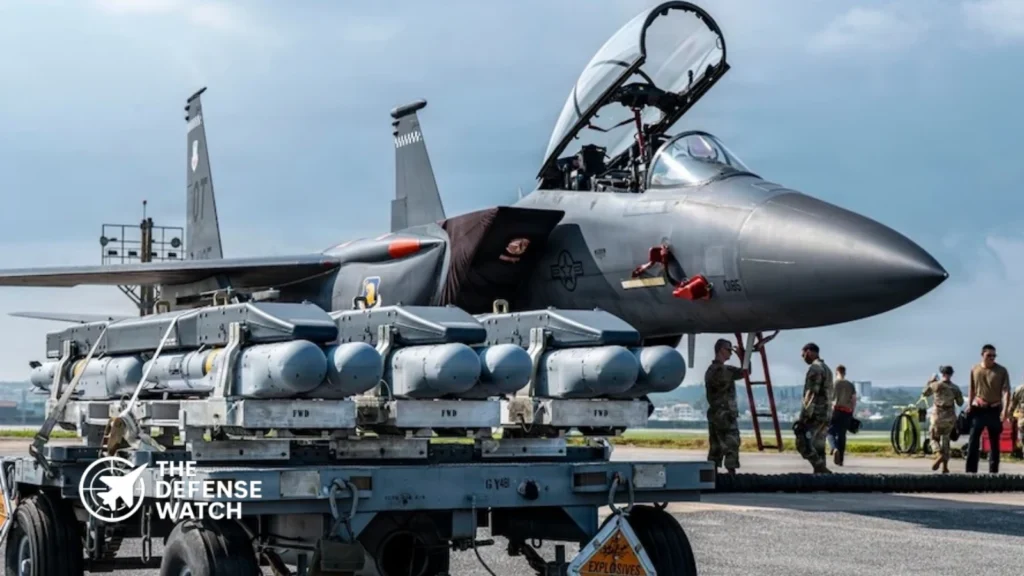
The Air Force has been preparing the aircraft for permanent deployment to Kadena Air Base, Japan. In September 2026, the first F-15EX designated for Kadena departed Boeing’s St. Louis facility for Portland, where it was scheduled to receive additional preparation before moving to Japan.
The Air Force has also used F-15EX deployments to Kadena to familiarize local personnel with the aircraft and validate maintenance, logistics and combat-generation procedures.
This gives the availability metric greater operational significance. Forward-based fighters must be supported in environments where maintenance capacity, spare parts and transportation can be more constrained than at U.S. bases.
For the Indo-Pacific, where distances between operating locations can be considerable, aircraft availability directly affects the number of sorties a force can generate over time.
What 72.4% Means for the Program
The current result does not indicate that the F-15EX program has failed its sustainment requirement. It indicates that the early fleet has cleared the minimum threshold while still leaving room to improve toward the 80% objective.
The key question is therefore not whether the first 16 aircraft reached 80%. They did not.
The more important question is whether the Air Force can improve availability as the fleet matures and expands.
That will depend on several factors, including maintenance turnaround times, spare-parts availability, supply-chain performance, technical workforce capacity and the maturity of the aircraft’s support infrastructure.
The program’s future scale makes those factors more important than the performance of a 16-aircraft sample alone.
F-15EX Expansion Raises the Stakes
The Air Force’s decision to expand the planned F-15EX fleet makes sustainment a central issue for the program.
The aircraft offers the service a large, modern weapons platform that can complement F-35 and F-22 aircraft rather than performing exactly the same role. The Air Force has specifically described the F-15EX as a complementary platform for fifth-generation fighters, while its large weapons capacity provides additional options for long-range fires and air operations.
But a fighter’s value depends on its ability to generate sorties when required.
For that reason, the 72.4% availability figure is best understood as an early sustainment indicator rather than a verdict on the aircraft. Clearing the 60% threshold is a positive program result, while the 7.6 percentage-point gap to the 80% objective identifies an area the Air Force will need to monitor closely as procurement accelerates.
The next stages of the F-15EX program will therefore test not only Boeing’s ability to deliver aircraft, but also the Air Force’s ability to sustain a rapidly expanding fleet at the readiness levels expected from a front-line fighter force.
Bottom Line
The first 16 F-15EX Eagle II fighters recorded a 72.4% average materiel availability rate in fiscal 2026, exceeding the program’s 60% threshold but falling short of the 80% objective. The result does not represent a formal program failure, but it provides an important early measure of the aircraft’s sustainment performance.
With the Air Force now planning for a fleet of 268 F-15EX aircraft, improving availability will become increasingly important. The aircraft is moving from an initial fielding phase toward a much larger operational role, including planned deployment to Japan.
For the F-15EX program, the central sustainment test is now clear: maintain and improve availability while the fleet expands substantially in size and geographic scope.