Britain Expands F-35 Long-Range Weapons Plans
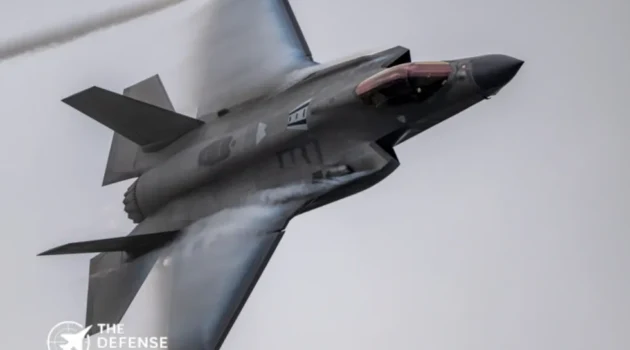
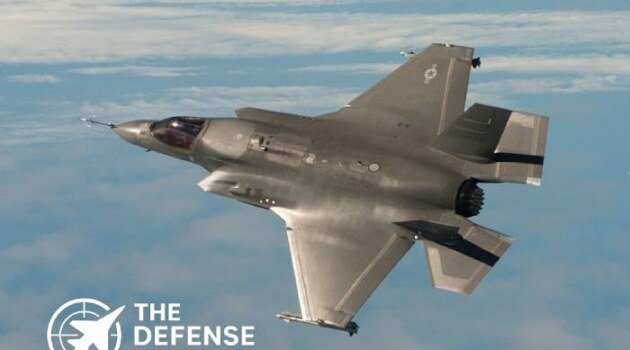
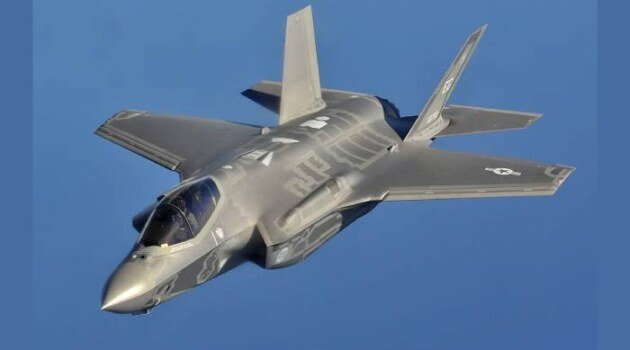
Britain is expanding the planned long-range weapons options for its F-35 Lightning II force while allocating £460 million to the SPEAR Capability 3 program through the 2029/30 financial year, according to the UK government’s 2026 Defence Investment Plan. The plan places greater emphasis on stand-off strike, larger weapons inventories and the ability to attack targets without requiring combat aircraft to penetrate the most heavily defended areas.
- Britain Expands F-35 Long-Range Weapons Plans
- Takeaways
- £460 Million Allocated To SPEAR Capability 3
- SPEAR Moves Closer To Operational Service
- Why Stand-Off Weapons Matter For the F-35
- The Broader British Shift Toward Long-Range Strike
- F-35B, F-35A and Autonomous Aircraft
- Stockpiles Are Becoming As Important As Aircraft
- What Remains Unclear
- Strategic Implications For Britain
- Bottom Line
Takeaways
Britain is expanding the planned weapons options for its F-35 force while continuing the integration and procurement of SPEAR Capability 3.
The announcement is significant because the UK is not treating the F-35 simply as a stealth fighter acquisition. Instead, Britain is developing a broader combat-air architecture in which the F-35B, future F-35A aircraft, long-range weapons and autonomous aircraft are intended to operate as parts of the same force.
The government has not yet identified the additional weapons covered by the wider F-35 package. It has also not released quantities, individual program values or firm integration dates, making the £460 million SPEAR allocation the clearest publicly identified weapons investment associated with the current plan.
£460 Million Allocated To SPEAR Capability 3
SPEAR Capability 3 is intended to provide the UK F-35 force with a network-enabled, air-launched stand-off strike weapon. MBDA describes SPEAR as a miniature cruise missile designed to engage a broad range of land and maritime targets while allowing the launch aircraft to remain beyond the effective reach of hostile air defenses.
The weapon is less than 2 meters long, has a diameter of 180 millimeters and weighs less than 100 kilograms, according to MBDA. Its turbojet propulsion, networked architecture and multi-sensor seeker are designed to support precision engagement in complex operating environments.
The British Ministry of Defence previously described SPEAR3 as a weapon intended to attack targets at more than 140 kilometers. The 2021 production contract was valued at £550 million and was intended to establish SPEAR as a major air-to-ground weapon for British F-35B aircraft.
The newer £460 million allocation should not be treated as a replacement for that earlier contract. It represents funding identified in the 2026 Defence Investment Plan for SPEAR Capability 3 during 2026/27 through 2029/30.
Program Current publicly identified figure Relevance SPEAR Capability 3 £460 million F-35 stand-off strike capability Broader F-35 program £2.2 billion Aircraft and wider program investment through 2029/30 UK weapons and munitions £11.1 billion Broader weapons and stockpile investment Collaborative Combat Aircraft £300 million Autonomous combat-air development Project PANTHEON Almost £240 million Uncrewed systems and F-35B integration work The figures above cover different parts of the UK defense program and should not be combined as if they represent a single F-35 weapons contract.
SPEAR Moves Closer To Operational Service
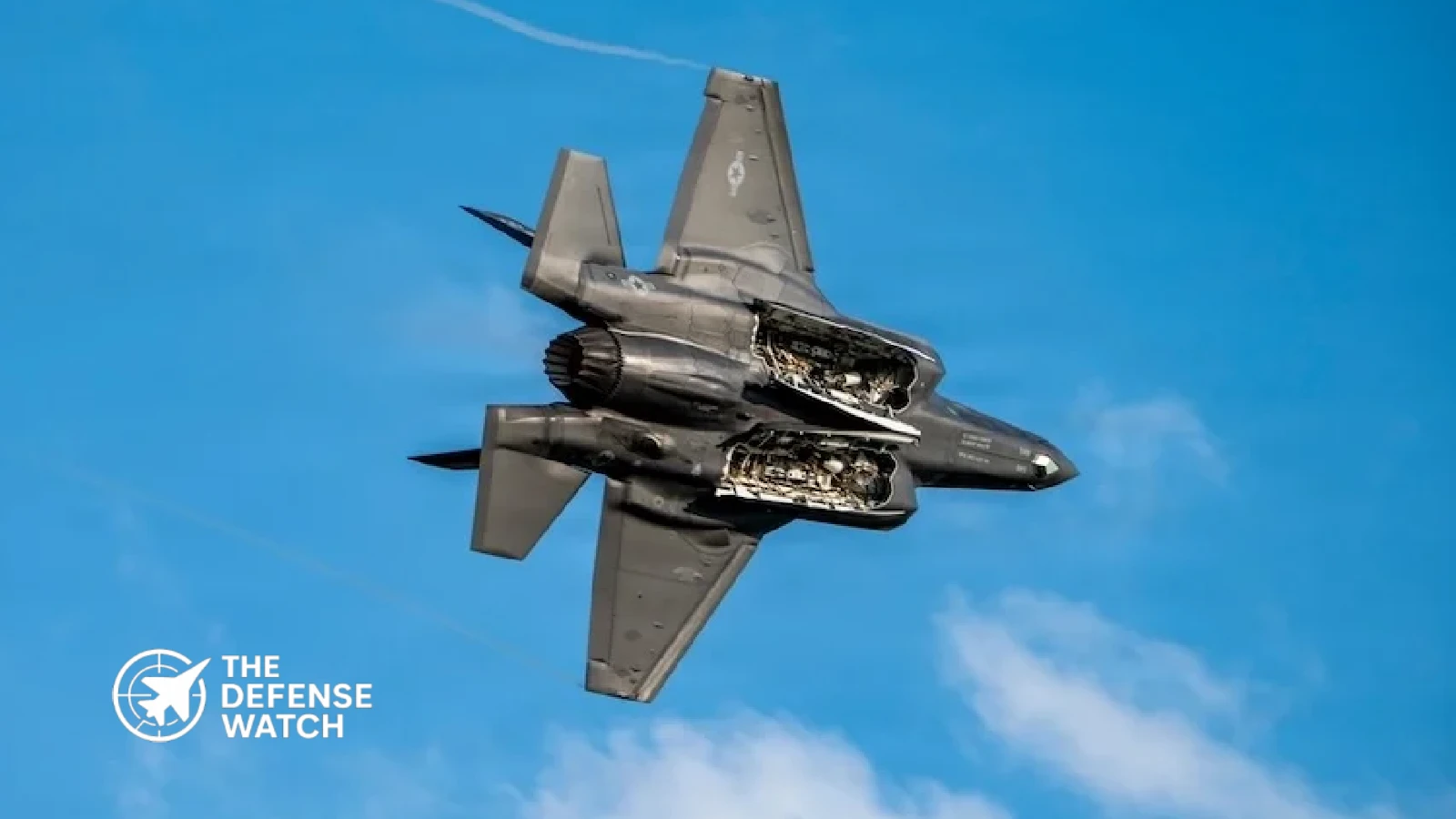
SPEAR has progressed significantly during 2026. MBDA reported in May that four SPEAR missiles were loaded into the weapons bay of an F-35B test aircraft during a flight from Naval Air Station Patuxent River in Maryland. The test involved the F-35 Integrated Test Force, MBDA, Lockheed Martin, BAE Systems, the UK Ministry of Defence and British Royal Navy and Royal Air Force personnel.
MBDA subsequently said at the 2026 Farnborough International Airshow that SPEAR had entered low-rate initial production, with manufacturing beginning during 2026 and first operational missile deliveries expected in early 2027.
That progression matters because a stand-off missile only provides meaningful combat capability once the weapon, aircraft software, mission systems, targeting process and operational support chain are all integrated.
The integration challenge is particularly important for the F-35B. Its short-takeoff and vertical-landing configuration imposes tight limits on aircraft weight, internal volume and thermal management, while the requirement to carry weapons internally places additional constraints on missile dimensions and launch interfaces.
Why Stand-Off Weapons Matter For the F-35
The principal operational value of a weapon such as SPEAR is not simply its nominal range. It is the ability to shift the engagement point away from the launch aircraft.
Modern integrated air defense systems combine long-range surveillance radars, mobile surface-to-air missiles, electronic warfare, short-range defenses and command networks. A penetrating fighter may still be able to enter such an environment, but the risk rises as the density and sophistication of those defenses increase.
A stand-off weapon allows the F-35 to use its sensors and network connections to contribute to an engagement without necessarily flying directly over the target area.
This is particularly relevant to the F-35 because the aircraft is designed around sensor fusion and low observability. Combining those attributes with longer-range weapons can create a layered strike system in which the aircraft searches, identifies and shares information while the weapon provides the physical reach needed to attack the target.
SPEAR is also designed for targets that may move or change position. MBDA says the weapon can engage targets across land and sea and uses an advanced multi-sensor seeker.
That makes it different from a simple fixed-target glide bomb. Its design is aimed at a more complicated battlefield where targets can relocate, air defenses can maneuver and weather or electronic interference can affect the engagement.
The Broader British Shift Toward Long-Range Strike
The F-35 weapons investment is part of a much larger British effort to rebuild and expand long-range strike capacity.
In February 2026, the Ministry of Defence said Britain expected to spend more than £400 million during the financial year on hypersonic and long-range weapons, including cooperative projects with France, Germany and Italy. The government identified long-range strike as a growing priority within European defense cooperation.
In June, Britain and other European states also moved forward with the European Long-range Strike Approach, covering air-launched, ground-launched and low-cost long-range strike capabilities.
The shift reflects a broader change in how European air forces are approaching contested operations. Instead of relying primarily on a relatively small number of highly capable combat aircraft, planners are increasingly looking at combinations of aircraft, stand-off missiles, autonomous systems, electronic warfare and networked sensors.
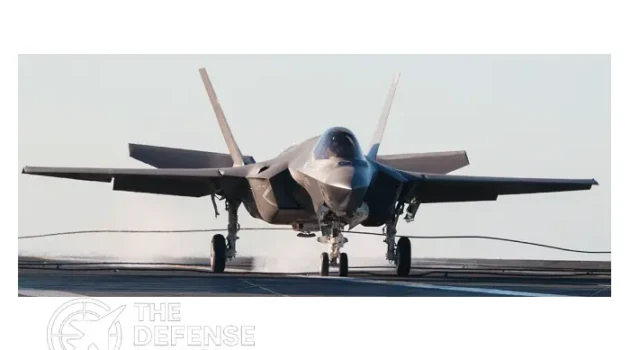
For Britain, that approach is especially important because the F-35B provides a carrier-based stealth combat capability. Its ability to operate from the Royal Navy’s Queen Elizabeth-class carriers gives Britain a mobile airpower option, but the effectiveness of that force depends heavily on the weapons available to the aircraft.
F-35B, F-35A and Autonomous Aircraft
Britain’s F-35 force is also changing in composition.
The UK plans to bring its first F-35A aircraft into Royal Air Force service in the early 2030s. Unlike the F-35B, the F-35A is designed for conventional runway operations and will allow Britain to participate in NATO’s Dual Capable Aircraft mission.
The UK is simultaneously developing autonomous combat aircraft. Its Collaborative Combat Aircraft program has a planned £300 million allocation and is intended to produce a demonstrator by 2030.
These aircraft are expected to operate alongside crewed fighters, carrying additional weapons and extending sensor coverage. The stated concept is to place autonomous systems farther forward in contested airspace, potentially allowing crewed aircraft to operate from positions with greater survivability.
Project PANTHEON represents another part of this effort, with almost £240 million allocated to trials involving jet-powered uncrewed aircraft intended to work with the F-35B force.
The resulting architecture could give Britain several layers of combat power: F-35s for stealth, sensing and command functions, stand-off missiles for long-range precision effects, autonomous aircraft for additional sensors and weapons, and Typhoon fighters for complementary air defense and strike missions.
Stockpiles Are Becoming As Important As Aircraft
One of the most important elements of the British plan is the emphasis on munitions depth.
The UK government has allocated £11.1 billion through its Defence Investment Plan for weapons and munitions. The stated objective is to rebuild stockpiles and create a mix of high-end and lower-cost weapons capable of addressing different target sets.
This is a significant lesson from recent conflicts. A small inventory of expensive precision weapons can provide exceptional capability, but it cannot support sustained operations indefinitely.
For an F-35 force, this means the number of available missiles can become almost as important as the number of aircraft. A fighter cannot generate sustained strike effects if its weapons inventory is too small to support repeated operations.
SPEAR’s relatively compact design is relevant here because MBDA emphasizes its high aircraft loadout and the ability to carry multiple weapons while retaining stand-off capability.
The combination of weapon size, range and network connectivity is therefore central to its intended role.
What Remains Unclear
The most important limitation in the current announcement is that Britain has not publicly identified the full list of additional stand-off and long-range weapons planned for the F-35 force.
The Defence Investment Plan does not provide a detailed breakdown of weapon quantities, individual procurement values or integration schedules. The wider program should therefore be viewed as a policy and investment direction rather than a completed procurement package.
The same caution applies to the £460 million SPEAR allocation. Funding does not automatically translate into an immediate operational capability. Aircraft integration, software certification, testing, production capacity, training and logistics all affect when a weapon can be fielded at scale.
Previous UK government reporting also shows that SPEAR Capability 3 has experienced program and integration challenges. The 2024/25 NISTA assessment identified uncertainty surrounding the F-35B integration timeline, although the program had achieved a successful guided firing trial in November 2024.
The latest flight and production milestones indicate that the program has continued to progress, but operational availability remains dependent on the completion of the remaining integration and acceptance process.
Strategic Implications For Britain
For Britain, the significance of the current investment goes beyond adding another missile to the F-35 inventory.
The country is moving toward a combat-air model that combines stealth aircraft, longer-range weapons, autonomous systems and deeper munitions inventories. That approach is designed to preserve the ability to conduct operations when adversaries can threaten aircraft with increasingly sophisticated air defense networks.
The approach also has implications for NATO.
Britain operates one of Europe’s most capable F-35 fleets and remains a major contributor to NATO airpower. Adding a mature stand-off strike capability to that fleet can increase the number of missions British aircraft can conduct without relying exclusively on direct penetration of defended airspace.
The UK government has also committed to broader European long-range strike cooperation, while NATO allies are increasing their emphasis on deep precision strike capabilities. In July 2026, a group of NATO countries, including Britain, committed to collectively invest $50.66 billion in deep precision strike capabilities over the next decade.
The British F-35 weapons effort therefore fits into a wider European effort to restore depth in long-range conventional strike.
Bottom Line
Britain is expanding the role of its F-35 Lightning II force from a stealth combat aircraft fleet into a broader long-range strike component of the Royal Air Force and Royal Navy.
The £460 million SPEAR Capability 3 allocation provides a defined financial commitment, while the wider plan for additional stand-off and long-range weapons signals a broader change in British strike planning. The specific weapons, quantities and schedules remain undisclosed.
SPEAR itself is further along than the broader weapons package. Its F-35B flight integration milestone, low-rate production and planned early 2027 operational deliveries indicate that Britain is moving toward a practical stand-off strike capability rather than simply outlining a future requirement.
For the F-35 force, the strategic value will ultimately depend on the combination of aircraft availability, weapon stockpiles, network connectivity and the ability to sustain operations against modern integrated air defenses. Britain’s current investment plan shows that London is attempting to address all four elements together.