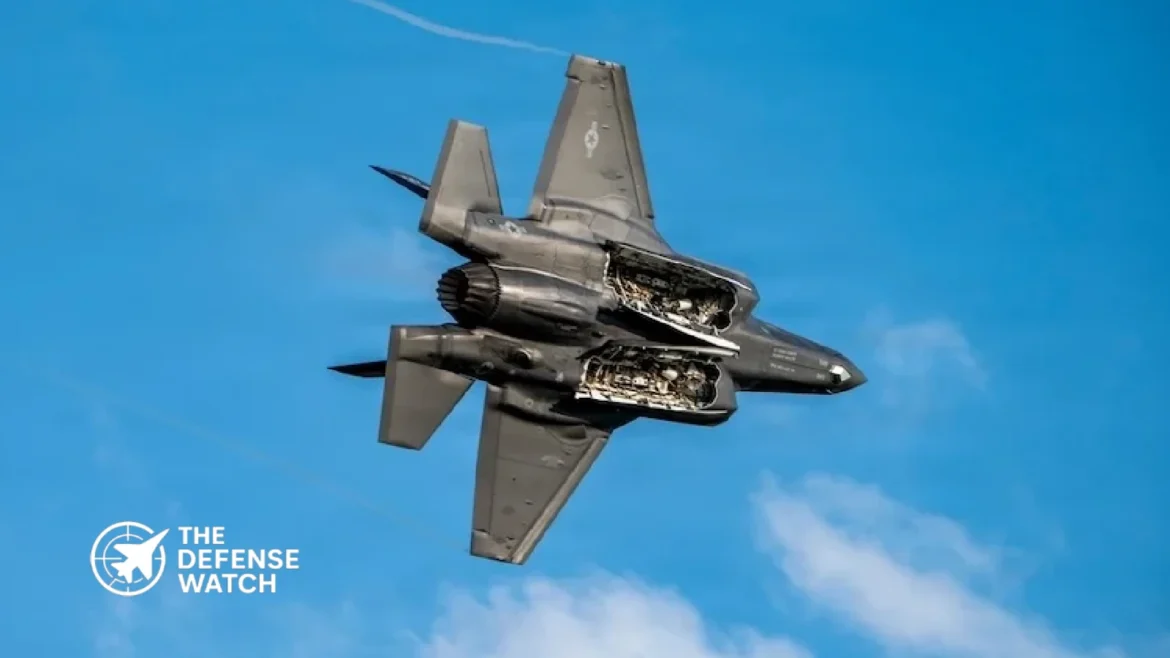
Britain Expands F-35 Long-Range Weapons Plans
Britain is expanding the planned long-range weapons options for its F-35 Lightning II force while allocating £460 million to the SPEAR Capability 3 program through the 2029/30 financial year, according to the UK government’s 2026 Defence Investment Plan. The plan places greater emphasis on stand-off strike, larger weapons inventories and the ability to attack targets without requiring combat aircraft to penetrate the most heavily defended areas.
Takeaways
Britain is expanding the planned weapons options for its F-35 force while continuing the integration and procurement of SPEAR Capability 3.
The announcement is significant because the UK is not treating the F-35 simply as a stealth fighter acquisition. Instead, Britain is developing a broader combat-air architecture in which the F-35B, future F-35A aircraft, long-range weapons and autonomous aircraft are intended to operate as parts of the same force.
The government has not yet identified the additional weapons covered by the wider F-35 package. It has also not released quantities, individual program values or firm integration dates, making the £460 million SPEAR allocation the clearest publicly identified weapons investment associated with the current plan.
£460 Million Allocated To SPEAR Capability 3
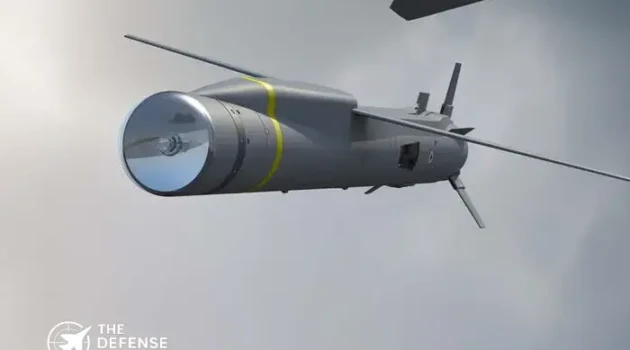
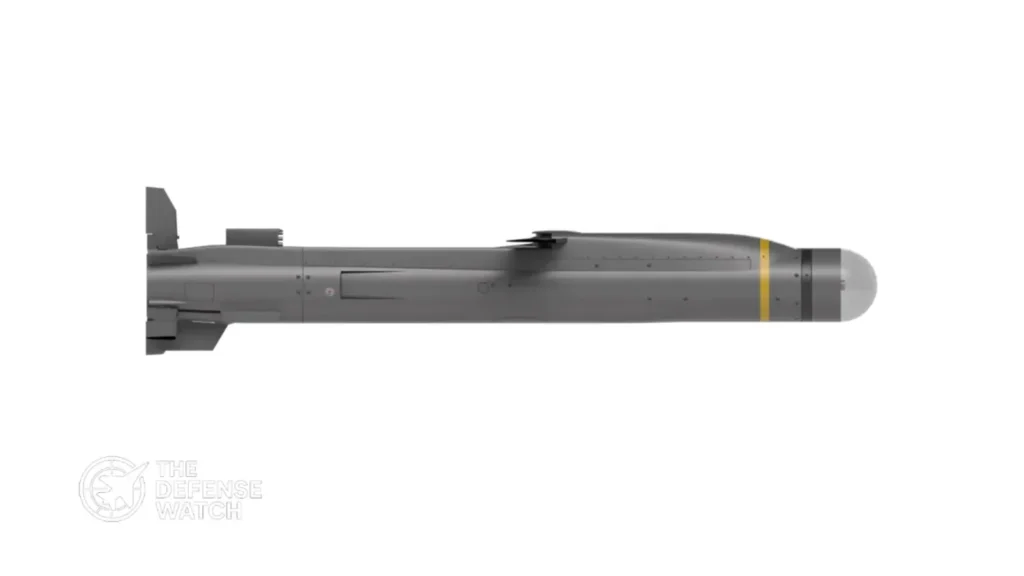
SPEAR Capability 3 is intended to provide the UK F-35 force with a network-enabled, air-launched stand-off strike weapon. MBDA describes SPEAR as a miniature cruise missile designed to engage a broad range of land and maritime targets while allowing the launch aircraft to remain beyond the effective reach of hostile air defenses.
The weapon is less than 2 meters long, has a diameter of 180 millimeters and weighs less than 100 kilograms, according to MBDA. Its turbojet propulsion, networked architecture and multi-sensor seeker are designed to support precision engagement in complex operating environments.
The British Ministry of Defence previously described SPEAR3 as a weapon intended to attack targets at more than 140 kilometers. The 2021 production contract was valued at £550 million and was intended to establish SPEAR as a major air-to-ground weapon for British F-35B aircraft.
The newer £460 million allocation should not be treated as a replacement for that earlier contract. It represents funding identified in the 2026 Defence Investment Plan for SPEAR Capability 3 during 2026/27 through 2029/30.
Program Current publicly identified figure Relevance SPEAR Capability 3 £460 million F-35 stand-off strike capability Broader F-35 program £2.2 billion Aircraft and wider program investment through 2029/30 UK weapons and munitions £11.1 billion Broader weapons and stockpile investment Collaborative Combat Aircraft £300 million Autonomous combat-air development Project PANTHEON Almost £240 million Uncrewed systems and F-35B integration work The figures above cover different parts of the UK defense program and should not be combined as if they represent a single F-35 weapons contract.
SPEAR Moves Closer To Operational Service
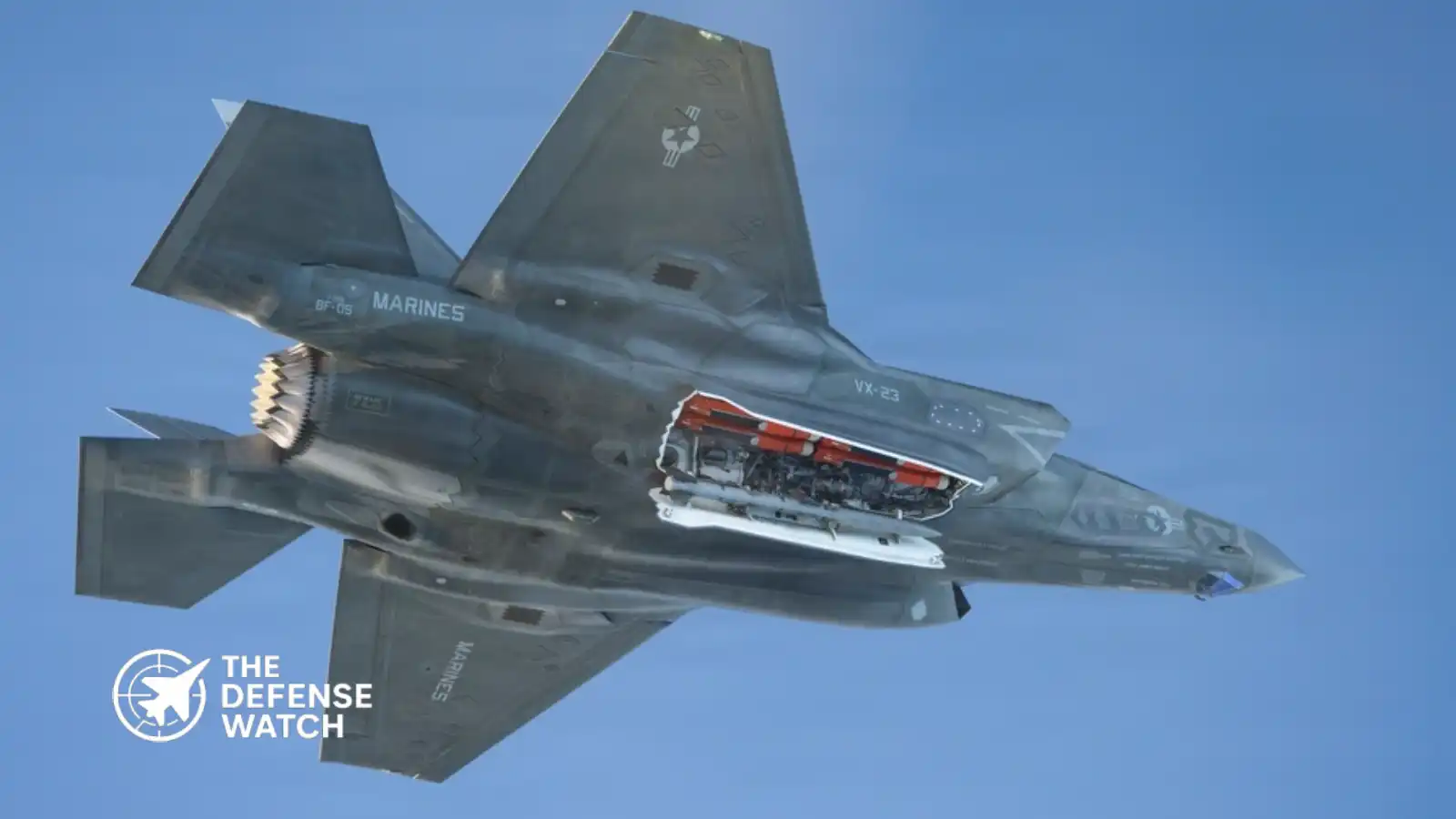
SPEAR has progressed significantly during 2026. MBDA reported in May that four SPEAR missiles were loaded into the weapons bay of an F-35B test aircraft during a flight from Naval Air Station Patuxent River in Maryland. The test involved the F-35 Integrated Test Force, MBDA, Lockheed Martin, BAE Systems, the UK Ministry of Defence and British Royal Navy and Royal Air Force personnel.
MBDA subsequently said at the 2026 Farnborough International Airshow that SPEAR had entered low-rate initial production, with manufacturing beginning during 2026 and first operational missile deliveries expected in early 2027.
That progression matters because a stand-off missile only provides meaningful combat capability once the weapon, aircraft software, mission systems, targeting process and operational support chain are all integrated.
The integration challenge is particularly important for the F-35B. Its short-takeoff and vertical-landing configuration imposes tight limits on aircraft weight, internal volume and thermal management, while the requirement to carry weapons internally places additional constraints on missile dimensions and launch interfaces.
Why Stand-Off Weapons Matter For the F-35
The principal operational value of a weapon such as SPEAR is not simply its nominal range. It is the ability to shift the engagement point away from the launch aircraft.
Modern integrated air defense systems combine long-range surveillance radars, mobile surface-to-air missiles, electronic warfare, short-range defenses and command networks. A penetrating fighter may still be able to enter such an environment, but the risk rises as the density and sophistication of those defenses increase.
A stand-off weapon allows the F-35 to use its sensors and network connections to contribute to an engagement without necessarily flying directly over the target area.
This is particularly relevant to the F-35 because the aircraft is designed around sensor fusion and low observability. Combining those attributes with longer-range weapons can create a layered strike system in which the aircraft searches, identifies and shares information while the weapon provides the physical reach needed to attack the target.
SPEAR is also designed for targets that may move or change position. MBDA says the weapon can engage targets across land and sea and uses an advanced multi-sensor seeker.
That makes it different from a simple fixed-target glide bomb. Its design is aimed at a more complicated battlefield where targets can relocate, air defenses can maneuver and weather or electronic interference can affect the engagement.
The Broader British Shift Toward Long-Range Strike
The F-35 weapons investment is part of a much larger British effort to rebuild and expand long-range strike capacity.
In February 2026, the Ministry of Defence said Britain expected to spend more than £400 million during the financial year on hypersonic and long-range weapons, including cooperative projects with France, Germany and Italy. The government identified long-range strike as a growing priority within European defense cooperation.
In June, Britain and other European states also moved forward with the European Long-range Strike Approach, covering air-launched, ground-launched and low-cost long-range strike capabilities.
The shift reflects a broader change in how European air forces are approaching contested operations. Instead of relying primarily on a relatively small number of highly capable combat aircraft, planners are increasingly looking at combinations of aircraft, stand-off missiles, autonomous systems, electronic warfare and networked sensors.
For Britain, that approach is especially important because the F-35B provides a carrier-based stealth combat capability. Its ability to operate from the Royal Navy’s Queen Elizabeth-class carriers gives Britain a mobile airpower option, but the effectiveness of that force depends heavily on the weapons available to the aircraft.
F-35B, F-35A and Autonomous Aircraft
Britain’s F-35 force is also changing in composition.
The UK plans to bring its first F-35A aircraft into Royal Air Force service in the early 2030s. Unlike the F-35B, the F-35A is designed for conventional runway operations and will allow Britain to participate in NATO’s Dual Capable Aircraft mission.
The UK is simultaneously developing autonomous combat aircraft. Its Collaborative Combat Aircraft program has a planned £300 million allocation and is intended to produce a demonstrator by 2030.
These aircraft are expected to operate alongside crewed fighters, carrying additional weapons and extending sensor coverage. The stated concept is to place autonomous systems farther forward in contested airspace, potentially allowing crewed aircraft to operate from positions with greater survivability.
Project PANTHEON represents another part of this effort, with almost £240 million allocated to trials involving jet-powered uncrewed aircraft intended to work with the F-35B force.
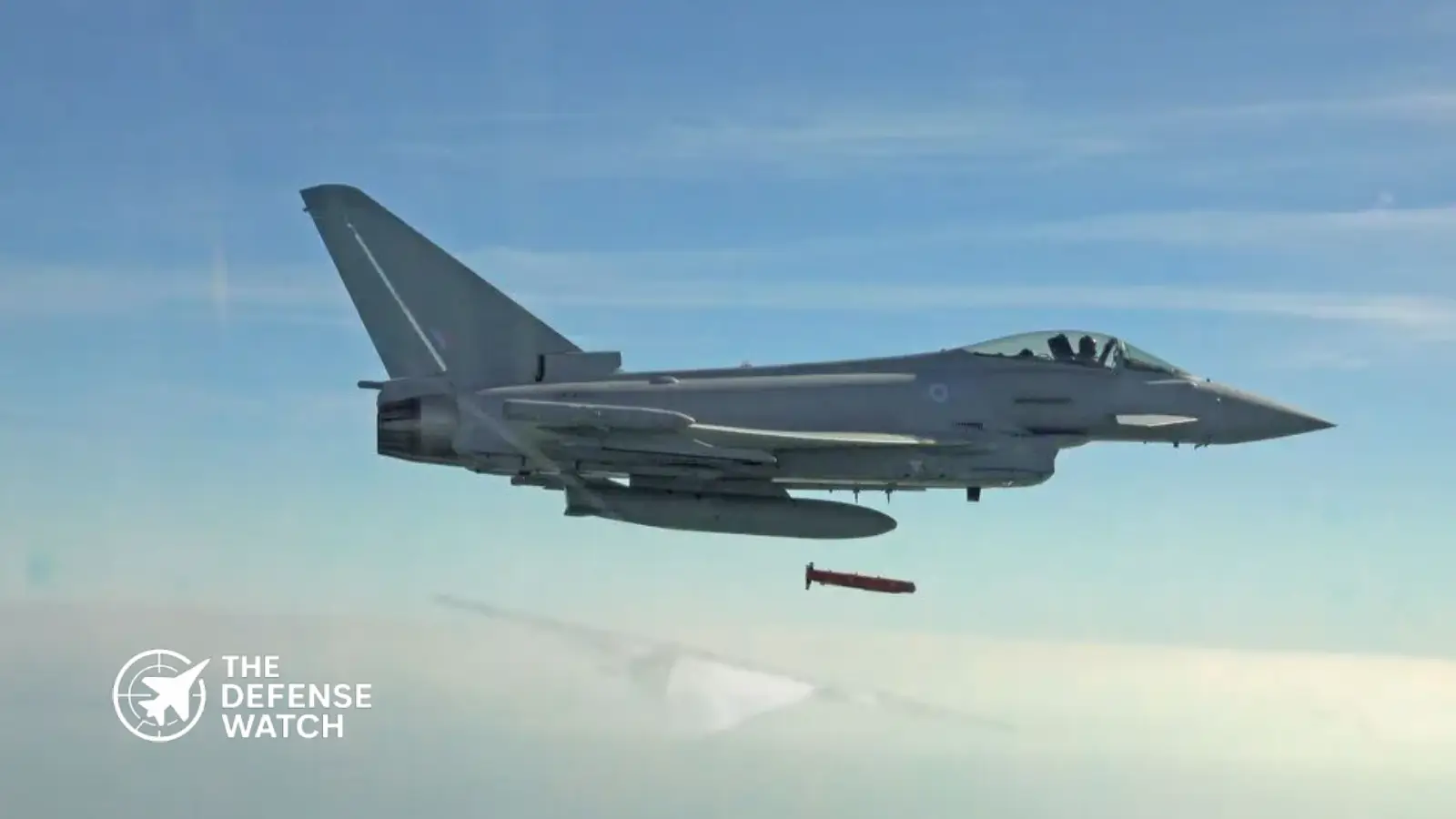
The resulting architecture could give Britain several layers of combat power: F-35s for stealth, sensing and command functions, stand-off missiles for long-range precision effects, autonomous aircraft for additional sensors and weapons, and Typhoon fighters for complementary air defense and strike missions.
Stockpiles Are Becoming As Important As Aircraft
One of the most important elements of the British plan is the emphasis on munitions depth.
The UK government has allocated £11.1 billion through its Defence Investment Plan for weapons and munitions. The stated objective is to rebuild stockpiles and create a mix of high-end and lower-cost weapons capable of addressing different target sets.
This is a significant lesson from recent conflicts. A small inventory of expensive precision weapons can provide exceptional capability, but it cannot support sustained operations indefinitely.
For an F-35 force, this means the number of available missiles can become almost as important as the number of aircraft. A fighter cannot generate sustained strike effects if its weapons inventory is too small to support repeated operations.
SPEAR’s relatively compact design is relevant here because MBDA emphasizes its high aircraft loadout and the ability to carry multiple weapons while retaining stand-off capability.
The combination of weapon size, range and network connectivity is therefore central to its intended role.
What Remains Unclear
The most important limitation in the current announcement is that Britain has not publicly identified the full list of additional stand-off and long-range weapons planned for the F-35 force.
The Defence Investment Plan does not provide a detailed breakdown of weapon quantities, individual procurement values or integration schedules. The wider program should therefore be viewed as a policy and investment direction rather than a completed procurement package.
The same caution applies to the £460 million SPEAR allocation. Funding does not automatically translate into an immediate operational capability. Aircraft integration, software certification, testing, production capacity, training and logistics all affect when a weapon can be fielded at scale.
Previous UK government reporting also shows that SPEAR Capability 3 has experienced program and integration challenges. The 2024/25 NISTA assessment identified uncertainty surrounding the F-35B integration timeline, although the program had achieved a successful guided firing trial in November 2024.
The latest flight and production milestones indicate that the program has continued to progress, but operational availability remains dependent on the completion of the remaining integration and acceptance process.
Strategic Implications For Britain
For Britain, the significance of the current investment goes beyond adding another missile to the F-35 inventory.
The country is moving toward a combat-air model that combines stealth aircraft, longer-range weapons, autonomous systems and deeper munitions inventories. That approach is designed to preserve the ability to conduct operations when adversaries can threaten aircraft with increasingly sophisticated air defense networks.
The approach also has implications for NATO.
Britain operates one of Europe’s most capable F-35 fleets and remains a major contributor to NATO airpower. Adding a mature stand-off strike capability to that fleet can increase the number of missions British aircraft can conduct without relying exclusively on direct penetration of defended airspace.
The UK government has also committed to broader European long-range strike cooperation, while NATO allies are increasing their emphasis on deep precision strike capabilities. In July 2026, a group of NATO countries, including Britain, committed to collectively invest $50.66 billion in deep precision strike capabilities over the next decade.
The British F-35 weapons effort therefore fits into a wider European effort to restore depth in long-range conventional strike.
Bottom Line
Britain is expanding the role of its F-35 Lightning II force from a stealth combat aircraft fleet into a broader long-range strike component of the Royal Air Force and Royal Navy.
The £460 million SPEAR Capability 3 allocation provides a defined financial commitment, while the wider plan for additional stand-off and long-range weapons signals a broader change in British strike planning. The specific weapons, quantities and schedules remain undisclosed.
SPEAR itself is further along than the broader weapons package. Its F-35B flight integration milestone, low-rate production and planned early 2027 operational deliveries indicate that Britain is moving toward a practical stand-off strike capability rather than simply outlining a future requirement.
For the F-35 force, the strategic value will ultimately depend on the combination of aircraft availability, weapon stockpiles, network connectivity and the ability to sustain operations against modern integrated air defenses. Britain’s current investment plan shows that London is attempting to address all four elements together.

The test marks a key step toward giving the F-35B a longer-range precision strike option designed for contested air defense environments.
Executive Summary:
Lockheed Martin and UK industry partners have completed the first flight test of the F-35B Lightning II carrying the SPEAR 3 precision strike missile. The milestone supports the United Kingdom’s effort to field a long-range stand-off weapon optimized for high-threat combat environments.F-35B SPEAR 3 Integration Advances UK Strike Capability
The F-35B SPEAR 3 missile integration program reached a major milestone after the aircraft completed its first flight carrying the MBDA-developed precision strike weapon. The test was conducted as part of the continuing effort to integrate advanced air-to-surface capabilities onto the fifth-generation fighter.
The flight marks the first time the F-35B has flown with the SPEAR 3 missile configuration.
The integration effort is being led in cooperation with the United Kingdom Ministry of Defence and European missile manufacturer MBDA. The weapon is intended to provide the F-35B with a compact stand-off strike capability capable of engaging defended targets at extended ranges.
The SPEAR 3 missile is designed for internal carriage within the F-35B weapons bay, preserving the aircraft’s low observable characteristics while expanding precision strike options.
What SPEAR 3 Adds To The F-35B
SPEAR 3, short for Select Precision Effects At Range Capability 3, is a network-enabled miniature cruise missile developed primarily for the Royal Air Force. The weapon combines low collateral damage targeting with stand-off range and multi-target engagement capability.
The missile uses a turbojet propulsion system rather than a traditional rocket motor, allowing greater range and flexible attack profiles. It is also designed to operate in electronically contested environments, an increasingly important requirement as air defense systems become more advanced.
The F-35B already operates as a multirole platform with stealth, sensor fusion, and electronic warfare capabilities. Integrating SPEAR 3 could significantly improve its ability to conduct precision strikes against mobile air defenses, command nodes, and hardened targets without entering heavily defended zones.
That capability has growing relevance as NATO air forces prepare for potential operations against integrated air defense networks fielded by near-peer competitors.
Strategic Importance For The United Kingdom
The United Kingdom remains one of the leading international partners in the F-35 program and operates the short takeoff and vertical landing F-35B variant through both the Royal Air Force and Royal Navy.
Britain’s carrier strike strategy relies heavily on the F-35B operating from the Queen Elizabeth-class aircraft carriers. Adding SPEAR 3 to the platform would provide UK carrier air wings with a longer-range strike option against time-sensitive and defended targets.
The integration effort also supports Britain’s broader defense modernization plans focused on deep precision fires, networked warfare, and survivable air combat systems.
Unlike larger cruise missiles, SPEAR 3’s compact size allows multiple weapons to be carried internally, potentially increasing strike density during combat operations while maintaining stealth performance.
This reflects a wider trend among Western air forces seeking smaller, networked precision weapons capable of operating in high-threat environments where survivability is critical.
Broader NATO And Industrial Implications
The F-35B SPEAR 3 missile program also highlights the growing role of multinational defense cooperation within NATO. The aircraft itself is produced by Lockheed Martin, while the missile is developed by MBDA with substantial British industry participation.
The successful flight test demonstrates continued progress in integrating European-made weapons onto the U.S.-built stealth fighter platform. That interoperability is strategically important as allied nations seek to maintain operational flexibility across joint missions.
The integration may also strengthen export prospects for SPEAR 3 among existing and future F-35 operators looking for compact stand-off precision weapons.
Analysts have increasingly noted that future air campaigns will likely depend on stealth aircraft carrying larger numbers of network-enabled munitions rather than relying solely on a small number of expensive long-range cruise missiles.
SPEAR 3 fits within that operational concept by combining reduced size with precision guidance and extended reach.
Testing And Future Development
The recent flight represents an early but important phase in the broader weapons integration campaign. Additional testing will likely focus on environmental performance, weapons separation, guidance validation, and live-fire demonstrations before operational deployment.
Neither Lockheed Martin nor the UK Ministry of Defence disclosed a formal operational fielding timeline. However, the milestone indicates steady progress toward bringing the capability into frontline service.
The F-35 program continues to expand its weapons portfolio as partner nations seek greater flexibility for regional deterrence and expeditionary operations.
As air defense systems evolve, stand-off precision strike weapons like SPEAR 3 are expected to play an increasingly central role in NATO combat aviation planning.
Executive Summary
The UK Ministry of Defence has approved the purchase of the GBU-53/B StormBreaker precision-guided bomb for the F-35B fleet. The move is intended to provide an interim standoff strike capability while the domestically developed SPEAR 3 missile remains delayed.The decision highlights ongoing pressure on Britain’s F-35 weapons integration roadmap and reflects growing concern over maintaining credible strike options in contested airspace.
UK Confirms F-35 Standoff Bomb Buy
The UK F-35 standoff bomb acquisition marks a significant shift in Britain’s approach to sustaining operational strike capability for its fifth-generation fighter fleet.
Britain has approved the procurement of the U.S.-made GBU-53/B Small Diameter Bomb II, also known as StormBreaker, through the Foreign Military Sales process. The weapon will serve as an interim solution until the delayed MBDA SPEAR 3 missile enters operational service.

Image : MBDA The decision follows mounting scrutiny over the limited air-to-ground weapons currently available to the UK’s F-35B Lightning II aircraft. At present, British F-35Bs primarily rely on the Paveway IV precision-guided bomb for strike missions. Analysts and parliamentary oversight bodies have repeatedly warned that the aircraft lacks sufficient long-range standoff capability against advanced air defense systems.
Why Britain Is Buying StormBreaker
The StormBreaker weapon offers the UK an immediate capability increase without waiting for SPEAR 3 integration to be completed.
Manufactured by RTX, the GBU-53/B is designed to engage moving and stationary targets in poor weather and contested environments. The weapon combines millimeter-wave radar, infrared imaging, semi-active laser guidance, and GPS-assisted navigation. Its glide capability allows engagement ranges exceeding 100 kilometers under optimal launch conditions.
For the UK, the purchase addresses a growing operational gap.
SPEAR 3 was originally intended to become the primary precision strike weapon for British F-35Bs. The missile, developed by MBDA, features a turbojet-powered design with a reported range exceeding 140 kilometers. It was specifically engineered for internal carriage inside the F-35B weapons bay to preserve stealth characteristics.
However, the program has experienced repeated delays tied to integration challenges, supplier performance issues, and broader schedule adjustments associated with F-35 Block 4 modernization efforts. British officials now expect SPEAR 3 operational deployment to begin around fiscal year 2028-29, while some reports suggest full service entry could slip further into the early 2030s.
Strategic Impact On UK Carrier Strike Operations
The purchase has direct implications for Britain’s carrier strike strategy.
The Royal Navy’s Queen Elizabeth-class aircraft carriers depend heavily on the F-35B as their principal strike aircraft. Without an effective long-range precision weapon, the survivability and operational flexibility of carrier-based air wings could be constrained in high-threat environments.
StormBreaker provides a temporary solution that allows British F-35Bs to engage targets from safer stand-off distances while preserving low observable characteristics. The acquisition also aligns the UK more closely with U.S. F-35 operational weapon standards, potentially simplifying coalition interoperability during NATO operations.
The move also reflects a broader pattern among Western militaries seeking near-term capability solutions while next-generation weapons programs face development delays.
Pressure On Britain’s F-35 Modernization Plans
The UK F-35 standoff bomb decision also exposes wider challenges surrounding Britain’s combat air modernization timeline.
Britain completed delivery of its first 48 F-35B aircraft earlier this year and continues evaluating future procurement plans tied to broader defense spending reviews.
Yet weapons integration has emerged as a persistent weakness within the program.
While other F-35 operators have integrated a wider range of stand-off munitions, the UK’s aircraft have remained comparatively limited in strike flexibility. Parliamentary oversight bodies and defense analysts have increasingly questioned whether delays to SPEAR 3 risk undermining the long-term effectiveness of Britain’s carrier strike force.
The interim StormBreaker acquisition suggests the Ministry of Defence is prioritizing immediate operational readiness over waiting for a fully sovereign solution.
At the same time, Britain continues investing heavily in SPEAR 3 development. The missile remains central to the UK’s long-term concept for deep precision strike operations and future combat air integration.
Broader NATO And Operational Relevance
The decision comes amid renewed focus across NATO on survivability in contested airspace.
Modern integrated air defense systems, including long-range surface-to-air missile networks, have reinforced demand for air-launched precision weapons capable of engaging targets from outside high-risk engagement zones.
By moving ahead with the StormBreaker acquisition, the UK ensures its F-35B fleet retains a relevant strike capability while more advanced domestic weapons continue development.
The procurement also reflects the increasing importance of rapid capability adaptation in current defense planning cycles, particularly as European militaries seek to close gaps exposed by recent operational assessments and evolving regional security threats.