
F-35 Six In The Bay Upgrade Targets More Internal Firepower
The F-35 six internal missiles upgrade is moving toward a planned September 2030 milestone as the Pentagon seeks to increase the aircraft’s internal missile capacity from four to six while preserving its low observable configuration. The latest F-35 Modernized Selected Acquisition Report identifies the Six in the Bay, or SITB, effort as part of the aircraft’s broader modernization program.
- F-35 Six In The Bay Upgrade Targets More Internal Firepower
- Takeaways
- From Four Missiles To Six
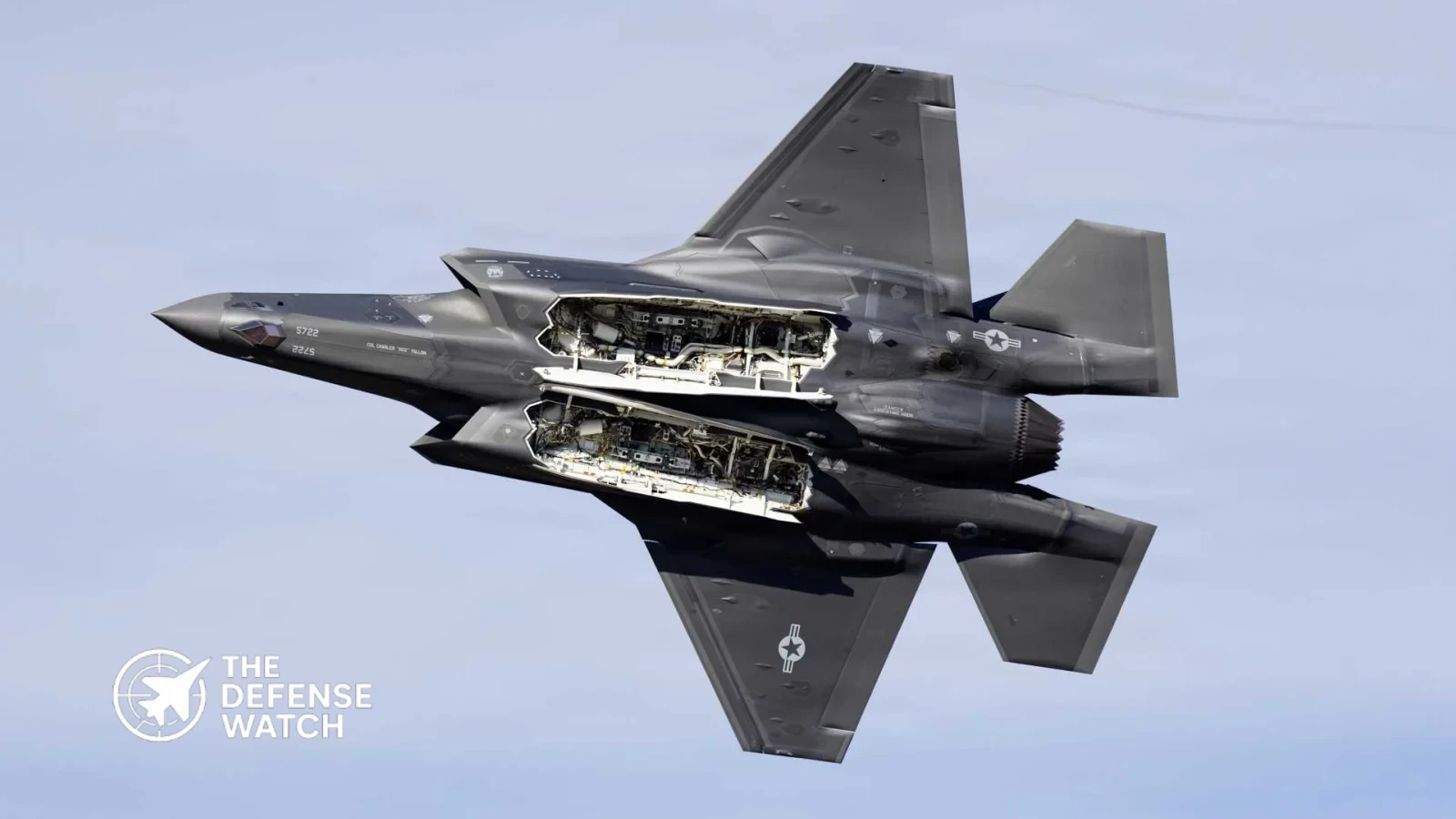
- Sidekick And The F-35 Weapons Bay
- Why Internal Capacity Matters
- Six In The Bay Is Only One Part Of Block 4
- AIM-120D Improvements Are Also Planned
- Engineering And Certification Remain Key Challenges
- Implications For High-End Air Combat
- The F-35 Modernization Timeline
Takeaways
The Pentagon’s Six in the Bay program is intended to increase the F-35’s internal missile capacity from four to six by September 2030, strengthening air combat capacity while retaining internal weapons carriage.
The planned change addresses a basic limitation of stealth fighters. Carrying weapons externally can increase the aircraft’s radar signature, while internal carriage preserves the configuration designed for operations in heavily defended airspace.
For the F-35, the objective is therefore not simply to carry more weapons. It is to increase the number of air combat engagements an aircraft can support without giving up the survivability benefits associated with internal carriage.
From Four Missiles To Six
Current F-35 internal air-to-air configurations can accommodate up to four AIM-120-class missiles when the aircraft is configured for an air-to-air mission. The F-35’s two internal weapons bays were designed around a mixture of larger and smaller weapons, giving the aircraft flexibility between air-to-air and air-to-ground missions. U.S. Air Force material has previously described the aircraft as having four internal weapon stations.
The planned Six in the Bay configuration represents a 50 percent increase in internal missile capacity.
| Capability | Current Configuration | Six In The Bay |
|---|---|---|
| Internal missile capacity | Up to 4 | Up to 6 |
| Increase | Baseline | 50 percent |
| External weapons required for additional internal capacity | Not applicable | No |
| Planned milestone | Existing capability | September 2030 |
| Exact missile configuration | Varies by integration | Not publicly specified |
The latest acquisition documentation is important because it confirms the capability increase while avoiding a claim about the exact missile type. The report does not establish that all six weapons will necessarily be AIM-120Ds.
That distinction matters because the F-35 weapons portfolio is changing at the same time.
Sidekick And The F-35 Weapons Bay
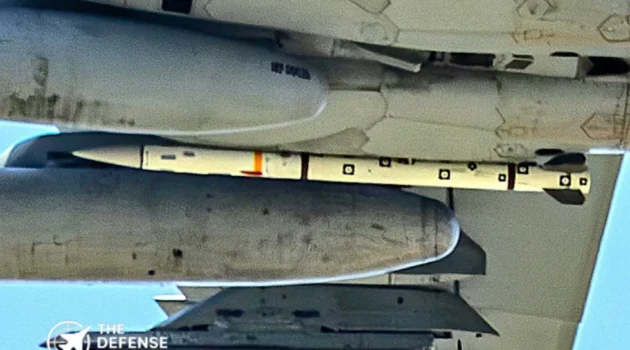
The Six in the Bay effort has also been associated with the Sidekick weapons adapter concept. Earlier reporting on the program described Sidekick as a weapons bay adapter designed to allow two additional AIM-120-sized missiles to be carried internally on F-35A and F-35C aircraft.
The F-35B presents a different engineering challenge. Its short takeoff and vertical landing architecture requires a lift fan behind the cockpit, contributing to a smaller internal weapons bay than those of the F-35A and F-35C. Earlier reporting therefore identified Sidekick as an F-35A and F-35C capability rather than an F-35B modification.
The latest acquisition material, however, does not publicly assign SITB to a specific F-35 variant. The safest description is therefore that the Pentagon is developing a six-missile internal carriage capability and that earlier Sidekick work provides important technical context.
Why Internal Capacity Matters
The operational value of Six in the Bay is closely tied to the F-35’s low observable design.
An F-35 carrying additional missiles on external pylons can increase its weapons inventory, but external stores can compromise some of the aircraft’s signature-management advantages. Internal carriage allows the aircraft to maintain a cleaner external configuration.
That creates a tradeoff between magazine depth and survivability that has become increasingly important as air forces prepare for operations against sophisticated integrated air defense and fighter forces.
Six internal missiles do not make the F-35 an air-superiority fighter in the traditional sense. Instead, the upgrade gives the aircraft more opportunities to employ its sensors, network connections and air-to-air weapons before it must return to base, rendezvous with a tanker or operate in a different weapons configuration.
The improvement is particularly significant for distributed operations. A formation of F-35s carrying six internal missiles each would have substantially more collective internal air-to-air capacity than the same number of aircraft limited to four missiles apiece.
For example, a four-aircraft flight would move from a theoretical 16 internally carried air-to-air missiles to 24. That is a 50 percent increase before considering any external weapons.
Six In The Bay Is Only One Part Of Block 4
The missile-capacity increase is being pursued alongside a much wider modernization effort.
The F-35 Block 4 program is designed to introduce new weapons, improved sensors, electronic warfare capabilities and expanded processing capacity. Technology Refresh 3, or TR-3, provides the computing and memory architecture needed to support these capabilities. The Government Accountability Office has identified Block 4 and TR-3 as major components of the F-35 modernization effort.
The Pentagon’s roadmap also includes improvements to the Multifunction Advanced Data Link, Link 16 and infrared sensing capabilities. These changes are significant because the value of additional missiles depends partly on the aircraft’s ability to detect, identify, track and prioritize targets before weapons employment.
In other words, Six in the Bay increases the aircraft’s magazine, while other Block 4 improvements are intended to strengthen the information and engagement chain around that magazine.
AIM-120D Improvements Are Also Planned
The F-35 modernization roadmap separately includes an AIM-120D two-way data link capability. The latest reporting on the acquisition documentation places that capability in the same general modernization timeframe as Six in the Bay.
The two efforts should not be treated as one confirmed upgrade, however. The documentation identifies them as separate capabilities.
That distinction is particularly important for reporting on future F-35 armament. The fact that the aircraft is being prepared for six internal missiles does not, by itself, establish the exact six-weapon loadout that will eventually be certified.
The F-35’s future missile mix could also evolve as newer air-to-air weapons enter development and integration. The U.S. is separately pursuing the AIM-260 Joint Advanced Tactical Missile as a successor to the AIM-120 family, although publicly available information does not establish that Six in the Bay will automatically translate into a six-AIM-260 operational loadout.
Engineering And Certification Remain Key Challenges
Increasing internal weapons capacity requires more than adding two attachment points.
The weapons bay, launcher mechanisms, aircraft structure, software, weapons interfaces and store-separation characteristics all have to work together. Missile release must remain safe across the aircraft’s relevant flight envelope, including high-speed and maneuvering conditions.
The F-35 program has extensive experience with internal weapons separation testing. Earlier Air Force testing evaluated the aerodynamic effects and store separation characteristics of internal and external weapons configurations, including AIM-120 and AIM-9X missiles.
Six in the Bay therefore represents an integration and certification challenge as much as a hardware change.
The program’s wider modernization schedule also carries technical risk. The Government Accountability Office has repeatedly highlighted delays, development challenges and rising F-35 costs, while the Pentagon continues to work through the large number of capabilities associated with Block 4.
Implications For High-End Air Combat
The most important effect of Six in the Bay is the combination of stealth, sensing and magazine depth.
Earlier F-35 employment concepts often emphasized the aircraft’s ability to penetrate defended airspace, collect information and contribute to networked operations. As the air combat environment becomes more dependent on long-range sensing and weapons, the ability to carry enough missiles internally becomes increasingly important.
An aircraft that detects several threats but carries only a small number of internally stored weapons faces a magazine constraint. Six missiles do not eliminate that constraint, but they provide more capacity without requiring an external weapons load.
This also gives commanders another option between two extremes: a highly stealthy internal weapons configuration with limited missile capacity, or a larger external weapons load with a potentially less favorable signature.
The significance extends beyond individual aircraft. F-35s operate as part of larger formations and joint networks, where one aircraft can contribute sensor information to another platform that performs the engagement. More internal weapons allow F-35s performing air-to-air missions to remain armed for longer while continuing to provide sensing and targeting functions.
The F-35 Modernization Timeline
The September 2030 target places Six in the Bay within the broader period in which the F-35 is expected to receive substantial improvements in weapons, sensors, communications and electronic warfare.
That timeline also illustrates how the F-35 is evolving from its original design baseline. The aircraft’s airframe remains largely unchanged, but its combat capability is being expanded through new computing hardware, software, weapons integration and modifications to the internal weapons system.
The Pentagon’s approach reflects the central challenge of maintaining a fifth-generation aircraft against increasingly capable air and missile threats without sacrificing the characteristics that made the F-35 valuable in the first place.
Six in the Bay is consequently a relatively small physical modification with potentially important operational consequences. Increasing internal missile capacity from four to six gives the F-35 more air-to-air weapons while preserving the option to operate without external stores.
The Pentagon’s current documentation confirms the capability target, but the final weapon configuration, variant applicability and detailed implementation remain matters for further testing and certification.
Bottom Line
The F-35 Six in the Bay upgrade is intended to increase internal missile carriage by 50 percent, from four to six weapons, with a September 2030 milestone identified in the latest modernization roadmap.
Its importance goes beyond the additional two missiles. By increasing internal magazine capacity, the program aims to improve the F-35’s persistence and flexibility in high-threat air combat without forcing the aircraft to rely on external weapons for the added capacity.
The upgrade is also part of a much broader Block 4 modernization effort involving computing, sensors, networking, electronic warfare and new weapons. Together, those changes are intended to keep the F-35 relevant as the U.S. Air Force, Navy and Marine Corps prepare for increasingly contested air operations.