Takeaways
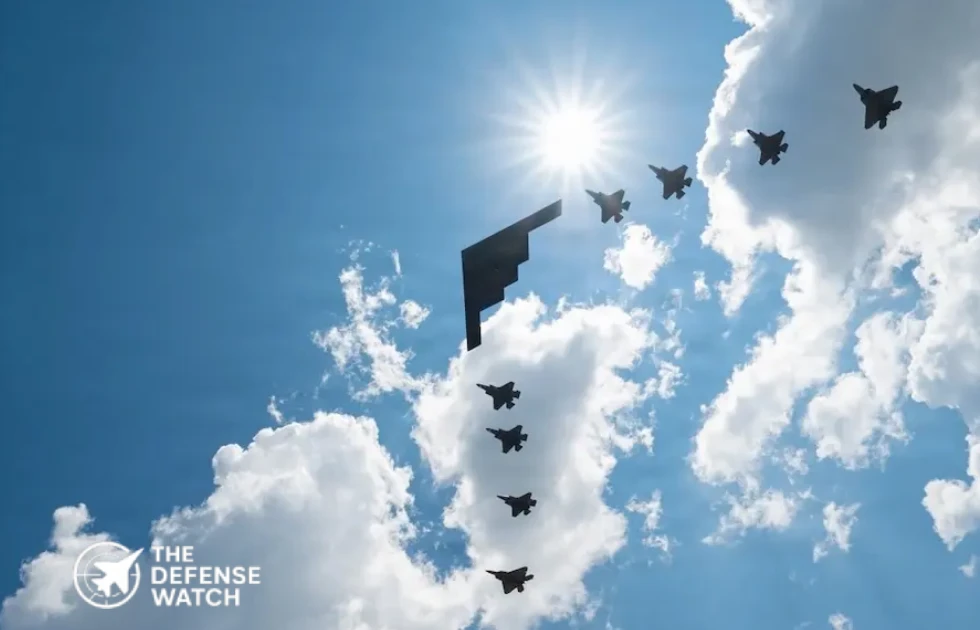
The Freedom 250 Grand Prix flyover brought together U.S. stealth fighters and a long-range stealth bomber in a highly visible demonstration of American airpower.
B-2 Spirit Leads Freedom 250 Grand Prix Flyover
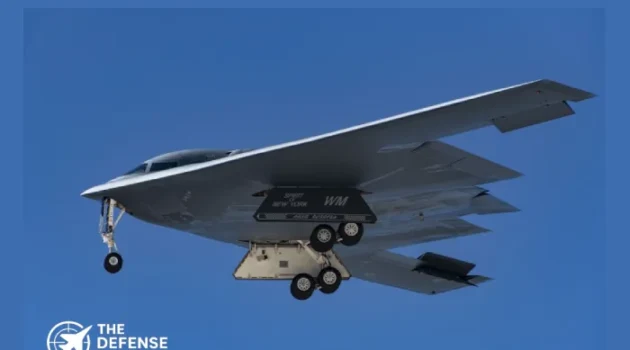
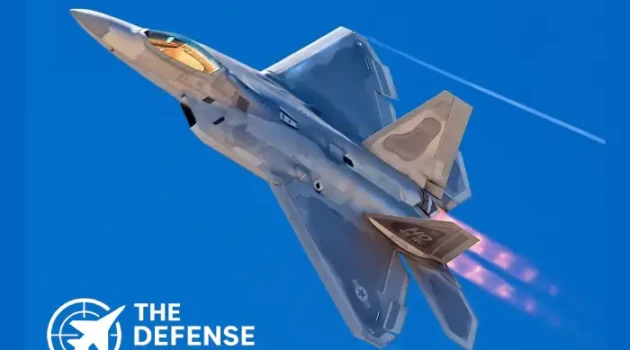
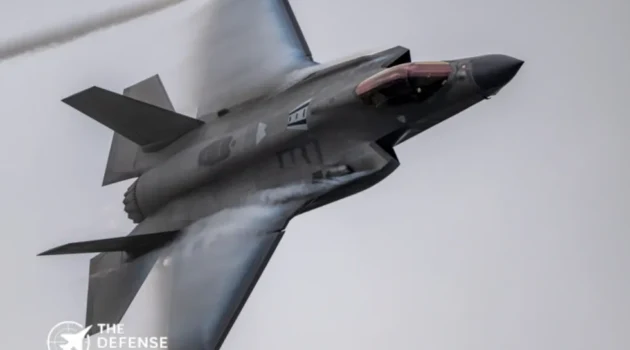
A U.S. Air Force B-2 Spirit joined F-35 Lightning II and F-22 Raptor fighters over Washington, D.C., during the Freedom 250 Grand Prix, providing a public demonstration of the aircraft and capabilities that underpin the United States‘ long-range and fifth-generation airpower. Official Air Force imagery identified a formation consisting of one B-2, two F-35A Lightning II aircraft, two F-22 Raptors and four U.S. Marine Corps F-35B aircraft.
The flyover took place in connection with the IndyCar Freedom 250 Grand Prix, an event held in Washington as part of celebrations marking the 250th anniversary of the United States. The U.S. Air Force described the military participation as a way to connect the armed forces with the American public.
The formation itself was ceremonial rather than a combat mission. Its significance, however, extends beyond the spectacle because the aircraft represent several distinct elements of the U.S. air combat architecture.
- (adsbygoogle = window.adsbygoogle || []).push({});
What the B-2 Brings to the Formation
The B-2 Spirit remains one of the U.S. Air Force’s most specialized long-range combat aircraft. The service describes it as a multirole bomber capable of delivering conventional and nuclear weapons while using low-observable technology to penetrate sophisticated air defenses.
The aircraft’s flying-wing configuration, composite construction and specialized coatings reduce multiple signatures, including radar, infrared, acoustic and electromagnetic signatures. The Air Force states that many details of the B-2’s low-observable technology remain classified.
The B-2 also has the endurance required for intercontinental operations. The Air Force lists an unrefueled range of approximately 6,000 nautical miles and a maximum payload of 60,000 pounds. The aircraft has a two-person crew and four General Electric F118 engines.
B-2 Spirit characteristic U.S. Air Force figure Primary role Multirole heavy bomber Crew 2 Engines 4 × F118-GE-100 Wingspan 172 feet Maximum takeoff weight 336,500 pounds Payload 60,000 pounds Unrefueled range Approximately 6,000 nautical miles Maximum altitude 50,000 feet Speed High subsonic Current Air Force inventory 20 aircraft, including 1 test aircraft These figures are current to the Air Force fact sheet dated May 2026.
(adsbygoogle = window.adsbygoogle || []).push({});F-35 and F-22 Add Different Fighter Capabilities
The inclusion of the F-35 and F-22 is significant because the two fifth-generation fighters were designed around different primary operational priorities.
The F-35A is a multirole fighter built around stealth, sensor fusion and situational awareness. Its sensor architecture includes the Distributed Aperture System and Electro-Optical Targeting System, while its communications and data links allow information to be shared with other aircraft and forces.
The F-22 Raptor, by contrast, was developed primarily as an air-dominance fighter. The Air Force highlights its combination of stealth, integrated avionics, maneuverability and supercruise, allowing the aircraft to sustain supersonic flight without afterburners under appropriate conditions.
The different designs are complementary. In a high-end operational environment, an F-22’s principal value lies in controlling the air domain and countering airborne threats, while the F-35 can contribute sensing, targeting, information sharing and multirole strike capabilities.
The eight-fighter element seen in the Washington formation therefore represented more than a collection of modern aircraft. It showed the distinct roles assigned to stealth fighters within a broader airpower system.
- atOptions = {
‘key’ : ‘3d48d603f906e3fe9f205be3c4433835’,
‘format’ : ‘iframe’,
‘height’ : 250,
‘width’ : 300,
‘params’ : {}
};
Why the B-2 and Fifth-Generation Fighters Matter Together
The B-2’s long-range penetrating mission and the fighters’ ability to operate in contested airspace address different parts of the same operational problem.
A modern air campaign against a capable opponent requires aircraft to locate threats, establish and maintain air superiority, penetrate defended areas, deliver weapons and exchange information across the force. No single aircraft needs to perform every one of those functions.
The B-2 is particularly important because its value comes from the combination of range, payload and low observability. Its design allows the bomber to conduct missions where a conventional large aircraft could face greater detection and engagement risks. The Air Force describes this penetrating capability as central to the B-2’s role against sophisticated defenses.
The F-35 adds a different advantage. Its sensors and data links are designed to collect and distribute information across the battlespace, making it an important node in joint and coalition operations.
The F-22 contributes another layer through air dominance. Its stealth, supercruise and maneuverability are intended to improve its ability to operate against advanced airborne threats while reducing the opportunities for adversaries to detect and engage it.
This combination illustrates why modern U.S. airpower increasingly depends on aircraft working as a force rather than operating as isolated platforms.
The B-2’s Role in the U.S. Bomber Force
The Washington flyover also comes as the United States continues transitioning its bomber force for future operations.
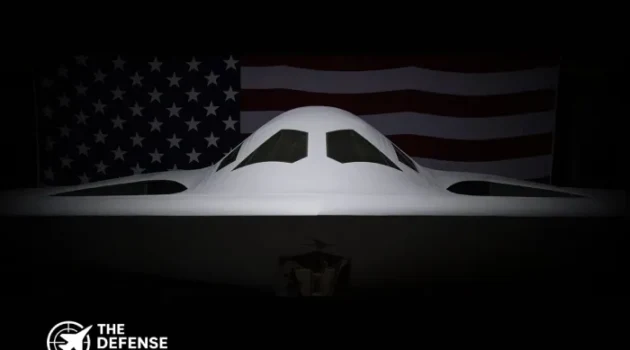
The Air Force’s 2026 bomber capability information describes the B-2 as a long-range nuclear and conventional stealth bomber, while the B-21 Raider is being developed as the future penetrating strike aircraft that will form the backbone of the bomber force alongside the B-52.
That transition does not make the B-2 irrelevant. The aircraft remains an operationally important part of the existing penetrating bomber fleet, while its design experience provides context for understanding the requirements of the next-generation B-21.
The Air Force currently lists 20 B-2 aircraft in the active inventory, including one test aircraft. That small fleet makes each operational aircraft a high-value national asset, particularly for missions requiring a combination of stealth and long-range strike capacity.
A Public Demonstration With Strategic Context
The Freedom 250 Grand Prix flyover should not be interpreted as an operational deployment or evidence of a specific military mission. It was a public event conducted to commemorate the nation’s 250th anniversary and showcase U.S. military aviation.
Nevertheless, the aircraft selected for the formation carried clear strategic symbolism. The B-2 represented long-range penetrating strike, the F-22 represented air dominance and the F-35 represented networked fifth-generation multirole combat power.
Official U.S. Air Force imagery also documented a separate tri-bomber formation involving a B-1B Lancer, B-2 Spirit and B-52 Stratofortress over Washington on Aug. 23, demonstrating the broader role of Freedom 250 events in showcasing the U.S. bomber force.
Earlier Freedom 250 events likewise featured B-2 and F-35 formations above the National Mall. On June 24, the Air Force documented a B-2 leading four F-35A aircraft over Washington.
Taken together, these appearances provide a public view of the U.S. approach to airpower: long-range bombers, stealth fighters, air-dominance aircraft and other supporting capabilities operating within a larger force structure.
What the Flyover Shows About U.S. Airpower
The most important takeaway from the Freedom 250 formation is not simply the presence of several famous aircraft over Washington. It is the contrast in their designed functions.
The B-2 provides penetrating long-range strike capacity and substantial weapons carriage. The F-22 is designed to establish air dominance in contested environments. The F-35 provides stealthy multirole operations while using advanced sensors and data links to connect information across the force.
That combination reflects a broader U.S. emphasis on integrated air operations. Future combat environments are expected to place greater demands on survivability, information sharing, stand-off weapons, electronic warfare and long-range strike, making coordination between different aircraft types increasingly important.
The Freedom 250 Grand Prix flyover was therefore a ceremonial event, but the platforms involved represented capabilities that remain central to U.S. airpower planning. The B-2 continues to provide a penetrating bomber capability today, while the F-35 and F-22 provide complementary fifth-generation fighter capabilities across the air domain.
Get real time update about this post category directly on your device, subscribe now.

- atOptions = {
‘key’ : ‘3d48d603f906e3fe9f205be3c4433835’,
‘format’ : ‘iframe’,
‘height’ : 250,
‘width’ : 300,
‘params’ : {}
};