B-2 Spirit Demonstrates Precision Strike Capability in Nevada
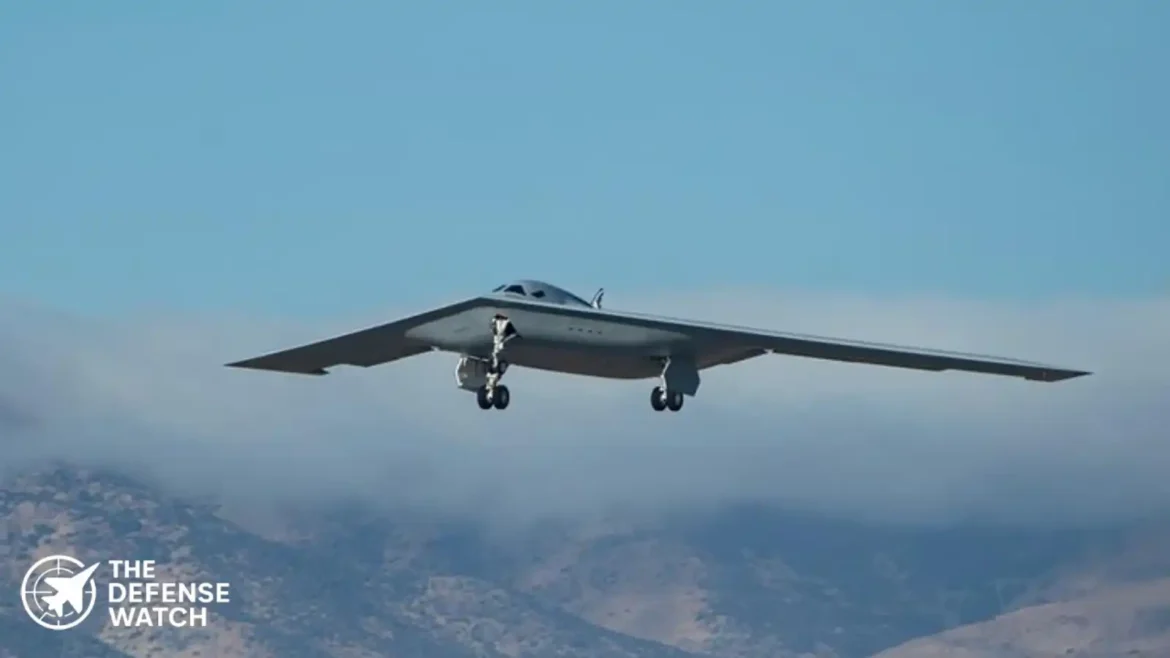
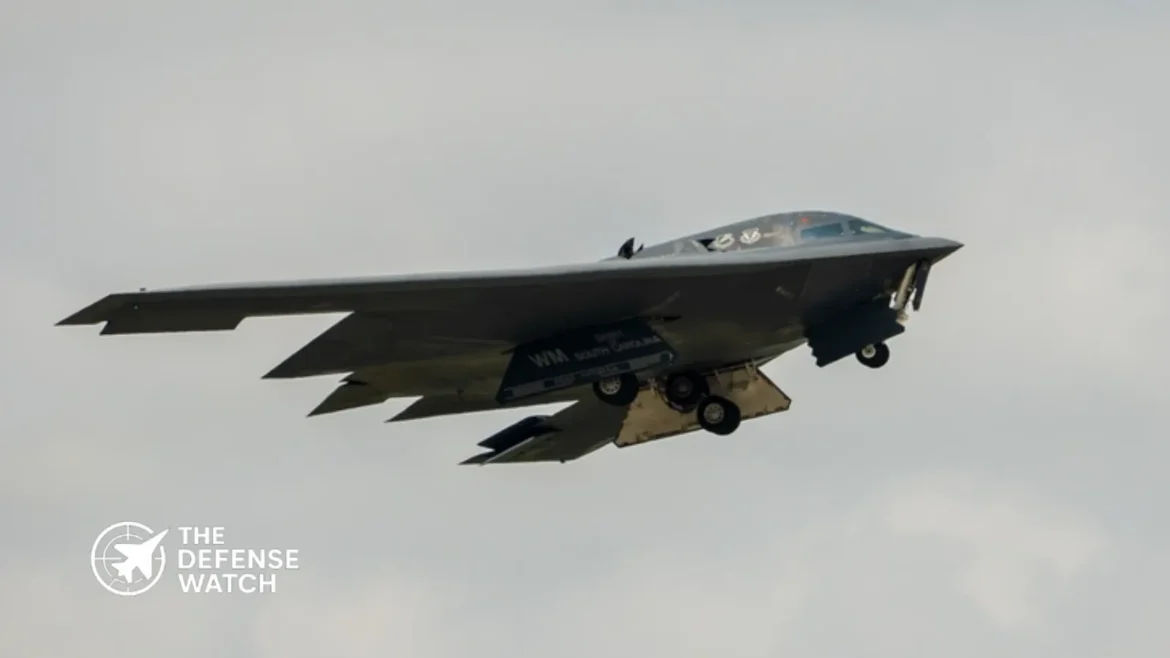
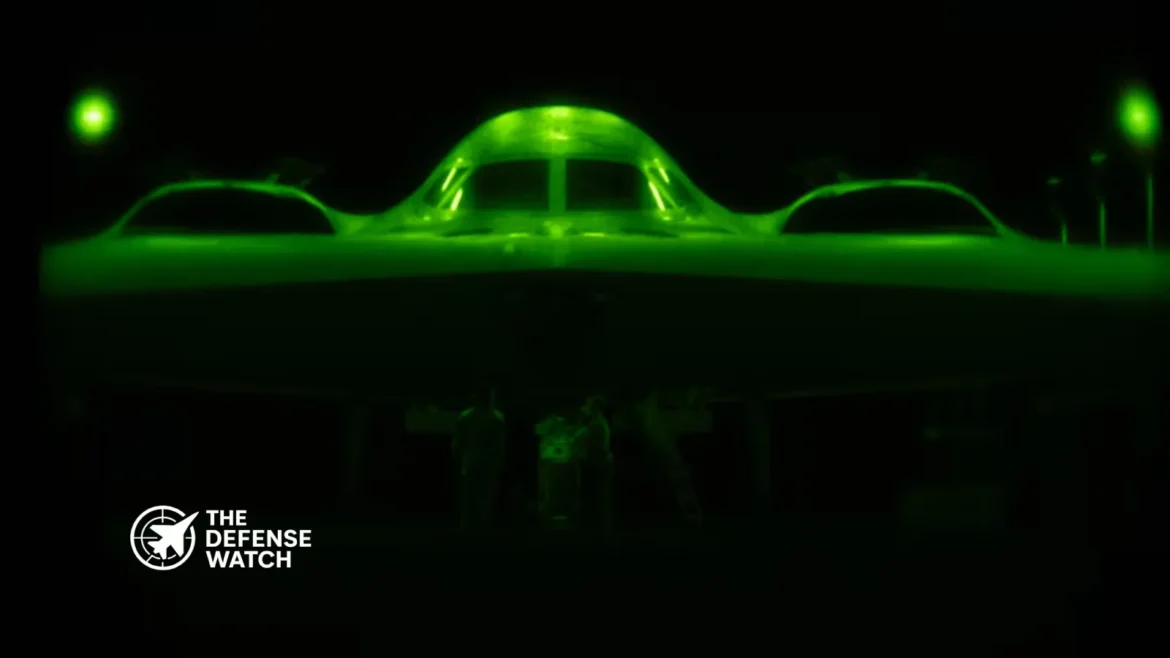
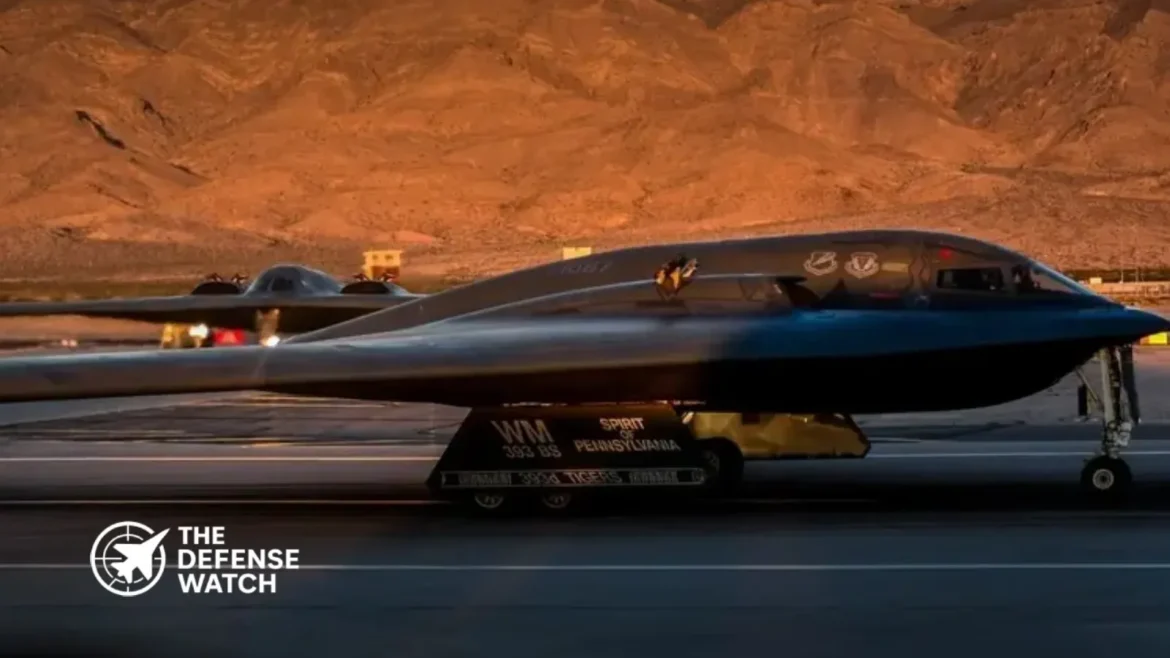
The U.S. Air Force used two B-2 Spirit stealth bombers for live-fire precision strike training at the Nevada Test and Training Range on Aug. 3, 2026, demonstrating the aircraft’s ability to integrate long-range bomber operations with terminal attack and command-and-control elements. The event was documented by Nellis Air Force Base and the Defense Visual Information Distribution Service.
Takeaways
The U.S. Air Force used two B-2 Spirit bombers for live-fire precision strike training at the Nevada Test and Training Range, integrating bomber crews with joint terminal attack controllers.
The aircraft were assigned to the 325th Weapons Squadron at Whiteman Air Force Base, Missouri. Personnel from the 66th Weapons Squadron provided command and control during the training, while joint terminal attack controllers and bomber aircrews worked together during the live-fire event.
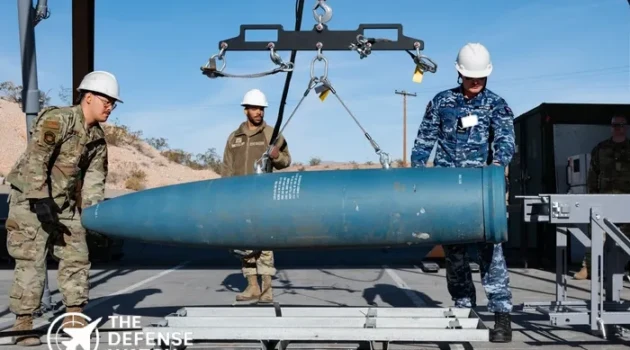
The U.S. Air Force described the exercise as an opportunity to demonstrate precision strike capabilities in a realistic training environment. The released video shows B-2 aircraft dropping munitions over the Nevada range, but the publicly released material does not identify the specific weapons used.
What the Training Demonstrates
The significance of the event extends beyond the B-2’s ability to release weapons. Precision strike missions depend on the integration of aircraft, weapons, communications, targeting information and personnel operating at different points in the kill chain.
The presence of the 66th Weapons Squadron is particularly relevant. Official imagery shows Lt. Col. Ridge Flick, commander of the 66th Weapons Squadron and lead joint terminal attack controller, communicating with the two B-2 aircraft during the live-fire training.
That relationship illustrates an important element of modern air operations: the bomber is one component of a larger strike architecture. The ability to execute a precision attack depends not only on aircraft survivability and weapons, but also on accurate target information, command relationships and reliable communications.
The training therefore provides a useful look at how the Air Force practices the coordination required for complex strike operations without revealing sensitive operational tactics.
Why the Nevada Test and Training Range Matters
The Nevada Test and Training Range, operated in support of Nellis Air Force Base, is one of the Air Force’s principal environments for advanced combat training, operational test and evaluation, and tactics development.
Nellis says the range provides more than 15,000 square miles of airspace and 4,700 square miles of restricted land. The Air Force also states that more than 75 percent of its live training munitions are dropped on the range.
This scale allows aircraft and weapons crews to conduct training that would be difficult to reproduce at conventional ranges. The available airspace supports complex scenarios involving multiple aircraft, ground controllers and other operational elements.
For the B-2 community, such training is important because the aircraft is designed for long-range conventional and nuclear missions and is intended to operate against heavily defended targets. The Air Force identifies penetration of sophisticated air defenses as a central feature of the B-2’s low-observable design.
B-2 Spirit: Key Capabilities
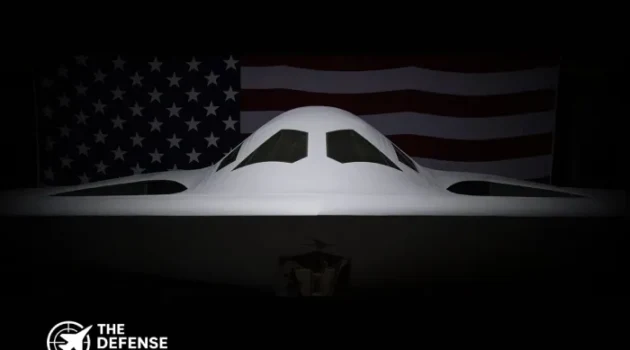
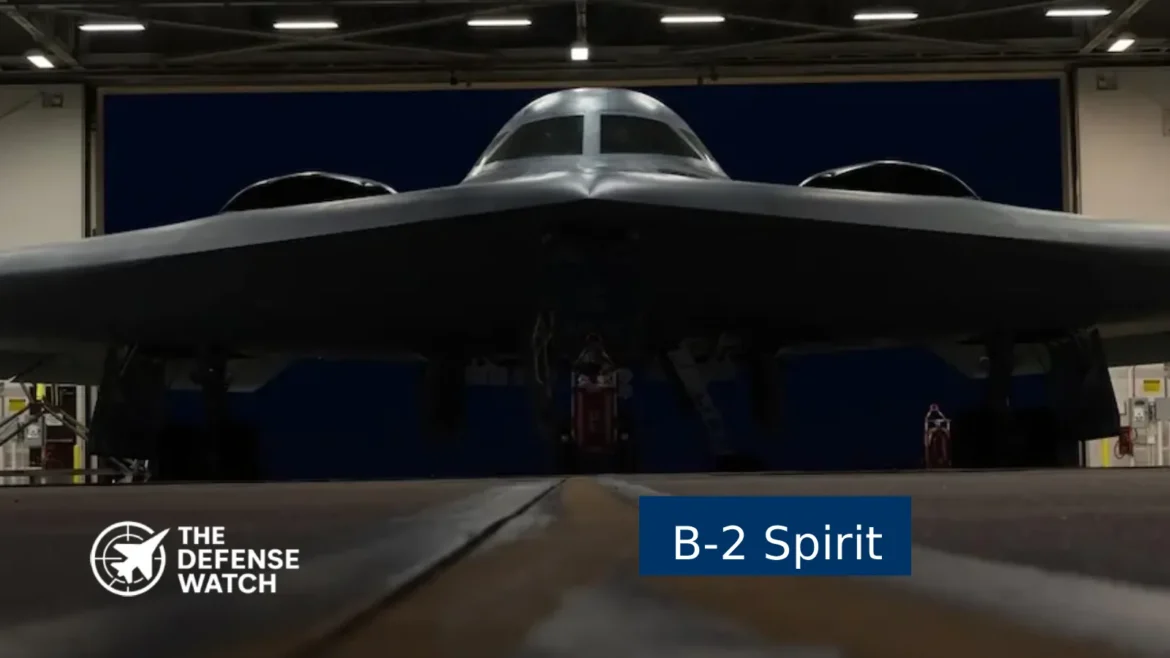
The B-2 remains one of the United States’ most specialized long-range strike aircraft. Its design combines a flying-wing configuration, composite materials and other low-observable technologies intended to reduce radar, infrared, acoustic, electromagnetic and visual signatures.
According to the Air Force’s current fact sheet, many details of the B-2’s low-observable technology remain classified. The publicly available specifications provide the following baseline information:
Capability B-2 Spirit Primary role Multi-role heavy bomber Crew Two pilots Engines Four General Electric F118-GE-100 Thrust 17,300 pounds per engine Maximum takeoff weight 336,500 pounds Payload Up to 60,000 pounds Wingspan 172 feet Length 69 feet Ceiling 50,000 feet Unrefueled range Approximately 6,000 nautical miles Speed High subsonic Mission types Conventional and nuclear These specifications explain why the B-2 remains relevant to U.S. long-range strike planning. Its combination of range, payload and low observability allows the aircraft to perform missions that require both substantial weapon capacity and a reduced probability of detection.
Precision Strike Is More Than Weapon Accuracy
The Nevada training event also highlights an important distinction in modern air warfare. A precision weapon is only one part of a precision strike capability.
A successful strike requires the target to be identified and located accurately, the appropriate authority to approve the engagement, the aircraft and weapon to receive reliable information, and the crew to execute the mission under the required rules and constraints.
The integration of the 325th Weapons Squadron and 66th Weapons Squadron therefore matters as much as the visible weapons release. The exercise tested the interaction between the bomber force and personnel responsible for directing and coordinating the strike.
This is particularly important for penetrating aircraft. A B-2’s low observability is intended to improve survivability, but the aircraft still operates as part of a wider command, control, communications, intelligence, surveillance and reconnaissance architecture.
The Nevada range provides a controlled environment where these relationships can be trained repeatedly without requiring an operational combat mission.
The B-2’s Role During the B-21 Transition
The B-2 training also comes as the Air Force prepares to expand the B-21 Raider fleet.
Air Force Global Strike Command’s 2026 bomber fact sheet states that the B-21 is expected to replace the B-1B and B-2, with initial capability planned for 2028. Until the B-21 is fully fielded, the command says it will continue balancing modernization and sustainment of the existing bomber fleet while maintaining readiness.
The Air Force is simultaneously expanding B-21 production capacity. In February 2026, the Department of the Air Force announced an agreement with Northrop Grumman to increase production capacity for the next-generation bomber, using $4.5 billion in previously authorized and appropriated funding.
That transition does not make current B-2 training less important. Instead, it creates a period in which the Air Force must keep the existing penetrating bomber force operational while building the infrastructure, workforce and training system required for the next-generation aircraft.
Whiteman Air Force Base is part of that transition. The Air Force has selected the Missouri installation as the second main operating base for the B-21, alongside its existing role as the home of the B-2 force.
What the Training Says About U.S. Strike Readiness
The most important takeaway from the Nevada event is not the weapons release itself. It is the continued emphasis on realistic, integrated training for a small but highly specialized bomber force.
The Air Force’s publicly released material confirms that two B-2 aircraft conducted live-fire operations, while the 66th Weapons Squadron provided command and control and joint terminal attack controllers worked with the bomber crews.
That combination reflects the broader direction of U.S. airpower, where individual platforms increasingly operate as nodes within a connected force rather than as independent weapons systems.
For the B-2, this remains particularly relevant because its value comes from the combination of penetration, range and weapons capacity. Maintaining proficiency in the entire strike process is essential while the Air Force moves toward a future bomber fleet centered on the B-21 and B-52.
The Aug. 3 training therefore represents a routine but strategically important component of bomber readiness. It demonstrates that the B-2 fleet continues to train for precision strike missions while the Air Force prepares the next generation of penetrating long-range aircraft.
Takeaways
The Freedom 250 Grand Prix flyover brought together U.S. stealth fighters and a long-range stealth bomber in a highly visible demonstration of American airpower.
B-2 Spirit Leads Freedom 250 Grand Prix Flyover
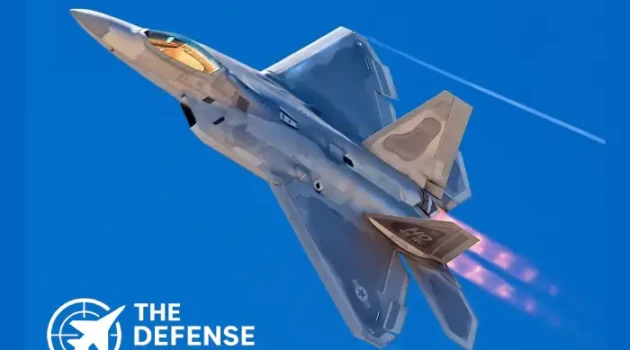
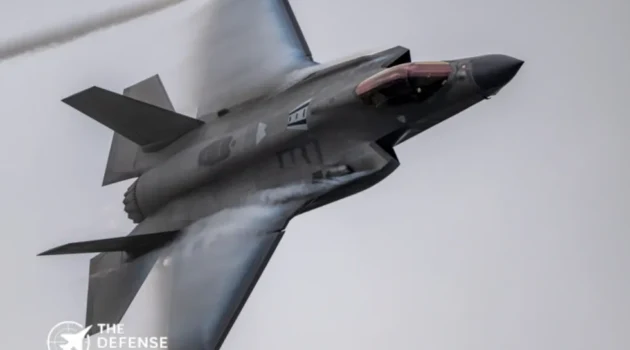
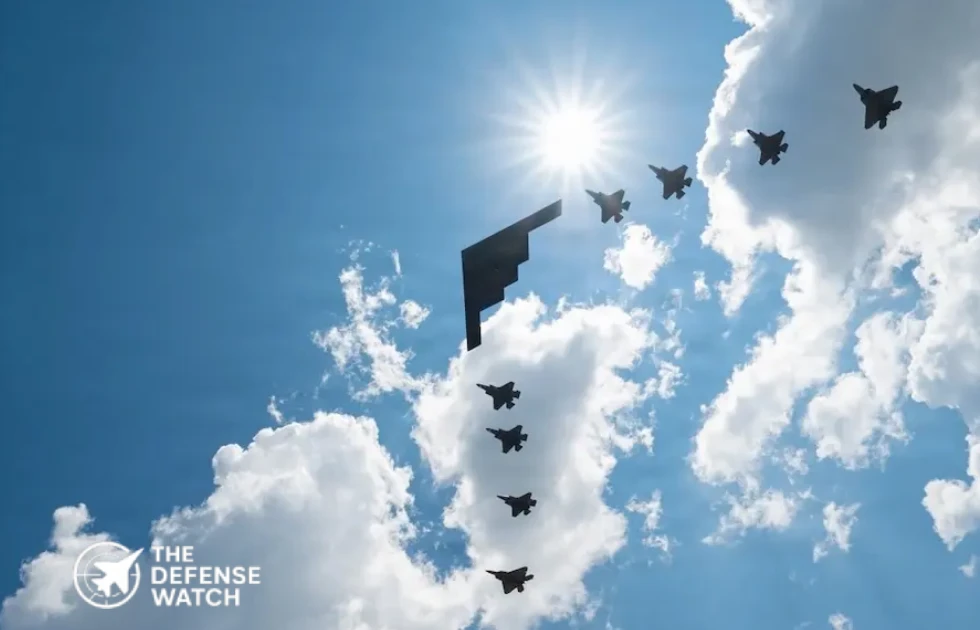
A U.S. Air Force B-2 Spirit joined F-35 Lightning II and F-22 Raptor fighters over Washington, D.C., during the Freedom 250 Grand Prix, providing a public demonstration of the aircraft and capabilities that underpin the United States‘ long-range and fifth-generation airpower. Official Air Force imagery identified a formation consisting of one B-2, two F-35A Lightning II aircraft, two F-22 Raptors and four U.S. Marine Corps F-35B aircraft.
The flyover took place in connection with the IndyCar Freedom 250 Grand Prix, an event held in Washington as part of celebrations marking the 250th anniversary of the United States. The U.S. Air Force described the military participation as a way to connect the armed forces with the American public.
The formation itself was ceremonial rather than a combat mission. Its significance, however, extends beyond the spectacle because the aircraft represent several distinct elements of the U.S. air combat architecture.
- (adsbygoogle = window.adsbygoogle || []).push({});
What the B-2 Brings to the Formation
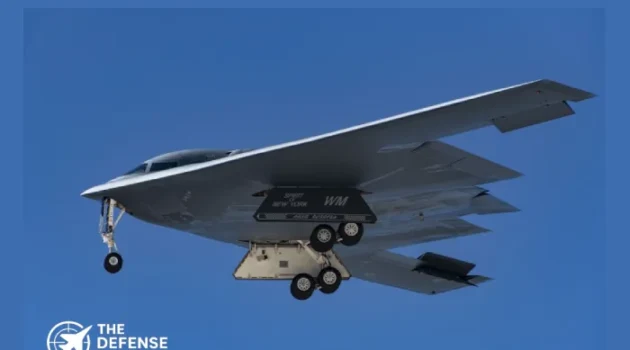
The B-2 Spirit remains one of the U.S. Air Force’s most specialized long-range combat aircraft. The service describes it as a multirole bomber capable of delivering conventional and nuclear weapons while using low-observable technology to penetrate sophisticated air defenses.
The aircraft’s flying-wing configuration, composite construction and specialized coatings reduce multiple signatures, including radar, infrared, acoustic and electromagnetic signatures. The Air Force states that many details of the B-2’s low-observable technology remain classified.
The B-2 also has the endurance required for intercontinental operations. The Air Force lists an unrefueled range of approximately 6,000 nautical miles and a maximum payload of 60,000 pounds. The aircraft has a two-person crew and four General Electric F118 engines.
B-2 Spirit characteristic U.S. Air Force figure Primary role Multirole heavy bomber Crew 2 Engines 4 × F118-GE-100 Wingspan 172 feet Maximum takeoff weight 336,500 pounds Payload 60,000 pounds Unrefueled range Approximately 6,000 nautical miles Maximum altitude 50,000 feet Speed High subsonic Current Air Force inventory 20 aircraft, including 1 test aircraft These figures are current to the Air Force fact sheet dated May 2026.
(adsbygoogle = window.adsbygoogle || []).push({});F-35 and F-22 Add Different Fighter Capabilities
The inclusion of the F-35 and F-22 is significant because the two fifth-generation fighters were designed around different primary operational priorities.
The F-35A is a multirole fighter built around stealth, sensor fusion and situational awareness. Its sensor architecture includes the Distributed Aperture System and Electro-Optical Targeting System, while its communications and data links allow information to be shared with other aircraft and forces.
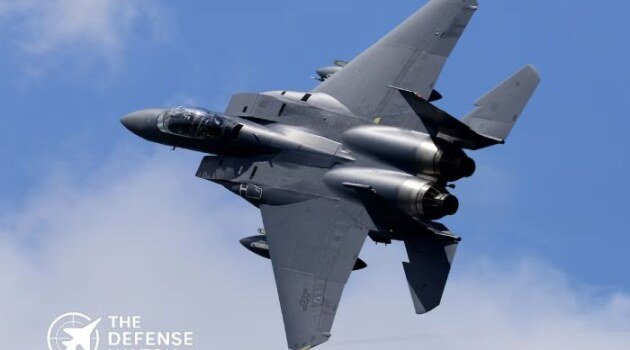
The F-22 Raptor, by contrast, was developed primarily as an air-dominance fighter. The Air Force highlights its combination of stealth, integrated avionics, maneuverability and supercruise, allowing the aircraft to sustain supersonic flight without afterburners under appropriate conditions.
The different designs are complementary. In a high-end operational environment, an F-22’s principal value lies in controlling the air domain and countering airborne threats, while the F-35 can contribute sensing, targeting, information sharing and multirole strike capabilities.
The eight-fighter element seen in the Washington formation therefore represented more than a collection of modern aircraft. It showed the distinct roles assigned to stealth fighters within a broader airpower system.
- atOptions = {
‘key’ : ‘3d48d603f906e3fe9f205be3c4433835’,
‘format’ : ‘iframe’,
‘height’ : 250,
‘width’ : 300,
‘params’ : {}
};
Why the B-2 and Fifth-Generation Fighters Matter Together
The B-2’s long-range penetrating mission and the fighters’ ability to operate in contested airspace address different parts of the same operational problem.
A modern air campaign against a capable opponent requires aircraft to locate threats, establish and maintain air superiority, penetrate defended areas, deliver weapons and exchange information across the force. No single aircraft needs to perform every one of those functions.
The B-2 is particularly important because its value comes from the combination of range, payload and low observability. Its design allows the bomber to conduct missions where a conventional large aircraft could face greater detection and engagement risks. The Air Force describes this penetrating capability as central to the B-2’s role against sophisticated defenses.
The F-35 adds a different advantage. Its sensors and data links are designed to collect and distribute information across the battlespace, making it an important node in joint and coalition operations.
The F-22 contributes another layer through air dominance. Its stealth, supercruise and maneuverability are intended to improve its ability to operate against advanced airborne threats while reducing the opportunities for adversaries to detect and engage it.
This combination illustrates why modern U.S. airpower increasingly depends on aircraft working as a force rather than operating as isolated platforms.
The B-2’s Role in the U.S. Bomber Force
The Washington flyover also comes as the United States continues transitioning its bomber force for future operations.
The Air Force’s 2026 bomber capability information describes the B-2 as a long-range nuclear and conventional stealth bomber, while the B-21 Raider is being developed as the future penetrating strike aircraft that will form the backbone of the bomber force alongside the B-52.
That transition does not make the B-2 irrelevant. The aircraft remains an operationally important part of the existing penetrating bomber fleet, while its design experience provides context for understanding the requirements of the next-generation B-21.
The Air Force currently lists 20 B-2 aircraft in the active inventory, including one test aircraft. That small fleet makes each operational aircraft a high-value national asset, particularly for missions requiring a combination of stealth and long-range strike capacity.
A Public Demonstration With Strategic Context
The Freedom 250 Grand Prix flyover should not be interpreted as an operational deployment or evidence of a specific military mission. It was a public event conducted to commemorate the nation’s 250th anniversary and showcase U.S. military aviation.
Nevertheless, the aircraft selected for the formation carried clear strategic symbolism. The B-2 represented long-range penetrating strike, the F-22 represented air dominance and the F-35 represented networked fifth-generation multirole combat power.
Official U.S. Air Force imagery also documented a separate tri-bomber formation involving a B-1B Lancer, B-2 Spirit and B-52 Stratofortress over Washington on Aug. 23, demonstrating the broader role of Freedom 250 events in showcasing the U.S. bomber force.
Earlier Freedom 250 events likewise featured B-2 and F-35 formations above the National Mall. On June 24, the Air Force documented a B-2 leading four F-35A aircraft over Washington.
Taken together, these appearances provide a public view of the U.S. approach to airpower: long-range bombers, stealth fighters, air-dominance aircraft and other supporting capabilities operating within a larger force structure.
What the Flyover Shows About U.S. Airpower
The most important takeaway from the Freedom 250 formation is not simply the presence of several famous aircraft over Washington. It is the contrast in their designed functions.
The B-2 provides penetrating long-range strike capacity and substantial weapons carriage. The F-22 is designed to establish air dominance in contested environments. The F-35 provides stealthy multirole operations while using advanced sensors and data links to connect information across the force.
That combination reflects a broader U.S. emphasis on integrated air operations. Future combat environments are expected to place greater demands on survivability, information sharing, stand-off weapons, electronic warfare and long-range strike, making coordination between different aircraft types increasingly important.
The Freedom 250 Grand Prix flyover was therefore a ceremonial event, but the platforms involved represented capabilities that remain central to U.S. airpower planning. The B-2 continues to provide a penetrating bomber capability today, while the F-35 and F-22 provide complementary fifth-generation fighter capabilities across the air domain.

Executive Summary: Northrop Grumman has reaffirmed the B-2 Spirit’s continuing role in the U.S. strategic deterrent, describing it as the nation’s only operational deep-strike nuclear stealth bomber. As of August 2026, the Air Force maintains 20 B-2 aircraft in its active inventory while preparing the B-21 Raider to progressively replace both the B-2 and B-1B.
B-2 Spirit Remains Central To U.S. Stealth Bomber Operations
The B-2 Spirit stealth bomber remains the United States’ operational platform for penetrating heavily defended targets with both conventional and nuclear weapons, according to Northrop Grumman and current U.S. Air Force information. Northrop Grumman highlighted the aircraft’s strategic deterrence role on Aug. 14, emphasizing its combination of low observability, long range and heavy weapons capacity.
The statement comes as the Air Force moves through a major transition in its bomber fleet. The B-21 Raider is being developed to replace the B-2 and B-1B and become the backbone of the future bomber force, but the B-2 remains operational while the new aircraft progresses through testing, production and fielding.
That transition is strategically significant because the B-2 is not simply another long-range strike aircraft. Its principal value comes from combining intercontinental reach, a large weapons payload and low observable characteristics in a single platform capable of operating against sophisticated air defenses.
B-2 Combines Stealth, Range And Heavy Payload
The B-2 was designed around the requirement to penetrate advanced air-defense networks rather than rely solely on stand-off weapons.
Its flying-wing configuration, composite construction and specialized coatings contribute to reduced radar, infrared, acoustic, electromagnetic and visual signatures. The Air Force notes that many details of the aircraft’s low-observable technology remain classified.
The aircraft’s publicly released specifications illustrate the scale of the capability:
B-2 Spirit Characteristic U.S. Air Force Data Active inventory 20 aircraft Crew 2 pilots Unrefueled range Approximately 6,000 nautical miles Maximum payload 60,000 pounds Maximum operating altitude 50,000 feet Engines 4 GE F118-GE-100 Engine thrust 17,300 pounds each Maximum takeoff weight 336,500 pounds Speed High subsonic Initial operational capability April 1997 The figures are current in the Air Force’s May 2026 B-2 fact sheet.
The combination is important operationally. A bomber with long range but limited payload would face different planning constraints than the B-2, while a heavily armed aircraft without low observability could have difficulty approaching highly defended targets.
The B-2 was designed to bring these attributes together in one aircraft.
Why The B-2 Still Matters During The B-21 Transition
The Air Force’s bomber modernization strategy is not based on an immediate replacement of every legacy aircraft. Instead, the service is sustaining existing B-1B and B-2 capabilities while gradually introducing the B-21.
Air Force Global Strike Command’s 2026 fact sheet states that the B-21 will replace the B-1B and B-2, with initial capability planned for 2028. Until the Raider is sufficiently fielded, the command intends to balance fleet modernization, sustainment and combat readiness across the existing bomber force.
This creates a period in which the B-2 remains operationally important even as it approaches the end of its planned service life.
The small size of the fleet also makes sustainment particularly important. The Air Force currently lists only 20 B-2 aircraft in the active inventory, including one test aircraft in that total.
For comparison, the B-21 program is intended to establish a substantially larger future stealth bomber fleet. Air Force planning has described the B-21 as a long-range, highly survivable aircraft capable of carrying both conventional and nuclear weapons.
Nuclear Deterrence Adds A Separate Requirement
The B-2’s importance extends beyond conventional long-range strike. It is part of the air component of the U.S. nuclear triad, alongside land-based intercontinental ballistic missiles and ballistic missile submarines.
The nuclear role places additional requirements on aircraft availability, weapon certification, communications, security and command-and-control systems.
The B61-12 modernization program is one example. The National Nuclear Security Administration completed the last production unit of the B61-12 Life Extension Program in December 2024, extending the service life of the B61 family while supporting the U.S. air-delivered nuclear deterrent.
The B61-12 was developed for certification on the B-2A as well as other compatible U.S. aircraft and future platforms. This illustrates why bomber modernization cannot be measured only by the number of new airframes produced. Weapons integration and certification must progress alongside aircraft development.
B-21 Raider Changes The Long-Term Equation
The B-21 is designed to provide the long-term replacement for the B-2 while also taking over the B-1B’s role in the conventional bomber force.
The Air Force has described the Raider as a highly survivable stealth bomber designed for both conventional and nuclear missions. Its planned role extends beyond simply replacing the B-2 on a one-for-one basis, with the aircraft intended to form the backbone of the future bomber fleet.
In February 2026, the Department of the Air Force announced an agreement with Northrop Grumman to expand B-21 production capacity. The initiative uses $4.5 billion in previously authorized funding to increase production capacity and accelerate delivery of the next-generation bomber.
The Air Force also announced in July 2026 that the B-21 will operate with a two-pilot crew. That decision aligns the basic crew requirement of the new bomber with the B-2’s two-person crew while reflecting differences in the Raider’s systems and mission architecture.
Whiteman Air Force Base Is Preparing For The Transition
Whiteman Air Force Base in Missouri remains central to the B-2 force and is also being prepared to support the B-21.
The Air Force’s fiscal 2027 military construction documentation identifies Whiteman as the home of the 509th Bomb Wing and states that it will become the second main operating base for the B-21. The planned infrastructure work includes facilities and training equipment needed to support the new bomber.
This creates a complex transition rather than a simple aircraft retirement process.
The Air Force must preserve B-2 readiness while establishing B-21 maintenance, weapons loading, training, infrastructure and operational procedures. The overlap allows the service to introduce the new platform without immediately removing the existing stealth bomber capability.
The Strategic Value Of The B-2 Is Its Mission Set
The B-2’s continuing value is best understood through its mission set rather than its age.
The aircraft entered initial operational capability in April 1997, making it a mature platform by modern military aviation standards. Yet its fundamental design remains relevant because low observable penetration combined with long-range strike is still a demanding requirement in an environment shaped by increasingly capable integrated air-defense systems.
The B-2 therefore serves as a bridge between generations of U.S. long-range strike technology.
Its operational importance also explains why sustaining the aircraft has remained a priority despite the small fleet. Air Force officials have previously identified the challenge of maintaining a 20-aircraft fleet operating under a demanding mission set, highlighting the importance of aircraft availability and sustainment resources.
The B-21 is intended to address many of these long-term challenges through a newer design and a larger planned fleet. Until sufficient numbers of Raiders are available, however, the B-2 remains a critical component of the U.S. bomber force.
What Changes After The B-21 Arrives
The transition to the B-21 will eventually shift the U.S. stealth bomber force from a small fleet centered on the B-2 to a larger force built around a newer aircraft.
That transition should provide greater capacity for sustained global operations while reducing dependence on a very small number of aging B-2 airframes. It will also allow the Air Force to incorporate newer systems and technologies into the bomber fleet from the outset.
The immediate challenge is maintaining credible combat and nuclear deterrence throughout the transition.
For that reason, the B-2’s continued operational status in 2026 is more than a legacy designation. It represents an active bridge between the current U.S. long-range strike architecture and the next generation represented by the B-21 Raider.
Northrop Grumman’s latest characterization of the aircraft therefore underscores an important point about the U.S. bomber modernization effort: the B-2 remains operationally relevant today, even as the Air Force builds the force intended to succeed it.
Executive Summary: A U.S. Air Force B-2 Spirit completed a more than 16-hour direct flight from Missouri to RAAF Base Amberley, Australia, during a June 2026 Bomber Task Force deployment. The mission demonstrated the bomber’s ability to project long-range stealth strike power into the Indo-Pacific while integrating with Australian tankers, aircraft and ground personnel.
B-2 Spirit Demonstrates Long-Range Strike Capability In Australia
The B-2 Spirit’s more than 16-hour flight from the continental United States to Australia highlights a central feature of U.S. global strike doctrine: strategic bombers can operate across the Indo-Pacific without requiring the aircraft to begin their missions from a forward combat base. The June 2026 deployment to RAAF Base Amberley was conducted as part of Bomber Task Force operations and Exercise Diamond Storm.
The aircraft, identified as Spirit of Texas and assigned to the 393rd Expeditionary Bomb Squadron of the 509th Bomb Wing at Whiteman Air Force Base, Missouri, reached Australia after an extended flight supported by aerial refueling. The deployment also involved Royal Australian Air Force KC-30A tanker aircraft and U.S. Air Force KC-135 Stratotankers.
The operation provides a useful example of how the United States and Australia are developing the ability to combine strategic strike aircraft, tanker support, fifth-generation fighters and expeditionary infrastructure across a very large operating area.
Why The 16-Hour Flight Matters
The significance of the mission goes beyond the distance covered.
The B-2 is designed to conduct penetrating strike missions against heavily defended targets. Its low-observable design reduces radar, infrared, acoustic, electromagnetic and visual signatures, allowing the aircraft to operate with a lower probability of detection than conventional aircraft. The U.S. Air Force lists an unrefueled range of approximately 6,000 nautical miles, or 9,600 kilometers.
The flight to Australia demonstrates how aerial refueling extends that basic range.
Instead of depending entirely on a forward airfield, the bomber can depart from Whiteman Air Force Base and receive fuel while in transit. This creates additional operational options for U.S. Strategic Command and theater commanders, particularly in regions where airfields, ports and other fixed military infrastructure could face long-range missile threats.
The distinction is important in the Indo-Pacific, where distances between major military bases can be measured in thousands of miles.
Australian KC-30A Adds A Key Allied Capability
One of the most significant elements of the deployment was the participation of Australia’s KC-30A Multi Role Tanker Transport aircraft.
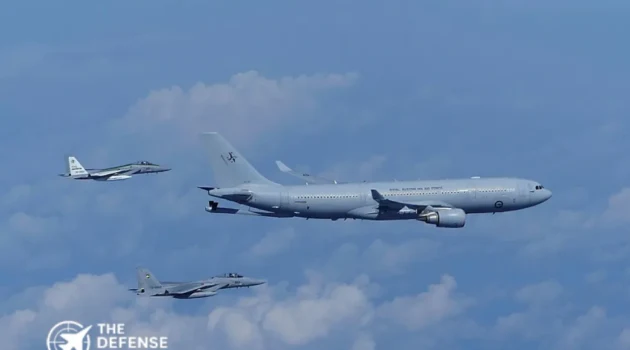
U.S. Air Force imagery from June 11 shows a B-2 receiving fuel from a Royal Australian Air Force KC-30A over the South Pacific. The operation formed part of the Bomber Task Force deployment and demonstrated the ability of Australian and U.S. aircrews to support the same long-range mission.
Australian ground crews also supported the B-2 at RAAF Base Amberley, including hot-pit refueling operations. Hot-pit refueling allows an aircraft to receive fuel while remaining on the ground with its engines running, reducing some turnaround time between missions.
For the alliance, the practical value is significant. Tanker interoperability can extend the operating radius of combat aircraft while reducing the amount of dependence on a limited number of forward bases.
B-2 Integration With Australian Airpower
The 2026 deployment was not simply a long-distance bomber flight.
The B-2 operated with Australian aircraft as part of Exercise Diamond Storm, including integration with Royal Australian Air Force F-35A Lightning II fighters. Australian Defence said the activity included fifth-generation integration, air-to-air support, ground-based refueling and security and logistics support at Amberley.
That combination is important because modern air operations increasingly depend on networks rather than individual aircraft.
The B-2 supplies long-range penetrating strike capability. F-35A aircraft can contribute sensing, targeting and air combat capabilities. Tankers extend the endurance of the force, while ground personnel provide the maintenance, security and logistics infrastructure needed to sustain operations.
The result is a more complex force package than a bomber operating independently.
Key B-2 Spirit Capabilities
Capability B-2 Spirit Primary mission Multi-role strategic bomber Crew Two pilots Engines Four General Electric F118-GE-100 Unrefueled range Approximately 6,000 nautical miles Maximum payload 60,000 pounds Maximum takeoff weight 336,500 pounds Maximum altitude Approximately 50,000 feet Speed High subsonic Weapons Conventional and nuclear Operational base Whiteman Air Force Base, Missouri The U.S. Air Force lists 20 B-2 aircraft in the active inventory as of May 2026, including one test aircraft. The fleet remains a highly specialized component of the U.S. long-range strike force.
The B-2 Remains Relevant As The B-21 Enters The Force
The Australian mission also illustrates why the B-2 continues to receive significant attention while the Air Force transitions toward the B-21 Raider.
The B-2 is an aging aircraft, but its combination of stealth, range and payload remains valuable for penetrating strike missions. In July 2026, the Air Force reported that the B-2 Spirit of Ohio had returned to operational service after programmed depot maintenance, reinforcing the importance of keeping individual aircraft available for global missions.
At the same time, the B-21 is being developed as the future backbone of the Air Force’s bomber fleet alongside the B-52. The Department of the Air Force announced in July 2026 that the B-21 will operate with a two-pilot crew and is intended to conduct extended-duration, long-range missions in contested environments.
The B-2 therefore occupies an important transitional position. It provides an operationally proven penetrating stealth bomber capability while the United States develops a larger and more sustainable next-generation bomber force.
Indo-Pacific Operations Depend On More Than Range
The June mission also demonstrates a broader operational reality.
Long-range aircraft do not operate independently of logistics. Even an aircraft with intercontinental range depends on tanker aircraft, maintenance crews, weapons support, secure communications, airfield infrastructure and trained personnel.
The Australian deployment brought several of those elements together.
The U.S. Air Force described the Bomber Task Force deployment as an opportunity to demonstrate Agile Combat Employment and generate combat power in the Indo-Pacific. The Australian Defence Force similarly emphasized that the B-2’s participation in Diamond Storm strengthened interoperability and demonstrated Australia’s ability to provide security, logistics and operational support in a demanding environment.
This matters because the Indo-Pacific presents an unusually challenging geography for air operations. Forces may need to operate over enormous distances while maintaining enough flexibility to shift between bases and mission areas.
The ability to move a B-2 from Missouri to Australia, refuel it in flight, integrate it with allied aircraft and support it at an Australian airbase provides a practical demonstration of that flexibility.
B-2 Expands The U.S. Strategic Options In The Pacific
The B-2 deployment should not be viewed simply as a demonstration flight.
It tested several capabilities that would be relevant to a real contingency: long-distance movement from the continental United States, tanker integration, allied refueling, expeditionary support, stealth bomber operations and coordination with fifth-generation aircraft.
The United States has repeatedly used Bomber Task Force deployments to maintain bomber proficiency and strengthen interoperability with allies. Previous B-2 operations in Australia included a 2024 deployment involving three aircraft and extensive integration with Australian F-35s, F/A-18F Super Hornets, EA-18G Growlers and KC-30A tankers.
The 2026 deployment builds on that pattern.
It also comes as U.S. and allied forces expand the range of capabilities used for Indo-Pacific deterrence. In June 2026, Pacific Air Forces conducted a B-2 live-fire exercise involving the AGM-158C Long Range Anti-Ship Missile north of the Mariana Islands, demonstrating that the bomber can contribute to counter-maritime strike missions as well as traditional long-range strike roles.
Taken together, these activities show how the B-2 is being used as part of a broader network of U.S. and allied capabilities.
What The Mission Demonstrates
The most important lesson from the Australia deployment is not simply that the B-2 can fly for more than 16 hours.
It is that U.S. global strike capability depends on the ability to connect long-range aircraft with tankers, allied bases, combat aircraft and support personnel across vast distances.
For Australia, the deployment provides experience in supporting one of the U.S. military’s most specialized aircraft. For the United States, it provides an additional operating environment and strengthens the practical integration needed for high-end air operations in the Indo-Pacific.
As the B-21 gradually becomes part of the U.S. bomber force, the B-2 will remain an important operational bridge between the current bomber fleet and the next generation of penetrating strike aircraft.
The June 2026 flight to Australia therefore represents more than a long-distance transit. It demonstrates the continued ability of the United States to move a stealth strategic bomber from the continental homeland into the Indo-Pacific and integrate it with an ally’s airpower and support infrastructure.
B-2 Spirit Drops GBU-57 Bunker Busters On IRGC Command Compound In Tehran During Operation Epic Fury
U.S. B-2 Spirit stealth bombers struck an underground Islamic Revolutionary Guard Corps command bunker near Tehran on April 7, 2026, using GBU-57 Massive Ordnance Penetrator bombs, The Wall Street Journal reported. The strike was executed as part of Operation Epic Fury — an active U.S. campaign that simultaneously included the combat recovery of a downed American airman inside Iranian territory, one of the most complex concurrent operations in recent American military history.
¦ KEY FACTS AT A GLANCE- U.S. B-2 Spirit stealth bombers struck a hardened underground IRGC command compound in Tehran on April 7, 2026, according to The Wall Street Journal.
- The aircraft reportedly employed the GBU-57 Massive Ordnance Penetrator — a 30,000-pound precision hard-target defeat weapon engineered specifically to destroy deeply buried, reinforced facilities.
- The mission was ordered by CENTCOM commander Admiral Brad Cooper after intelligence reportedly identified a high concentration of senior IRGC leaders inside the bunker — indicating a dynamic, time-sensitive targeting decision rather than a pre-planned strike.
- The B-2 sortie launched from Whiteman Air Force Base, Missouri, requiring intercontinental range, aerial refueling support, and a round-trip penetration of Iranian airspace — demonstrating the full reach of U.S. homeland-based power projection.
- The strike formed part of Operation Epic Fury, which simultaneously included the rescue of a downed U.S. F-15E airman inside Iran and supporting interdiction strikes to suppress Iranian ground forces in the recovery corridor.
The Big Picture
Washington’s willingness to apply strategic long-range bombers against hardened leadership targets deep inside Iran reflects a fundamental shift in how U.S. CENTCOM has approached Iranian military infrastructure. For years, deterrence against Iran rested primarily on regional air presence, carrier strike groups, and the implicit threat of escalation. Operation Epic Fury suggests a posture that has moved beyond deterrence by denial and toward active, kinetic suppression of Iran’s most protected command architecture — including deeply buried sites within the capital.
That shift carries meaning well beyond the immediate tactical outcome. The B-2 Spirit remains the sole operational platform capable of combining low-observable penetration of advanced air defense environments with the carriage and precision delivery of the GBU-57 MOP. When Washington deploys that specific combination against targets near Tehran, it signals a willingness to match the most demanding aimpoints in the Iranian target set with the most capable conventional weapons in the American inventory.
B-2 Spirit and GBU-57 in Operation Midnight Hammer, June 2025
What’s Happening
CENTCOM commander Admiral Brad Cooper ordered B-2 bombers to conduct a round-trip strike mission from Whiteman Air Force Base in Missouri after intelligence reportedly pinpointed a significant gathering of senior IRGC commanders inside a hardened underground compound in Tehran. According to The Wall Street Journal, the decision was driven by time-sensitive targeting data — meaning the window to strike the leadership concentration was narrow and required rapid command authorization, rapid aircraft tasking, and sustained aerial refueling support across intercontinental distance.
Each B-2 released GBU-57 Massive Ordnance Penetrators against the bunker. The GBU-57 is a 30,000-pound GPS-guided weapon with a hardened steel casing and a delayed fuze designed to penetrate multiple meters of earth and reinforced concrete before detonating. It is not a general-purpose munition. Its development was driven explicitly by the requirement to defeat the type of deeply buried, purpose-built command and weapons facilities that Iran, North Korea, and other adversaries have invested in for decades.
The mission unfolded while separate U.S. forces were executing a combat search and rescue operation to recover a downed F-15E Strike Eagle aircrew member inside Iran — a personnel recovery mission that itself required American bombers to drop approximately one hundred 2,000-pound bombs to suppress Iranian forces attempting to intercept the rescue corridor.
Why It Matters
The operational significance of this strike rests on three converging elements: what was targeted, what was used, and when it happened.
Targeting an IRGC command bunker near Tehran during an active personnel recovery operation means U.S. forces were simultaneously managing at least two high-risk, high-complexity mission threads inside Iranian territory at the same moment. That level of concurrent joint-force integration — dynamic leadership targeting layered on top of combat rescue — reflects the maturity and responsiveness of the American kill chain in a contested, rapidly evolving operational environment.
The selection of the GBU-57 confirms that the target was assessed as deeply hardened. Standard 2,000-pound penetrating bombs are capable against moderate protection, but the IRGC has constructed facilities specifically designed to survive conventional bombardment. Only the MOP — carried exclusively by the B-2 — provides the combination of mass, penetration geometry, and fuze delay necessary to defeat such structures with conventional ordnance.
The launch from Whiteman AFB rather than a forward theater base is equally deliberate. It demonstrates that the United States can generate power projection directly from the continental homeland without requiring in-region basing that could be denied, threatened, or politically complicated. For planners in Tehran, that removes one of the key assumptions behind Iranian A2/AD strategy: that U.S. airpower depends on vulnerable regional airfields to generate sustained strike sorties.
Strategic Implications
This mission accelerates the erosion of a core Iranian strategic assumption — that underground military architecture provides meaningful sanctuary for senior leadership and command nodes.
Iran has invested heavily in buried facilities over decades. The logic was straightforward: depth and reinforced construction would preserve regime command continuity under air attack, effectively holding a critical element of Iranian military capacity beyond the reach of conventional American airpower. The June 2025 Operation Midnight Hammer already challenged that assumption by marking the first confirmed combat employment of the GBU-57 against hardened Iranian nuclear facilities. The April 2026 strike against the IRGC command bunker near Tehran extends that logic directly to protected leadership infrastructure.
The implications for Iranian force posture are significant. If the IRGC can no longer rely on fixed underground compounds as secure command centers during a conflict, it must adapt — dispersing leadership more widely, shifting to mobile command platforms, reducing the concentration of senior officers in any single location, and accepting the degraded coordination that comes with that dispersal. None of these adaptations are costless. Greater dispersion reduces coherence. Mobile command platforms are harder to secure and easier to detect. The tradeoff between survivability and command effectiveness becomes a permanent operational tension.
For U.S. deterrence signaling, the strike delivers a message that is precise, concrete, and unmistakable: the combination of B-2 Spirit penetration and GBU-57 hard-target defeat capability can be applied against deeply buried command sites in the Iranian capital on compressed timelines, driven by real-time intelligence, and executed from the American homeland.
Competitor View
For China and Russia, both of which maintain extensive hardened underground military facilities — including leadership bunkers and nuclear command infrastructure — the B-2 and GBU-57 pairing carries a sobering deterrent signal. The demonstrated willingness of the United States to employ its deepest-penetrating conventional ordnance against protected command sites in a real operational context, rather than in exercise scenarios, sharpens the credibility of American hard-target defeat capability in any future high-end contingency.
Beijing’s People’s Liberation Army operates numerous deeply buried strategic facilities, and Chinese defense planners will have noted both the weapon employed and the dynamic, intelligence-driven targeting cycle that preceded the strike. Moscow similarly maintains Cold War-era and more recent deep underground command complexes. Both capitals now have updated empirical evidence that U.S. conventional hard-target defeat capability has moved from validated testing into active combat use against a non-nuclear regional adversary.
For Iran specifically, the strike against an IRGC command node — not merely nuclear or missile infrastructure — indicates that Washington views the IRGC’s protected command architecture as a legitimate conventional target set during active hostilities. That broadens the perceived target menu and further compresses Iranian confidence in the survivability of command-and-control during a sustained U.S. air campaign.
What To Watch Next
The immediate follow-on questions center on battle damage assessment and Iranian operational response. Independent confirmation of the physical damage inflicted on the IRGC bunker will take time, and the U.S. government has not issued a formal official statement as of this publication. Commercial satellite imagery of the affected area near Tehran will likely provide initial indicators.
Strategically, the pace of subsequent U.S. strike activity within Operation Epic Fury — and whether Washington signals any pause linked to diplomatic signaling — will indicate whether the current campaign posture is oriented toward coercive pressure or toward sustained degradation of Iranian military capability. The U.S. has also not publicly defined the operational boundaries or stated objectives of Epic Fury, leaving Iranian and regional interlocutors to assess U.S. intentions based primarily on the actions observed.
Capability Gap
The GBU-57 Massive Ordnance Penetrator was developed because no previous conventional weapon in the American inventory could reliably defeat the class of hardened and deeply buried facilities that Iran, North Korea, and other actors have constructed specifically to survive standard munitions. The B-2 was already the only aircraft large enough and stealthy enough to carry the MOP into contested airspace, but the weapon languished as a contingency asset through most of the previous decade.
Operation Midnight Hammer in June 2025 closed the gap between validated capability and operational credibility. The April 2026 IRGC bunker strike confirms that GBU-57 employment is now an established tool in the active U.S. operational playbook — not a threshold reserved exclusively for existential scenarios.
The realistic limitation is inventory depth. The GBU-57 is a specialized, expensive, and low-volume munition. Sustained employment in a prolonged campaign would draw down available stocks. The degree to which the United States has expanded MOP production or pre-positioned additional units since Midnight Hammer remains classified, but inventory management will be a real planning constraint in any extended hardened-target campaign.
The Bottom Line
The reported B-2 Spirit strike against a hardened IRGC command bunker near Tehran with GBU-57 Massive Ordnance Penetrators confirms that the United States has integrated deep-strike hard-target defeat into active, time-sensitive, concurrent operations — fundamentally undermining the strategic logic that underground military architecture provides durable sanctuary for Iranian leadership.
¦ KEY FACTS AT A GLANCE- Chinese firm claims detection of B-2 Spirit signal emissions over Iran.
- System uses AI to analyze radio frequency patterns and operational behavior.
- Highlights growing importance of passive detection and electronic intelligence.
- Detection reportedly linked to US military activity during a regional operation.
- Raises questions but does not confirm compromise of stealth aircraft survivability.
Chinese AI B-2 Spirit Signal Detection Raises New Questions
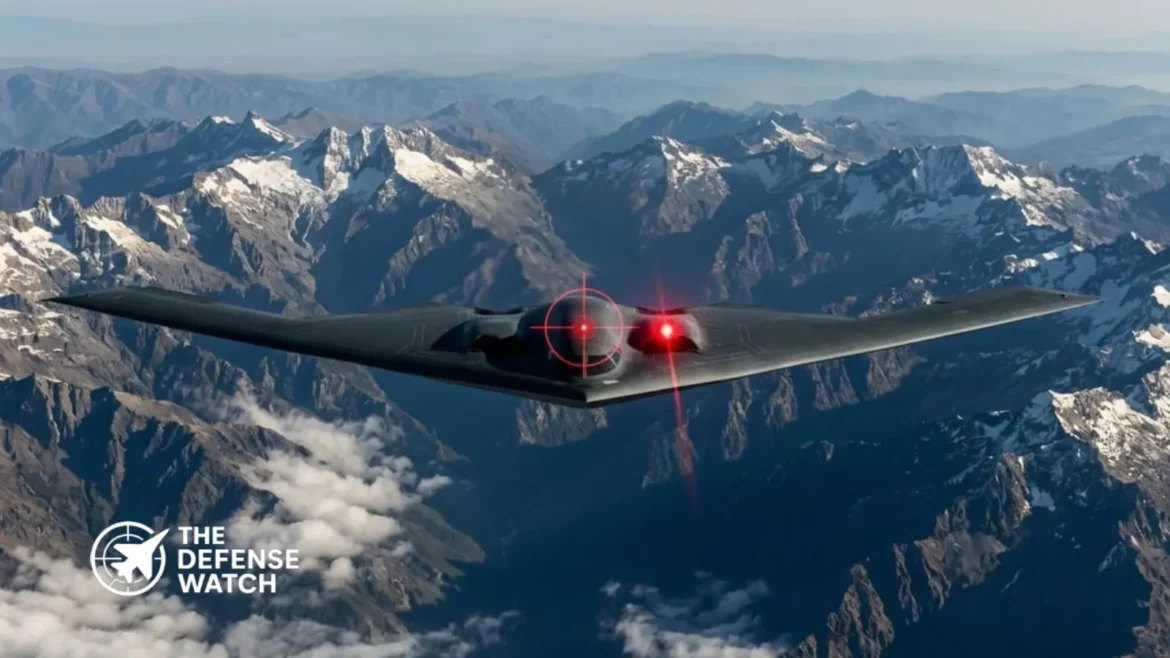
The B-2 Spirit signal detection claim by a Chinese defense firm has drawn attention to evolving electronic warfare capabilities, particularly the use of artificial intelligence to analyze radio frequency emissions from stealth aircraft.
Chinese company Jingan Technology stated that its system intercepted radio signals associated with a B-2 Spirit operated by Northrop Grumman during a mission linked to activity over Iran. The firm said the aircraft used call signs “Petro 41” through “Petro 44” during part of the operation.
The Big Picture
Stealth technology has long underpinned US air superiority, allowing aircraft like the B-2 to evade radar detection and penetrate contested airspace. However, modern military competition is shifting toward multi-domain sensing, where passive detection methods and AI-driven analytics play an increasing role.
The United States has invested heavily in low observable platforms, while competitors such as China focus on counter-stealth systems, including long wavelength radar, infrared tracking, and electronic intelligence.
This claim reflects a broader trend. Military powers are now targeting the electromagnetic spectrum itself rather than relying solely on traditional radar.
What’s Happening
Jingan Technology reported that its system detected radio frequency emissions linked to a B-2 mission. According to the company:
- The system captured signal activity associated with US aircraft operations
- AI algorithms analyzed patterns in communications and movement
- The platform reconstructed operational sequences and identified early indicators of military buildup
The firm described the detected activity as part of a large-scale US military presence in the Middle East, though it did not provide independent verification or technical details.
No official confirmation has been issued by the US Department of Defense.
Why It Matters
The significance of this B-2 Spirit signal detection claim lies in the distinction between stealth and emissions control.
Stealth aircraft reduce radar cross-section, but they can still emit signals through:
- Communications systems
- Data links
- Navigation equipment
If those emissions are detected and analyzed, adversaries may gain insight into operations without directly tracking the aircraft via radar.
AI adds a new dimension. Instead of identifying a single signal, modern systems correlate multiple data points across time, building a broader operational picture.
Strategic Implications
Electronic warfare is becoming central to modern conflict. Even if stealth aircraft remain difficult to track physically, their electronic footprint can create vulnerabilities.
This development suggests three key implications:
First, passive detection networks are gaining importance. Systems that listen rather than emit signals are harder to counter.
Second, AI enables faster processing of complex datasets. This shortens the time between detection and actionable intelligence.
Third, operational security becomes more critical. Managing emissions is now as important as reducing radar visibility.
However, the claim does not indicate that the B-2 was tracked continuously or targeted. Detecting signals is not the same as achieving fire-control quality tracking.
Competitor View
Chinese analysts often emphasize “system-of-systems” warfare, where data integration across sensors creates a comprehensive battlefield picture. This claim aligns with that approach.
Russia has also invested in electronic intelligence and counter-stealth radar systems, particularly for integrated air defense networks.
Iran, which operates layered air defense systems, may view such capabilities as a way to offset US technological advantages, especially in contested airspace scenarios.
Still, none of these perspectives confirm a fundamental erosion of US stealth capabilities.
What To Watch Next
Future developments will likely focus on:
- Integration of AI into electronic warfare platforms
- Expansion of passive sensor networks
- US efforts to enhance emissions control and secure communications
The Pentagon continues to invest in next-generation stealth platforms such as the B-21 Raider, which reportedly includes improved electronic signature management.
Capability Gap
This development highlights a gap between traditional stealth design and modern electromagnetic spectrum threats.
Stealth aircraft were optimized to defeat radar, not necessarily large-scale AI-driven signal analysis.
However, limitations remain:
- Signal detection depends on emissions being present
- Encrypted or low probability of intercept communications reduce exposure
- Detection does not equal targeting capability
These factors suggest that while the threat is evolving, it does not render stealth obsolete.
The Bottom Line
Chinese claims of B-2 Spirit signal detection reflect advances in AI-driven electronic warfare, but they do not signal the end of US air superiority.
¦ KEY FACTS AT A GLANCE- U.S. Central Command says B-2 Spirit stealth bombers struck roughly 200 targets in Iran during a 72 hour air campaign.
- The strikes targeted Iranian military infrastructure linked to missile, drone, and operational command networks.
- The operation demonstrated the U.S. Air Force’s ability to conduct deep precision strikes inside contested airspace.
- B-2 bombers flew long range missions supported by aerial refueling and intelligence surveillance assets.
- The operation highlights the continued strategic relevance of stealth bombers in modern high intensity warfare.
B-2 Spirit Stealth Bombers Conduct Major Strike Operation In Iran
B-2 Spirit stealth bombers carried out strikes on roughly 200 targets in Iran during a 72 hour operation, according to U.S. Central Command. The long range bombing campaign targeted Iranian military infrastructure and operational facilities connected to missile and drone activity.
(adsbygoogle = window.adsbygoogle || []).push({});Officials said the operation relied heavily on the stealth capabilities and precision strike capacity of the U.S. Air Force’s B-2 bomber fleet. The aircraft conducted deep strike missions designed to degrade Iranian military capabilities while avoiding heavily defended airspace.
The operation represents one of the largest stealth bomber strike campaigns conducted in the region in recent years.
The Big Picture
The use of B-2 Spirit stealth bombers highlights the United States’ continued reliance on long range stealth strike platforms to conduct high value missions in heavily defended environments.
The B-2 remains one of the few aircraft capable of penetrating advanced air defense networks while delivering precision guided munitions against strategic targets. Although the aircraft entered service in the 1990s, its stealth design and long range endurance still give the U.S. Air Force a unique deep strike capability.
Operations like this also reflect a broader shift in modern warfare. Precision air campaigns increasingly focus on disabling command networks, missile infrastructure, and unmanned systems rather than mass bombing of large facilities.
By striking hundreds of smaller operational nodes, the United States aims to disrupt military coordination and reduce the ability of adversaries to launch sustained attacks.
What’s Happening
U.S. Central Command reported that B-2 Spirit stealth bombers struck approximately 200 targets across Iran during a 72 hour period.
The strikes focused on military infrastructure linked to missile systems, drone launch operations, and command and control networks.
The B-2 Spirit is designed for long range precision strike missions. The aircraft can fly intercontinental distances and deliver conventional or nuclear payloads. Its stealth design reduces radar detection, allowing it to operate inside contested airspace protected by modern air defense systems.
(adsbygoogle = window.adsbygoogle || []).push({});The bombers typically operate from Whiteman Air Force Base in Missouri, though they can deploy forward when required. Long duration strike missions often rely on extensive aerial refueling and intelligence support from surveillance aircraft and satellites.
CENTCOM did not release detailed information about the specific locations targeted or the munitions used in the operation.
Why It Matters
The B-2 bomber strikes in Iran demonstrate the continued operational value of stealth aircraft in modern military campaigns.
Stealth platforms allow commanders to strike high value targets early in a conflict without exposing large numbers of aircraft to enemy air defenses. This approach reduces operational risk while maximizing the impact of precision weapons.
The ability to hit 200 targets in a short time frame also shows the scale at which modern precision strike operations can be conducted. Advances in intelligence, targeting systems, and networked warfare allow militaries to coordinate complex air campaigns across multiple locations simultaneously.
For the United States, maintaining the ability to conduct these deep strike missions is a core component of global power projection.
Strategic Implications
The operation sends a clear signal about U.S. military reach and readiness.
Stealth bombers remain a central component of American deterrence strategy. Their ability to strike strategic targets anywhere in the world gives U.S. leaders flexible options during crises.
The strikes also highlight the importance of integrated air campaigns. Missions involving B-2 bombers typically rely on a large supporting network that includes intelligence satellites, airborne early warning aircraft, aerial refueling tankers, and electronic warfare platforms.
This layered approach allows U.S. forces to maintain situational awareness while conducting high precision operations in contested environments.
The campaign may also shape how future air operations are planned in regions with advanced air defense systems.
Competitor View
Regional and global competitors closely monitor the use of stealth bombers in real combat operations.
Iran has invested heavily in air defense systems, including domestically produced radar networks and surface to air missile platforms. Operations involving B-2 Spirit stealth bombers test the effectiveness of those defenses against advanced low observable aircraft.
China and Russia also study these operations carefully. Both countries continue developing advanced radar systems and stealth detection technologies designed to counter aircraft like the B-2.
Real world combat operations provide valuable insight into how stealth aircraft operate in contested environments, including mission profiles, strike patterns, and operational tempo.
Capability Gap
The B-2 bomber fleet helps fill a critical capability gap in the U.S. military’s strike architecture.
Short range tactical aircraft can conduct many missions, but penetrating heavily defended territory often requires stealth platforms with long endurance and large payload capacity.
The B-2 was specifically designed for this role. Its large internal weapons bays allow it to carry precision guided bombs while maintaining a low radar signature.
(adsbygoogle = window.adsbygoogle || []).push({});However, the fleet is relatively small. The U.S. Air Force operates only about 20 B-2 aircraft, which limits the number of simultaneous missions that can be conducted.
To address this limitation, the Pentagon is developing the next generation B-21 Raider stealth bomber, which will eventually replace both the B-2 and the B-1 bomber fleets.
What To Watch Next
Future developments will likely focus on follow up military operations and potential escalation dynamics in the region.
Analysts will also watch for signs of damage to Iranian missile infrastructure and drone launch capabilities following the strikes.
Another key factor will be how Iran adjusts its air defense posture and military strategy after the operation.
The strikes may also accelerate discussions around next generation long range strike capabilities as the U.S. Air Force prepares to field the B-21 Raider.
(adsbygoogle = window.adsbygoogle || []).push({});The Bottom Line
The B-2 Spirit stealth bomber strikes in Iran highlight the United States’ ability to conduct large scale precision air operations deep inside contested territory.
■ KEY FACTS AT A GLANCE- ► Four B-2A Spirit stealth bombers flew directly from Whiteman Air Force Base, Missouri, to strike Iranian ballistic missile sites on the night of February 28 to March 1, 2026.
- ► The aircraft refueled over the central Atlantic from KC-46 tankers staged at Lajes Air Base in the Azores.
- ► CENTCOM confirmed the B-2s carried 2,000-pound bombs targeting hardened ballistic missile facilities — not the GBU-57 Massive Ordnance Penetrator used in Operation Midnight Hammer in June 2025.
- ► Operation Epic Fury marks the second confirmed B-2 combat strike against Iran in less than nine months.
- ► The targeted sites are described as ballistic missile launchers concealed in rock formations and underground tunnel networks — what analysts refer to as “missile cities.”
- ► The GBU-57 MOP weighs approximately 13,600 kilograms and is designed to penetrate up to 60 meters of earth or eight meters of reinforced concrete before detonation.
- ► CENTCOM has separately confirmed that ATACMS tactical missiles were also employed as part of Operation Epic Fury’s broader target set.
Operation Epic Fury: Why the B-2 Spirit Returned to Iran — and What the Munitions Choice Tells Us
Operation Epic Fury, confirmed by U.S. Central Command on March 1, 2026, represents the second time in nine months that the United States has employed B-2 Spirit stealth bombers in direct strikes against Iranian military infrastructure. This time, the target set shifted from nuclear facilities to hardened ballistic missile sites — and the munitions choice shifted with it.
From Midnight Hammer to Epic Fury: A Deliberate Escalation Ladder
In June 2025, Operation Midnight Hammer saw B-2s deploy the GBU-57 Massive Ordnance Penetrator against Iran’s underground nuclear facilities — the only aircraft capable of carrying the 13,600-kilogram bunker-busting weapon. The message at that time was unambiguous: the United States was targeting the hardest, deepest infrastructure in Iran’s strategic arsenal, and only one platform in the world could do that job.
Operation Epic Fury presents a different scenario. CENTCOM confirmed the B-2s were armed with 2,000-pound JDAMs, not MOPs. This is not a downgrade — it is a doctrinal signal.
Iran’s ballistic missile “cities” — underground tunnel complexes carved into mountain formations across multiple provinces — are not the same engineering problem as a uranium enrichment facility buried under 80 meters of rock. They are networked. Collapsing one exit or one launcher bay rarely eliminates the underlying capability. The complex reroutes. Launchers are repositioned. Crews clear rubble and resume operations.
Against that type of target, a single 13,600-kilogram penetrator may achieve less than a sustained campaign using multiple precision-guided 2,000-pound weapons applied systematically across tunnel entrances, ventilation infrastructure, logistics nodes, and launch hardstands. The munitions selection in Epic Fury suggests U.S. planners have been thinking carefully about this distinction.
What “Missile Cities” Actually Mean for Targeting
Iran’s underground ballistic missile infrastructure is among the most extensive in the world outside of China and Russia. Iranian state media has periodically broadcast footage of tunnel networks housing Shahab, Emad, and Ghadr-series missiles on mobile transporter-erector-launchers. These facilities are not fixed silos — they are mobile launch systems that operate from tunnel exits, making them fundamentally harder to neutralize than static hardened sites.
The challenge for any strike planner is that destroying the tunnels themselves is operationally expensive and logistically difficult. A tunnel network with 15 or 20 access points requires either an implausible number of MOP-class weapons or a sustained precision campaign targeting the exits, rail infrastructure, generator systems, fuel storage, and associated command nodes in sequence.
The use of 2,000-pound class weapons in Epic Fury likely reflects a targeting approach focused on launcher infrastructure, exit points, and supporting logistics rather than tunnel excavation per se. Whether that approach achieved meaningful degradation of Iran’s ballistic missile launch capacity will depend on battle damage assessment data that will not be public for some time, if ever.
The B-2’s Operational Envelope and What This Mission Demonstrates
The Whiteman AFB-to-Iran round trip — including mid-Atlantic refueling from KC-46s staged at Lajes in the Azores — underscores what makes the B-2 Spirit operationally unique and strategically irreplaceable until the B-21 Raider achieves full operational capability.
No other platform can combine the B-2’s payload capacity, low-observable radar cross section, and the range necessary for a continuous-flight intercontinental strike mission. The KC-46 tanker integration is a critical element of this equation; without forward-positioned tanker assets, the mission profile becomes significantly more constrained. The selection of Lajes, a joint U.S.-Portuguese facility on Terceira Island, reflects long-standing access agreements within the NATO alliance that remain operationally relevant well beyond the European theater.
This is worth noting in a broader context: two combat strikes against Iran using the B-2 in under a year represents a higher operational tempo for the Spirit than at any previous point in its service history, including its use over Kosovo in 1999, Afghanistan post-2001, and Libya in 2011. The 509th Bomb Wing at Whiteman is sustaining a genuine combat commitment, not a one-time demonstration.
The Readiness Question Nobody Is Asking Loudly Enough
The B-2 fleet consists of 20 operational aircraft. That number has been stable for years, and it is not increasing. Two consecutive combat deployments of four aircraft each represent a meaningful fraction of the available fleet on any given day, accounting for scheduled depot maintenance, modification programs, and routine availability rates.
The U.S. Air Force’s long-term answer to this capacity problem is the B-21 Raider, currently in low-rate initial production at Northrop Grumman’s Palmdale facility. The service has stated an intent to procure at least 100 B-21s, which would roughly triple the penetrating bomber fleet. But that fleet exists in the future. Today, the B-2 carries the full weight of U.S. penetrating strike capability, and repeated combat deployments impose real costs on airframe hours, crew readiness, and maintenance cycles.
Congress and the Air Force leadership will face difficult questions about B-2 sustainment funding in the FY2027 budget cycle if this operational tempo continues.
Strategic Assessment
Impact on Regional Power Balance
Iran retains substantial residual ballistic missile capability despite two rounds of U.S. strikes. The Islamic Revolutionary Guard Corps Aerospace Force has invested decades and significant resources in distributed, hardened, and mobile missile infrastructure precisely to survive this type of campaign. Degradation of the launch network is likely, but elimination is implausible. Iran’s ability to threaten regional neighbors, U.S. bases in the Gulf, and Israeli population centers is reduced — not removed.
Deterrence Implications
The back-to-back use of B-2s sends a clear message about U.S. willingness to sustain a strategic strike campaign using its most capable penetrating bomber. The deliberate CENTCOM public statement — “No nation should ever doubt America’s resolve” — is directed at audiences beyond Iran, including North Korea and China, both of which operate hardened underground facilities that would require similar or greater effort to hold at risk. The credibility of U.S. extended deterrence is being demonstrated, at operational cost, in real time.
Budget and Procurement Signals
Every combat sortie flown by a B-2 reinforces the procurement rationale for the B-21 Raider. The argument for accelerating B-21 production — already gaining momentum in Air Force planning documents and Congressional testimony — becomes considerably stronger when the 20-aircraft B-2 fleet is visibly under operational strain. Northrop Grumman’s recent announcements of accelerated B-21 production timelines are likely to find a receptive audience on the Hill in the near term.
Alliance Dynamics
The use of Lajes Air Base for KC-46 tanker staging highlights the operational importance of Atlantic basing rights within the NATO framework. Portugal’s continued hosting of U.S. assets under the Lajes Field agreement provides a forward logistics node that has proven relevant to Middle East operations — a fact that is not lost on alliance planners as debates about NATO burden-sharing continue.
Escalation Risks
Iran’s reported retaliatory salvo of more than 300 ballistic missiles and nearly 300 drones on the first day of the broader U.S.-Israeli campaign illustrates that the escalation ladder has multiple rungs remaining. Sustained pressure on Iranian missile infrastructure may accelerate Iranian decisions about proxy activation in Lebanon, Iraq, and Yemen, and raises questions about the durability of U.S. missile defense assets — THAAD, Patriot, and shipborne SM-3 — to absorb continued high-volume attacks without degradation. Defense officials have already flagged concerns about interceptor inventory sustainability under prolonged engagement conditions.
Air Force Leaders Call for Enhanced Communications After Successful Iran Strike
The U.S. Air Force must improve how it securely transmits critical information with bombers and other aircraft following last summer’s strikes on Iranian nuclear facilities, according to senior military officials who identified command-and-control gaps during the mission.
(adsbygoogle = window.adsbygoogle || []).push({});Lt. Gen. Jason Armagost, deputy commander of Air Force Global Strike Command, emphasized the need for enhanced communications architecture during a Mitchell Institute for Aerospace Studies conference in Arlington, Virginia, on Thursday. The remarks come seven months after Operation Midnight Hammer, the June 22, 2025, B-2 Spirit bomber-led strikes that successfully destroyed three deeply buried Iranian nuclear facilities.
The operation demonstrated both the Air Force’s strike capabilities and critical vulnerabilities in how mission-critical data moves between aircraft and commanders during combat operations.
Operation Midnight Hammer Reveals Communications Vulnerabilities
Operation Midnight Hammer utilized Massive Ordnance Penetrator weapons—nearly 26,000 pounds of steel designed to penetrate 200 feet of mountain rock—to destroy Iranian nuclear facilities buried deep underground. While the mission succeeded through careful engineering, intelligence gathering, and coordination, it exposed weaknesses in the Air Force’s command-and-control networks.
If that package is not able to communicate the status of their forces and the ‘go’ from the mission commander, then that is a foul on all of us,” Armagost stated during the conference panel discussing lessons learned from the operation.
The general’s comments underscore growing concerns that current communications systems may not provide the secure, real-time data transmission necessary for future penetrating strike missions against sophisticated adversaries.
Balancing Communications Capabilities with Command Authority
Maj. Claire Randolph, chief of weapons and tactics for U.S. Air Forces Central Command, agreed that communications capabilities and intelligence sharing require improvement during combat operations. However, she cautioned against unintended consequences of enhanced connectivity.
Randolph warned that providing combatant commanders with direct communications links to cockpits could undermine aircrew commander authority and lead to operational decision-making by personnel without complete situational awareness.
“Let’s imagine you have a wire direct from the CENTCOM commander to the cockpit of every B-2 or the cockpit of every F-16,” Randolph explained. “There’s a liability there to add decision-making authority without all the awareness. We have to improve our communications capabilities, but we also have to be very careful to bound the authority that ends up touching the cockpit.
The major emphasized the risk of involving personnel outside the aircraft who should not participate in tactical decision-making processes.
B-21 Raider to Feature Advanced Data-Sharing Capabilities
The Air Force is positioning the in-development B-21 Raider stealth bomber as a solution to current communications challenges. Northrop Grumman, the aircraft’s manufacturer, has promoted the B-21 as the world’s first sixth-generation aircraft, partly due to its advanced data-sharing capabilities.
Armagost confirmed the Air Force plans to leverage these capabilities to improve command-and-control and communications systems. It’s definitely how we’re configuring going forward,” he told Defense News when asked about the B-21 and improved combat communications.
The general indicated that operations similar to Midnight Hammer will look different—and potentially be easier to execute—once the Raider integrates into the Air Force’s fleet.
Current B-2 Fleet Carries Stealth Strike Burden
The B-2 Spirit currently serves as the Air Force’s only operational stealth bomber. The platform has demonstrated its value in high-risk penetrating strike missions against hardened targets, but aging communications systems limit its effectiveness in contested environments where secure, real-time data transmission proves critical.
The B-21 Raider program represents the Air Force’s effort to field a next-generation platform combining stealth characteristics with modern communications architecture capable of supporting complex, coordinated strike operations.
Implications for Future Strike Operations
The communications challenges identified during Operation Midnight Hammer carry significant implications for future Air Force operations. As adversaries develop more sophisticated air defense systems and anti-access/area-denial capabilities, the ability to securely transmit mission updates, target information, and status reports becomes increasingly vital.
(adsbygoogle = window.adsbygoogle || []).push({});Military analysts suggest the Air Force must balance three competing priorities: maintaining secure communications that prevent adversary interception, ensuring sufficient bandwidth for real-time data sharing, and preserving appropriate command authority at the tactical level.
The service’s investment in the B-21 Raider program indicates recognition that next-generation strike platforms require communications systems designed from the ground up to support distributed operations in contested environments.
Looking Ahead
Air Force Global Strike Command continues evaluating lessons learned from Operation Midnight Hammer as the service prepares for the B-21 Raider’s eventual operational deployment. The timeline for the Raider’s initial operating capability remains classified, though testing continues to progress.
Military officials have not disclosed specific technical solutions under consideration for communications upgrades, citing operational security concerns. However, industry sources indicate potential approaches include advanced satellite communications systems, artificial intelligence-enabled network management, and quantum-resistant encryption protocols.
The Air Force’s focus on communications improvements reflects broader Department of Defense efforts to ensure Joint All-Domain Command and Control capabilities can support distributed operations across contested battlespaces.
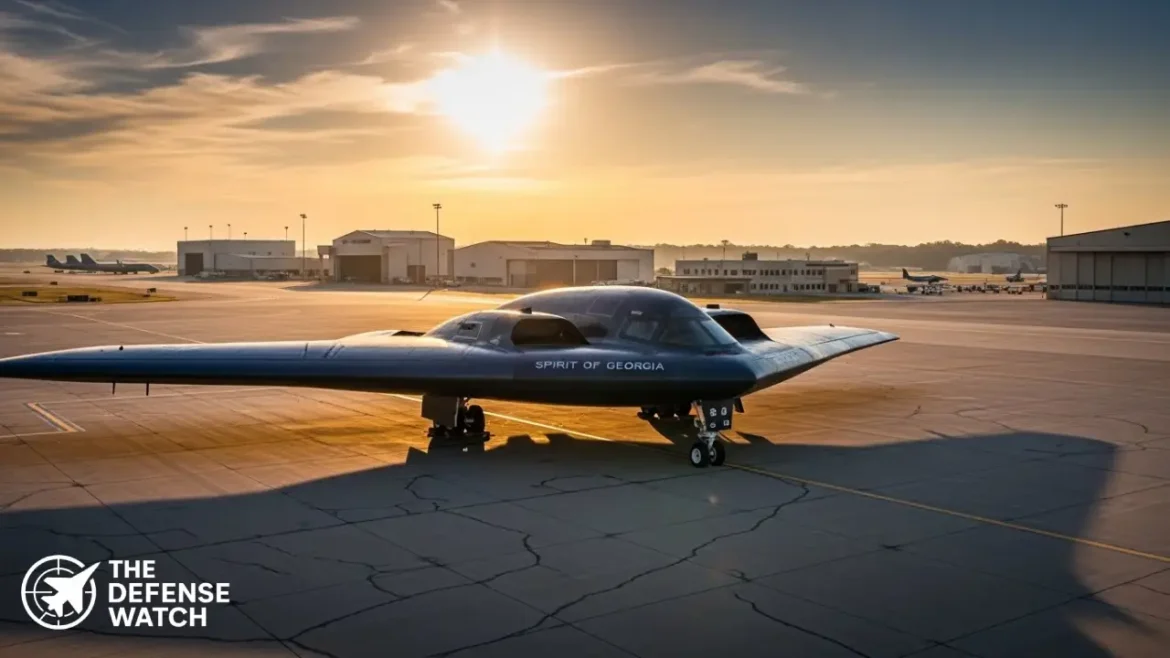
The B-2 Spirit stealth bomber known as “Spirit of Georgia” (tail number 89-0129) officially rejoined the U.S. Air Force’s operational fleet, following extensive repairs to structural damage sustained in a landing gear collapse at Whiteman Air Force Base, Missouri.
Background: Gear Collapse Incident and Fleet Significance
The incident occurred on September 14, 2021, during landing at Whiteman AFB. A hydraulic failure triggered an emergency gear-extension, but upon touchdown the left main landing gear (LMLG) failed to remain locked, causing it to collapse. The bomber veered off runway — its left wing scraped the ground and the aircraft came to rest roughly one mile from the landing point.
At the time, initial repairs were estimated at a minimum of US$10.1 million. But given the complex damage to the wing bay, lower wing skin, and landing-gear bay structures — including potential impact on stealth skin and internal fuel tanks — further analysis was required.
With the restoration of Spirit of Georgia, the B-2 fleet returns to 19 operational bombers, following the retirement of another damaged B-2 — “Spirit of Hawaii” — in 2024 after a separate crash-landing and fire.
Repair Details: The Restoration Journey
Phase 1: Damage Discovery and Recovery
Immediately after the collapse, maintenance crews from the 509th Maintenance Group and the B-2 System Program Office used airbags to lift the aircraft, manually locked the main gear, and towed the bomber into a hangar for inspection.
Non-Destructive Inspections revealed the bulk of the damage was concentrated in the left main landing gear bay and the lower wing region. Outside wing spars were reportedly intact.
Phase 2: Ferry Flight to Palmdale
After temporary repairs, Spirit of Georgia was cleared for a ferry flight from Whiteman AFB to the maintenance facility at Northrop Grumman in Palmdale, California. This move marked a key milestone toward full structural repair.
Phase 3: Structural Repair — Innovation Saves Time and Cost
Rather than fabricate a completely new composite skin for the damaged left wing, engineers sourced an existing 8×4 ft composite skin section from a B-2 test article (Test Article 0998). This donor part significantly reduced both cost and time compared with building from scratch.
Repair work included:
- Replacement of the left-hand wingtip;
- Replacement of the outboard wing major-mate skin panel;
- Replacement of the left main landing gear door hinges;
- Repairing disbonded composite skin and rigging the landing-gear door.
Structural repairs were finalized on May 12, 2025.
Phase 4: Certification and Return to Service
Following the repairs, engineers developed airworthiness artifacts and certifications to ensure the bomber met all safety and stealth-integrity standards. Once cleared, the aircraft was returned to Whiteman AFB and reinstated to operational status on November 6, 2025.
The total cost of the repair effort was approximately US$23.7 million.
Col. Jason Shirley, Senior Materiel Leader of the B-2 System Program Office at the Air Force Life Cycle Management Center (AFLCMC), characterized the achievement as a “remarkable recovery,” crediting the 509th Maintenance team’s rapid response and the engineering creativity that accelerated repair and kept costs well below potential replacement value.
Why It Matters — Strategic Implications for the USAF
- Fleet Size and Stealth Capability: With only 19 B-2 bombers now operational, the return of the Spirit of Georgia restores one of the USAF’s most critical stealth assets. Given the limited size of the fleet and its centrality to nuclear deterrence and global strike missions, each aircraft’s availability bears outsized strategic weight.
- Cost-Effective Maintenance and Sustainment: The successful use of donor composite material demonstrated an efficient, cost-effective approach to restoring low-observable airframes — a model that could inform future maintenance strategies across stealth fleets.
- Operational Readiness and Confidence: The restoration affirms the U.S. commitment to sustaining legacy stealth capabilities even as newer platforms emerge. It also sends a message of resilience: the USAF can recover from serious mishaps without permanently losing high-value aircraft.
What’s Next
With Spirit of Georgia back in service, the USAF may refocus maintenance resources on other aging B-2 airframes. Ongoing sustainment of stealth skin integrity — notoriously labor-intensive — will remain a priority, especially as the bomber continues to operate alongside emerging platforms like the B-21 Raider.
Further, the successful repair could influence policy decisions favoring restoration over early retirement for select legacy aircraft — provided the damage is contained and the airframe remains structurally sound.
Newer Posts
- atOptions = {
‘key’ : ‘3d48d603f906e3fe9f205be3c4433835’,
‘format’ : ‘iframe’,
‘height’ : 250,
‘width’ : 300,
‘params’ : {}
};