Executive Summary:
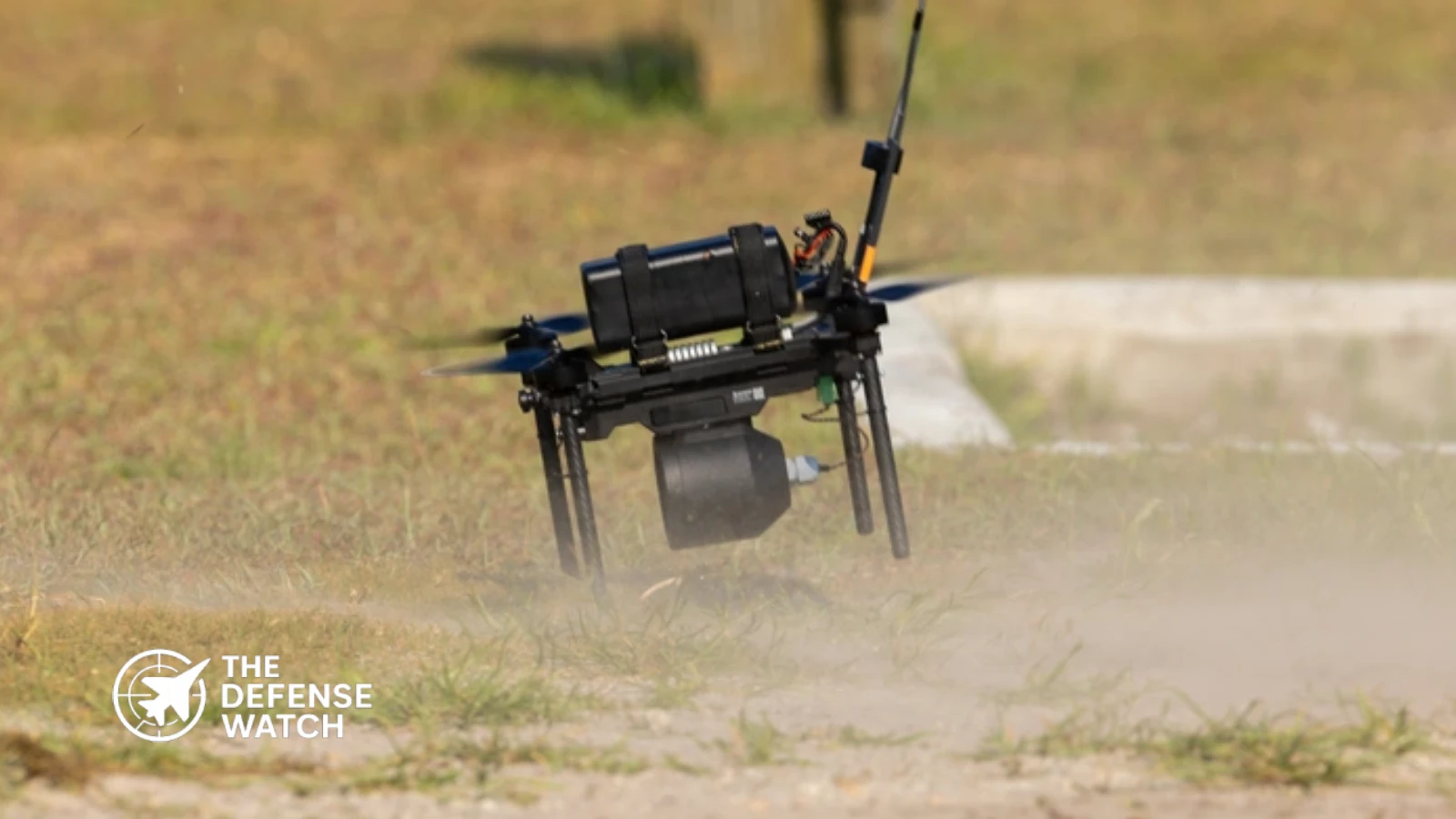
U.S. Marines have completed the Marine Corps’ first live fire first person view (FPV) attack drone training series in South Korea using the Neros Archer loitering munition. The milestone reflects the service’s accelerating effort to integrate low cost precision strike systems into forward deployed forces across the Indo-Pacific while strengthening interoperability with South Korean and U.S. joint forces.
U.S. Marines Expand FPV Attack Drone Capability In South Korea
The U.S. Marines FPV attack drone program reached a significant milestone after the Marine Corps successfully completed its first live fire series of first person view attack drone missions on the Korean Peninsula. Conducted by the 4th Marine Regiment, 3rd Marine Division, the training demonstrated how rapidly deployable FPV drones are becoming part of the Marine Corps’ evolving operational toolkit for distributed warfare.
The historic exercise included two live fire events. The first was conducted on July 30 by the 3rd Light Armored Reconnaissance Battalion, followed by a second iteration carried out by the 3rd Battalion, 7th Marine Regiment. Both units are forward deployed to the Indo-Pacific under the Marine Corps’ Unit Deployment Program.
The training centered on the Neros Archer, an FPV attack drone designed to deliver precision effects against armored vehicles and personnel targets at ranges approaching 20 kilometers.
Neros Archer Brings Precision Fires To Small Units
Unlike traditional indirect fire systems that often require support from higher headquarters, the Neros Archer provides squad and platoon level Marines with an organic precision strike capability.
According to the Marine Corps, the drone enables operators to engage targets from relatively protected positions while extending the reach of infantry formations well beyond conventional small arms.
Marine Corps 1st Lt. Evan Brace, company executive officer with the 3rd Light Armored Reconnaissance Battalion, said the live fire events allowed Marines to evaluate the system under realistic conditions.
He noted that operating the drones in a deployed environment provides valuable lessons for refining tactics, techniques, and procedures before the capability is employed during operational missions.
The training also demonstrated how FPV drones can complement existing weapons rather than replace them, giving commanders additional options for engaging armored vehicles, fortified positions, and other battlefield targets.
Modernization Reflects Lessons From Contemporary Conflicts
The introduction of FPV attack drones aligns with broader Marine Corps Force Design initiatives that emphasize distributed operations, smaller formations, and long range precision fires.
Low cost FPV drones have gained increasing military attention following their widespread use in recent conflicts, particularly in Ukraine, where they have proven effective against armored vehicles, defensive positions, and logistics assets at relatively low cost.
For the Marine Corps, integrating systems such as the Neros Archer reflects an effort to provide frontline units with affordable precision capabilities that can be fielded quickly without relying on larger aviation or artillery assets.
This approach also supports the Marine Corps’ concept of Expeditionary Advanced Base Operations (EABO), which envisions small, dispersed units operating across contested maritime environments throughout the Indo-Pacific.
The South Korea training represents an operational validation of those concepts under realistic conditions rather than a laboratory demonstration.
Joint Coordination Enabled Historic Live Fire Event
Because the event marked the first FPV attack drone live fire series conducted by U.S. Marines in South Korea, extensive planning and coordination were required before the training could begin.
The 4th Marine Regiment worked alongside the U.S. Army’s 2nd Infantry Division, 8th Army, 2nd Combat Aviation Brigade, and South Korean authorities to establish the required safety procedures, airspace coordination, and regulatory approvals.
Before each live fire mission, Marines completed dry run rehearsals and procedural safety checks designed specifically for explosive equipped FPV drone operations.
Brace credited close cooperation with South Korean partners and a mission focused approach for overcoming regulatory and operational challenges associated with introducing the new capability on the Korean Peninsula.
Strengthening Alliance Readiness In The Indo-Pacific
Senior Marine leaders described the exercise as more than a technology demonstration, emphasizing its role in strengthening combined readiness with South Korea.
Marine Corps Sgt. Maj. Ismael Bamba, senior enlisted leader for U.S. Marine Corps Forces Korea, said providing Marines with FPV attack drones gives even fire team sized elements an additional precision strike option capable of shaping the battlefield.
He added that young Marines have adapted rapidly to the technology, allowing small units to become increasingly self sufficient while improving their ability to operate alongside South Korean allies during future contingencies.
Beyond the immediate training objectives, the exercise establishes a framework for future combined FPV drone events involving U.S. and allied forces throughout the region.
Analysis: Small Drones Are Becoming Core Combat Systems
The significance of the Marine Corps’ first FPV attack drone live fire series extends beyond a single training event. It highlights a broader shift underway across Western militaries, where inexpensive unmanned systems are transitioning from experimental capabilities into standard battlefield equipment.
Rather than relying exclusively on high value aircraft or expensive precision guided munitions, modern forces increasingly seek layered strike options that combine affordability, flexibility, and rapid deployment. FPV drones fill an important niche by enabling infantry formations to deliver precision effects without waiting for external fire support.
For forward deployed Marine units operating across the vast Indo-Pacific, these systems could prove especially valuable. The region’s geography favors dispersed operations across islands and coastal areas where traditional artillery coverage may be limited and rapid resupply cannot always be guaranteed.
The South Korea exercise also demonstrates that successful adoption of emerging technologies depends on more than hardware. Airspace management, explosive safety procedures, operator training, and allied coordination are equally critical for integrating FPV drones into routine military operations.
As more allied militaries adopt similar systems, standardized tactics and combined training will likely become increasingly important for maintaining interoperability across coalition forces.
Looking Ahead
The Marine Corps has identified unmanned systems as a key component of its future force structure, and the successful completion of the first FPV attack drone live fire series in South Korea provides operational experience that can inform future deployments throughout the Indo-Pacific.
By validating the Neros Archer in a forward deployed environment alongside U.S. joint forces and South Korean partners, the Marine Corps has taken another step toward integrating low cost precision attack drones into everyday combat operations.