North Korea Escalates Ballistic Missile Testing as IAEA Warns of Nuclear Advances
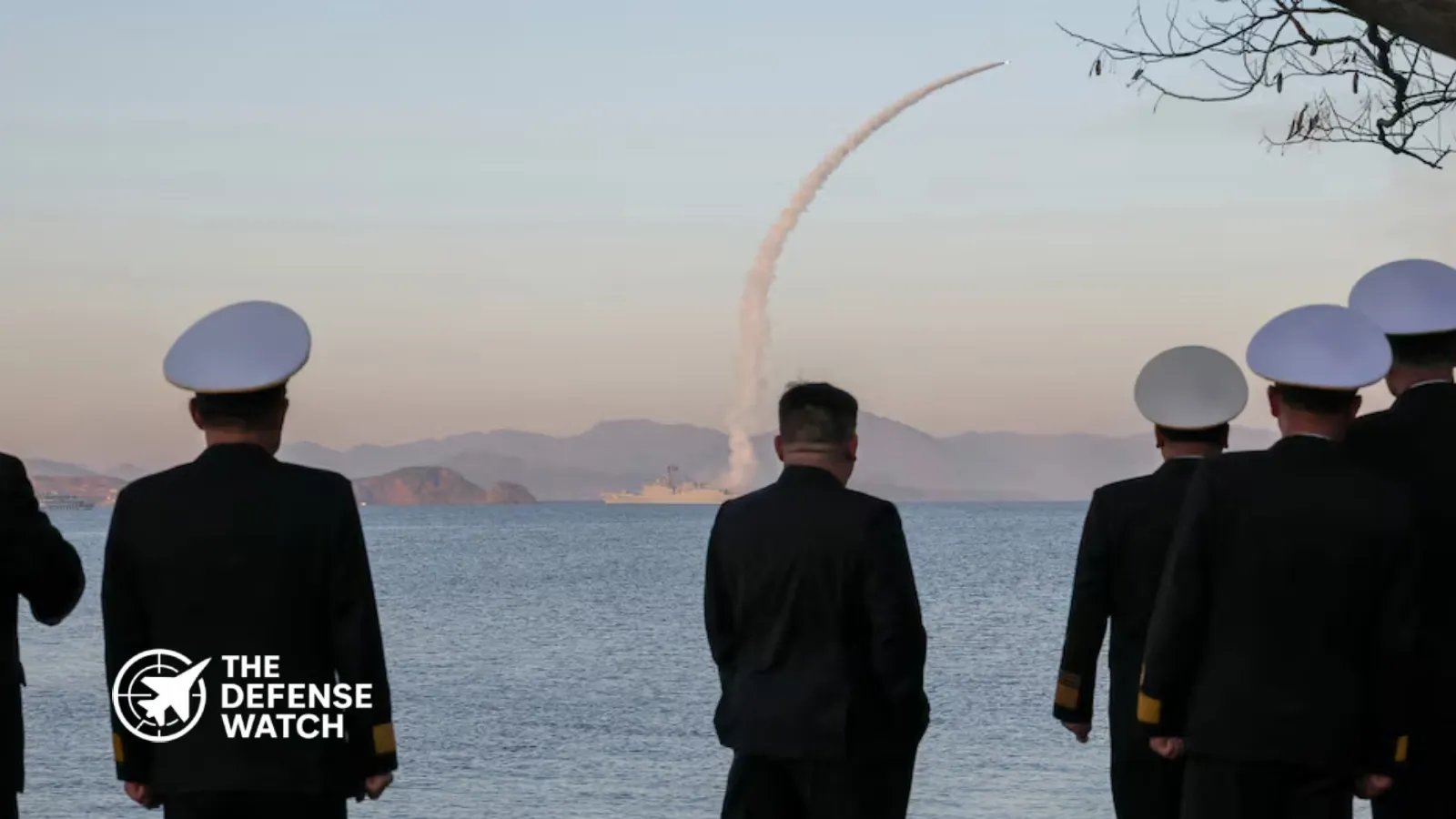
North Korea launched multiple short-range ballistic missiles on Sunday, April 19, 2026, marking the country’s seventh ballistic missile test of the year and the fourth in April alone — a pace of escalation that is raising serious alarms across the Indo-Pacific and in Washington. The launches occurred as global attention remained fixed on the Middle East, a timing analysts describe as anything but coincidental.
- North Korea launched multiple short-range ballistic missiles on April 19, 2026, from the Sinpo area on its eastern coast — its seventh ballistic missile launch of 2026 and fourth in April alone.
- The missiles flew approximately 140 kilometers (87 miles) before falling into the East Sea (Sea of Japan), according to South Korea’s Joint Chiefs of Staff.
- South Korea convened an emergency National Security Council meeting and condemned the launches as a clear violation of UN Security Council resolutions.
- Sinpo hosts North Korea’s submarine base; analysts are examining whether the salvo included submarine-launched ballistic missiles (SLBMs).
- The IAEA warned days earlier of a “rapid increase” in activity at North Korean nuclear facilities, citing probable advances in uranium enrichment capacity.
South Korea’s Joint Chiefs of Staff confirmed that several short-range ballistic missiles were fired into the East Sea from North Korea’s Sinpo area at approximately 6:10 a.m. local time, with each missile traveling roughly 140 kilometers. Japan’s Defense Ministry independently confirmed the launches, stating that the missiles fell toward the sea between the Korean Peninsula and Japan.
Launch Site Raises Submarine Concerns
The choice of launch location is drawing particular scrutiny from defense analysts. Because Sinpo is widely regarded as home to a major North Korean submarine base, South Korean military authorities are actively examining whether the launches may have included submarine-launched ballistic missiles in addition to land-based firings.
Sunday’s missile launches appear to have originated from the Sinpo coastal facility, where submarines capable of launching such weapons are built. If confirmed, SLBM involvement would mark a significant operational signal — submarine-launched platforms introduce a survivable second-strike dimension to Pyongyang’s deterrence posture that complicates allied defense planning considerably.
South Korea’s military is analyzing whether the latest launches were made from a submarine, a land-based launcher, or both platforms.
Seoul and Tokyo Respond With Emergency Measures
The allied response was swift. In an emergency meeting of the National Security Council, senior South Korean officials expressed concerns about North Korea’s repeated ballistic missile tests and urged Pyongyang to stop them immediately. South Korea said it had bolstered its surveillance posture and was closely exchanging information with the United States and Japan.
Japan lodged a strong formal protest with Pyongyang, stating that the launches threaten regional and international peace and constitute violations of UN Security Council resolutions banning North Korea’s ballistic activities.
South Korea’s Defense Ministry called the launches a “clear violation” of UN resolutions and reaffirmed that Seoul maintains an overwhelming capability and readiness to respond to any provocation.
A Pattern of Deliberate Escalation
Sunday’s test did not emerge in a vacuum. It is the culmination of an intense, sustained testing campaign that Pyongyang has conducted throughout early 2026. The previous week saw North Korea announce three days of testing activities, including ballistic missiles armed with cluster-bomb warheads and other new weapons systems. Last month, it said it had tested an upgraded solid-fuel engine for missiles capable of reaching the U.S. mainland.
Earlier in April, Kim Jong Un personally oversaw tests of strategic cruise missiles launched from the naval destroyer Choe Hyon — one of two 5,000-ton destroyers in North Korea’s fleet, both launched last year as Kim pursues a naval modernization drive. The North is also building two additional 5,000-ton class destroyers.
After last week’s destroyer-based tests, Kim declared his government’s commitment to the “limitless expansion” of its nuclear forces and issued new directives to sharpen the country’s nuclear attack and rapid-response capabilities.
IAEA Warns of Nuclear Breakout Advances
The missile escalation comes against a backdrop of deepening concern from the international nuclear watchdog. IAEA Director General Rafael Grossi visited the Korean Demilitarized Zone days before Sunday’s launches, calling on North Korea to engage in diplomacy and warning that “as the world’s attention is focused on developments in the Middle East, we must not forget tensions and divisions elsewhere, including here on the Korean Peninsula.”
IAEA chief Rafael Grossi confirmed a “rapid increase” in activities at North Korean nuclear facilities, warning of probable advances in uranium enrichment capacity. North Korea has made “very serious” advances in its ability to produce nuclear weapons, Grossi stated, with the probable addition of a new uranium enrichment facility.
South Korea’s intelligence service told lawmakers that recent engine tests were likely tied to building a more powerful intercontinental ballistic missile capable of carrying multiple nuclear warheads.
Strategic Calculus: Exploiting a Distracted Washington
Multiple defense analysts see a clear strategic logic behind Pyongyang’s accelerating test pace. As the U.S. is focused on Iran, the North sees this as a golden time to upgrade their nuclear power and missile capability,” said Lim Eul-chul, a professor at Kyungnam University.
The launches come as China and the U.S. prepare for a summit in mid-May at which President Xi Jinping and President Donald Trump are expected to discuss North Korea. Some observers assess that Pyongyang’s recent testing activities are deliberately timed to increase its leverage in any future diplomatic dealings.
This analysis holds strategic weight. By testing at scale ahead of the Trump-Xi summit, Kim Jong Un is effectively signaling that any deal brokered in Beijing must account for North Korea’s expanded capabilities — not those that existed during the collapsed 2019 diplomacy. The cluster munitions warhead tests, the solid-fuel ICBM engine advances, and now the potential SLBM salvo together form a coherent message: Pyongyang’s deterrent has grown qualitatively, not just quantitatively.
North Korea has refused to return to talks with South Korea or the U.S. since Kim Jong Un’s diplomacy with President Trump collapsed in 2019, instead deepening ties with Russia and China.
Diplomatic Door Remains Technically Ajar — But Narrowly
Despite the escalatory posture, Pyongyang has maintained a rhetorical crack in the diplomatic door. Trump has repeatedly expressed a desire to restore diplomacy with Kim, and the North Korean leader has recently left open the possibility of dialogue — but has urged Washington to drop demands for the North’s nuclear disarmament as a precondition for talks. PBS
Earlier this month, Jang Kum Chol, first vice minister at North Korea’s Foreign Ministry, declared South Korea would always remain the North’s “most hostile enemy state,” explicitly rejecting Seoul’s recent attempts to interpret signals from Kim’s sister as a diplomatic opening.
The pattern suggests a dual-track strategy: use missile tests to build leverage while leaving a narrow diplomatic corridor open exclusively for engagement with Washington — on Pyongyang’s terms.
Bottom Line
North Korea’s April 19 ballistic missile launches are not an isolated event. They represent the latest data point in a systematic, deliberate effort to advance every pillar of Pyongyang’s nuclear deterrent — warhead design, delivery range, solid-fuel mobility, naval launch platforms, and submarine-based second-strike capability — while world attention is elsewhere. For U.S. Indo-Pacific Command, allied defense planners in Seoul and Tokyo, and the broader arms control community, the core challenge is no longer preventing North Korea from becoming a nuclear state. It is managing the reality of a nuclear-armed Pyongyang that is actively expanding its arsenal and shows no interest in negotiating it away.