
Why It Matters
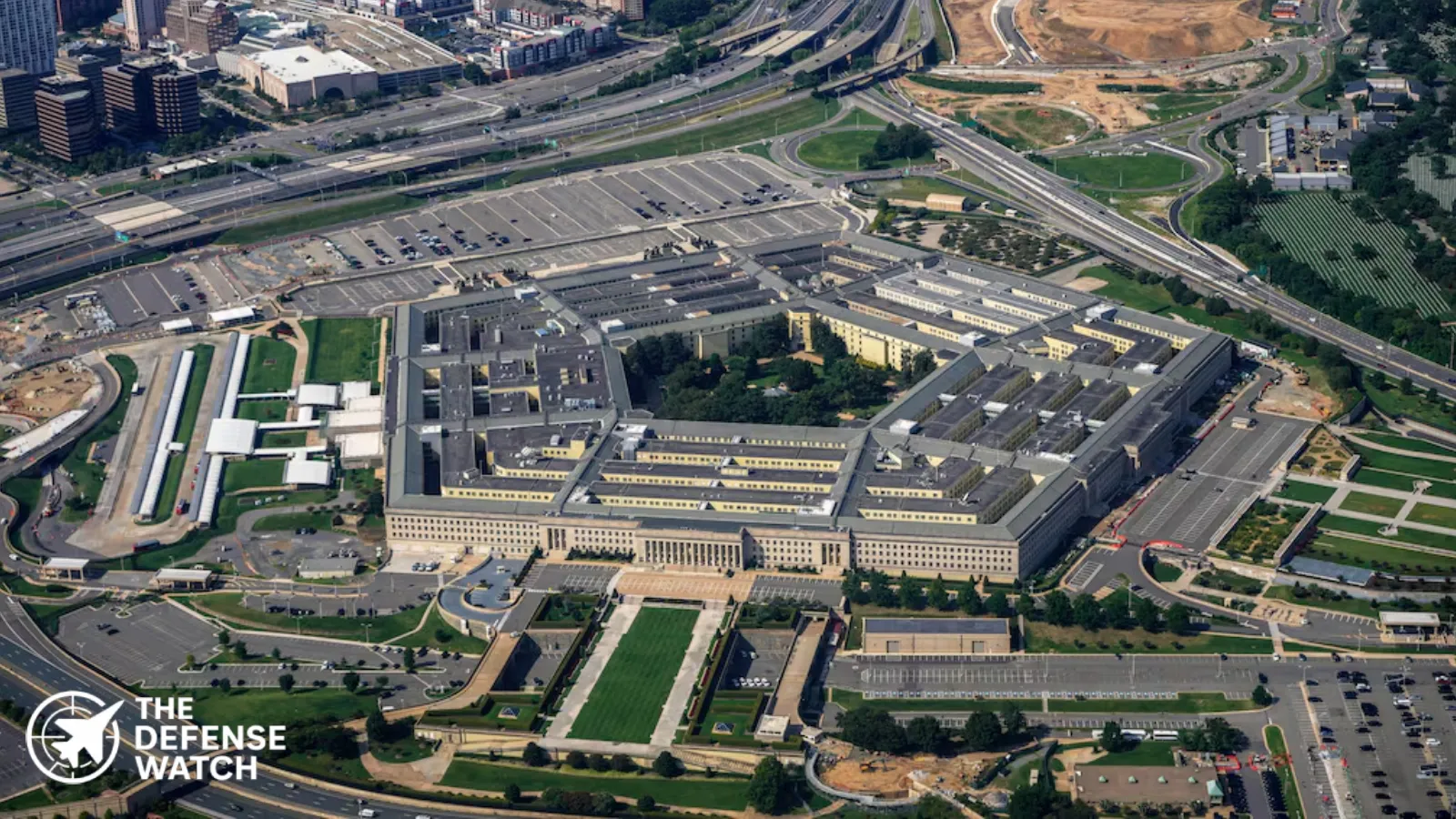
The Pentagon financial audit failure matters because it exposes long standing weaknesses in how the United States tracks and manages defense resources at a time of sustained strategic competition with China and Russia. As Washington emphasizes readiness, modernization, and alliance assurance, unresolved accounting gaps raise questions about efficiency, credibility, and long term force planning.
What Happened
The U.S. Department of Defense confirmed it failed its annual financial audit for the eighth consecutive year, according to its Agency Financial Report for fiscal year 2025. Congress has required yearly audits since 2018, yet the Pentagon remains the only one of the federal government’s 24 major agencies that has never received a clean opinion.
Auditors reported 26 material weaknesses and two significant deficiencies across the department’s financial systems. These findings indicate that large portions of defense assets and liabilities could not be fully verified or accurately valued.
Background
The Pentagon manages the largest and most complex budget in the federal government, spanning all military services, defense agencies, and global operations. For fiscal year 2025, the department reported about 4.65 trillion dollars in assets and roughly 4.7 trillion dollars in liabilities distributed across all U.S. states and more than 40 countries.
Unlike civilian agencies, the Defense Department oversees weapons programs, global supply chains, classified systems, and legacy platforms dating back decades. These factors have long complicated efforts to meet standard federal accounting requirements.
Key Audit Findings
One of the most significant issues identified in the latest audit involved the Joint Strike Fighter program. Auditors found that assets in the Global Spares Pool were omitted or inaccurately recorded. As a result, the value and existence of certain aircraft parts could not be reliably verified.
This problem reflects a broader pattern in Pentagon financial audit results, where logistics systems, property records, and inventory tracking remain fragmented across services and contractors. While not unique to the F 35 program, its scale and multinational structure make such weaknesses more visible.
How It Works
A Pentagon financial audit examines whether reported assets and liabilities can be supported by accurate records. This includes weapons systems, real estate, spare parts, and long term obligations. Auditors test data systems, internal controls, and documentation across hundreds of entities.
In practice, many defense systems were built for operational needs rather than financial reporting. Unlike commercial firms, the Pentagon historically prioritized speed and mission execution over standardized accounting. Retrofitting these systems for audit compliance has proven slow and costly.
Strategic Competition Context
From a strategic perspective, persistent audit failures intersect with broader competition among major powers. The United States is increasing defense spending to deter peer adversaries, modernize nuclear forces, and expand capabilities in space and cyber domains.
By comparison, China’s centralized defense structure allows tighter state control over industrial and military resources, though with less transparency. Russia, while spending less overall, maintains strong central authority over defense production. In this context, U.S. audit challenges do not imply reduced capability, but they do complicate long term planning and congressional oversight.
Policy and Expert Perspective
Defense officials have stated that annual audits remain a tool for improvement rather than a pass fail exercise. Department leadership has committed to continued reviews and reforms, with the stated goal of achieving an unmodified audit opinion by 2028.
Independent analysts often note that progress is measured in narrower problem areas rather than a single overall result. Reductions in material weaknesses over time suggest incremental gains, even as full compliance remains elusive.
Why It Matters Going Forward
As defense budgets face pressure from national debt and competing domestic priorities, financial transparency is increasingly tied to strategic credibility. Allies rely on U.S. sustainment and logistics networks, while lawmakers depend on accurate data to allocate resources across theaters.
In the near term, audit failures are unlikely to affect operational readiness. Over the long term, however, unresolved accounting gaps could slow modernization efforts and complicate responses to sustained global competition.
Conclusion
The Pentagon financial audit failure underscores the tension between operational scale and financial accountability. As the United States positions itself for prolonged strategic rivalry, the ability to clearly account for defense resources remains a foundational requirement for effective policy and planning.
Get real time update about this post category directly on your device, subscribe now.

15 comments
[…] the time of award, the Navy obligated $5 million in fiscal year 2026 research, development, test, and evaluation funds. These funds will not expire at the end of […]
[…] Fiscal 2026 Navy working capital funds will fully cover the contract value at the time of award. According to the Navy, the funds will not expire at the end of the current fiscal year. […]
[…] Additional funding sources include Navy research, development, test and evaluation funds, Navy other procurement funds, Army research and development funds, and Navy operations and maintenance funding. A portion of the obligated operations and maintenance funding will expire at the end of the current fiscal year. […]
[…] funding obligated at award will not expire at the end of the current fiscal year, allowing program managers to plan multi-year engineering activities without […]
[…] contract has a total value of $170,444,462. At the time of award, $1,944,400 in fiscal year 2026 operations and maintenance funds were […]
[…] hazards including unstable equipment, exposed live lines, and unsafe operating conditions. Local reporting cited an electric shock as the suspected cause of Brekht’s death while he was on […]
[…] criticized the presence and role of NATO forces in Afghanistan, characterizing the mission as a strategic failure and questioning the value of allied troop contributions. The comments quickly reverberated across […]
[…] avoided setting a clear, long-term security policy. Instead leaders made ad hoc decisions that failed to address broader strategic needs, undermining coherent defense […]
[…] for the contract comes from several procurement accounts across fiscal years 2025 and 2026. At the time of award, the Navy obligated funds as […]
[…] the time of award, fiscal year 2026 operations and maintenance funds totaling $3,497,937 were obligated. Additional funding is […]
[…] updated policy incorporates provisions from the Fiscal Year 2026 National Defense Authorization Act, authorizing the sharing of UAS track and sensor data among […]
[…] year 2025 other procurement Navy funds. These funds will not expire at the end of the current fiscal year, allowing program stability across budget […]
[…] notice said the award would be made through a negotiated procedure without prior publication, citing a “absence of competition for technical reasons.” Only one offer was received, and award is based on […]
[…] will be obligated at the time of award. None of the funds will expire at the end of the current fiscal year, providing financial stability for the multi year […]
[…] The Navy funded portion will be obligated at the time of award, with funds set to expire at the end of the current fiscal year. […]