

Defense Diplomacy: How Military Partnerships Shape the Global Power Balance
In today’s interconnected security environment, defense diplomacy has become a central instrument for shaping the global balance of power. While traditional military strength remains a measure of national power, states increasingly rely on defense diplomacy—military-to-military engagement, joint training, technology sharing, and arms cooperation—as a tool of influence and deterrence.
Defense diplomacy not only strengthens alliances but also enables nations to project power, secure strategic access, and prevent conflict through dialogue rather than confrontation. From NATO’s collective security framework to bilateral defense pacts in the Indo-Pacific, military partnerships are redefining the way nations pursue stability in an era of great-power competition.
What is Defense Diplomacy?
Defense diplomacy refers to the non-combat use of military resources and relationships to advance foreign policy goals. It includes activities such as joint exercises, defense agreements, military exchanges, technology transfers, and strategic dialogues. Unlike direct military interventions, defense diplomacy emphasizes cooperation over coercion, aiming to build trust, interoperability, and strategic alignment among partners.
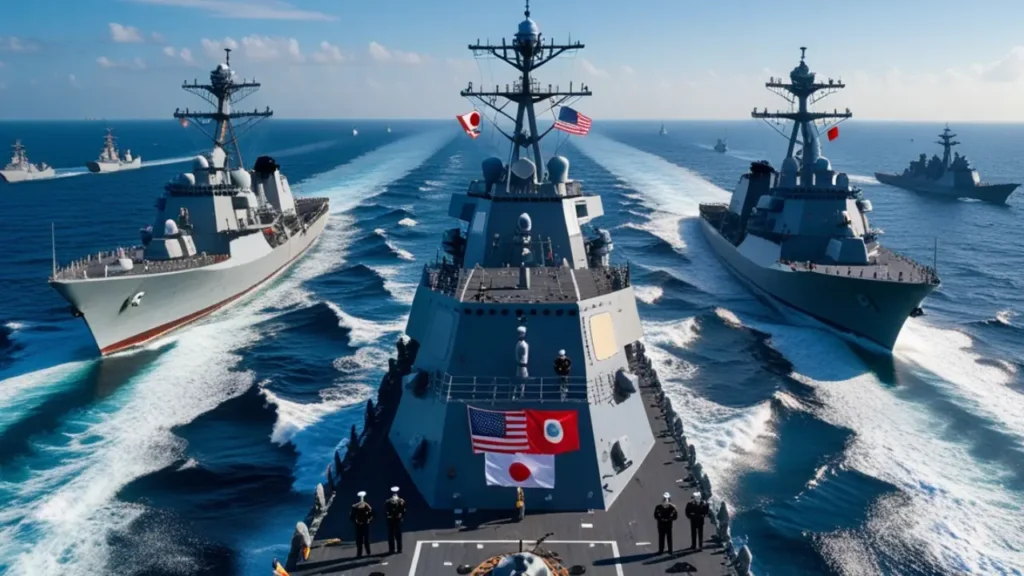
Examples include U.S. naval freedom-of-navigation patrols with allies in the South China Sea, India’s defense outreach with Southeast Asian nations, or European security partnerships in Africa. Each of these initiatives reflects how defense diplomacy extends national influence beyond traditional borders.
Historical Context: From Cold War to Today
During the Cold War, defense diplomacy largely revolved around bloc politics, with the U.S. and Soviet Union building vast military alliances to counterbalance each other. NATO, the Warsaw Pact, and a series of bilateral treaties defined strategic boundaries.
Today, the global landscape is more multipolar. Emerging powers such as India, China, and Turkey are using defense diplomacy to carve out regional influence. At the same time, the U.S. continues to rely on its global network of alliances, while China advances its Belt and Road Initiative with a growing security dimension, including arms exports and port access agreements.
Regional Hotspots and Strategic Partnerships
Indo-Pacific:
The Indo-Pacific has become the focal point of defense diplomacy. The U.S., Japan, India, and Australia have strengthened cooperation through the Quadrilateral Security Dialogue (Quad). Meanwhile, China is expanding military partnerships with Pakistan, Cambodia, and African nations, underscoring the competition for influence.
Middle East:
Defense diplomacy plays out through arms sales and military basing rights. The U.S. maintains deep ties with Gulf states, while Russia leverages its presence in Syria to project influence. Turkey and Iran also engage in regional defense diplomacy to expand their reach.
Europe and NATO:
NATO remains the most institutionalized form of defense diplomacy, now reinforced by the inclusion of Finland and Sweden. The alliance’s support for Ukraine demonstrates how collective defense partnerships can deter aggression and reshape regional power dynamics.
Technology and Defense Industry as Diplomacy Tools
Defense exports and technology transfers have become powerful levers of diplomacy. The U.S. Foreign Military Sales (FMS) program, France’s Rafale fighter exports, and Turkey’s Bayraktar drone sales all demonstrate how defense industries are used as instruments of influence.
By supplying advanced systems, nations not only secure economic benefits but also build long-term dependencies—ensuring interoperability, training, and political alignment. For recipient nations, such partnerships are vital for capability development and strategic security assurances.
Analysis: Why Defense Diplomacy Matters Now
As global tensions rise—from the South China Sea to Eastern Europe—military partnerships are proving as decisive as battlefield capabilities. Defense diplomacy creates networks of trust and access, making it harder for adversaries to act unilaterally without facing collective pushback.
Unlike purely economic or cultural diplomacy, defense diplomacy has direct security implications. In many cases, it sets the framework for crisis response, ensuring partners can coordinate in real time. With the global balance shifting toward multipolar competition, nations that master defense diplomacy will shape not only security architectures but also geopolitical outcomes.
Looking Ahead
The future of defense diplomacy will likely hinge on three factors:
- Technology-driven partnerships—AI, cyber, and space cooperation will redefine alliances.
- Regional balancing—Middle powers such as South Korea, UAE, and Brazil will increasingly use defense diplomacy to elevate their global role.
- Strategic deterrence—As major powers avoid direct conflict, military partnerships will serve as the primary tool of influence.
Defense diplomacy is no longer just about preventing conflict—it is about setting the terms of global power.
FAQs
Defense diplomacy is the use of military partnerships, training, and cooperation to achieve foreign policy objectives without direct combat.
The Indo-Pacific, Europe, and the Middle East are currently the most active arenas for defense diplomacy.
By building alliances, securing access, and fostering interoperability, defense diplomacy influences deterrence and strategic alignment.
Arms exports create long-term security relationships, aligning recipient states politically and strategically with the supplier.
It will increasingly focus on cyber, space, and AI cooperation, alongside traditional military partnerships.
Get real time update about this post category directly on your device, subscribe now.

20 comments
[…] Balancing Deterrence and Alliance SovereigntyThe intensifying budget and exercise demands pose political challenges for reluctant allies balancing domestic priorities and rising dependence on U.S. security guarantees. Sustaining a durable coalition under these pressures will test U.S. diplomatic finesse. Recent tensions around defense spending show that commitment must be complemented by equitable partnership and transparent burden-sharing. […]
[…] more deeply entwine Kyiv’s defense posture with U.S. strategic interests—a classic model of defense diplomacy. It also raises questions of how other allies (European, NATO) will coordinate or compete in […]
[…] Threats Forging Air Dominance: How NATO’s 2025 Joint Air Exercises Reinforce Global… Defense Diplomacy: How Military Partnerships Shape the Global Power Balance SUBSCRIBE […]
[…] & U.S…. Forging Air Dominance: How NATO’s 2025 Joint Air Exercises Reinforce Global… Defense Diplomacy: How Military Partnerships Shape the Global Power Balance Columbia-Class Submarines Advance U.S. Nuclear Deterrence Amid Cost and Schedule Pressures […]
[…] Cloud… AI-Armored Cyber Defense: Securing Next-Gen Military Networks Against Evolving Threats Defense Diplomacy: How Military Partnerships Shape the Global Power Balance Forging Air Dominance: How NATO’s 2025 Joint Air Exercises Reinforce Global… USCYBERCOM FY […]
[…] Posture AI-Armored Cyber Defense: Securing Next-Gen Military Networks Against Evolving Threats Defense Diplomacy: How Military Partnerships Shape the Global Power Balance Forging Air Dominance: How NATO’s 2025 Joint Air Exercises Reinforce Global… F-35 Program […]
[…] USCYBERCOM FY 2025 Priorities: Strengthening Infrastructure, Training, and Strategic Posture Defense Diplomacy: How Military Partnerships Shape the Global Power Balance AI-Armored Cyber Defense: Securing Next-Gen Military Networks Against Evolving Threats Forging […]
[…] & U.S…. Key Features of Boeing’s Sixth-Gen F-47 Fighter Jet That Define Next-Gen… Defense Diplomacy: How Military Partnerships Shape the Global Power Balance First Flight of Air Force’s YFQ-42A Drone Wingman Marks Major Step… USCYBERCOM FY 2025 […]
[…] and Strategic Posture First Flight of Air Force’s YFQ-42A Drone Wingman Marks Major Step… Defense Diplomacy: How Military Partnerships Shape the Global Power Balance China, Russia Hold Joint Submarine Patrol — What It Means for… Why U.S. Artillery Shells […]
[…] Jet That Define Next-Gen… China, Russia Hold Joint Submarine Patrol — What It Means for… Defense Diplomacy: How Military Partnerships Shape the Global Power Balance USCYBERCOM FY 2025 Priorities: Strengthening Infrastructure, Training, and Strategic Posture […]
[…] & U.S…. Autonomous Weapon Systems Spark U.S. Ethics Debate Amid Rapid Military AI… Defense Diplomacy: How Military Partnerships Shape the Global Power Balance China, Russia Hold Joint Submarine Patrol — What It Means for… Key Features of Boeing’s […]
[…] Training, and Strategic Posture Top 5 U.S. Army Weapons That Define Modern Warfare in 2025 Defense Diplomacy: How Military Partnerships Shape the Global Power Balance First Flight of Air Force’s YFQ-42A Drone Wingman Marks Major Step… SUBSCRIBE […]
[…] its border infrastructure and expanding its airpower reach, Nyoma will play a pivotal role in shaping the strategic balance along the […]
[…] such partnerships may come under regulatory and security scrutiny. For instance, U.S. export control laws and foreign ownership restrictions could […]
[…] has attracted greater focus from Norway and other states as changes in climate, accessibility, and global strategic competition draw attention to the High North. Norway’s Arctic defense efforts have included […]
[…] uses for battleships. They offered heavy shore fire and could absorb damage. But they no longer shaped strategy. Carriers and submarines […]
[…] The discussions follow a mutual defense pact signed in September 2025, committing both nations to treat any aggression against either as an attack on both, reinforcing a long-standing security partnership. […]
[…] DIMDEX 2026 also features broader exhibits on naval innovations, unmanned systems, and air defense, with related reports noting Qatar’s unveilings of new platforms. The Middle East Naval Commanders Conference (MENC) on January 20 addressed maritime security challenges and defense diplomacy. […]
[…] has become a growing focus for Russian defense diplomacy, with countries including Mali, Algeria, and Egypt maintaining or expanding military cooperation […]
[…] The CPSP competition has been narrowed down to a small group of shipbuilders. Germany’s ThyssenKrupp Marine Systems remains a primary rival with its Type 212CD conventional submarine offering, a design with a long pedigree in NATO navies. Evaluation criteria extend beyond technical performance to include industrial participation, schedule reliability, and strategic partnerships. […]